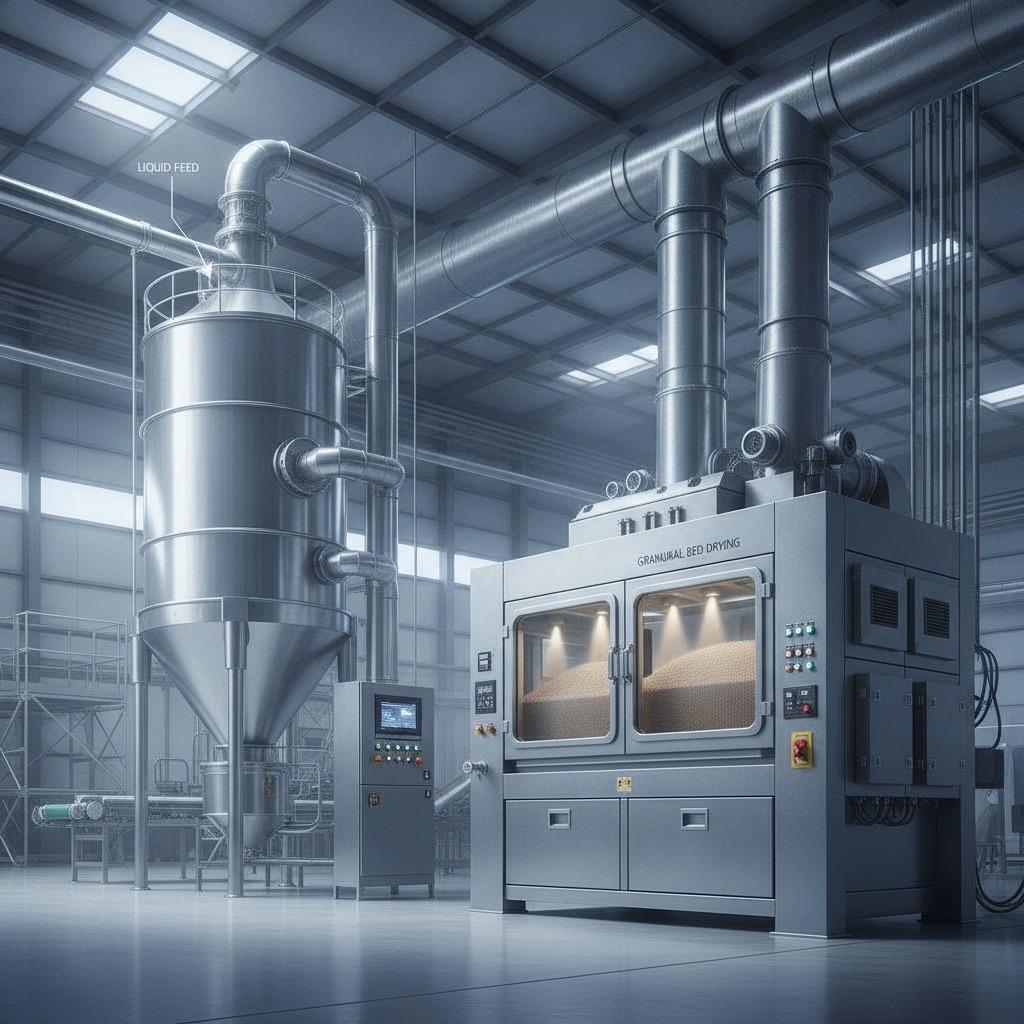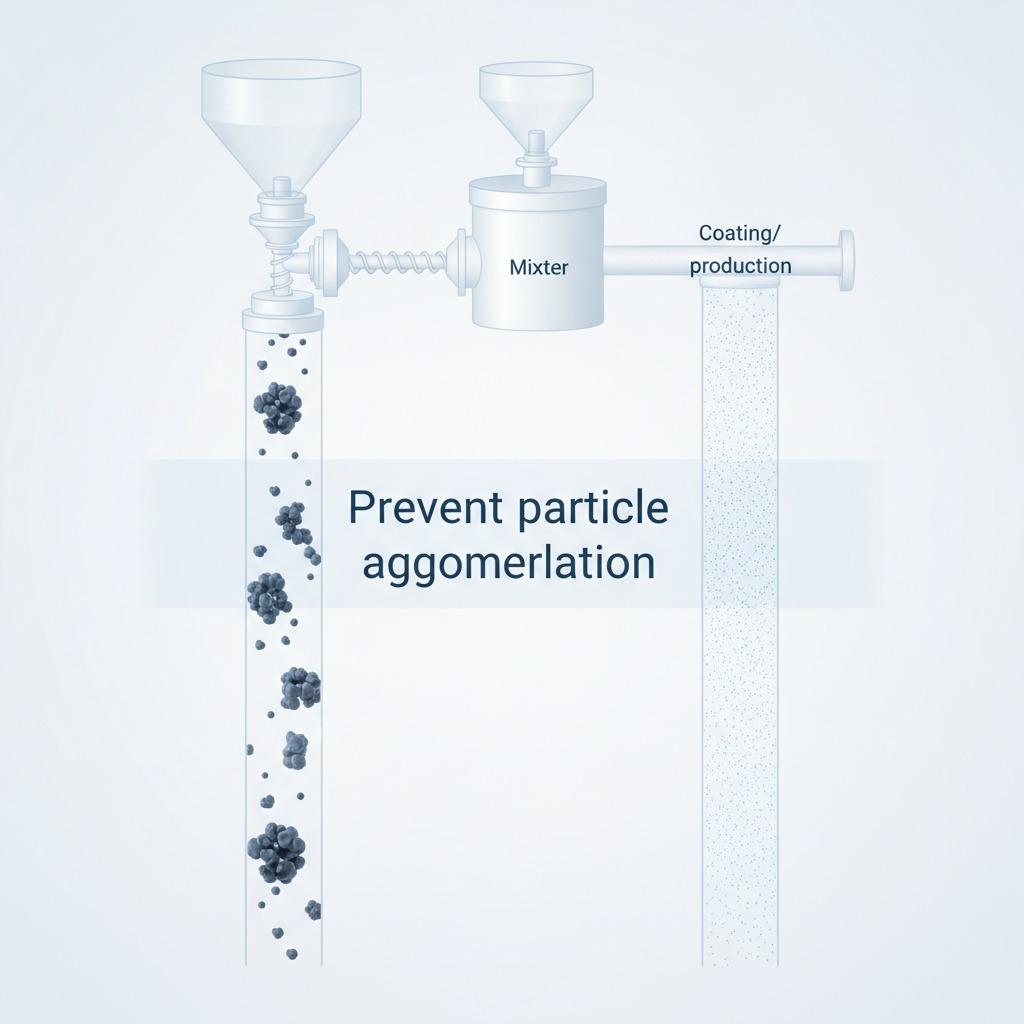
An industrial spray dryer is one of those machines that can look deceptively simple from the outside: atomize a liquid feed, expose it to hot air, and collect a dry powder in seconds. In practice, the decision to buy or specify one is rarely simple. The wrong design can leave you with sticky walls, poor powder recovery, dust losses, or a process that is far harder to clean than anyone expected. That is why engineers and sourcing teams usually need more than a brochure. They need a clear view of how the dryer fits the product, the plant, and the downstream air-handling system.
This matters whether you are making food ingredients, ceramics, chemicals, detergents, or specialty powders. A spray drying line is not just the tower or chamber. It includes atomization, hot-air delivery, powder separation, exhaust treatment, and often a dust collection stage that keeps fines out of the room and recovers sellable material. In many installations, the auxiliary air system is as important as the dryer itself.
What an industrial spray dryer is expected to solve
The basic job of spray drying is to convert a liquid, slurry, or solution into a controlled powder with consistent moisture and flow behavior. The process is attractive because it can reduce thermal exposure time, support continuous production, and produce a powder that is easier to package, transport, or blend than a wet intermediate. That is the theory, anyway. The real challenge is getting the powder properties you actually need, not just getting the water out.
For many buyers, the central question is not “Can it dry?” but “Can it dry this formulation without damaging it?” Heat sensitivity, particle morphology, bulk density, dispersibility, and residual moisture can all shift depending on nozzle choice, inlet-air conditions, residence time, and recovery hardware. If you are feeding a sticky formulation, even small changes in wall temperature or exhaust handling can alter uptime.
Key parts of the line
A complete spray drying system usually combines several functions. The feed preparation stage may include mixing, filtration, and holding tanks. The dryer itself provides the drying chamber, atomizer, and hot-air distribution. Then comes powder separation, which may rely on a cyclone separator, a baghouse, or another dust-collection stage depending on the product and emissions requirements.
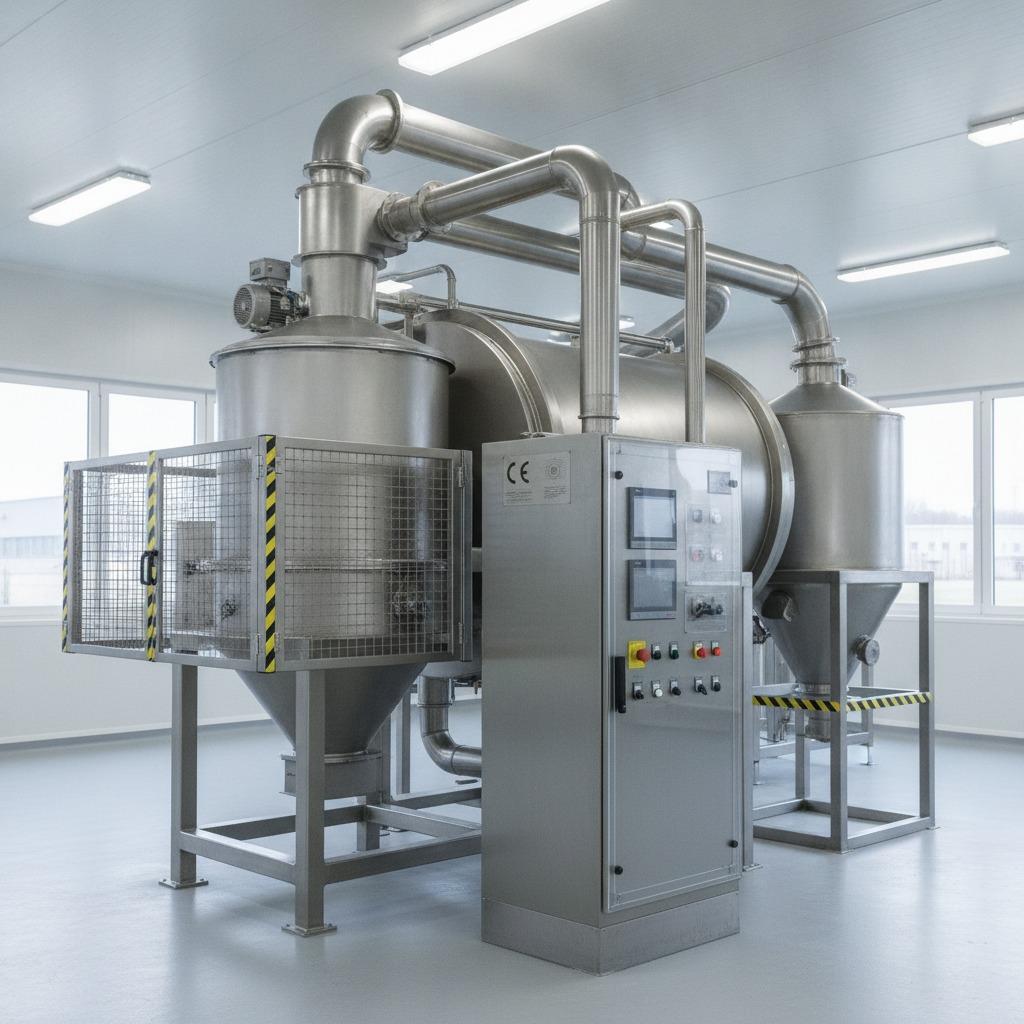
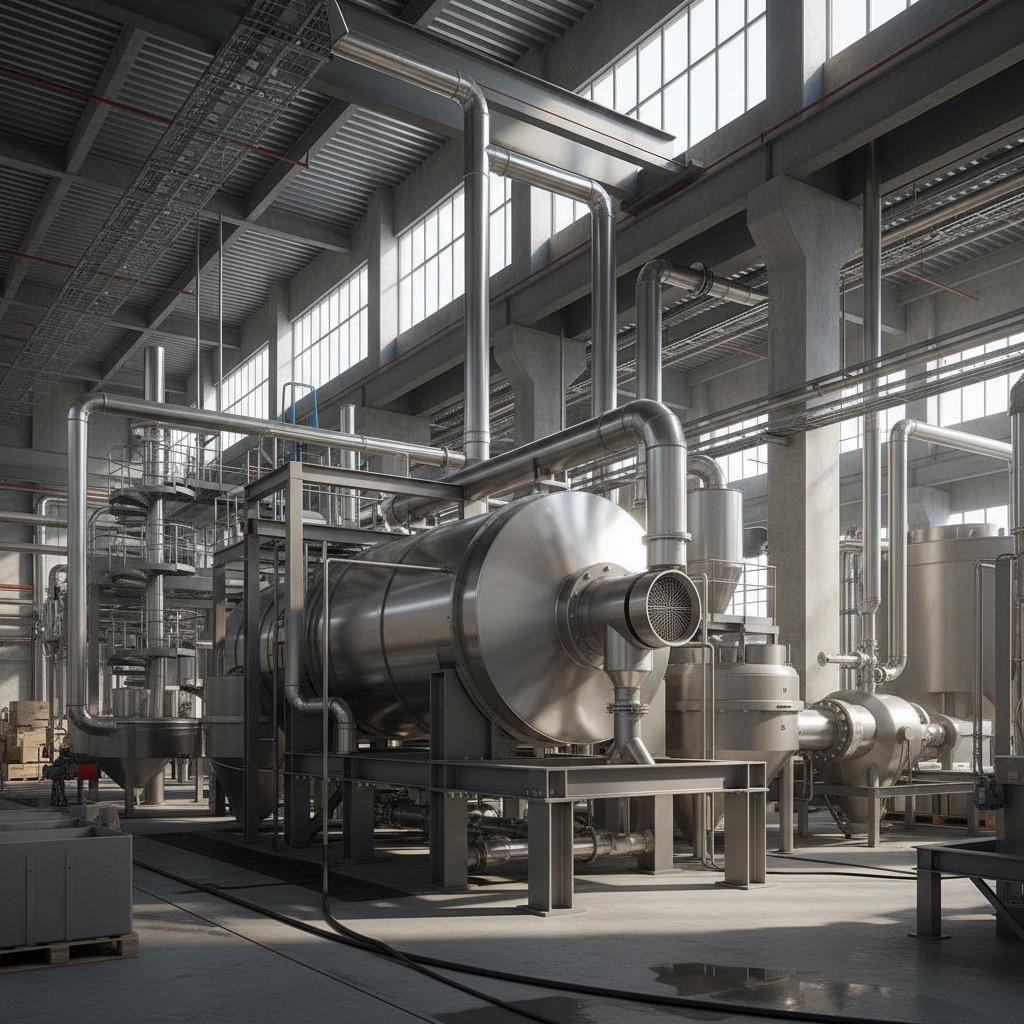
That downstream air-handling equipment is not a footnote. A floor-standing separator with a tall vertical cylindrical body, a conical hopper bottom, rigid duct connections, and a heavy welded support frame is a common sight in process plants. Equipment with that general geometry is used to collect, separate, and move dust or process air through a ducted line before discharge or recirculation. In a spray-drying context, it can help recover fines, reduce product loss, and keep exhaust treatment under control.
Why separation matters
Powder recovery affects both yield and housekeeping. If the dryer throws too many fines into the exhaust stream, you may lose material that should have been sold, and you may also burden the air-treatment system. On the other hand, overly aggressive recovery can create deposits, pressure drop, or cleaning headaches. The best arrangement depends on the product and the way particles behave after atomization.
How to think about spray drying equipment
When people compare spray drying equipment, they often focus on the chamber size first. That is understandable, but it is rarely the first number that should drive the choice. Atomization method, feed solids content, thermal sensitivity, airflow pattern, and powder recovery strategy usually matter more. A large chamber does not rescue a poor process definition.
Broadly speaking, the main design choices are about how the feed is atomized and how the powder is recovered. Rotary atomizers can handle many formulations and are often valued for flexibility. Nozzle-based systems can suit different duty ranges and may offer tighter control for certain products. The best fit depends on viscosity, throughput, required particle size, and whether the formulation behaves more like a solution, suspension, or slurry. None of those variables should be guessed.
Airflow and exhaust handling deserve equal attention. Some lines are arranged to maximize heat efficiency, while others prioritize gentle drying or fine powder recovery. If you are handling an abrasive product, the wear pattern in ducting and recovery equipment becomes a practical design issue, not a theoretical one.
Selection criteria that actually change outcomes
Start with the product, not the machine. Ask what the powder must do after drying: flow into packaging, disperse quickly, dissolve cleanly, resist caking, or survive transport. Those end-use requirements can pull the design in different directions. For example, a powder that needs strong dispersibility may be produced differently from one that is simply stored and blended.
Then look at operating reality. What is the expected feed variability? Will the plant run one grade all day or frequent changeovers? Is the process room tight on floor space? Can the ductwork be routed without awkward bends and dead legs? Those details are boring until they become the reason a line is difficult to clean or impossible to maintain.
Materials and construction also matter. In many industrial settings, equipment is fabricated from painted or coated sheet steel, with galvanized-looking ducting and welded support framing. That is normal for many process plants, but the exact material selection should still be matched to the product, corrosion risk, and cleaning requirements. I would be cautious about assuming one finish fits all; a plant that handles hygroscopic or corrosive material may need more than standard fabrication.
Questions to ask before buying
What is the target moisture range? How stable is the feed? What recovery efficiency is required? How will fines be handled? Can the system be cleaned without disassembly that takes the line down for half a shift? Those are the questions that separate a usable dryer from an expensive lesson.
Common mistakes buyers still make
The most common mistake is buying on capacity alone. A vendor may be able to quote a throughput number, but that number is only meaningful if it is tied to your formulation and operating window. Another frequent error is underestimating exhaust and dust control. If the powder is valuable, fine, or messy, recovery hardware should be treated as part of the production asset, not as a peripheral add-on.
A second mistake is ignoring cleaning and maintenance access. Spray drying systems often accumulate buildup in the chamber, ducts, or separator sections. If technicians cannot inspect the top section, hopper, ducting, and access points without improvisation, downtime will creep up. The heavy-duty support structures seen on many industrial units are useful, but only if they are paired with sensible access planning.
Finally, teams sometimes assume that a familiar process from another plant will transfer directly. That is risky. A product with a slightly different solids loading or binder system can change wall deposition behavior, exhaust loading, and discharge characteristics in ways that are not obvious from lab tests.
Practical buyer advice
If you are sourcing a new line, ask for process data that reflects your actual feed, not a generic demonstration case. Where possible, review performance across startup, steady state, and cleaning cycles. Make sure the dust collection and separation section is evaluated alongside the dryer, because the recovery stage often determines whether the plant can meet quality and housekeeping goals in practice.
Also consider future flexibility. Many plants start with one formulation and later add a second or third. A good industrial spray dryer should leave room for moderate process changes without forcing a full mechanical rebuild. That does not mean overbuying. It means avoiding a design that is so narrow it becomes obsolete the moment the product mix changes.
FAQ
Is an industrial spray dryer always the best drying method?
No. It is a strong choice when you need continuous powder production from a liquid feed, but it is not ideal for every product. Heat sensitivity, particle fragility, and recovery requirements all affect the decision.
Why does dust collection matter so much?
Because recovered fines can affect yield, emissions control, and cleanliness. In many plants, the separator or dust collector is essential to the economics of the line, not just the compliance side.
Can one system handle different products?
Sometimes, but only within limits. Changeover feasibility depends on residue behavior, cleaning access, and whether the process conditions can be adjusted without compromising powder quality.
What to do next
If you are evaluating an industrial spray dryer, start by mapping the product requirements, then trace the full line from feed tank to powder collection and exhaust handling. The machine itself matters, but the surrounding air system often decides whether the plant runs smoothly or spends too much time chasing buildup and yield loss. If your application involves a dryer paired with a tall separator or dust-collection unit, treat that equipment as part of the same purchasing decision. That is usually where the practical differences show up.
For sourcing teams, the best next step is a specification review built around product behavior, recovery expectations, and maintenance access. That will do more for a successful purchase than a glossy capacity claim ever will.