Why a centrifugal spray dryer matters in powder production
A centrifugal spray dryer sits at the center of many powder lines because it turns liquids, slurries, and feed suspensions into free-flowing powder in one controlled step. For engineers and sourcing teams, that is not a minor convenience. It can determine particle size, bulk density, moisture level, flow behavior, and how easily the final material moves through packaging or downstream blending. When a plant is chasing instant powder production, the dryer is often the equipment that decides whether the process is stable or constantly fighting variability.
The practical question is not just “What does it do?” but “How well does it fit the product?” A centrifugal spray dryer is typically selected when the feed can be atomized effectively and when the process needs a repeatable, sanitary, or high-throughput route from liquid to powder. In dairy, food ingredients, chemicals, and some pharmaceutical applications, that can be the difference between a smooth-running line and a costly bottleneck. The surrounding stainless-steel process equipment matters too, because the dryer rarely works alone. Feed tanks, conical hoppers, discharge systems, transfer piping, and controls all affect final quality.
What the equipment is doing in the line
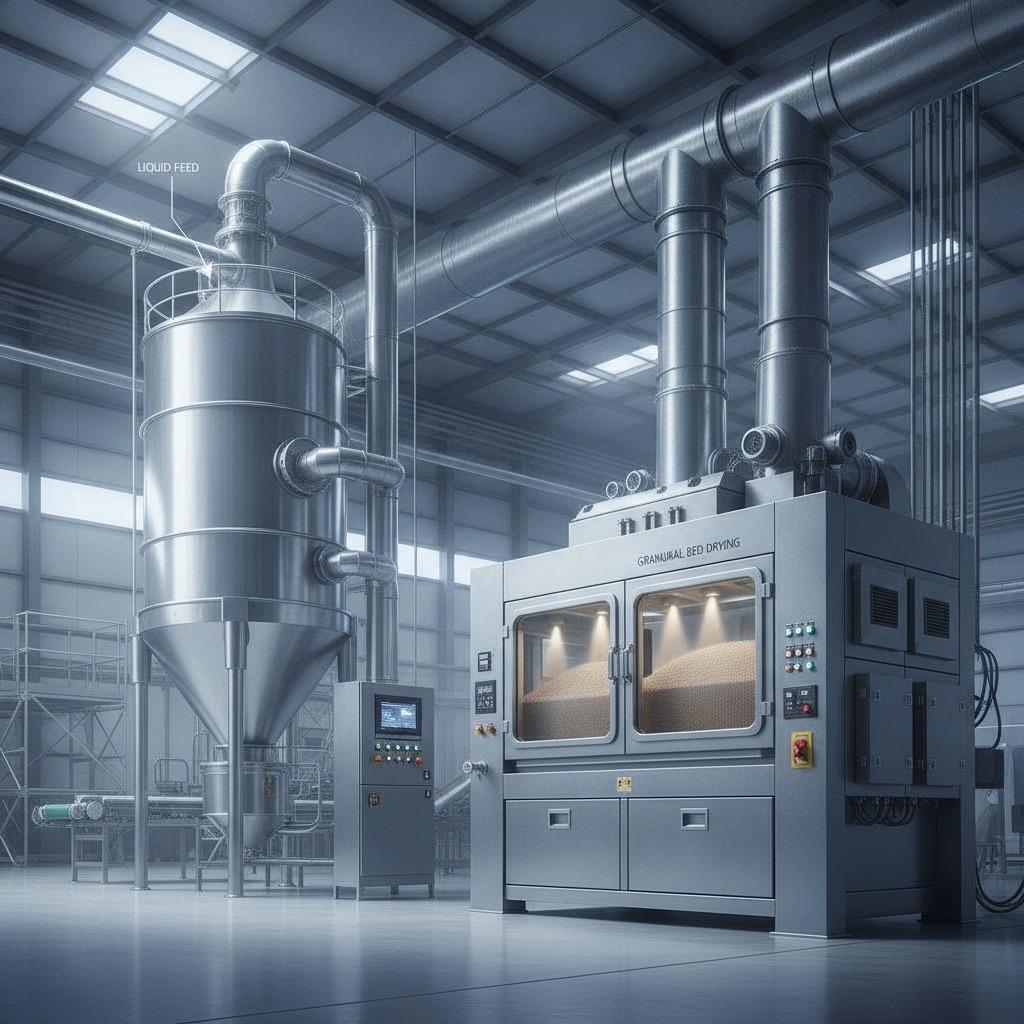
In a centrifugal spray dryer, liquid feed is broken into fine droplets by a high-speed rotating atomizer. Those droplets meet a hot air stream, moisture flashes off quickly, and dry particles fall to a collector or hopper below. The basic principle sounds simple, but the industrial reality is not. Airflow pattern, feed consistency, droplet size, residence time, and chamber geometry all shape the powder that comes out the other end.
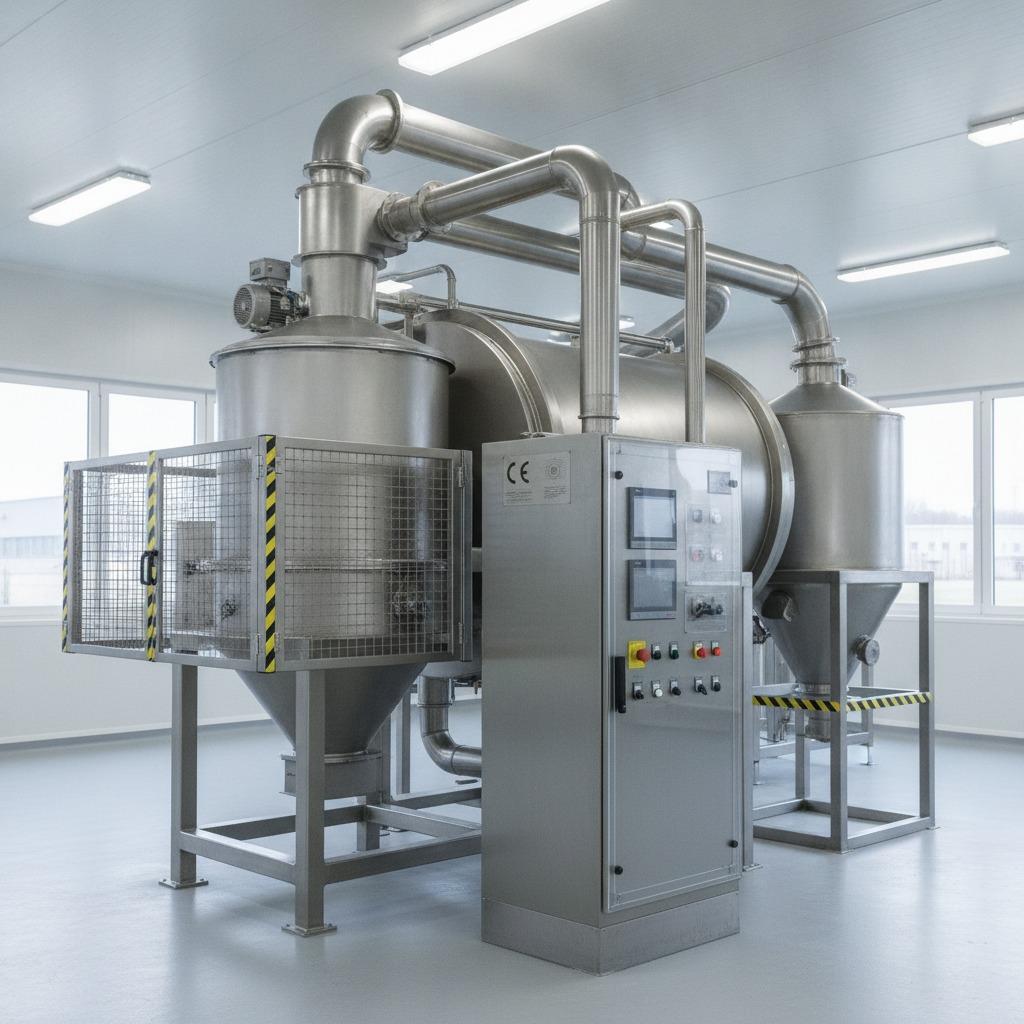
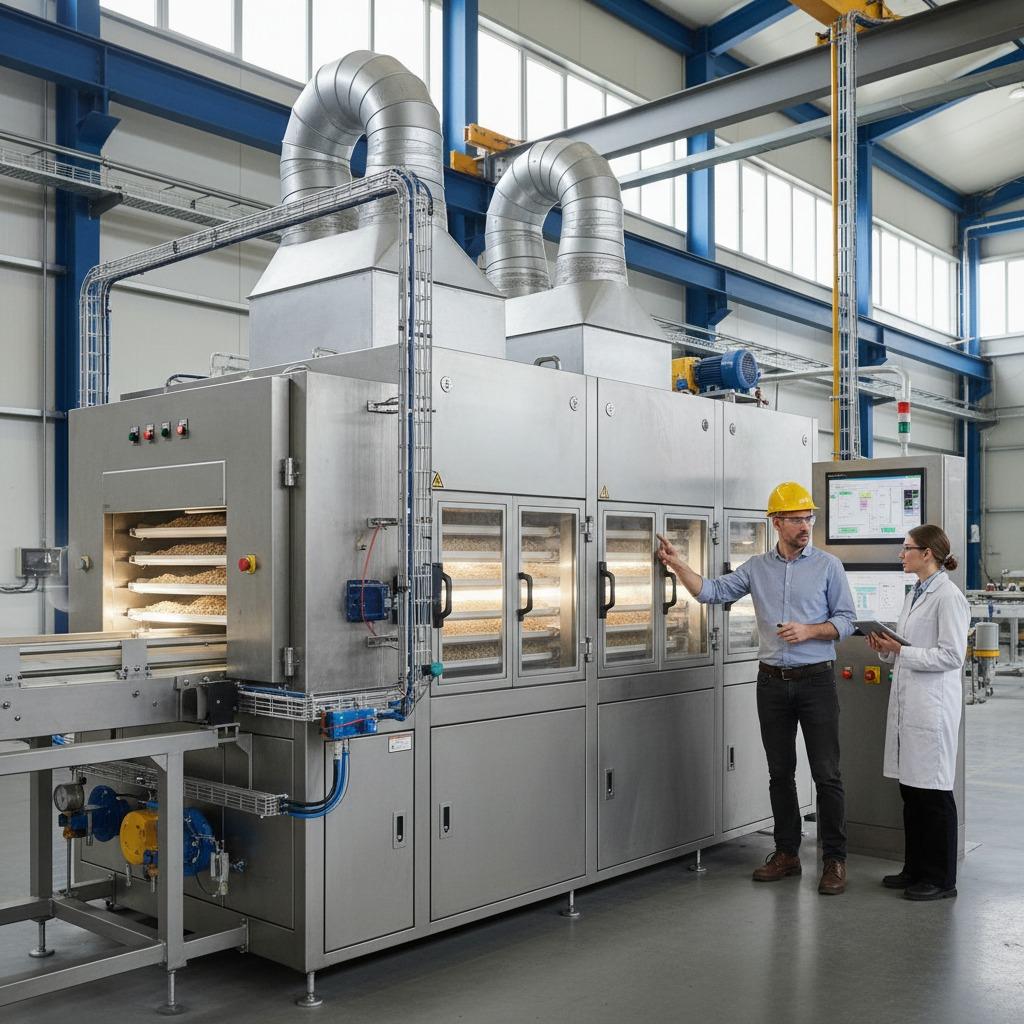
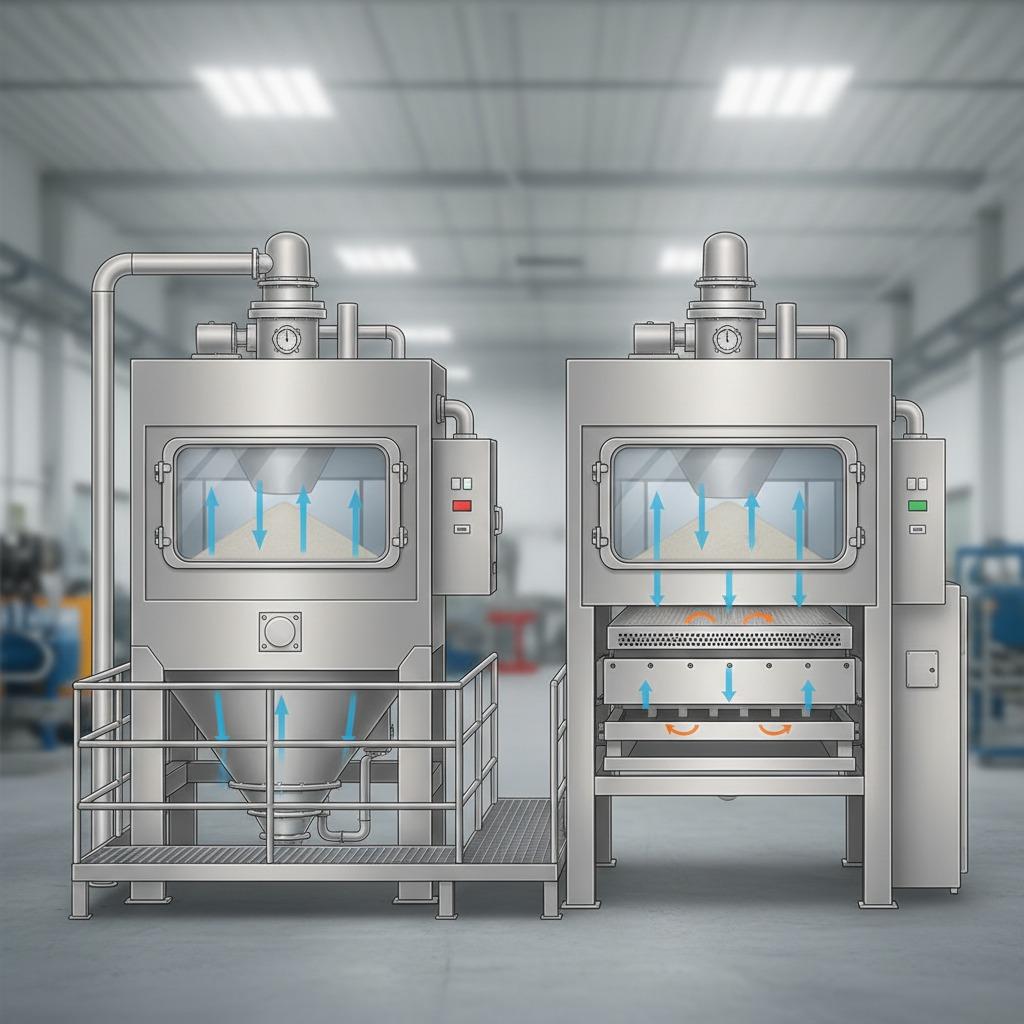
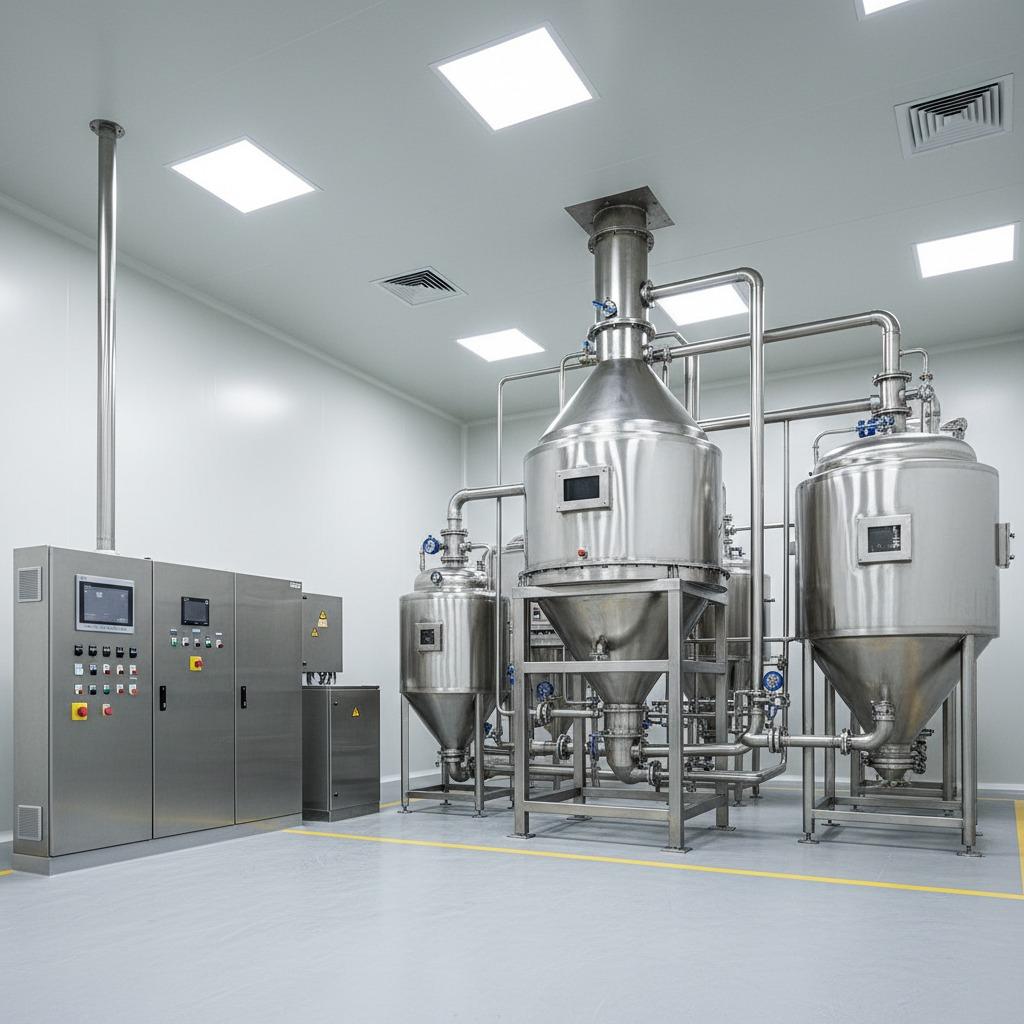
In the kind of process room suggested by the stainless-steel conical vessels and connected piping shown here, the dryer is usually only one part of a broader material-handling system. Bulk ingredients may be stored in hoppers or silos, metered into the process, collected after drying, and then transferred through enclosed piping or discharge points. That modular layout is common in powder plants because it helps keep materials moving without exposing them to unnecessary contamination or moisture pickup.
Quick comparison: when this dryer makes sense
If you are weighing an industrial spray dryer against other drying methods, the real decision often comes down to product form and process economics. A high speed spray dryer is usually attractive when you want consistent powder from a pumpable feed, relatively fast drying, and a system that can be integrated into a continuous line. It is less attractive if the feed is highly abrasive, too viscous to atomize reliably, or prone to severe heat damage before moisture removal is complete.
Compared with tray drying, spray drying is much faster and more suited to large-scale powder conversion. Compared with drum drying, it generally offers better control over particle formation for many ingredients. Compared with freeze drying, it is far less specialized and much more industrially productive, though it will not preserve every sensitive compound in the same way. That is the trade-off buyers should keep in view: speed and scale on one side, product sensitivity on the other.
Key equipment details buyers should pay attention to
The visible stainless-steel vessels in a production line tell you something important even before the dryer itself is discussed. Plants that handle powders usually need corrosion resistance, cleanable surfaces, and stable discharge geometry. Conical bottoms are used because they help solids move by gravity and reduce dead zones, which is valuable whether the vessel is serving as a storage hopper, an intermediate bin, or a collection point after drying. Multiple identical units can support batch staging or parallel processing, which matters when output needs to remain steady.
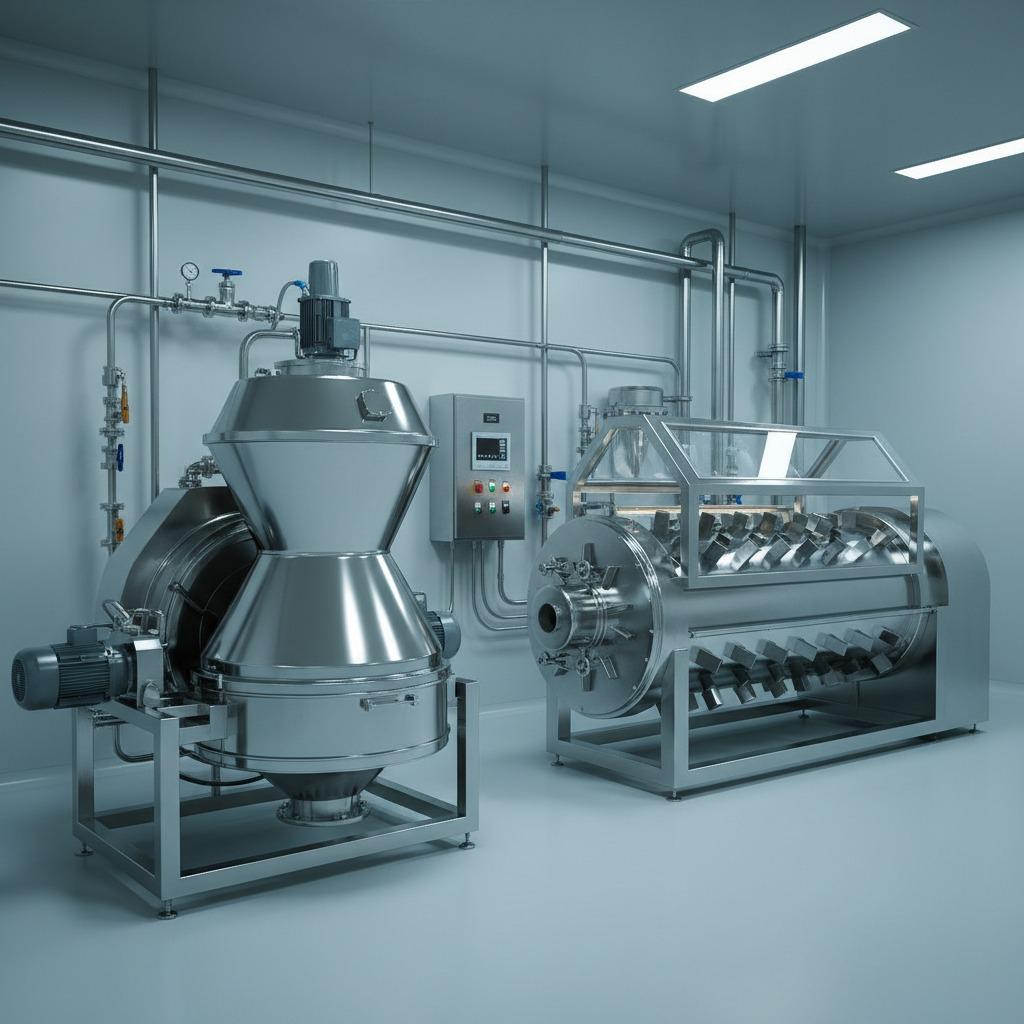
For a centrifugal spray dryer system, the surrounding hardware is rarely cosmetic. Ports, clamps, valves, and piping connections help the line feed, vent, collect, and discharge material. Support frames and enclosed routing keep the process organized and reduce the kind of open handling that creates contamination risks. In a hygienic plant, those details are not extras; they are part of the process logic.
What to confirm before buying
Buyers often focus on throughput first, but it is usually wiser to start with product behavior. Ask how the feed will atomize, how sticky the powder may be, whether the powder tends to bridge in hoppers, and how sensitive it is to heat exposure. Then review how the dryer connects to storage and discharge equipment. If the system is poorly matched upstream or downstream, even a well-built dryer can underperform.
It also helps to clarify whether the line is meant for food, chemical, pharmaceutical, or another process environment. That changes the expectations around cleanliness, access, material finish, and how much manual intervention is acceptable. I would be cautious about assuming one “universal” dryer configuration will suit every powder. That is rarely true in practice.
Typical process flow around a spray-drying line
Although the exact internal function of the visible vessels cannot be confirmed here, a common setup around an industrial spray dryer looks like this: raw material is received in a tank or hopper, the feed is conditioned or mixed, the liquid is pumped to the atomizer, the powder is separated from exhaust air, and the collected product is discharged into a silo, bin, or transfer line. The conical geometry shown in the stainless units fits neatly into that kind of flow because it supports controlled discharge and intermediate buffering.
That flow matters for consistency. If the feed surges, the atomizer can create uneven droplets. If the discharge area is poorly designed, powder may hang up or absorb moisture. If transfer piping has too many awkward bends, material buildup becomes a maintenance issue. Engineers know these are small failures that add up quickly on the floor.
Common mistakes in specifying drying equipment
One common mistake is treating the dryer as a standalone machine instead of part of a system. The dryer may be the headline item, but the feed tank, hopper, piping, and downstream handling often determine whether production is reliable. Another mistake is overestimating how forgiving the process will be. Spray drying can be efficient, but it still depends on feed consistency and a sensible thermal profile.
A second trap is ignoring cleanability. Stainless steel is a strong starting point, but smooth-looking metal alone does not guarantee easy sanitation or quick changeover. Access points, weld quality, and how the equipment is assembled all matter. For plants with frequent product changes, that becomes a daily operational issue, not a design footnote.
Finally, some buyers underestimate the importance of floor layout. Large conical vessels, ducting, cabinets, and operator access space all consume room. A well-sized dryer that cannot be serviced safely is a poor investment, even if the core process works.
How to evaluate a supplier or fabricator
When the equipment looks like the stainless process line shown here, the supplier is often doing more than supplying a catalog product. Custom fabrication, welding, sheet-metal forming, piping, and site installation may all be involved. That means the buyer should evaluate not just the machine, but the maker’s ability to integrate it into the plant.
Ask for clear descriptions of the fabrication scope, the piping interfaces, and the installation responsibilities. If the supplier is building conical hoppers or silos as part of the system, ask how discharge, inspection, and access are handled. If the dryer is part of an industrial spray dryer package, ask how the feed and collection points connect. Exact grades, dimensions, and performance limits should be documented in the project specification; if they are not, that is a warning sign rather than a small omission.
Practical buyer advice for instant powder production
If your goal is instant powder production, start with the end use. Will the powder need to dissolve quickly, flow through fine feeders, or pack densely for shipping? Those requirements can point to different atomization and collection choices. It is also worth considering whether the powder will later be blended, compressed, or redispersed. The dryer should support the whole value chain, not just the drying step.
For a product team or sourcing manager, the best questions are often the unglamorous ones: How will the material discharge? Where can buildup occur? What happens during cleaning? How does the line behave during start-up and shutdown? Those questions expose risk faster than a glossy brochure does.
FAQ: short answers buyers usually need
Is a centrifugal spray dryer the same as an industrial spray dryer?
Not exactly. A centrifugal spray dryer is one type of industrial spray dryer, defined by the rotating atomization method.
Why are stainless-steel hoppers and silos often used around spray drying lines?
Because they support cleanability, corrosion resistance, and controlled gravity discharge in powder-handling systems.
Can the same line handle food, chemical, and pharmaceutical products?
Sometimes the layout is similar, but the acceptance criteria differ. Materials, cleaning expectations, and compliance needs should be checked case by case.
What is the biggest risk in specifying this equipment?
Assuming the dryer alone solves the process. In practice, the feed system and downstream handling are just as important.
Next step
If you are comparing a centrifugal spray dryer for a new line or upgrade, build the discussion around the product first and the equipment second. Define the feed characteristics, the desired powder behavior, and the way the powder will move through storage, transfer, and packaging. Then review the surrounding stainless-steel process equipment as a single system rather than a set of separate purchases. That is usually where the real production gains are found.