What buyers usually mean when they search for a Vibrating Fluid Bed Dryer Manufacturer
When engineers or sourcing teams look for a Vibrating Fluid Bed Dryer Manufacturer, they are usually not shopping for a brochure feature. They are trying to solve a process problem: how to dry, cool, or handle bulk solids without damaging the product, wasting energy, or creating a maintenance headache. In practice, the decision often sits somewhere between throughput, product behavior, sanitation needs, and how much floor space the plant can spare.
That matters because vibrating fluid bed drying equipment is rarely a one-size-fits-all purchase. A unit that performs well on granules may not behave the same way on powders, fragile food pieces, or mixed particle sizes. The wrong machine can cause uneven drying, fines carryover, or bridging at the discharge point. The right one, by contrast, can steady a line and make downstream packaging or processing much more predictable.
How vibrating fluid bed dryer systems are typically used in plant operations
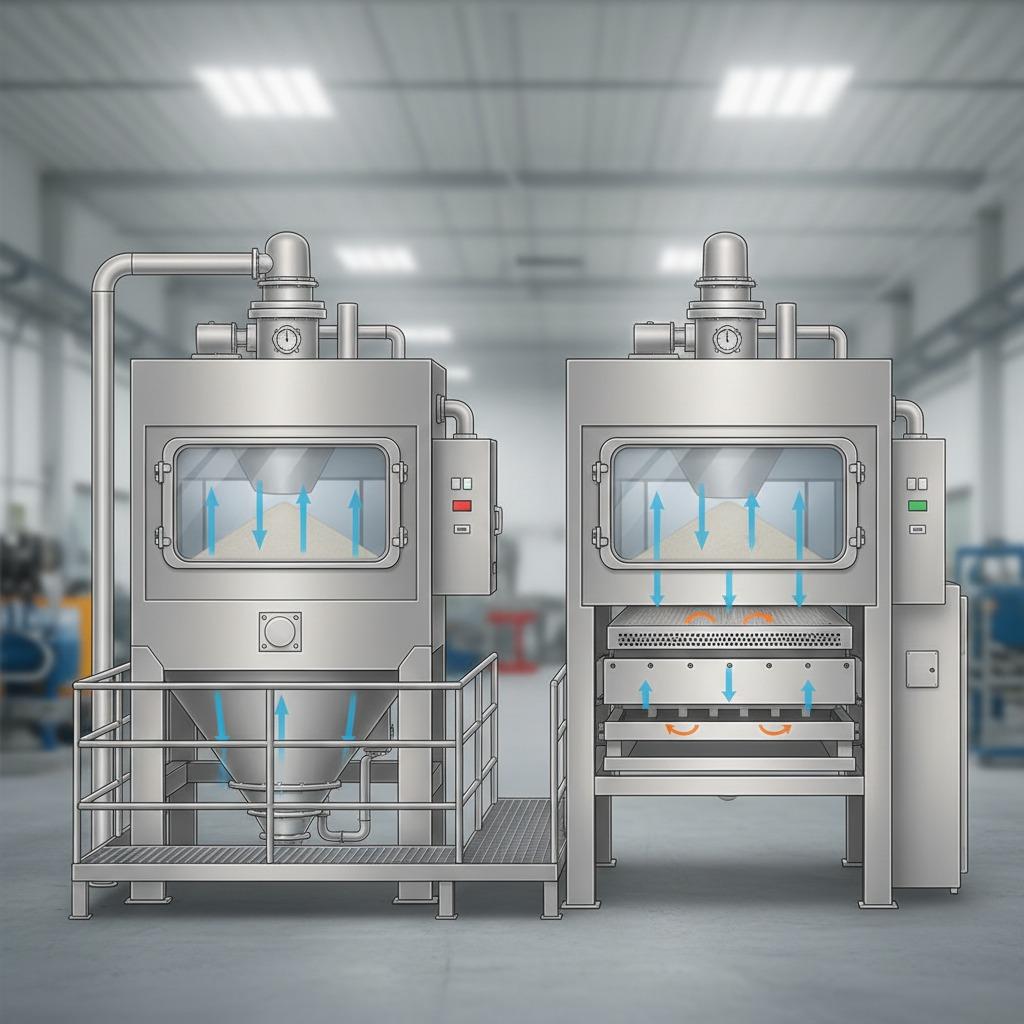
A vibrating fluid bed dryer machine is usually selected when a process needs more than simple heated air. The vibration helps move material across the bed, while the air stream helps remove moisture or manage product temperature. In many plants, that combination is attractive because it can support continuous processing rather than a stop-start batch cycle.
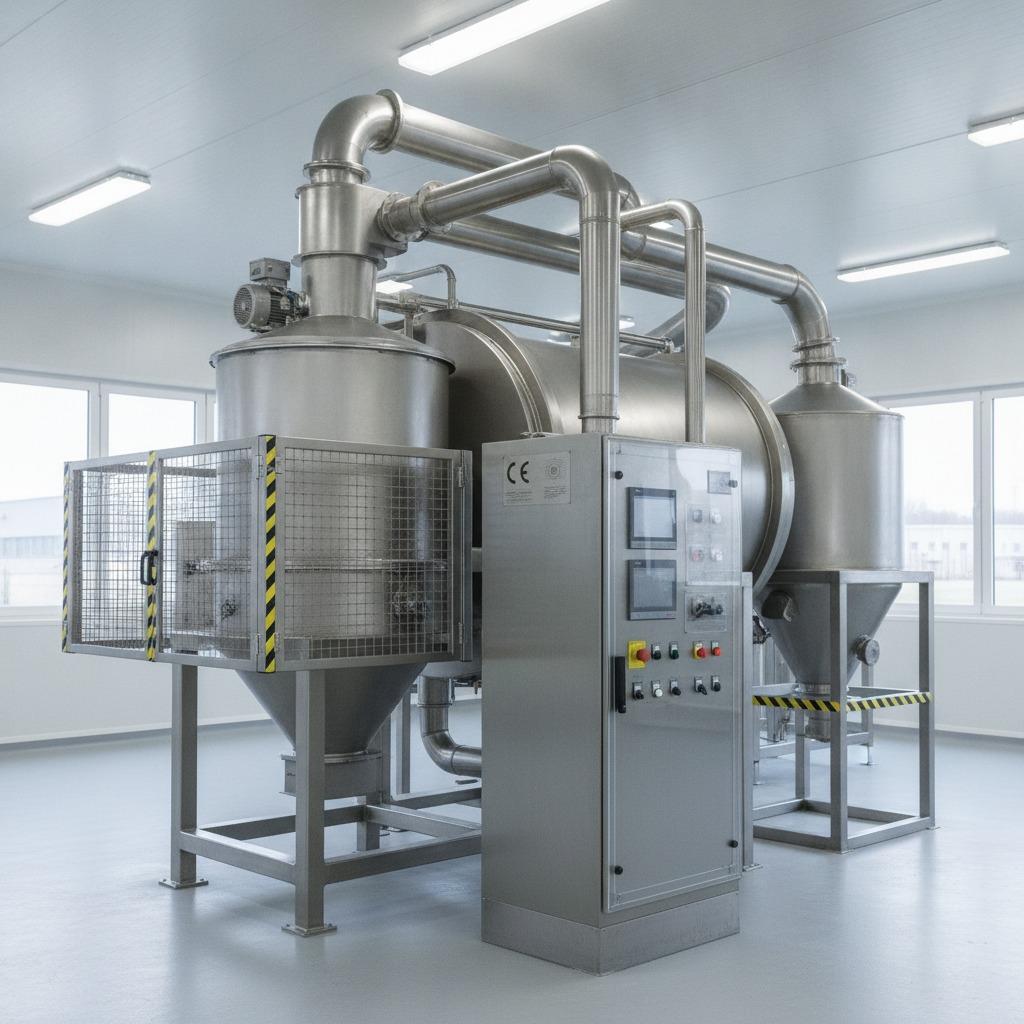
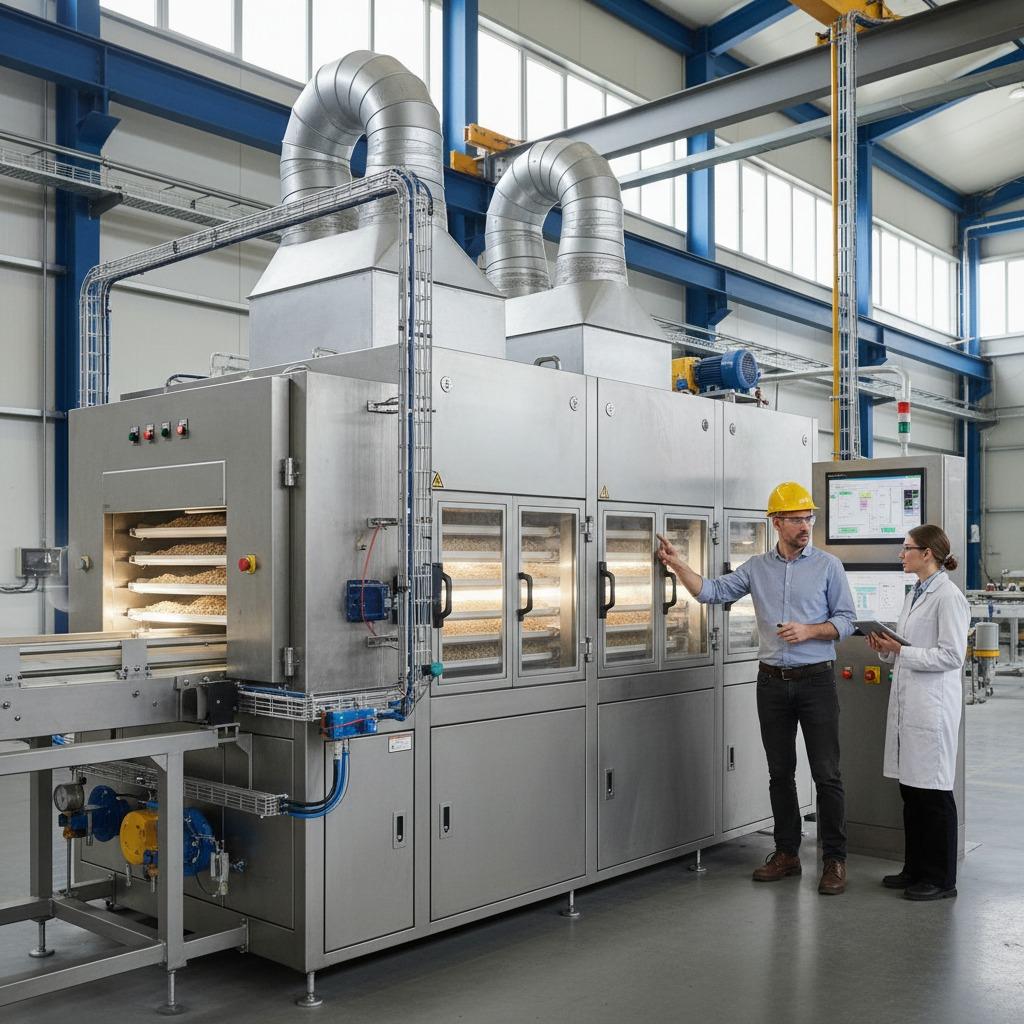
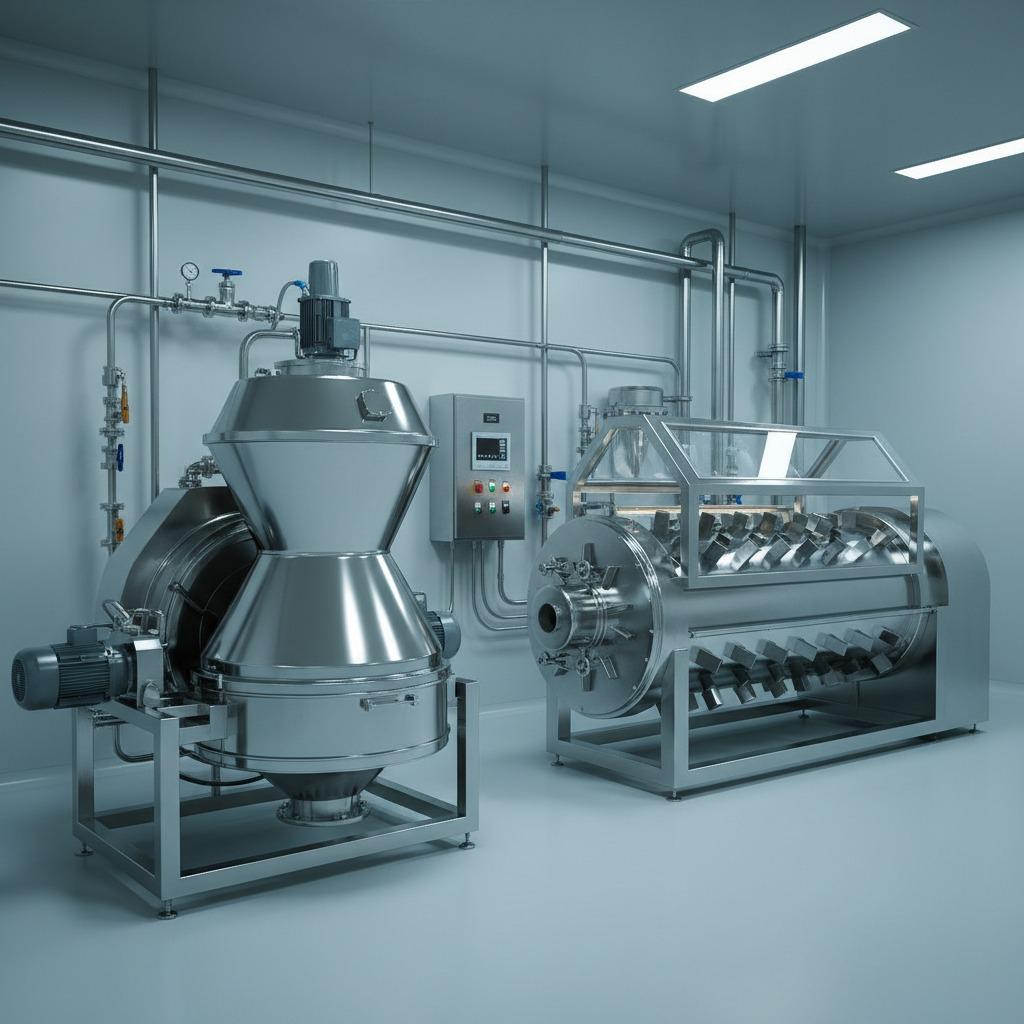
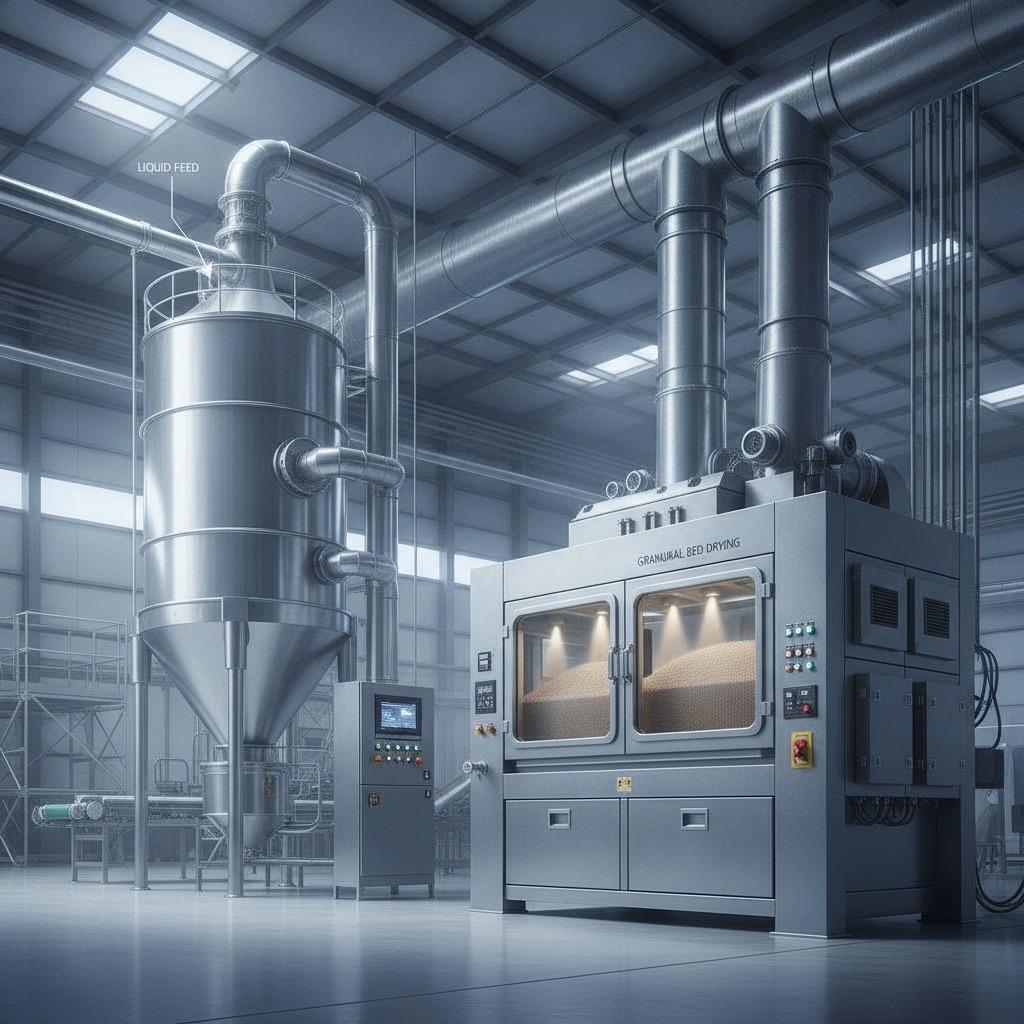
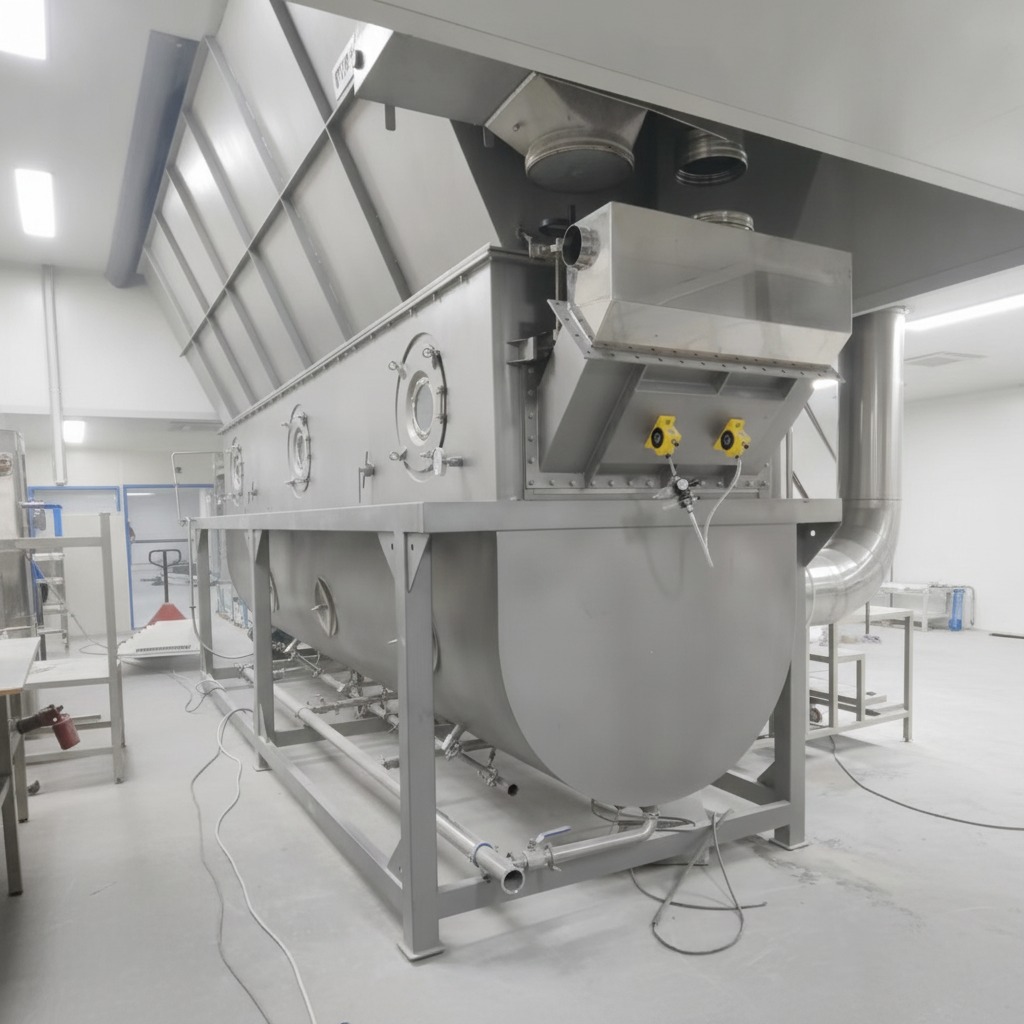
The visible equipment cues described in the preparation data point to large stainless-steel fabricated process machines with ducts, ports, access hatches, and heavy frames. That construction style is common in industrial drying and bulk handling equipment because it supports cleaning access, maintenance, and integration with air-handling systems. The exact internal mechanism is not visible, so it would be a mistake to assume details like internal agitators, jacketed heating, or a specific sanitary finish. Still, the overall geometry suggests a serious production-line asset, not a small lab unit.
For buyers, that is often the first real question: is the machine intended to dry product, cool it, convey it, or do some combination of those jobs? A plant may say “dryer” on the inquiry, but in reality it needs controlled residence time, discharge consistency, and dust management as much as moisture removal.
What to look for in the machine design before you compare suppliers
The best comparison starts with the visible and verifiable features, not with vendor claims.
A well-built vibrating fluid bed dryer supplier will usually be able to explain how the frame, bed geometry, access ports, and duct connections support the process. In the image descriptions provided, the equipment appears to include stainless-steel construction, multiple inspection openings, and top and bottom process connections. Those are practical details. They tell you the machine was designed for real plant integration, not just a simplified concept drawing.
You should also pay attention to the following design questions:
Material handling behavior
Does the product flow evenly across the bed, or does it tend to clump, cake, or segregate by size? Even a strong dryer can underperform if the material does not travel properly through the chamber.
Access and maintenance
Multiple manways or inspection ports are a good sign, but only if they are positioned where operators can actually reach them. In a production environment, cleaning access matters more than elegant sheet-metal work. This is especially true in food and pharmaceutical settings, where residue buildup or cross-contamination is a real concern.
Airflow and dust control integration
The presence of ducting, hoods, and flanged connections suggests the machine is intended to work with an air-handling or dust-collection system. That is not a small detail. Drying systems fail quietly when airflow is poorly matched to product load, and operators often notice the symptom long before they notice the cause.
Discharge strategy
The lower geometry in the supplied descriptions suggests gravity discharge or controlled emptying into downstream equipment. That sounds routine, but it is where many problems show up: hang-up zones, inconsistent discharge, or product loss at transfer points.
Why stainless-steel construction matters, and where buyers sometimes overread it
Stainless steel is common in process equipment for a reason. It usually offers a practical balance of corrosion resistance, cleanability, and durability. The equipment described in the product data appears to use brushed or satin stainless construction, which is a sensible default for many industrial environments.
That said, buyers should be careful not to treat “stainless” as a complete specification. The material grade, surface finish, wall thickness, weld quality, and cleaning requirements can vary significantly. Two machines may both look stainless in photos and behave very differently in service. A sourcing manager should ask for the actual grade, finish, and fabrication details rather than assuming the visible appearance tells the whole story.
This is one of those areas where a vibrating fluid bed dryer manufacturer should be able to speak plainly. If the vendor gets vague about materials, that is worth noting early.
Common applications where these systems tend to make sense
Based on the general industrial geometry described, a vibrating fluid bed drying system can be relevant in several settings:
Food processing, where product consistency and cleanability matter.
Chemical processing, where controlled drying and stable discharge are important.
Pharmaceutical or specialty materials work, where enclosed handling and maintenance access may be required.
Bulk solids processing, especially when a line needs drying, cooling, or gentle conveying in one enclosed unit.
The exact use case depends on the internal design, which is not visible here. But the external construction suggests a machine meant for integrated plant service, not a standalone benchtop operation.
How to compare manufacturers without getting lost in sales language
A useful purchasing comparison usually comes down to a handful of practical questions.
First, can the supplier explain how the machine handles your product form? Dense granules, friable particles, sticky powders, and mixed feed all behave differently.
Second, can they show how the equipment interfaces with the rest of the line? Top-mounted duct points, bottom piping, and motor assemblies are not decorative. They tell you how the machine sits in the process.
Third, can they discuss maintenance honestly? The presence of access doors and inspection hatches is useful only if the internal arrangement allows meaningful cleaning and inspection.
Fourth, do they understand the trade-off between capacity and control? Bigger is not automatically better. In drying, over-sizing can create poor residence-time control or excess energy use.
Finally, ask what is standard and what is custom. The fabrication described in the source material sounds custom or semi-custom, which is common in industrial equipment. That can be a strength if the vendor is disciplined, but a risk if specifications are left vague.
Buyer mistakes that show up late, after the order is already placed
One common mistake is focusing only on throughput. Plants often ask how many kilograms per hour a machine can handle, but that number is not meaningful without moisture content, particle properties, inlet temperature, and discharge conditions.
Another mistake is overlooking cleaning and access. A dryer that looks compact on paper can be a maintenance burden if operators cannot reach the critical zones.
A third issue is assuming any vibrating fluid bed dryer machine will suit a sensitive product. Vibration and airflow are useful tools, but they can also create attrition or product movement that a fragile material will not tolerate.
And then there is the easy-to-miss issue of downstream fit-up. If the discharge point does not align well with the next conveyor, hopper, or packaging stage, the plant ends up solving a mechanical mismatch with extra labor.
Questions to ask before you contact a supplier
If you are evaluating a vibrating fluid bed dryer supplier, bring a short but specific list:
What product form was the unit designed for?
What are the material contact construction details?
How are access ports arranged for inspection and cleaning?
What external utilities or duct connections are required?
Is the machine intended for drying only, or also for cooling or conveying?
Can the supplier support custom process integration if your line layout is unusual?
Those questions sound basic, but they separate vendors that build equipment from vendors that understand process risk.
Practical next step for engineering and sourcing teams
If your project is still at the pre-bid stage, start by documenting the product behavior, the target moisture range, the available footprint, and the downstream interface. Then compare manufacturers on how well their machine architecture matches those constraints, not just on price or surface finish.
A capable Vibrating Fluid Bed Dryer Manufacturer should be able to discuss product flow, access, airflow integration, and fabrication details without hand-waving. That is usually a better sign than any polished rendering.
If you are reviewing an existing design or planning a new line, use the visible equipment features in the supplied images as your checklist: stainless construction, access hatches, ducting, discharge geometry, and frame support. Those are the clues that reveal whether the machine is built for real plant duty.
FAQ
Is vibrating fluid bed drying equipment always used for drying only?
No. Depending on the internal design, it may also be used for cooling, conveying, or conditioning bulk solids.
Is stainless steel enough to judge equipment quality?
Not by itself. Grade, finish, weld quality, access design, and process fit matter just as much.
Are custom-built machines common in this category?
Yes. The construction described in the preparation data strongly suggests fabricated industrial equipment with integrated nozzles, access ports, and process connections.
What is the biggest selection risk?
Probably assuming the machine will work for your product without checking material behavior and process integration details first.