Vacuum Drying Technology: Why It Matters When Heat Alone Is Not Enough
Vacuum drying technology has become a practical answer for manufacturers that need to remove moisture without punishing the product with high heat. For engineers and sourcing teams, the real question is not whether drying can be done, but whether it can be done without warping parts, degrading active ingredients, trapping solvent, or stretching cycle times beyond reason. That is where vacuum drying earns attention: by lowering the pressure around a material, it helps moisture leave at a lower temperature than conventional hot-air methods often require.
This matters across industries. In food, it can help preserve color, aroma, and texture. In pharmaceuticals and chemicals, it can reduce the risk of thermal damage or contamination. In plastics, ceramics, batteries, and specialty materials, it can improve consistency when surface drying alone is not enough. The buying decision is rarely about “dry or not dry.” It is about choosing a method that fits the material, the production flow, and the quality risk profile.
What Vacuum Drying Does Differently
Standard drying depends on heat and airflow. That works well for many products, but it becomes less reliable when the material is sensitive, thick, porous, viscous, or packed in a way that slows moisture migration. Vacuum drying technology changes the physics. By reducing chamber pressure, it lowers the boiling point of water and, in many cases, of other volatiles as well. Moisture can then leave the material at temperatures that would be unacceptable in open-air or atmospheric systems.
The practical advantage is not only gentler treatment. In the right application, vacuum can also help dry internal moisture more uniformly, especially when the product structure makes it difficult for water to escape from the center outward. That said, vacuum is not a magic wand. If the material forms a crust, releases moisture too slowly, or contains components that foam or splatter under reduced pressure, the process may need careful tuning. Some buyers learn that the hard way after assuming a vacuum system will automatically solve a drying bottleneck.
Where the Process Fits Best
Vacuum drying is most valuable when product quality depends on keeping temperatures relatively low or controlling oxidation. It is often considered for heat-sensitive pharmaceuticals, botanical extracts, specialty foods, electronic components, battery materials, and precision parts that may retain moisture in cavities or porous structures. It can also be useful after washing or solvent-based processing, when a part must be fully dried before packaging, assembly, or further coating.
For sourcing teams, a useful first filter is this: if the product can tolerate stronger heat and still meet quality targets, a simpler drying method may be more economical. But if the material is expensive, fragile, or hard to rework once damaged, vacuum drying technology may be worth the added equipment and process complexity.
Common Vacuum Drying Methods at a Glance
Not every vacuum dryer is built the same way. The core principle is shared, but the mechanical design changes the outcome.
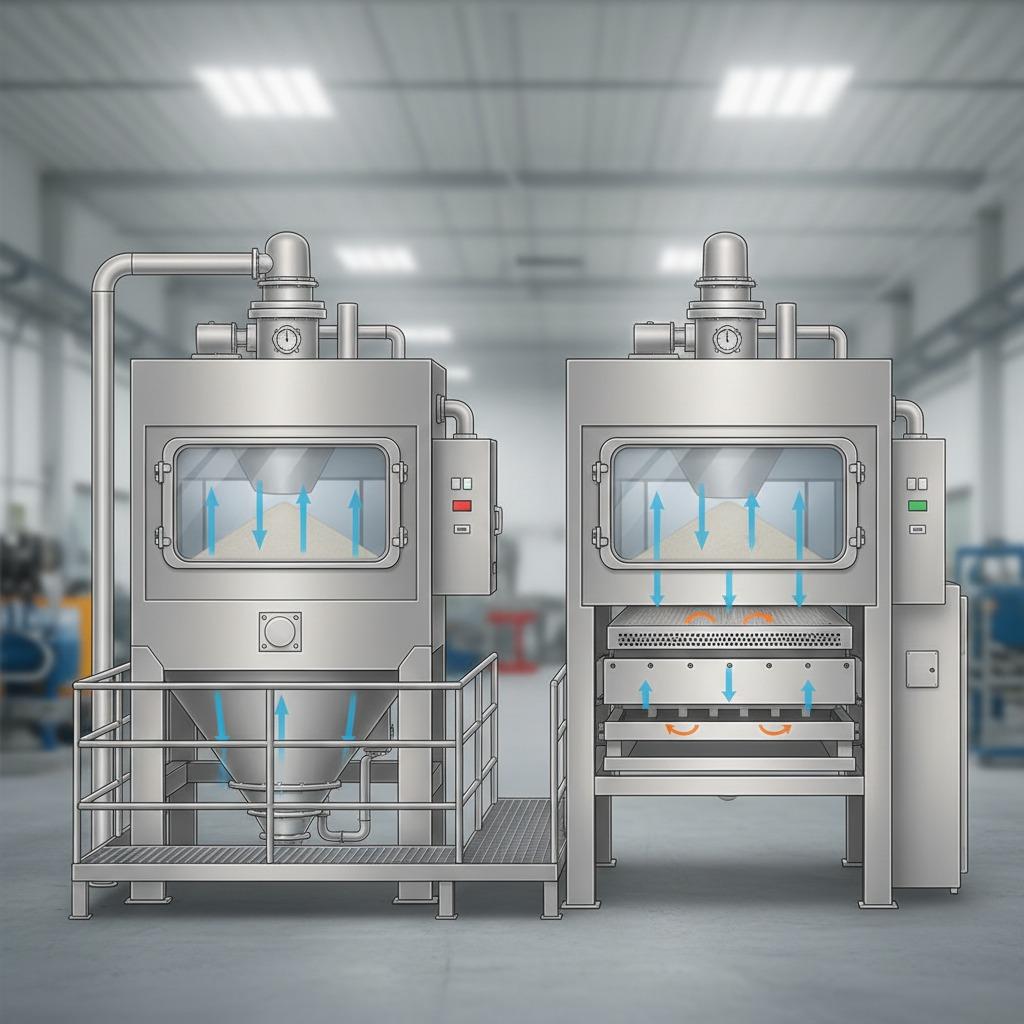
Vacuum tray drying
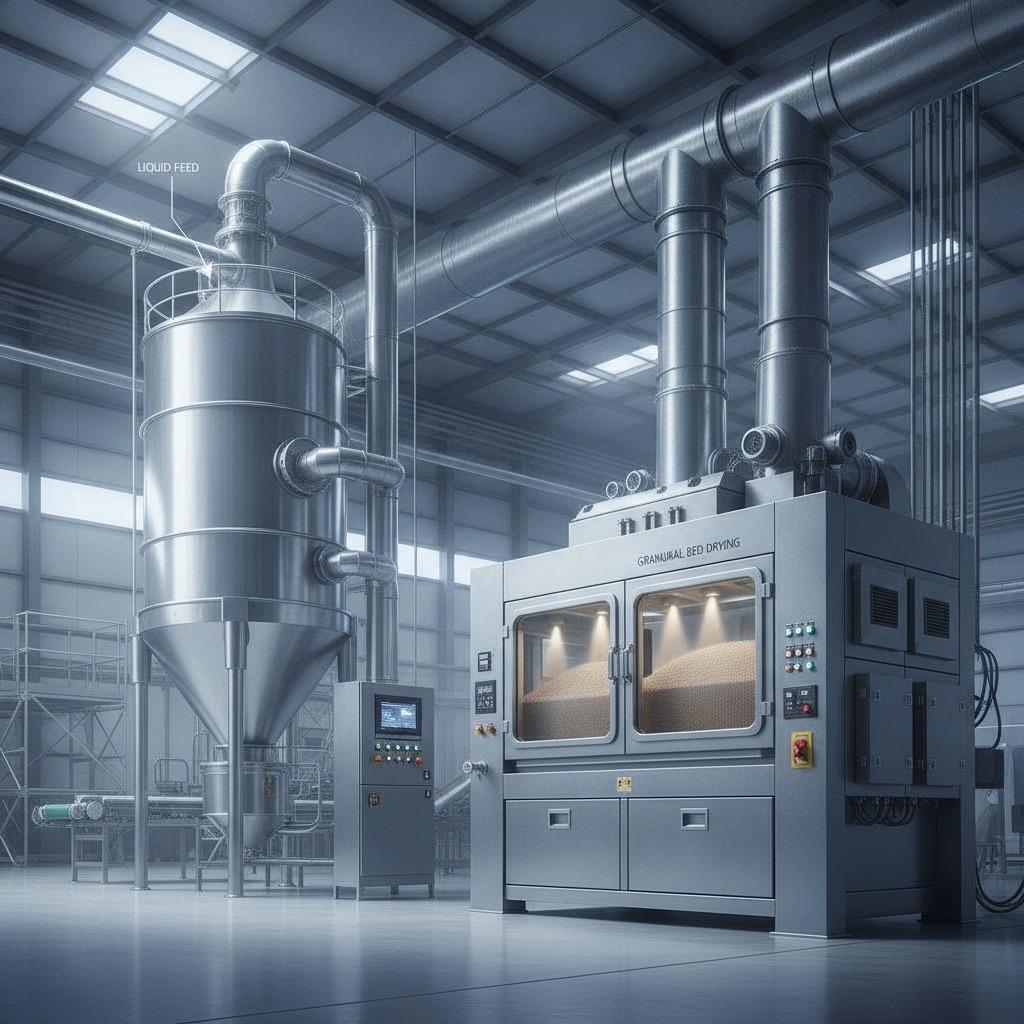
This is a familiar format for batch processing. Product is spread across trays in a sealed chamber, and heat is introduced through shelves or chamber walls while pressure is reduced. It is straightforward and widely used, though drying can be uneven if tray loading is inconsistent or the product layer is too thick.
Vacuum shelf drying
Often used for pharmaceuticals and fine chemicals, shelf systems rely on controlled heat transfer through shelves. They offer good control, but the process can be slow if the material has low surface area or poor moisture mobility. Cycle development matters a great deal here.
Vacuum belt and continuous systems
For high-volume operations, continuous systems can improve throughput and reduce labor. They are more complex to install and maintain, but they may be the better fit when batch processing creates a bottleneck.
Vacuum freeze drying
Although not identical to conventional vacuum drying, freeze drying is often discussed alongside it. Here, water is removed through sublimation after freezing. It is far more specialized and usually more expensive, but for certain biological or high-value products it preserves structure better than standard thermal drying.
How to Evaluate a Vacuum Drying System
A good equipment choice starts with product behavior, not with the machine brochure. Engineers usually want to know how fast the material dries, what temperature limits apply, whether the product can collapse or cake, and how much solvent or moisture must be removed. Sourcing managers, meanwhile, need to understand footprint, utilities, maintenance burden, and whether the system will support expected output over the long term.
Three questions tend to shape the decision most clearly. First, what is the moisture or solvent profile of the material? Free water behaves differently from bound water, and volatile solvents require different safety considerations. Second, what quality defect is most costly: color loss, shrinkage, oxidation, residue, or incomplete drying? Third, does the process need batch flexibility or continuous flow? Those answers often matter more than a long feature list.
It also helps to examine how heat is transferred. In vacuum environments, pressure is reduced, but heat still has to reach the material somehow. If heat transfer is weak, cycle time rises. If heat transfer is too aggressive, product damage can follow. The machine’s control philosophy is therefore just as important as the vacuum level itself.
Selection Criteria Buyers Should Not Overlook
A frequent mistake is focusing only on the chamber size. Capacity matters, but it is not the only limiting factor. Some systems can hold a large load and still dry it slowly because of poor heat distribution or limited vapor removal. Others have a smaller chamber but better process control and more reliable output.
Buyers should look closely at material compatibility, chamber cleanliness, loading method, temperature uniformity, pumping capacity, condensate handling, and the ease of cleaning between batches. If the product is sensitive to cross-contamination, the cleaning design deserves special attention. If solvents are involved, the equipment must be evaluated with safety and recovery in mind, not only with dry-time goals.
Noise, floor space, service access, and operator training are the unglamorous details that often separate a system that performs well on paper from one that works well in production. A compact machine that is impossible to maintain can become expensive in ways that never show up in the first quotation.
Common Mistakes in Vacuum Drying Projects
One of the most common errors is underestimating the importance of preconditioning. If the material enters the dryer in a highly variable state, the process window becomes wider and harder to control. Another frequent problem is assuming that all moisture will move at the same rate. Surface moisture may disappear quickly, while internal moisture lags behind, creating a false sense of completion.
Another practical caution: vacuum does not automatically protect product quality if the thermal cycle is poorly designed. Too much heat, even under low pressure, can still damage delicate products. On the other hand, running too conservatively can create long cycles and poor throughput. The right balance often requires pilot testing or at least a disciplined process development phase.
There is also the temptation to specify a system around the largest possible future need. That can make sense, but oversized equipment can be harder to optimize for current production. In drying, as in much of manufacturing, an elegant overbuy can still be an overbuy.
Why the Technology Keeps Expanding
Vacuum drying technology continues to attract interest because manufacturers are under pressure to improve quality while reducing waste. Materials are more specialized than they were in many legacy processes, and customers now expect tighter control over appearance, purity, stability, and performance. In that environment, a drying method that can reduce thermal stress and help preserve product integrity has a clear role.
It also supports process consistency. When properly designed, a vacuum dryer can make results less dependent on ambient humidity or room conditions than some open-air methods. That is a meaningful operational advantage in plants where seasonal variation has always made drying a little less predictable than anyone would like to admit.
Practical Buyer Advice Before You Commit
Before selecting equipment, define the product’s failure modes in plain language. What happens if the part stays damp? What happens if it gets too hot? What impurity or residue is unacceptable? Those answers will point toward the right drying approach faster than a generic request for quotations.
Ask suppliers for process logic, not just machine dimensions. A credible vendor should be able to explain how the vacuum level, heating method, loading pattern, and vapor removal strategy work together. If the discussion stays at the level of chamber size and pump horsepower, you probably do not yet have enough information.
It is also worth asking how the system will be validated in your environment. Drying performance can shift when batch size, raw material source, or upstream processing changes. A good system is not just one that performs once under ideal conditions; it is one that remains stable when production gets messy.
FAQ
Is vacuum drying always better than hot-air drying?
No. It is better for some products and unnecessary for others. If the material is not heat-sensitive and the drying target is simple, conventional drying may be faster and cheaper.
Does lower pressure mean faster drying?
Not automatically. Lower pressure helps moisture escape, but the overall cycle also depends on heat transfer, product geometry, and how easily moisture migrates out of the material.
Can vacuum drying handle solvents as well as water?
In some cases, yes, but solvent removal introduces additional safety and recovery requirements. The system must be evaluated for compatibility with the actual volatile compounds involved.
Next Step for Engineering and Sourcing Teams
If you are comparing drying options, start by mapping the product’s sensitivity, moisture behavior, and acceptable quality loss. Then test whether vacuum drying technology can meet those requirements without creating new bottlenecks in throughput, cleaning, or maintenance. The best choice is usually not the most sophisticated one on paper; it is the one that fits the material and the plant with the least drama after commissioning.