Why fruit juice powder plants care about the dryer, not just the recipe
A fruit juice spray dryer is often the point where a beverage formulation stops being a liquid process and becomes a powder business. That sounds simple, but anyone who has worked around fruit juice powder machine lines knows the decision is rarely simple at all. The dryer affects flavor retention, powder flow, stickiness, cleaning effort, and ultimately how the product behaves in packaging and storage.
For sourcing managers and plant engineers, the real question is not whether a spray dryer can turn juice concentrate into powder. It is whether the system can do it consistently without wasting aroma, causing wall build-up, or creating a powder that bridges in silos and feeds badly into downstream handling equipment. That is where the broader line matters: the dryer, the powder collection section, and the storage and conveying hardware all have to work together.
In practice, fruit juice drying equipment is judged less by brochure claims and more by whether it keeps a production line stable on an ordinary Tuesday. The details are mundane, but they decide the economics.
What a spray dryer is doing in a fruit juice line
A spray dryer for fruit juice takes a liquid feed, atomizes it into fine droplets, and exposes those droplets to hot drying air so moisture leaves quickly. The goal is to form dry particles before the product overheats or sticks to the chamber walls. That basic idea is common across food powder production, but fruit juice is a demanding feed because it usually contains sugars, acids, and natural compounds that make the powder more hygroscopic and more prone to tackiness.
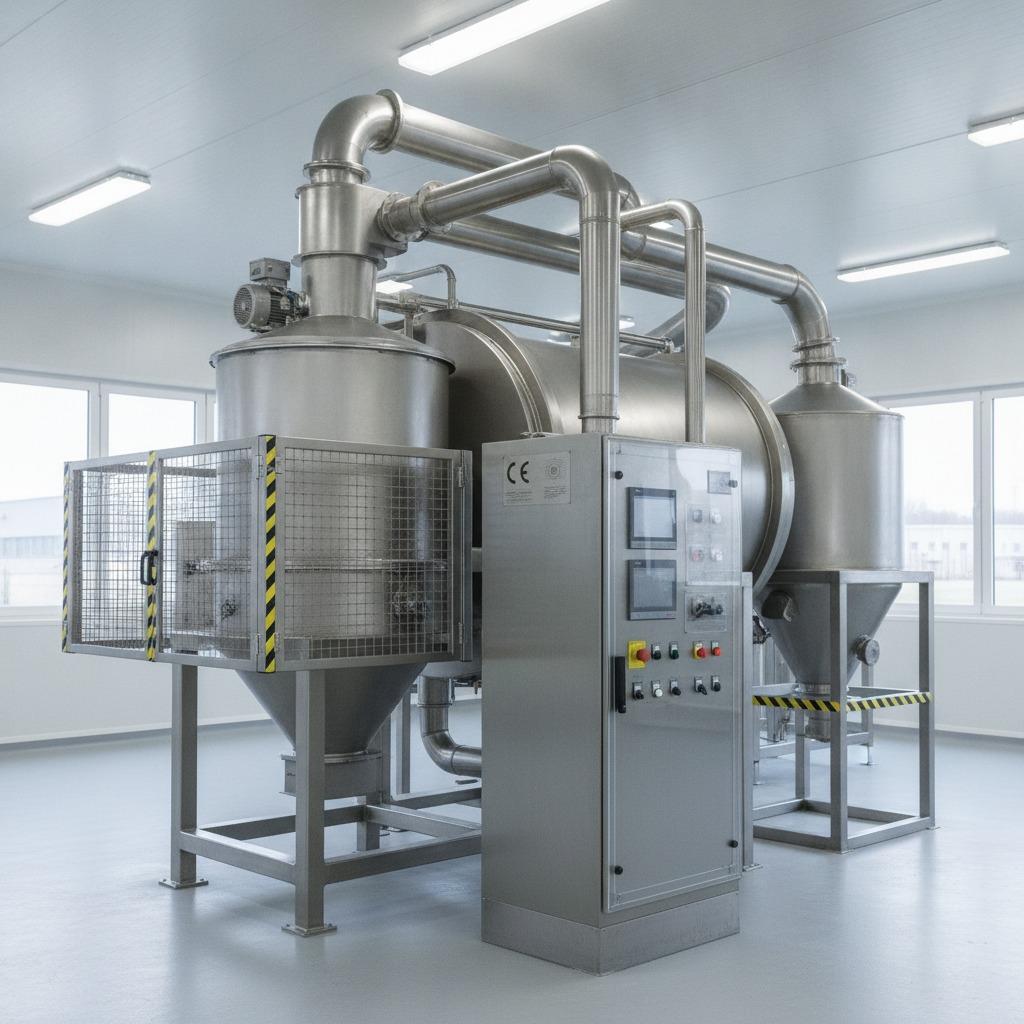
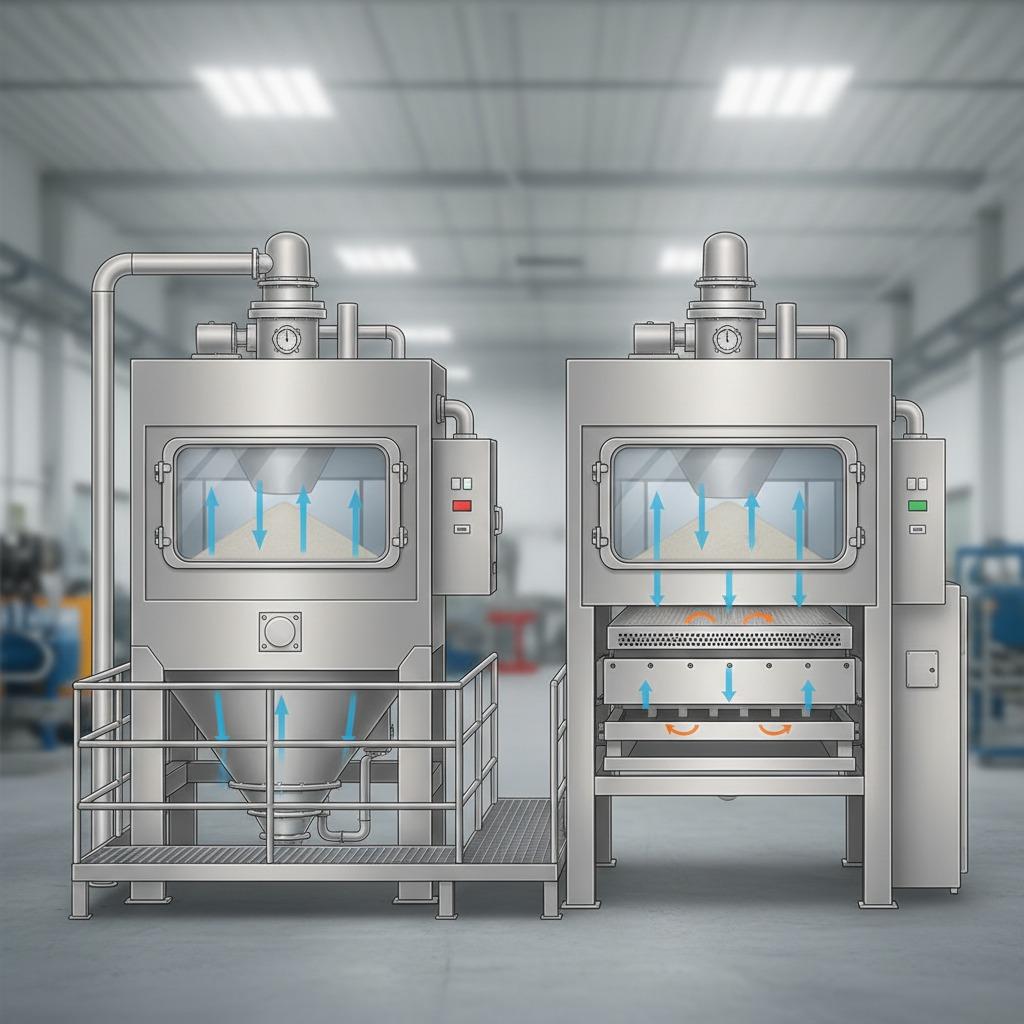
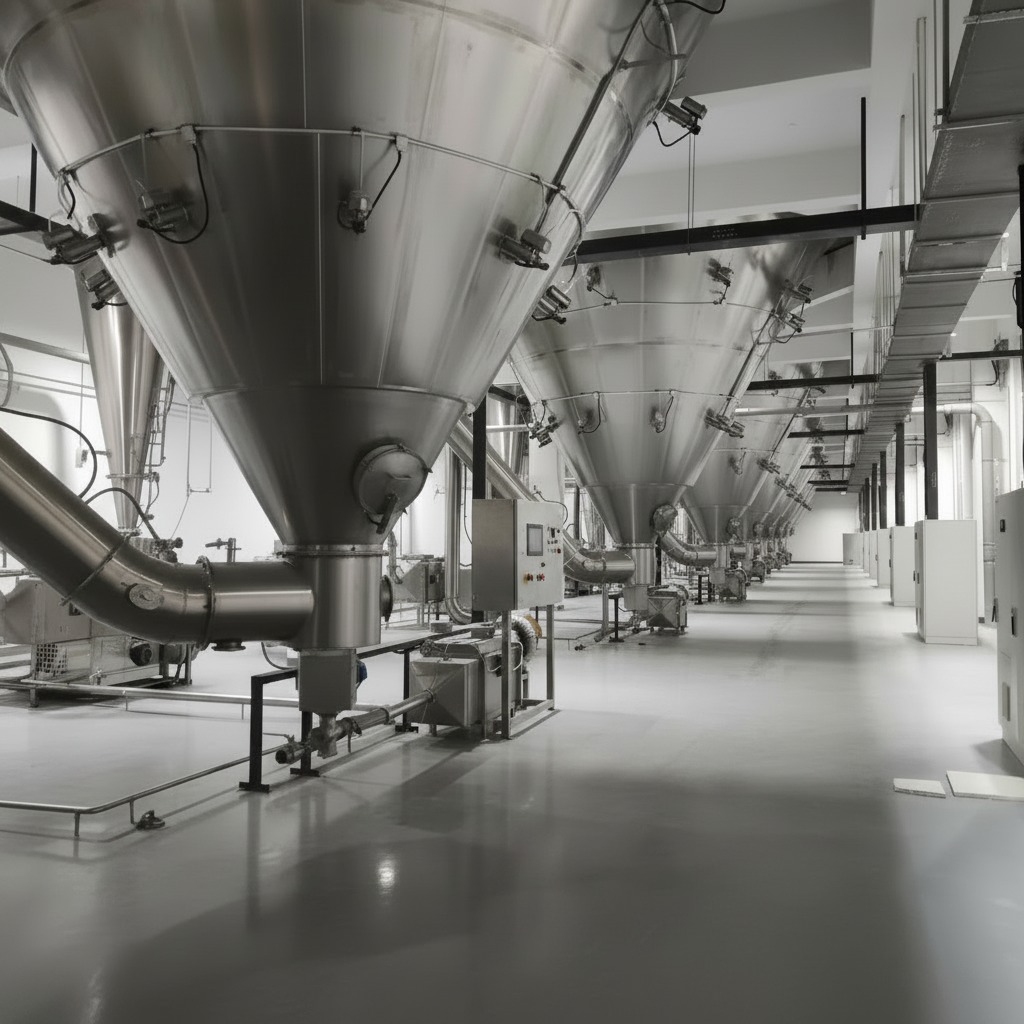
That is why the dryer is only one part of the answer. The powder has to be collected, transferred, cooled if needed, and stored in clean stainless-steel vessels or silos. The visible industrial hoppers and conical storage units often seen in process lines are there for a reason: dried powder may be free-flowing one moment and reluctant the next. A gravity-fed cone, a well-designed outlet, and a controlled discharge path can prevent a lot of headaches downstream.
What usually matters most to buyers
If you are comparing options, start with the product behavior, not the machine family. Fruit juice powder is not the same as milk powder, starch, or mineral fines. The powder can be sticky, flavor-sensitive, and sensitive to storage humidity. That affects the choice of chamber design, powder recovery method, and how the line handles discharge into bins or packaging equipment.
Buyers usually need to look at four practical points:
First, feed consistency. A stable liquid feed is easier to dry than one that swings in viscosity or solids content. Second, thermal control. Too much heat can flatten aroma and darken the powder. Third, powder collection and transfer. Even a good dryer becomes a nuisance if the downstream hoppers are poorly designed. Fourth, cleaning and maintenance. Food plants do not tolerate awkward access or residue traps for long.
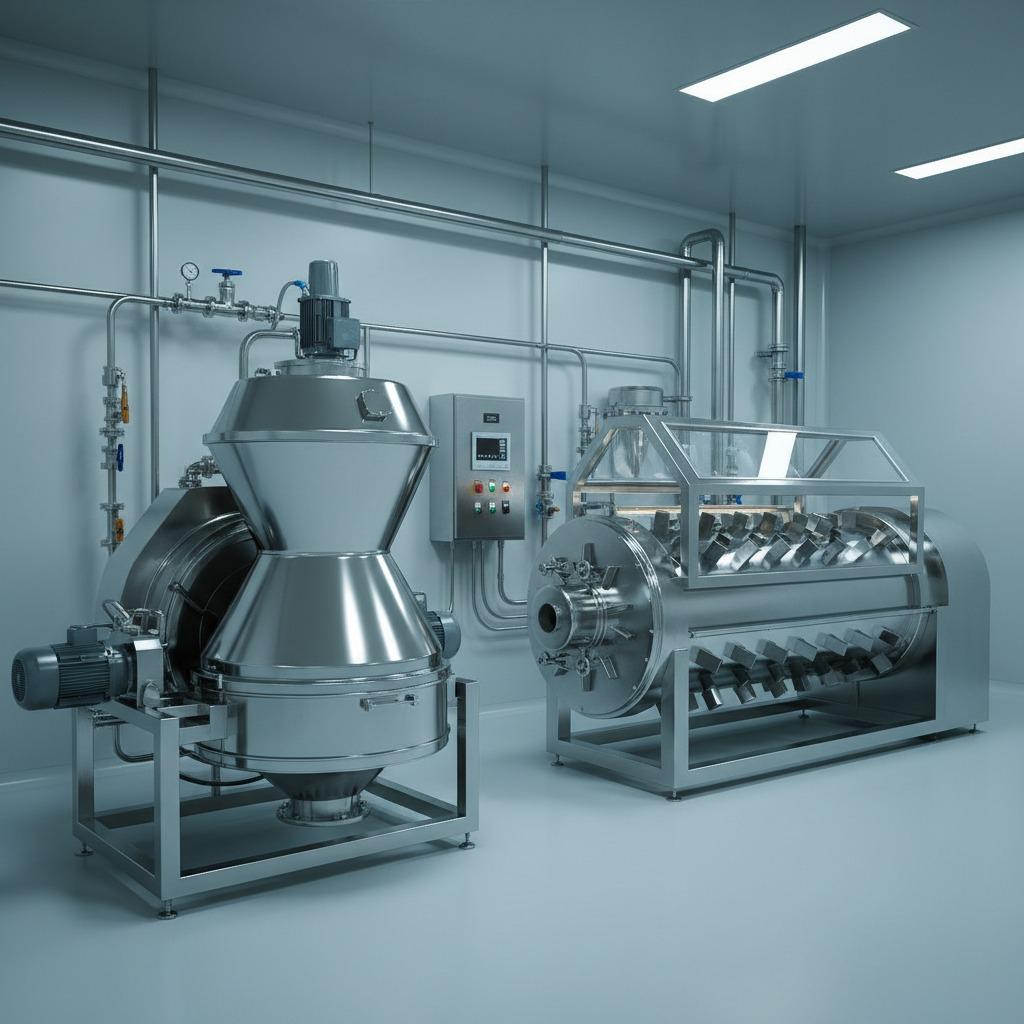
The clean stainless-steel conical tanks and multi-unit process layout shown in many plants are a clue to how serious this stage is. Dry powder wants orderly transfer, not improvisation.
How fruit juice drying equipment fits into the full line
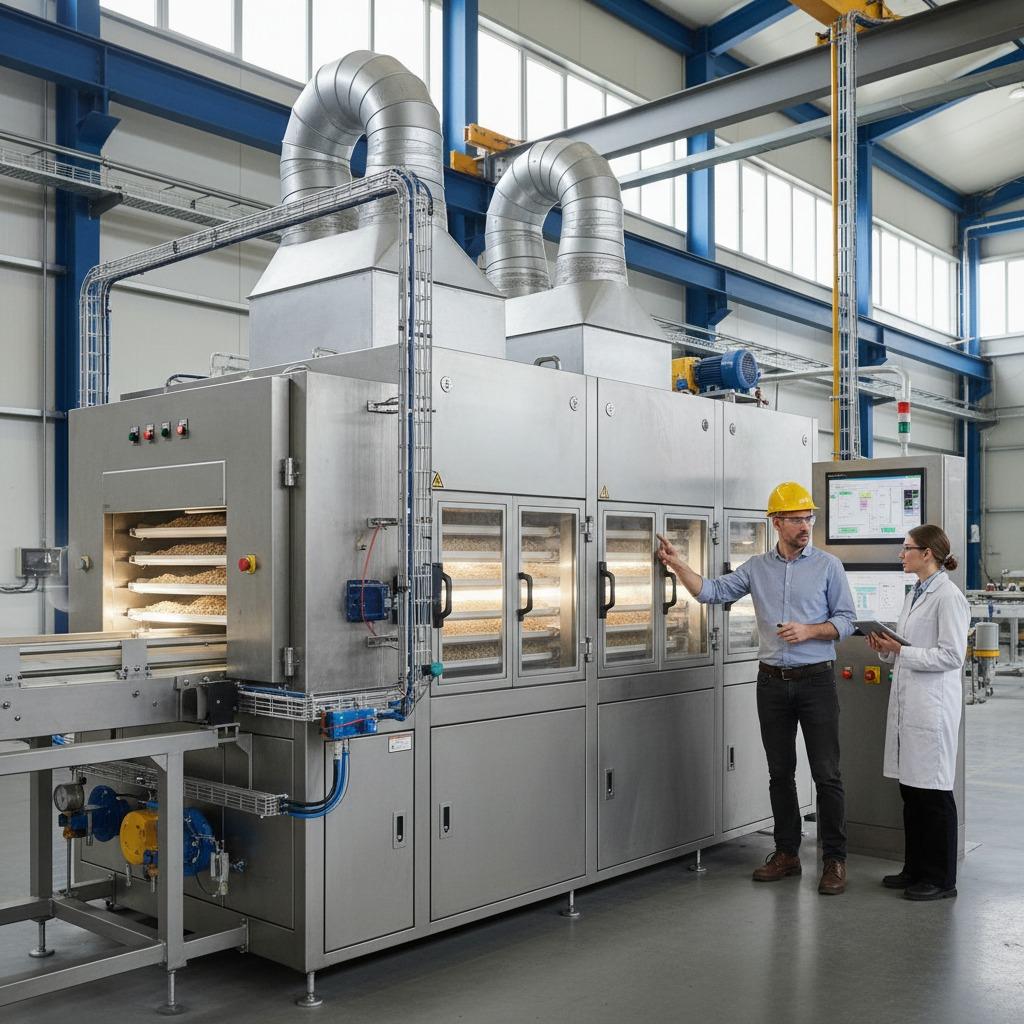
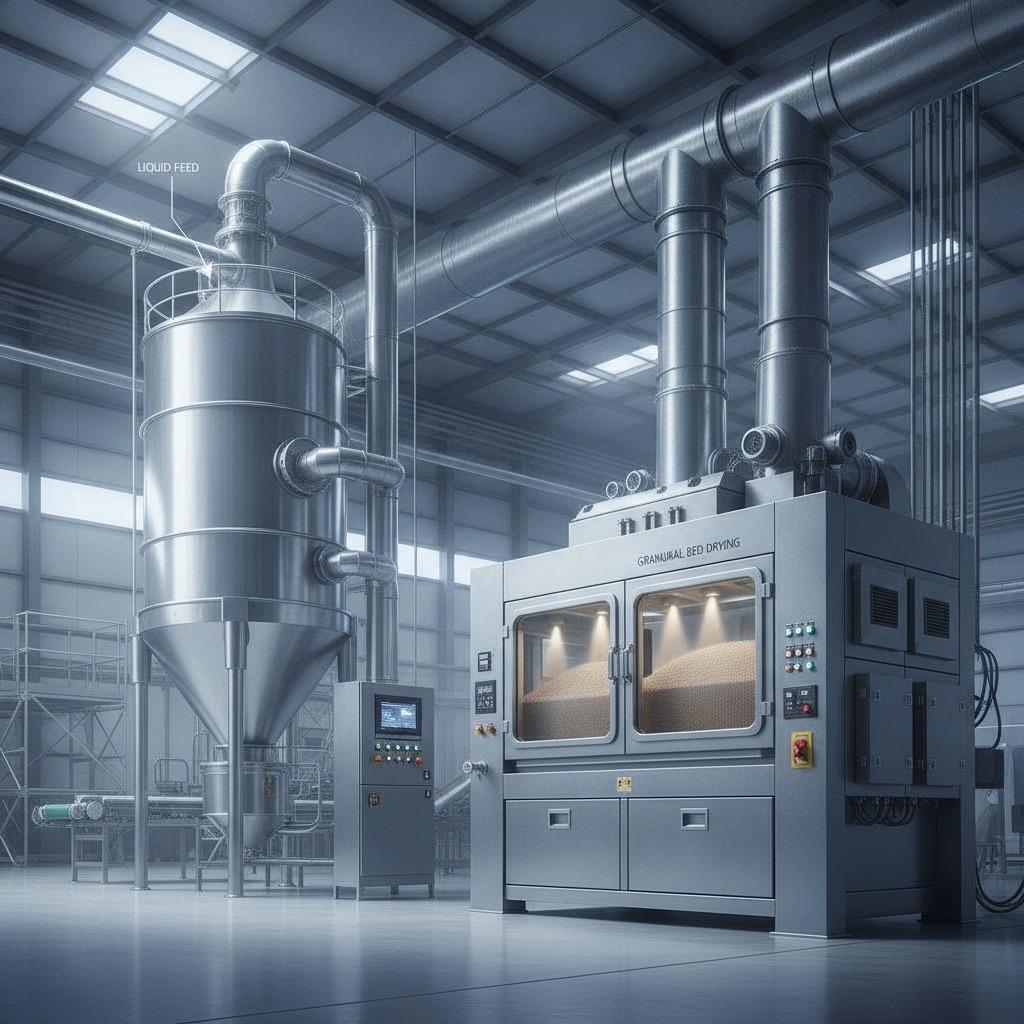
A complete fruit juice drying setup typically includes feed preparation, atomization, drying, powder separation, and storage. In some plants, the powder then moves through a conveying or batching system into a packaging line. That is where the stainless-steel hoppers, silos, ducting, and support frames become important. They are not just background equipment; they preserve product quality after the dryer has done its job.
In a well-planned line, dry powder drops by gravity into a hopper or silo with smooth internal surfaces and a reliable outlet. From there it may be moved mechanically or pneumatically, depending on the plant layout. If the powder is fine and lightweight, dust control becomes a priority. If it is more granular, flow behavior and arching are the first concerns. Either way, the handling equipment has to match the material.
That is one reason engineers often favor modular installations. The line can be arranged in stages: dryer, separator, collector, storage, and feed-out. It is easier to service and easier to expand later, though the footprint can be substantial. Not every factory has room to be elegant.
Quick comparison: what to evaluate before buying
Drying performance
Look at how the system handles heat-sensitive fruit components and whether it can produce a powder with the target moisture and flow characteristics. For fruit products, preserving flavor is usually as important as removing water.
Powder handling
Check whether the line includes proper collection and storage. Stainless-steel hoppers and silos with conical bottoms are common for a reason: they support gravity discharge and reduce stagnant zones.
Cleanability
Food-grade dry processing depends on accessible surfaces, sensible piping, and minimal residue traps. A highly polished finish can help, but geometry matters more than shine.
Integration
Make sure the spray dryer connects cleanly to the rest of the plant. Poor duct routing, awkward access platforms, and undersized transfer points can undo the benefits of a sound drying chamber.
Common mistakes that cause trouble later
One frequent mistake is treating the dryer as a standalone purchase. It is not. A line that looks fine on paper can still produce trouble if the powder accumulates in the wrong place, if discharge is inconsistent, or if the storage bins are badly matched to the particle size.
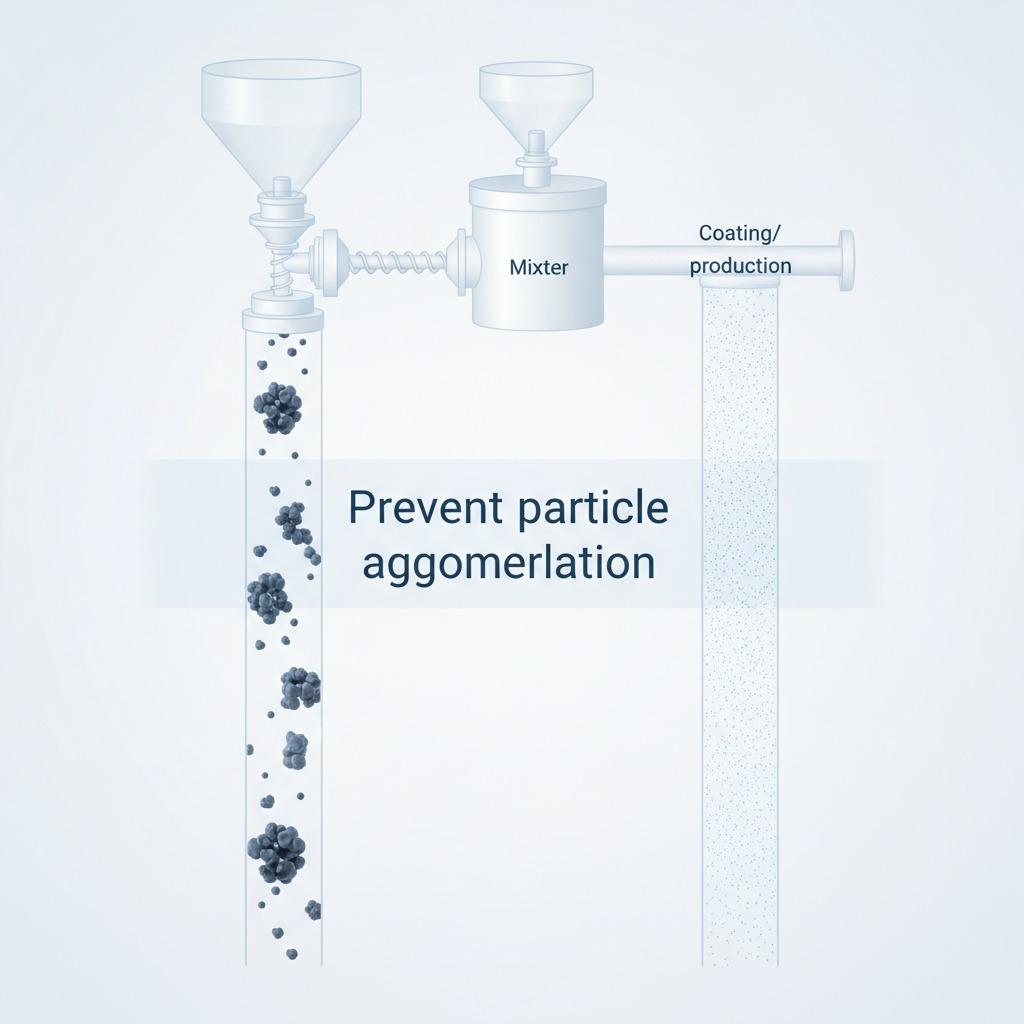
Another mistake is underestimating stickiness. Fruit juice powders often pick up moisture and cling to surfaces, especially if they are stored warm or exposed to humid air. That is why plant layout, sealing, and transfer design matter as much as the atomizer itself. A buyer may focus on output tonnage and miss the real bottleneck, which is usually handling.
There is also a temptation to specify the largest possible system. Bigger is not always safer. Oversized equipment can be harder to control, more expensive to clean, and less forgiving when feed conditions change. Matching the machine to the actual product and production pattern usually beats buying capacity that never gets used.
Practical selection criteria for engineering and sourcing teams
When reviewing a spray dryer for fruit juice, ask for process data that relates to the real product, not just generic food powder language. You want to know how the system handles fruit solids, how powder is recovered, where dust is controlled, and how the discharge sequence works. If the supplier can also explain the downstream hoppers, conveyors, and storage units, that is a good sign they understand the line rather than just the machine.
For sourcing teams, it helps to separate the visible hardware from the invisible process risk. Stainless steel construction, modular support frames, and well-planned ducting are visible and easy to compare. Product quality, cleanability, and stability under production fluctuations are less visible but more important. Ask for the design logic behind the powder collection and transfer stages. A polished vessel alone does not guarantee a clean process.
For engineers, a simple floor-level walk-through of the material path can reveal more than a stack of drawings. Where does powder fall? Where can it hang up? Can operators inspect it safely? Are there access ports for maintenance? Those questions sound basic because they are basic, and they are usually the ones that save a plant from avoidable downtime.
Buyer-facing caution on powder storage and handling
Fruit juice powder may leave the dryer in good condition and still become a problem later if it is stored in a damp or poorly ventilated area. Even in a clean plant, powders can compact, bridge, or absorb moisture if the discharge system is not designed properly. That is why the stainless-steel conical hoppers and silos visible in many process lines deserve attention during procurement. They are not accessory items; they are part of product protection.
If the powder is to be moved into packaging or blending, check the full path from the dryer outlet to the final destination. A short transfer line with awkward bends can be enough to create hold-up, and hold-up becomes contamination risk, cleaning burden, and sometimes product loss. These are small things until they are not.
FAQ: short answers buyers usually need
Is a fruit juice spray dryer the same as a powder machine?
In industry language, people may call it a fruit juice powder machine, but the underlying system is a spray dryer plus collection and handling equipment. The full line matters more than the label.
Can the same dryer work for all fruit juices?
Not automatically. Different fruit formulations behave differently because of sugar content, acidity, and solids level. A line that works for one product may need adjustments for another.
Why are stainless-steel hoppers and silos used after drying?
Because dry fruit powder needs hygienic, corrosion-resistant storage and controlled gravity discharge. Cleanable metal surfaces and conical geometry help reduce residue and improve flow.
What should I ask the supplier first?
Ask how the system handles feed consistency, flavor retention, powder recovery, dust control, and cleaning access. Those answers reveal more than a headline capacity number.
What a good next step looks like
If you are planning a new fruit juice drying line or reviewing an existing one, start with the material behavior and the plant layout, not just the dryer nameplate. Map the path from liquid feed to stored powder, then check where the system might lose control: heat exposure, wall build-up, poor discharge, or awkward transfer points.
From there, compare suppliers on the full line. A capable fruit juice spray dryer should make sense alongside the collection vessels, conical hoppers, ducting, and downstream handling equipment. If those pieces are engineered as a system, the plant is far more likely to run quietly, which is usually the best sign in food manufacturing.
For teams evaluating a new installation, the next useful step is a process review with your product specs, target powder characteristics, and cleaning expectations in hand. That is where the real buying decision starts.