What a fruit juice spray dryer is really doing on the plant floor
A fruit juice spray dryer is one of those pieces of equipment that looks straightforward from a distance and becomes a lot more interesting once you start asking what happens inside it. In plain terms, it takes a liquid fruit juice feed and turns it into a dry powder that can be stored, transported, blended, or packaged more easily. For buyers, engineers, and product teams, the decision is rarely about the machine alone. It is about whether the fruit juice powder machine will protect flavor, fit the plant layout, and keep the line running without creating hygiene headaches or unstable powder.
That matters because fruit juice drying equipment sits at the point where formulation, process control, and logistics meet. The wrong setup can leave you with sticky deposits, poor yield, inconsistent powder flow, or a powder that clumps before it reaches the bagging line. The right system gives you a cleaner handling route and a more usable ingredient, especially when the end product is meant for beverages, flavor blends, nutrition products, or dry mixes.
Why spray drying is used for fruit juice powders
Fruit juice is not an easy feed material. It carries sugars, acids, and natural solids that can be sensitive to heat and notorious for sticking to metal surfaces. Spray drying solves a practical problem: it atomizes the liquid into fine droplets and dries them very quickly in a controlled air stream. Because the droplets are small, moisture leaves fast, which reduces the time the product spends at elevated temperature.
That short residence time is one of the main reasons buyers look at a spray dryer for fruit juice instead of other drying routes. The process is not magic, and it does not preserve every note of fresh fruit flavor perfectly. But compared with slower thermal drying methods, it can be a better compromise between throughput, powder quality, and plant efficiency.
How the process works in a typical plant setup
A fruit juice spray dryer line usually starts with feed preparation. The juice may be filtered, standardized, concentrated, or blended with carrier materials depending on the recipe and the powder target. From there, a pump sends the liquid to an atomizing device, which creates a spray of droplets inside the drying chamber. Hot air enters the chamber, moisture evaporates, and dry particles are separated from the exhaust stream before collection.
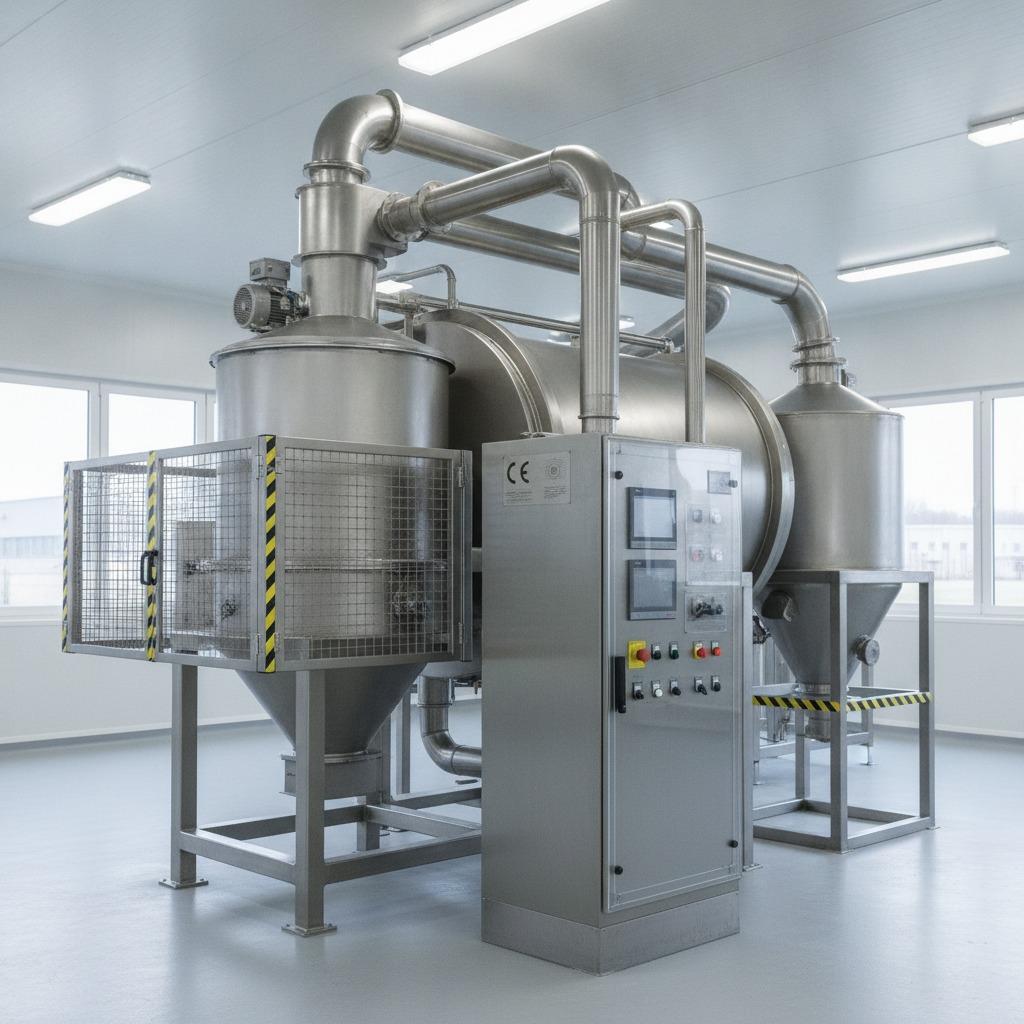
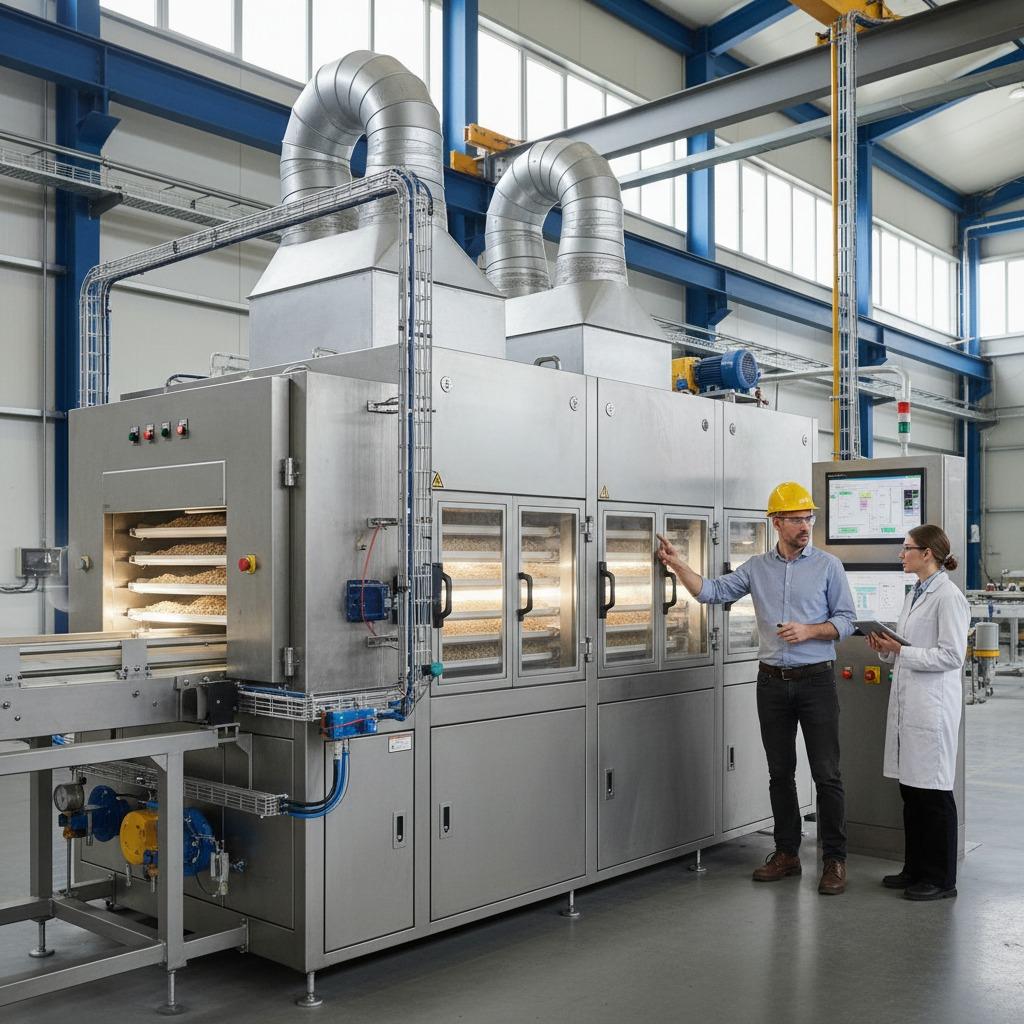
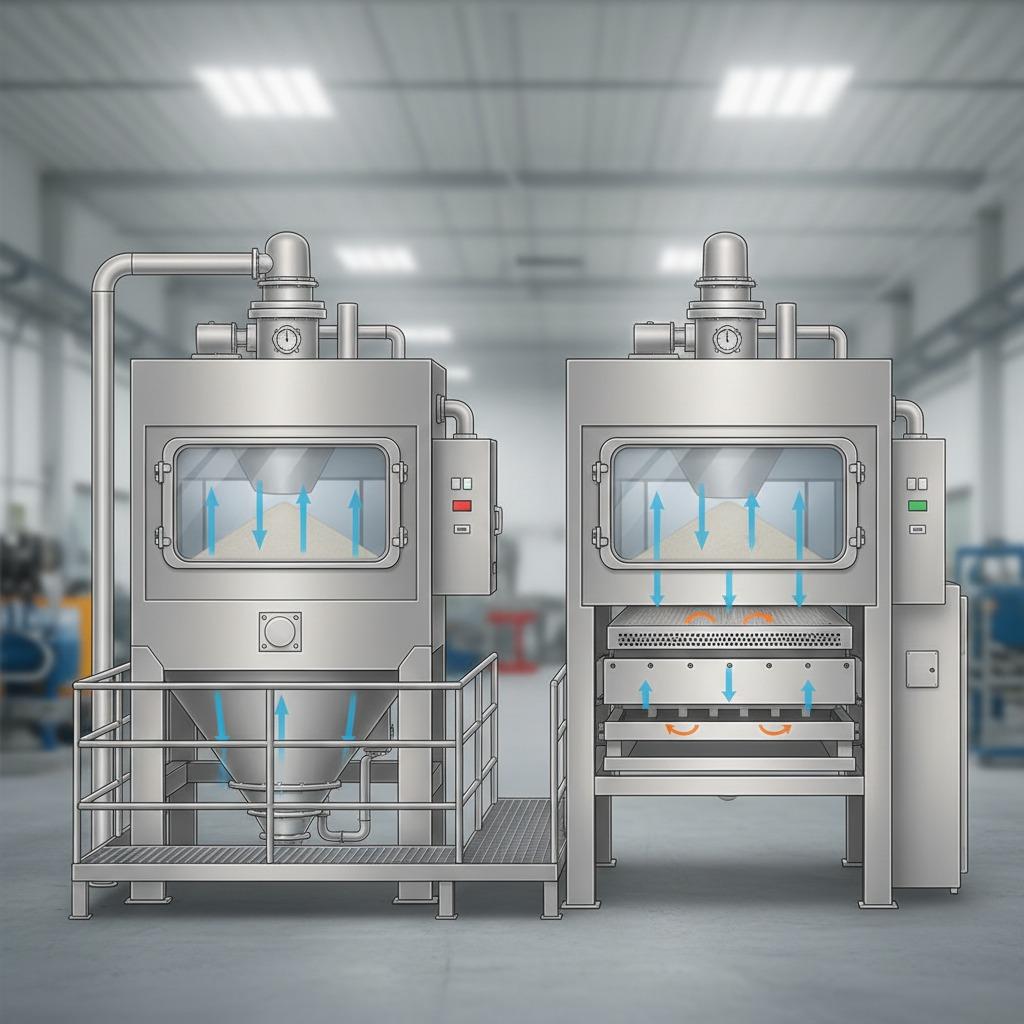
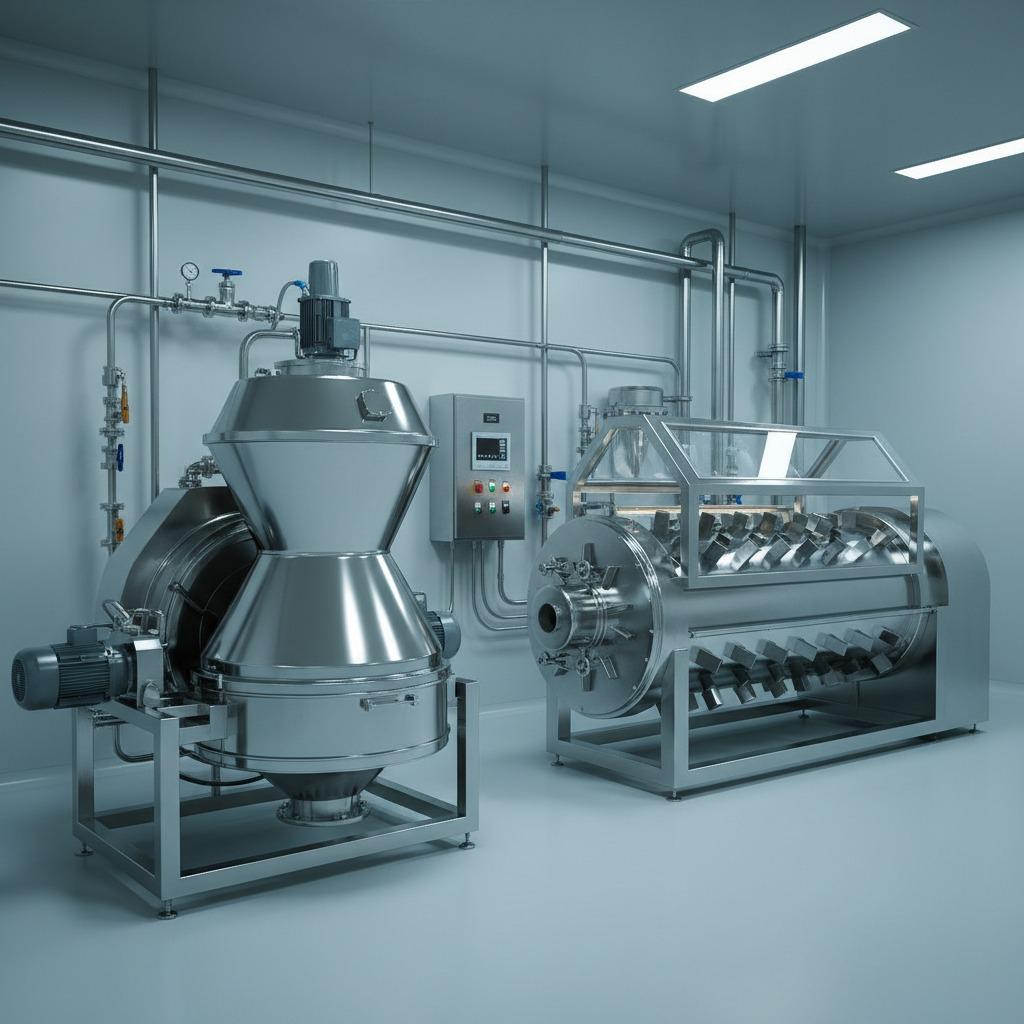
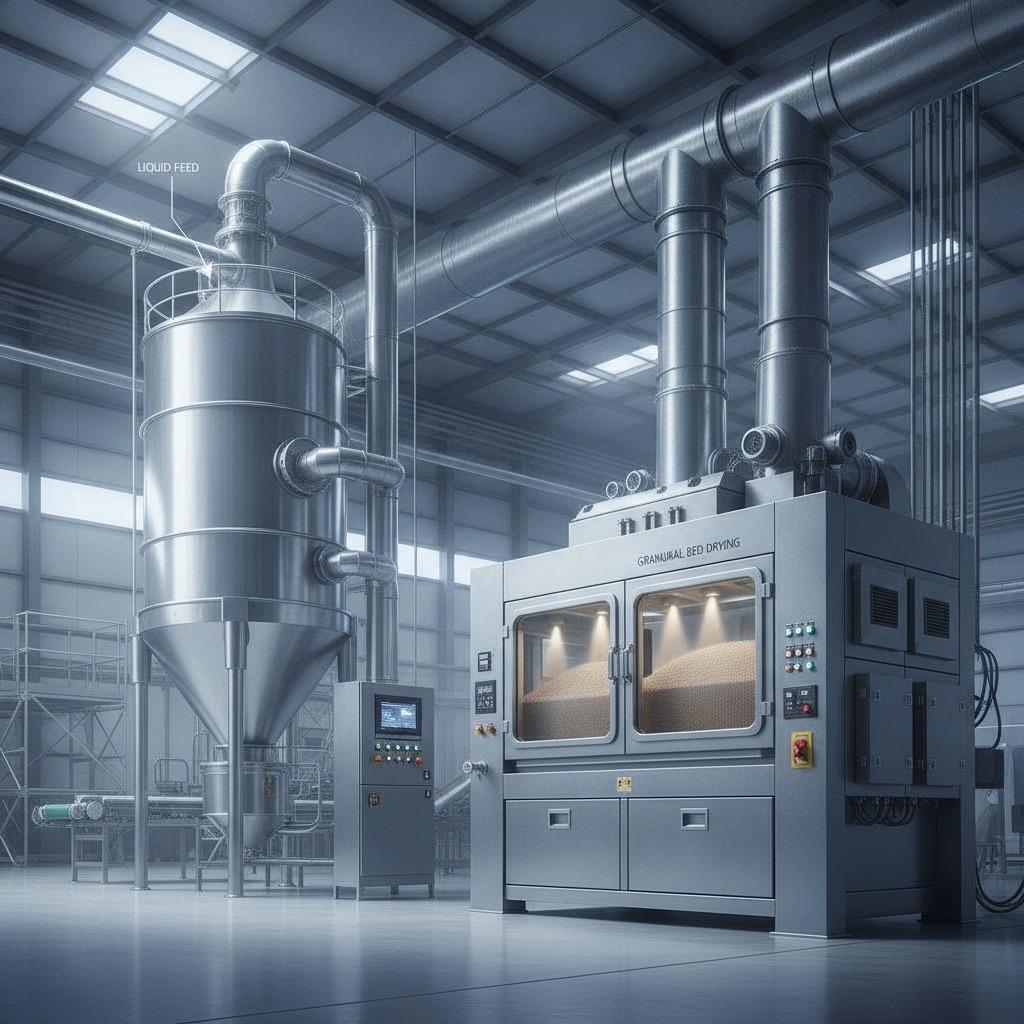
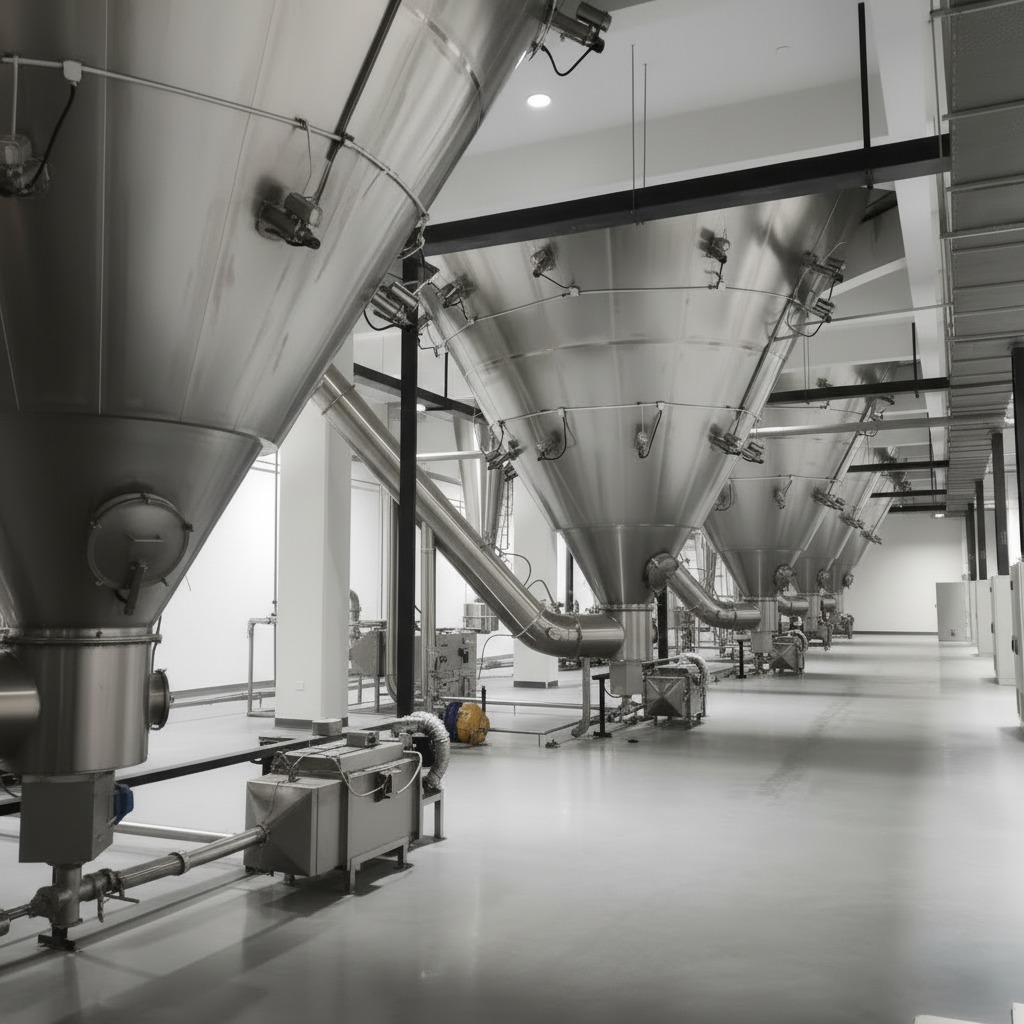
That collection and transfer stage is where the wider plant equipment matters. The imagery provided for this topic shows large stainless-steel conical hopper or silo systems, vertical vessels, ducting, and modular process frames. Even if those units are not the dryer itself, they are exactly the kind of downstream and supporting equipment that makes spray drying workable at scale: storage for incoming powder, controlled discharge to blending or packing, and closed-system movement of dry material through the plant. In a well-designed line, the dryer, cyclone, hopper, and transfer piping all behave like one system rather than a collection of separate machines.
Key equipment blocks buyers should understand
Feed preparation and pumping
The quality of the powder begins before drying starts. Feed solids, viscosity, and filtration all influence atomization. If the liquid is too thick or unstable, the dryer may produce larger particles, uneven drying, or more deposits in the chamber. This is where process teams often make a tradeoff between flavor retention and dryability.
Drying chamber and atomization
The central chamber is where the actual moisture removal happens. Whether the atomizer is a nozzle or a rotary device, the aim is to expose as much surface area as possible to the drying air. For fruit-derived feeds, that balance is delicate. Too aggressive a thermal profile and you risk flavor loss or scorch marks; too mild and the powder may come out sticky or under-dried.
Cyclone separation and dust control
Fruit juice drying equipment almost always needs a solid plan for powder recovery and dust separation. The system illustrated in the supplied material shows the kind of vertical vessels, ducting, and framed process units often used for powder handling, air separation, or dust collection. In practical terms, these units help recover fine product, control emissions, and keep downstream spaces cleaner. For a buyer, that is not a minor detail. Powder loss is product loss, and airborne fines can become an operating and housekeeping problem very quickly.
Storage, discharge, and transfer
After drying, powder needs to move to storage or packaging without picking up moisture. This is where conical hoppers, silos, and discharge systems matter. The visible stainless-steel conical vessels in the reference material are a good reminder that powder handling is not just about making the product; it is about keeping it free-flowing after it is made. A poor discharge angle or an awkward outlet arrangement can create bridging, rat-holing, or inconsistent feed to the next stage.
What to look for when comparing a fruit juice powder machine
Buyers often compare machines on throughput first, but that is only part of the story. A fruit juice powder machine should be judged on how well it handles sticky feeds, how easy it is to clean, and whether the powder path stays closed enough to protect product quality. Stainless-steel construction is a sensible expectation in food processing, especially where corrosion resistance and sanitary cleaning are important. The supplied plant imagery shows smooth metal surfaces and closed piping, which are good signs in a powder-handling context, even though exact material grade and surface finish are not stated.
Another practical criterion is layout fit. Spray drying plants are not friendly to improvisation. The chamber, ducting, cyclone or separator, hopper, and packaging line need room, and they need access for maintenance. A system that looks compact on paper can become a nuisance if access doors, platforms, and service clearances are ignored. That warning sounds basic, but it is one of the most common mistakes in plant procurement.
Common mistakes with fruit juice drying equipment
The first mistake is assuming every fruit feed behaves the same. Citrus, berry, mango, apple, and blended juice concentrates can dry differently because their sugar profiles, acidity, and solids levels are not identical. A dryer tuned for one product may perform poorly on another without adjustment.
The second mistake is overlooking powder handling after drying. If the discharge hopper, silo, or conveying section is undersized or badly designed, the powder may absorb moisture or compact before packing. Once that happens, the quality problem shows up downstream, not inside the dryer, which can make troubleshooting awkward.
The third mistake is underestimating cleaning. Fruit residues can build up. Sticky deposits around nozzles, ducts, or collection points are not just a nuisance; they can shorten run lengths and raise the risk of contamination between batches. Even when a system is well built, it still needs realistic cleaning access and a maintenance routine that operators can actually follow.
When stainless-steel hoppers and silo systems earn their place
Not every fruit juice spray dryer installation needs a forest of vessels and transfer lines, but larger or more automated plants usually benefit from them. The supplied product information points to industrial stainless-steel conical hopper and silo systems used for bulk storage, gravity discharge, and feeding connected process equipment. In a spray drying line, that kind of hardware becomes valuable when you want controlled flow into blending, filling, or pneumatic conveying systems.
There is also a hygiene argument. Closed metal vessels and connected piping reduce exposure to ambient moisture and dust. They also support a more orderly plant. That does not guarantee better product by itself, but it makes good process control easier to maintain.
Quick buyer checklist
Before approving a spray dryer for fruit juice or the supporting powder-handling equipment around it, ask a few direct questions:
Will the system handle the specific juice concentrate and its solids level?
How is powder recovered, transferred, and stored after drying?
Are the hopper, cyclone, and ducting arranged for easy cleaning and access?
Is the layout realistic for the available floor space and service access?
Can the line move powder without creating excess fines, bridging, or moisture pickup?
FAQ
Is a fruit juice spray dryer only for large factories?
Not necessarily, but the economics usually improve with scale. Smaller operations may still use spray drying when they need consistent powder quality and a reliable ingredient format, though the plant footprint and support utilities still need careful planning.
Does spray drying preserve fruit flavor perfectly?
No drying process does. Spray drying is often chosen because it can be relatively gentle and fast, but heat-sensitive flavor compounds are still a real concern. Product formulation and operating conditions matter a great deal.
Why do hopper and silo systems matter in a drying line?
Because drying is only part of the job. Once the powder is made, it has to be collected, stored, and discharged without clumping or contamination. The conical vessels and connected transfer hardware shown in the supplied material are typical of that broader powder-handling task.
What a good next step looks like
If you are evaluating fruit juice drying equipment, start by mapping the full route from liquid feed to finished powder bag. That includes the dryer itself, separator or dust collection, hopper storage, transfer piping, and packaging interface. A supplier who can only discuss one section of the line is not yet giving you the whole picture.
For sourcing teams, the most useful RFQ is usually the one that describes the feed, the target powder, the expected throughput range, hygiene requirements, and the downstream handling setup. That gives vendors room to propose a spray dryer for fruit juice that fits the process rather than a generic machine with a fruit label on it.
If you are planning a new line or replacing an older one, the best decision is usually the one that keeps the drying chamber efficient and the powder path simple. In this part of the plant, simplicity is not a compromise. It is often what keeps the product saleable.