Why drying equipment matters in pharmaceutical production
Drying equipment for pharmaceutical production is one of those subjects that usually gets attention only after something goes wrong. A wet granule does not compress properly. A powder that holds too much moisture may cake in storage. An API that dries unevenly can drift out of specification before it ever reaches the next step. In a plant where batch consistency, containment, and traceability matter, the drying stage is not a side note. It is a control point.
That is why engineers and sourcing teams tend to look at dryers differently than they would in other processing industries. The goal is not simply to remove water. It is to remove the right amount of moisture, from the right material, under conditions that protect product quality and support validation. The challenge is that pharmaceutical materials are often sensitive, variable, and expensive. A dryer that works on paper may still be a poor fit if it creates excessive heat exposure, particle damage, or cleaning headaches.
This article is meant to help buyers and technical teams make a practical decision: which drying approach fits the material, how to compare options, and where projects commonly slip. The details matter, and not just in the final specification sheet.
What the drying step is really trying to control
In pharmaceutical production, drying influences more than residual moisture content. It can affect flowability, compressibility, stability, shelf life, and downstream blending behavior. For wet granulation, drying often defines whether the granules will press well on a tablet line. For temperature-sensitive actives, it can influence degradation risk. For sterile or controlled environments, it also affects contamination control and equipment cleanability.
The drying method has to match the product’s physical behavior. A free-flowing intermediate is one thing. A sticky mass, a fragile crystal, or a solvent-bearing wet cake is something else entirely. This is where many projects become more complex than expected. The product may dry fast in a lab tray, yet prove difficult in scale-up because heat transfer, airflow patterns, bed depth, or loading method change the behavior.
Common dryer types used in pharmaceutical production
There is no universal best dryer. The right choice depends on the material, the solvent system, the target moisture level, and the process route. A quick comparison helps narrow the field.
Fluid bed dryers
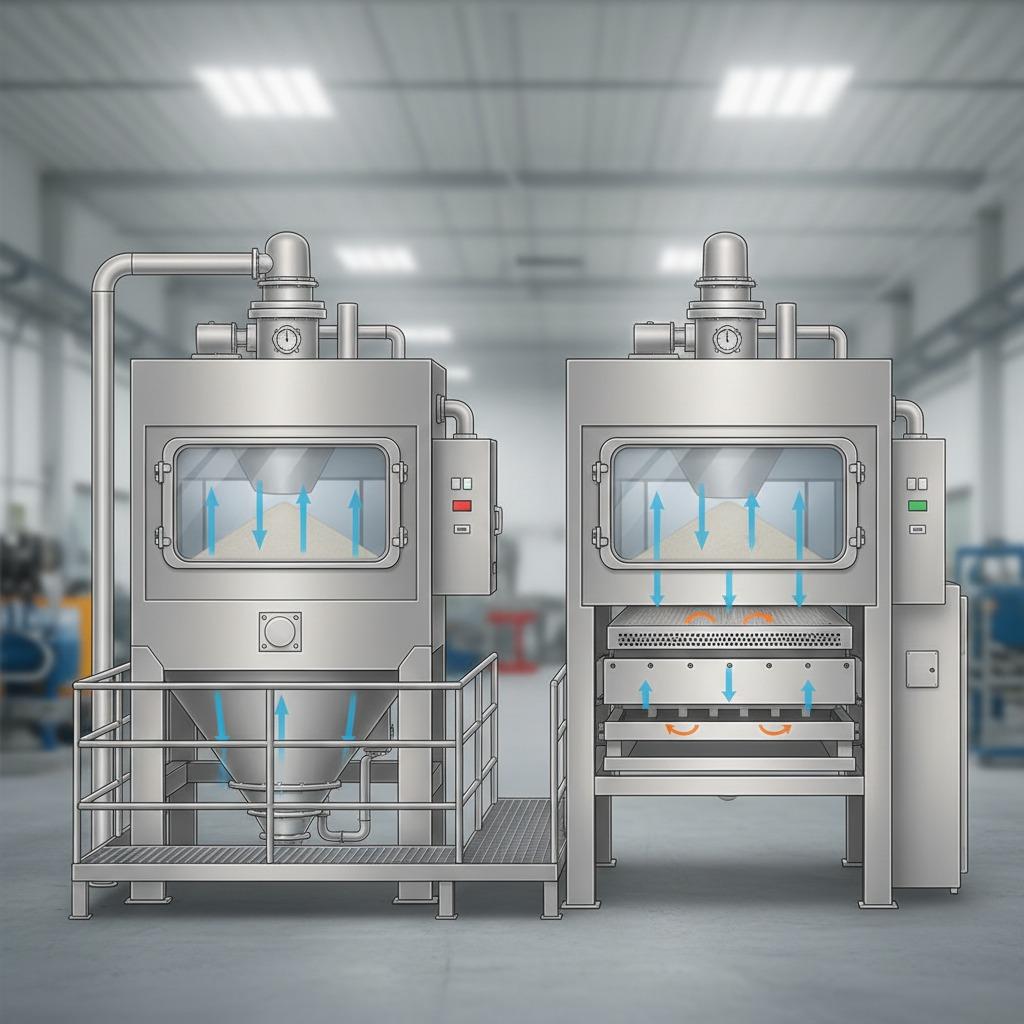
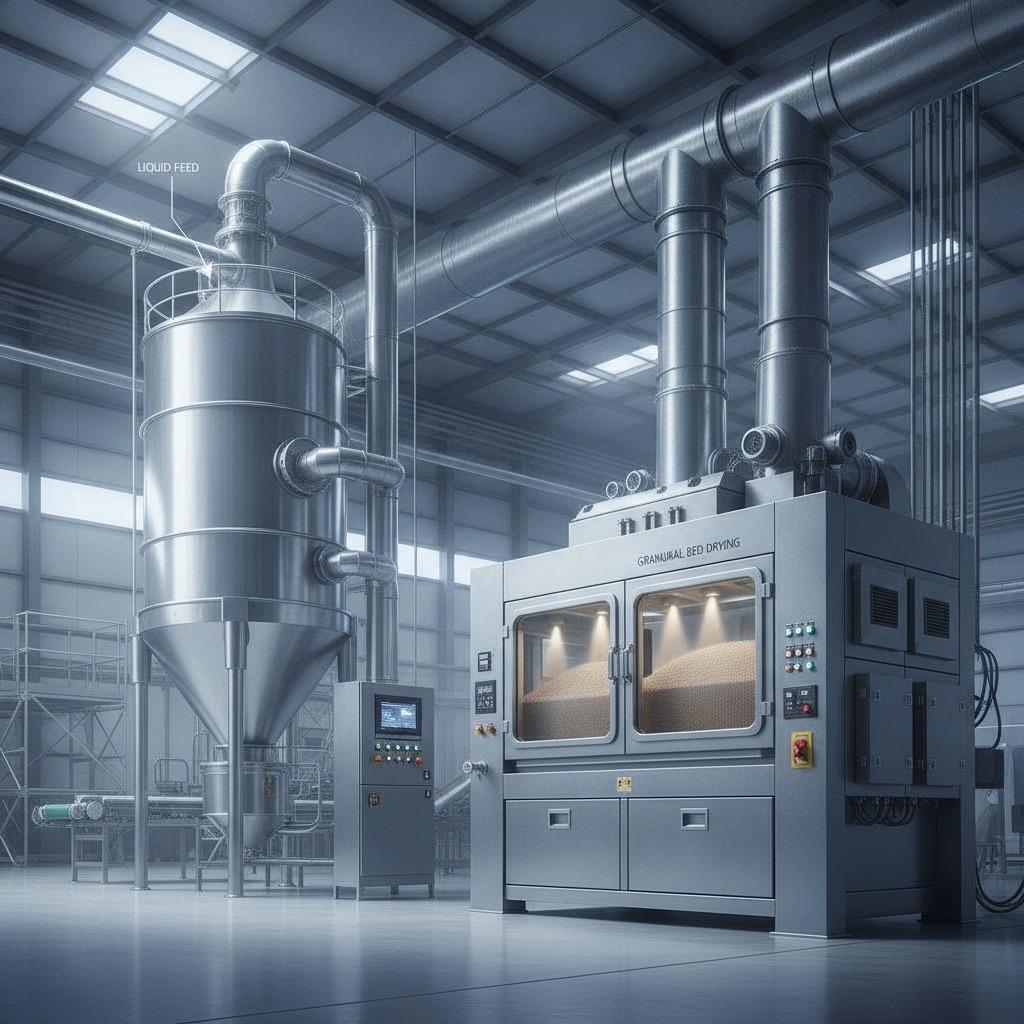
Fluid bed systems are widely used for granules and powders that can be suspended by airflow. They are attractive because they can dry relatively quickly and may offer good process uniformity when the product fluidizes well. In many pharmaceutical operations, they are paired with granulation workflows, so drying becomes one step in a broader integrated process.
That said, they are not ideal for every material. Fine particles may entrain. Sticky or cohesive powders may not fluidize consistently. Engineers also need to pay close attention to airflow, dust handling, and product attrition. The dryer may look efficient in a brochure, but if the bed behavior is unstable, the process becomes harder to control than expected.
Vacuum dryers
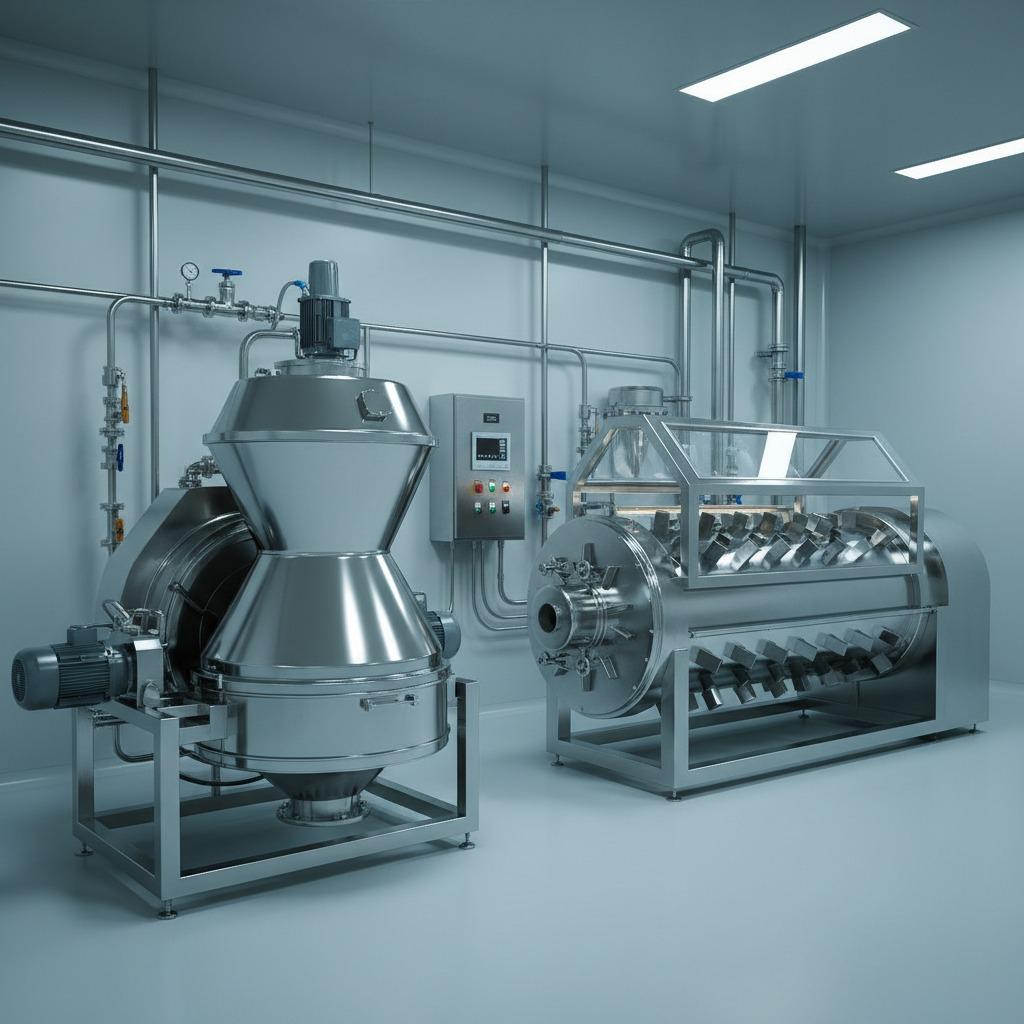
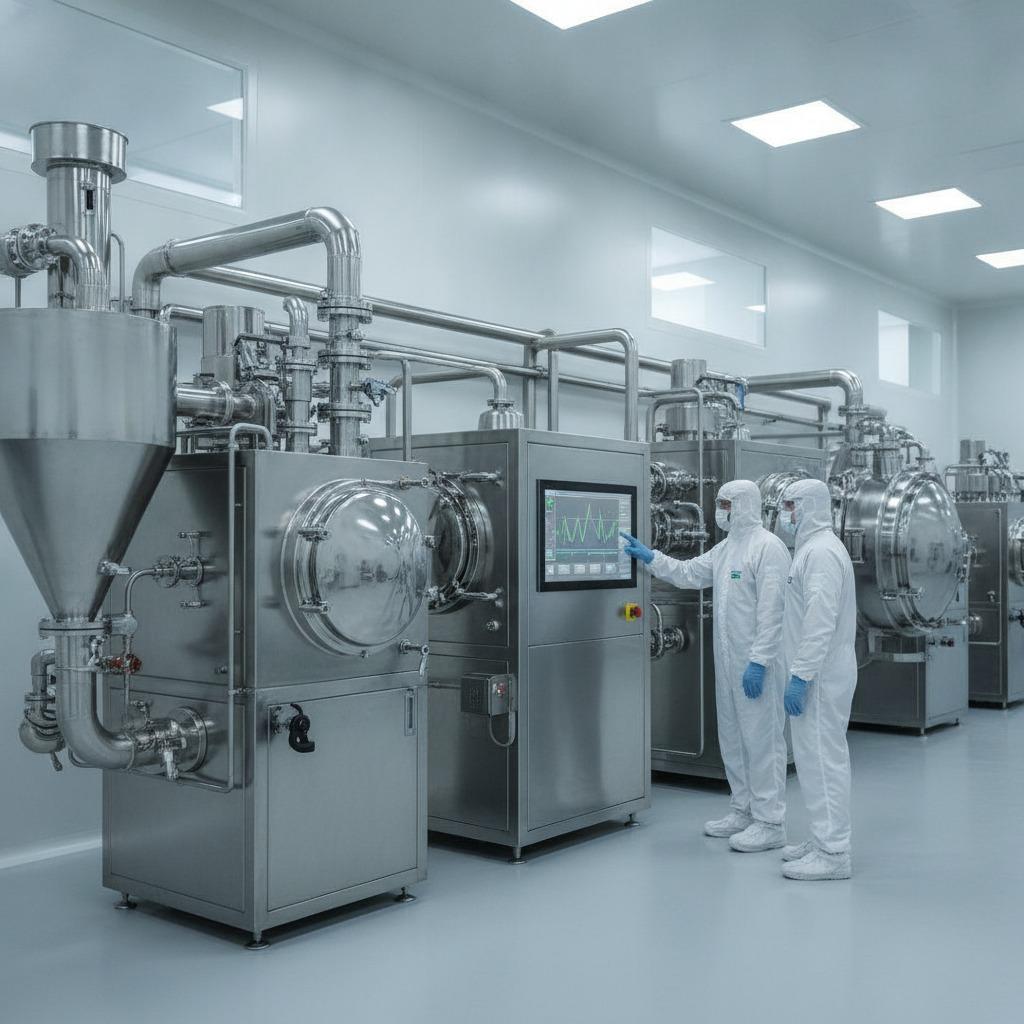
Vacuum drying is often selected when low-temperature processing is important. By lowering pressure, moisture or solvent can be removed at reduced temperatures, which can help protect heat-sensitive compounds. This makes vacuum systems relevant for certain APIs, intermediates, and solvent-containing products.
The tradeoff is cycle time and throughput. Vacuum dryers can be slower, and the system design has to handle vapor recovery, sealing, cleaning, and loading. For buyers, the question is not just whether the product can be dried under vacuum, but whether the plant can run the system efficiently at scale.
Tray dryers and cabinet dryers
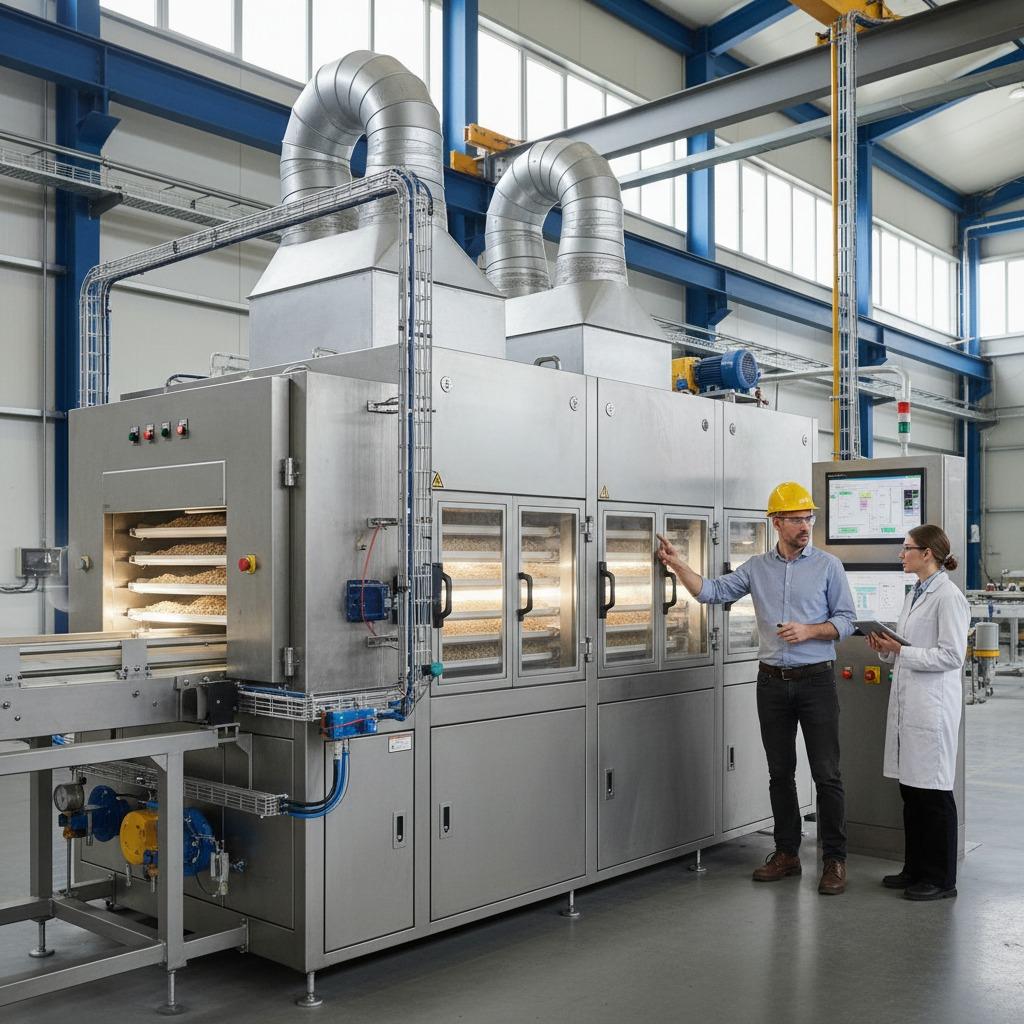
Tray dryers are straightforward and familiar, especially in smaller operations or legacy production settings. They can be useful for simple batch work, development lots, or products that do not require high automation. Their appeal is partly mechanical simplicity.
The limitation is consistency. Tray loading, airflow distribution, and operator handling all influence the result. For regulated pharmaceutical environments, that can create variation that is hard to ignore. They also tend to be less efficient than more modern enclosed systems, especially when throughput starts to matter.
Conical and vacuum cone dryers
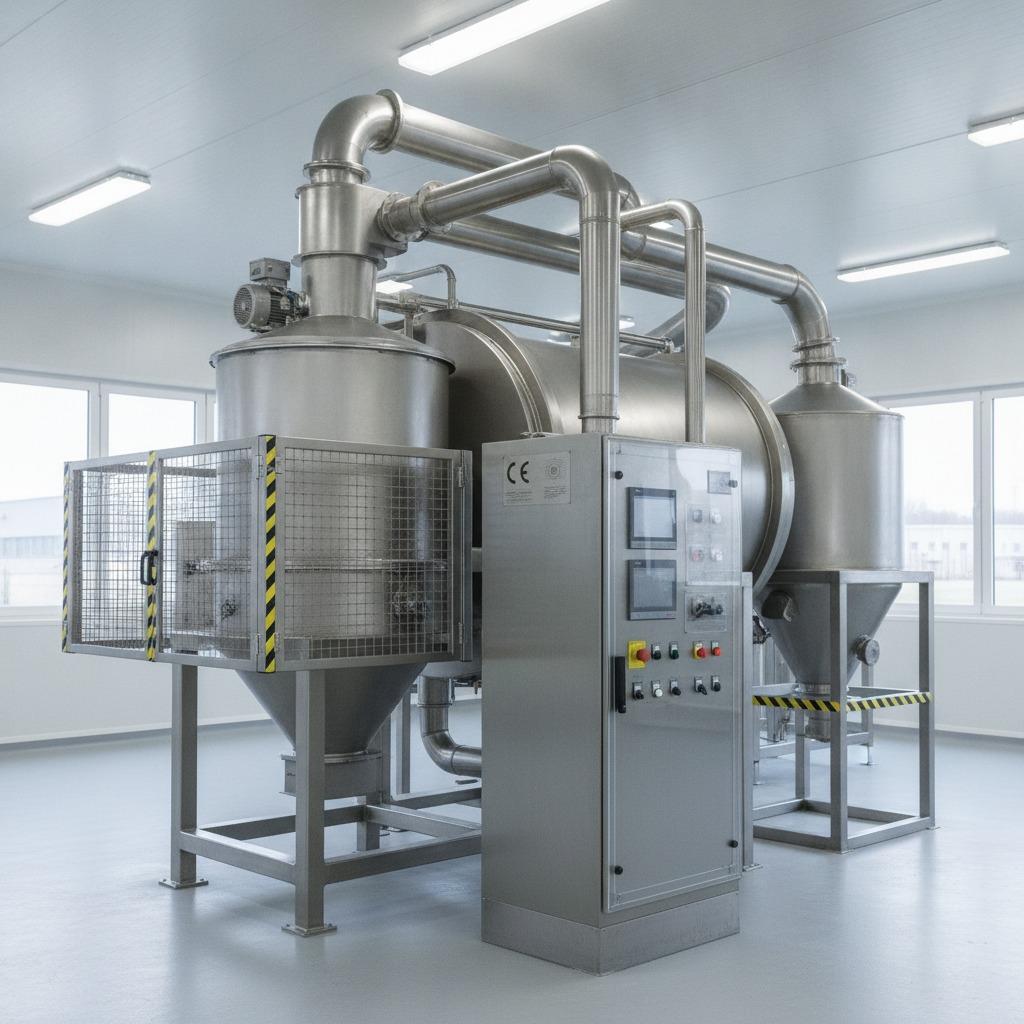
Conical or vacuum cone dryers are often chosen for gentle drying of powders and wet cakes. They can support contained processing and may be useful where cross-contamination control is important. The geometry can help with discharge and cleaning, though actual performance depends on the material and the plant’s handling practices.
These systems are commonly discussed in projects involving sensitive powders. Still, the practical evaluation should include not only drying performance, but also mixing behavior, residual heel, cleaning accessibility, and whether the vessel integrates well with upstream and downstream handling.
Selection criteria that matter in the real world
When teams compare drying equipment for pharmaceutical production, they sometimes start with horsepower, vessel volume, or footprint. Those numbers matter, but they rarely decide the project. Better questions usually produce better outcomes.
Material sensitivity
Is the product heat-sensitive? Does it degrade in oxygen? Is it solvent-bearing, sticky, crystalline, or friable? A dryer has to respect the product’s limits. If the material is fragile, aggressive agitation may cause attrition. If it is moisture-sensitive, long hold times may be a problem. The material profile should drive the equipment shortlist before anyone gets attached to a vendor’s standard model.
Containment and operator safety
Pharmaceutical drying is not just about the product. It is also about exposure control. Many operations handle potent compounds, dusty intermediates, or solvent residues that require careful containment. Closed transfer, filtration, and safe discharge become central considerations. A sourcing team should ask how the dryer fits the plant’s containment philosophy, not merely whether it fits the floor plan.
Cleaning and changeover
Dryers that are hard to clean create hidden cost. Residual powder, product hold-up, and awkward internal surfaces can slow turnarounds and raise cross-contamination risk. For multiproduct facilities, cleanability is not a nice-to-have. It is part of the production rate. Buyers should look closely at access points, drainability, material finishes, and whether the design supports repeatable cleaning procedures.
Validation and documentation
In regulated environments, the equipment must be supportable from an engineering and quality perspective. That means clear documentation, traceable materials, maintainable controls, and a design that can be qualified without heroic effort. If the dryer introduces complicated verification steps, the total project burden rises. A machine that dries well but is difficult to qualify can become expensive in a different way.
Process risks that buyers should not overlook
One common mistake is assuming that more heat solves the problem faster. In practice, excessive temperature can damage the product surface while leaving moisture trapped deeper inside. Another issue is uneven loading. If the material layer is inconsistent, drying becomes inconsistent too. That sounds obvious, but it is often where batch variation begins.
Another practical caution: scale-up is not linear. A dryer that performs well in development may need re-optimization at production scale because vapor removal, mixing intensity, and residence time all shift. Teams sometimes underestimate the effect of bed depth, batch size, or solvent load. The result is a project that looked straightforward during trials and becomes much less straightforward once it meets full-rate production.
What engineering teams should ask before purchase
Before committing to a system, it helps to ask a few direct questions:
Can the dryer handle the full range of product properties expected in this line, or only the easiest case?
How will loading, unloading, and sampling work without exposing operators or the product unnecessarily?
What parts of the cycle are most sensitive to variation: temperature, airflow, pressure, loading density, or discharge method?
How difficult is routine cleaning, and what does that mean for downtime?
Can the system be integrated with existing utilities, controls, and cleanroom expectations without major rework?
These questions sound basic, but they usually expose the difference between a brochure-ready machine and a production-ready one.
Choosing between options by application
If the product is a wet granule in a tablet process, fluid bed drying often deserves serious consideration because it aligns well with throughput and process integration. If the material is temperature-sensitive or solvent-heavy, vacuum-based approaches may be more appropriate. For simpler or lower-volume operations, tray dryers may still have a place, especially where capital budgets are tight and the process is forgiving.
The best choice is usually the one that balances product protection, process stability, and plant practicality. Sometimes a gentler dryer is justified even if it takes longer. Sometimes the cleaner, simpler answer is the better commercial decision. That judgment depends on how expensive the material is, how tight the quality window is, and how often the equipment will be used.
Practical buyer advice for sourcing teams
Do not let a vendor define the process for you. Start with the material and the quality target, then work backward. A serious evaluation should include drying behavior, cleaning strategy, containment needs, utility demand, and how the system will be maintained over time. If possible, insist on test conditions that resemble the real process rather than a simplified demo.
It also helps to involve both operations and quality early. Operators will notice access and handling issues that engineers may miss. Quality teams will focus on documentation, consistency, and change control. If either group is brought in late, the project often becomes more expensive than necessary.
FAQ: short answers to common questions
Is one dryer type best for all pharmaceutical products?
No. Product sensitivity, solvent type, scale, and containment needs all influence the decision.
Why is vacuum drying used so often for sensitive materials?
Because reduced pressure can support drying at lower temperatures, which may help protect fragile compounds.
What is the biggest mistake in dryer selection?
Choosing based on capacity alone and ignoring how the product actually behaves inside the equipment.
Should cleaning be part of the selection review?
Absolutely. In pharmaceutical plants, cleanability affects uptime, cross-contamination control, and long-term operating cost.
Next step
If you are evaluating drying equipment for pharmaceutical production, the most useful next move is a process review, not a catalog comparison. Map the material, the moisture target, the containment requirements, and the cleaning expectations first. Once those are clear, equipment choices become easier to compare and much harder to get wrong.