Why a double cone vacuum dryer still matters in batch processing
A double cone vacuum dryer is one of those pieces of plant equipment that looks simple from a distance and turns out to be doing several jobs at once. It dries, it tumbles, it can help blend a batch while it dries, and—when vacuum is part of the design—it does all of that at a lower temperature than many conventional systems. For engineers and sourcing teams, that combination matters because the real question is rarely “Can it dry material?” It is more often “Can it dry this material without damaging it, contaminating it, or wasting time in the next step?”
That is why the double-cone format keeps its place in chemical, pharmaceutical, food ingredient, pigment, resin, and general fine powder operations. The geometry is old, but the buying decision is still current: if you need gentle batch handling, predictable discharge, and a machine that can sit neatly inside a controlled process line, this is often worth a serious look.
What the equipment is designed to do
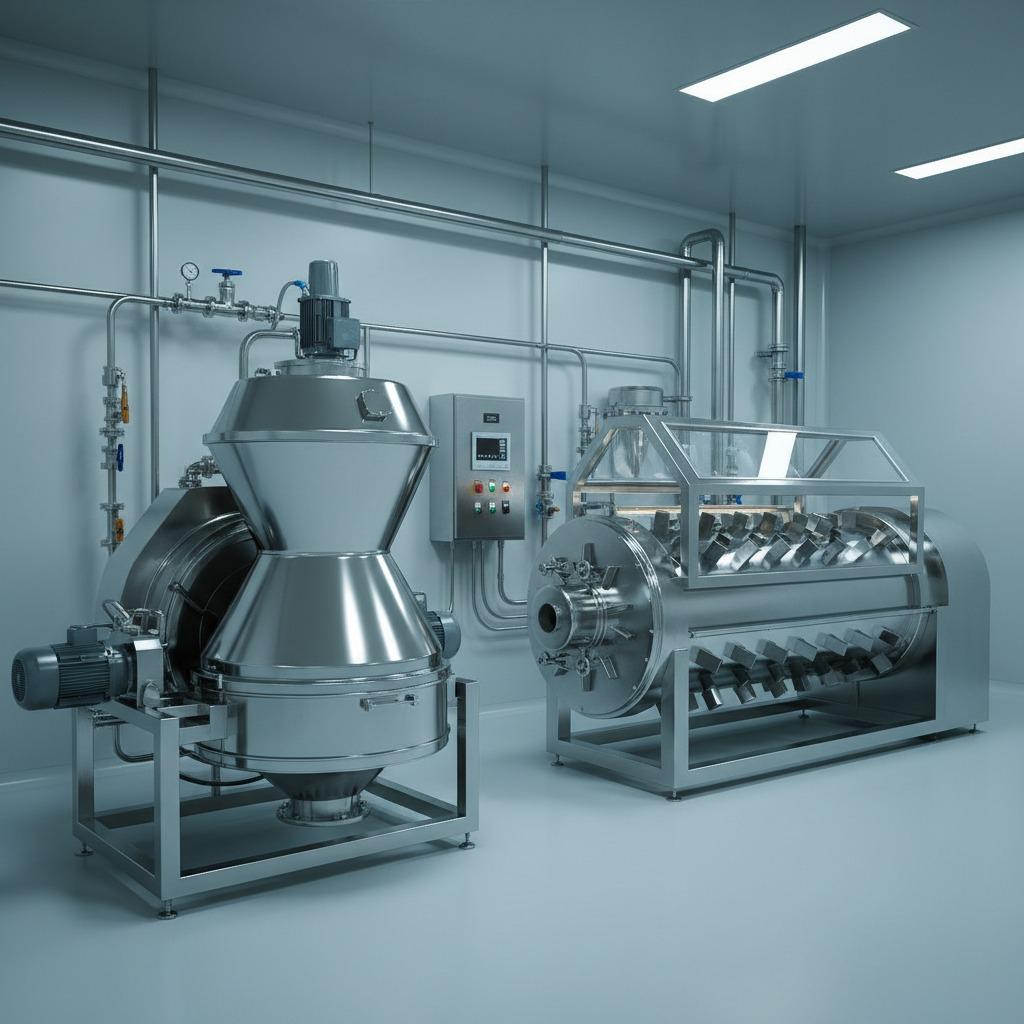
At its core, a conical vacuum dryer uses a rotating vessel shaped like two cones joined at the center. Material enters the drum, the vessel rotates slowly, and the load repeatedly lifts and falls. That tumbling action exposes more surface area and reduces the chance of hot spots or localized over-drying. If the unit is configured as a vacuum system, the reduced pressure helps moisture leave the product at a lower temperature, which is important for heat-sensitive compounds.
In practical terms, the machine is chosen when a plant needs batch drying rather than continuous drying. That distinction matters. Batch systems are slower by nature, but they give better control over traceability, recipe changes, and product recovery. For a plant running multiple SKUs or smaller campaigns, that flexibility can be more valuable than raw throughput.
What the visible machine tells a buyer
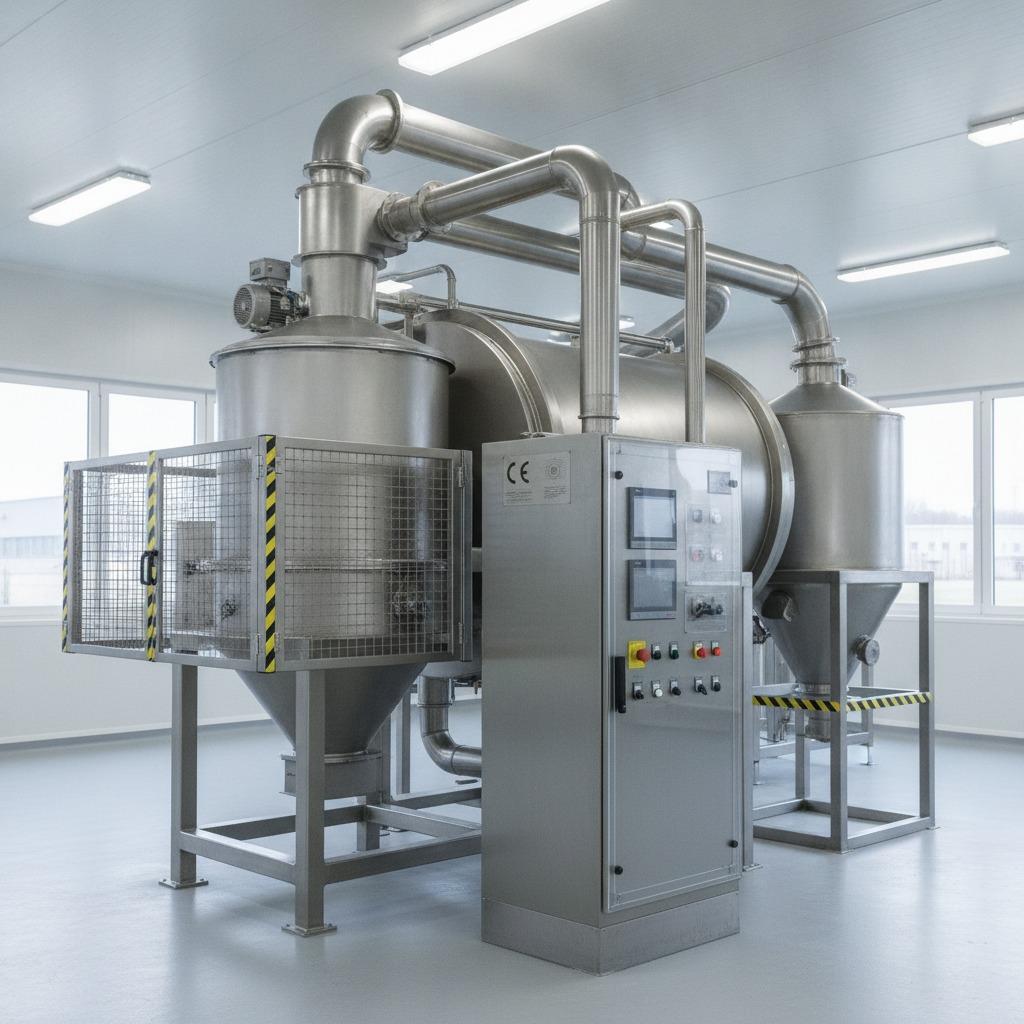
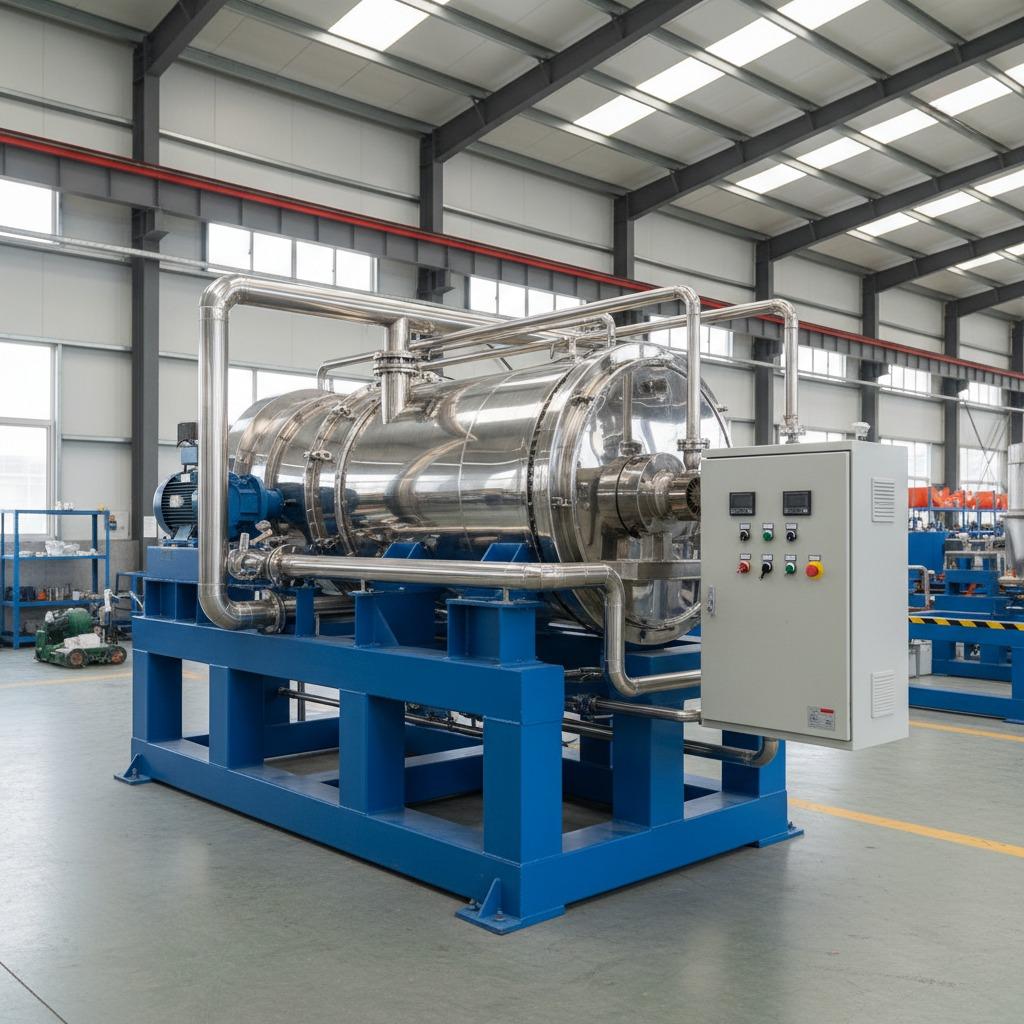
The equipment shown in the supplied product information appears to be a floor-mounted industrial dryer with a stainless steel vessel, a heavy support frame, and side enclosures that likely house drive or service components. The front access or discharge area is visible, along with a control cabinet. Protective wrapping on part of the top section suggests the unit is new, stored, or being prepared for commissioning.
Those are small clues, but they are useful. A buyer cannot confirm capacity, heating method, or vacuum level from appearance alone, yet the construction does suggest a serious industrial installation rather than a light-duty lab unit. That means sourcing teams should treat it as process equipment with real integration needs: utilities, access space, cleanability, maintenance access, and operator safety all need attention before purchase.
How a double cone dryer compares with other drying equipment
People often compare this machine with a tray dryer, fluid bed dryer, or ribbon-style system. Each has its place, but the double-cone design solves a different problem.
Compared with tray drying
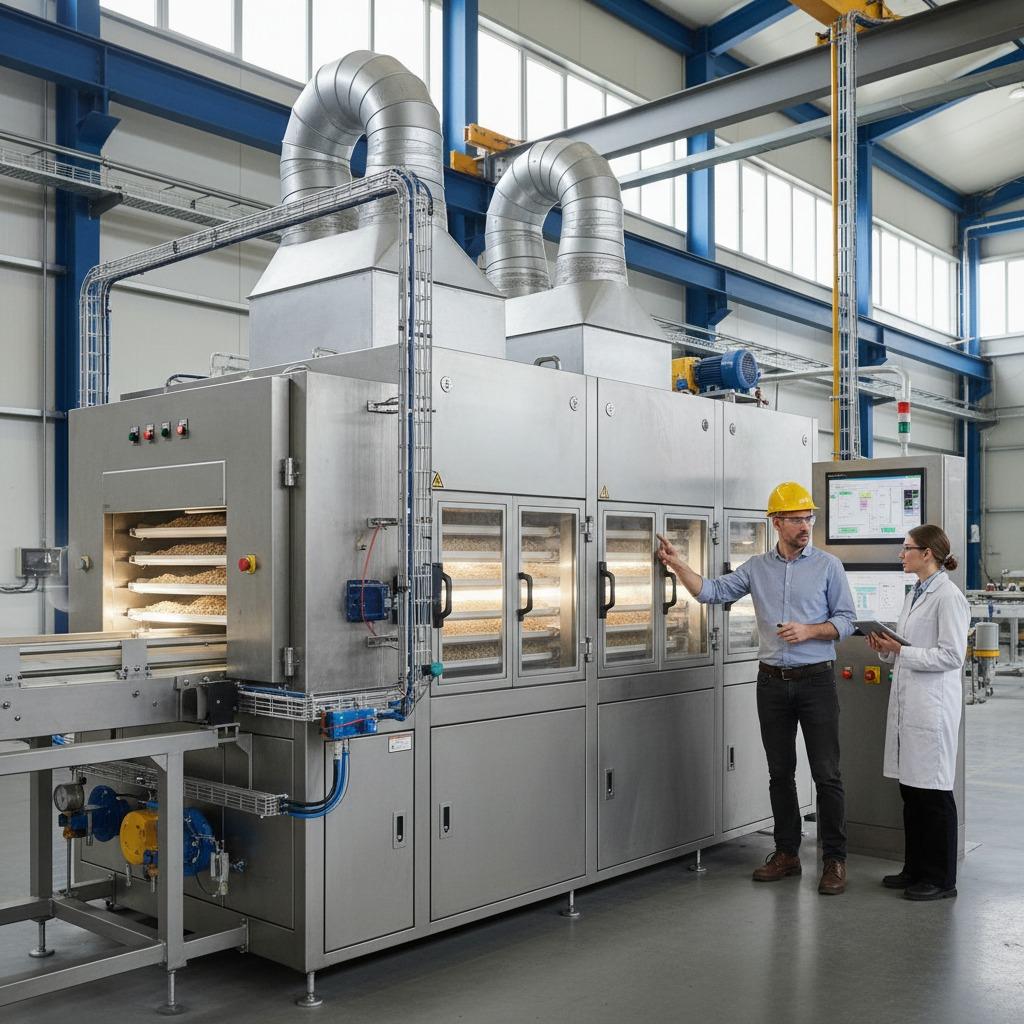
Tray systems are straightforward and widely used, but they rely on spreading material out in shallow layers. That can be labor-heavy and inconsistent if loading is uneven. A double cone vacuum dryer keeps the product enclosed and batch contained, which lowers handling steps and can reduce contamination risk.
Compared with fluid bed drying
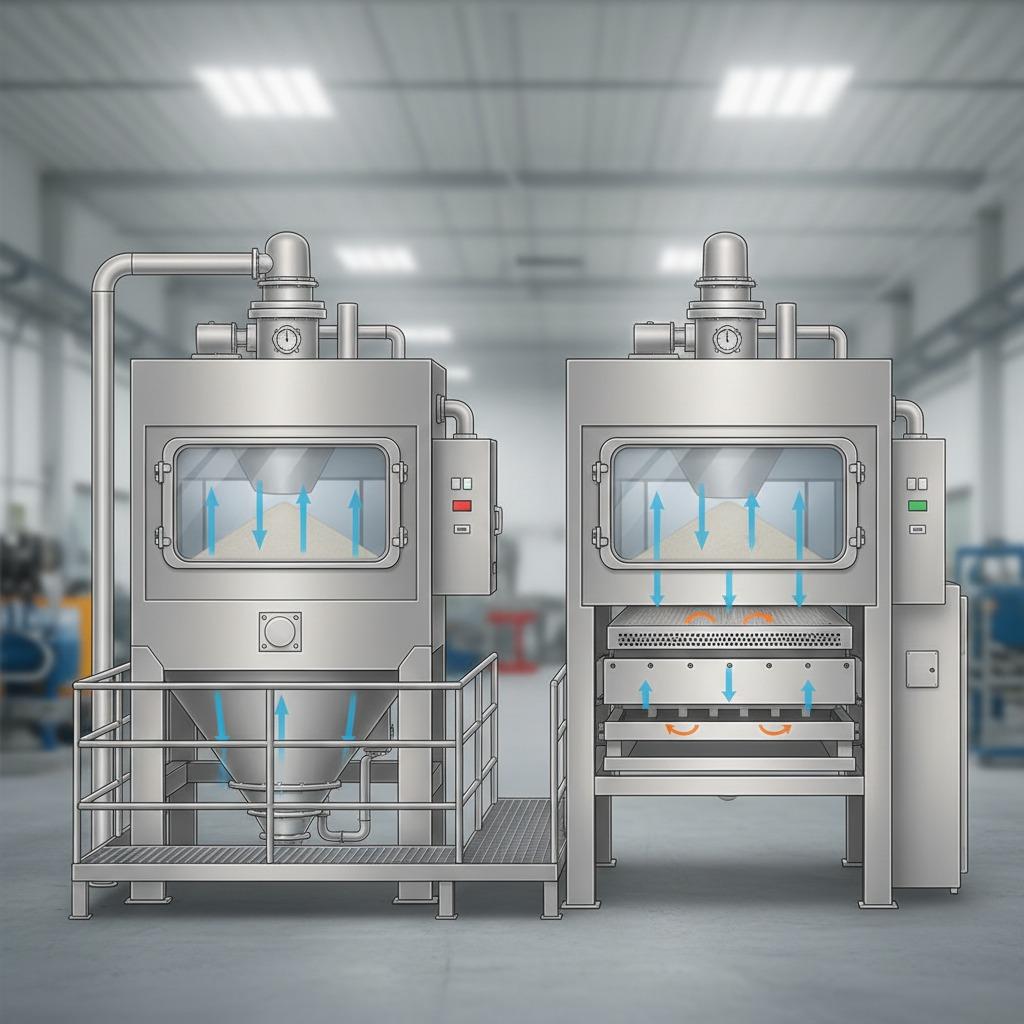
Fluid bed dryers can be fast and efficient for free-flowing particles, but they are not always kind to fragile granules or sticky powders. The double-cone unit is gentler. It is not usually the fastest option, but it is often a better fit for fragile, crystalline, or high-value materials that should not be aggressively agitated.
Compared with atmospheric tumbling dryers
An industrial vacuum dryer adds another layer of control if the product is temperature-sensitive or has a higher residual solvent concern. That said, vacuum capability should not be assumed. If vacuum is essential to the process, buyers need confirmation of the pump package, seals, condensers, and vessel integrity rather than just the vessel shape.
Where the double-cone format is strongest
This type of dryer is best known for handling bulk solids, powders, granules, and crystalline materials that benefit from low-shear movement. It is especially attractive when the process must balance three things at once: moisture removal, product integrity, and contamination control.
Typical application areas include pharmaceutical intermediates, fine chemicals, food ingredients, pigments, resins, and other specialty materials. In those environments, the value is not just drying. It is preserving material quality while reducing operator intervention. For regulated or high-value products, that can matter more than a small gain in cycle speed.
Selection criteria buyers should actually use
It is easy to ask for a “double cone vacuum dryer” and stop there. That is usually not enough. The machine can vary a great deal depending on the product and the plant around it.
Product behavior
Start with the material, not the machine. Is it free-flowing or sticky? Does it break down under agitation? Does it form clumps as moisture leaves? A gentle rotating vessel is helpful, but it will not solve a poor fit between product and process.
Heat sensitivity
If the material degrades at elevated temperatures, vacuum operation becomes more attractive. Lower-pressure drying can reduce thermal stress, though the exact performance depends on the system design and the product itself. This is where a buyer should ask for process validation, not marketing language.
Cleaning and changeover
For plants with multiple recipes, cleanability can be a bigger issue than drying time. Look at access points, seal design, discharge arrangement, and whether the internal surface is easy to inspect. A machine that dries well but is a nuisance to clean can become a production bottleneck very quickly.
Integration into the line
The visible control cabinet and support structure suggest a unit intended for a full production setting, not a standalone bench process. That means the buyer should check utility requirements, footprint, discharge height, maintenance clearance, and whether loading and unloading methods match the rest of the line.
Common mistakes when sourcing this type of dryer
One common mistake is buying by vessel shape alone. A double cone vacuum dryer is not just a tank with two cones. The drive system, seal integrity, heating configuration, and vacuum package determine whether it will be a dependable process tool or an expensive drum that looks right but performs inconsistently.
Another mistake is underestimating cycle time. Batch drying sounds simple, but real cycle time includes loading, heating, vacuum pull-down if used, drying, cooling, discharge, and cleaning. If a plant only calculates the active drying period, the capacity model will be too optimistic.
A third issue is assuming the machine is equally good for all powders. It is not. Cohesive, sticky, or very dense materials may need more care than the basic specification sheet suggests. If the supplier cannot explain how the vessel handles the specific material class, that is a warning sign.
Questions to ask before you issue a purchase order
Before buying, ask for details that actually affect operation: vessel working volume, rotation speed range, heating method, vacuum configuration if applicable, discharge arrangement, surface finish, and control philosophy. Ask how the machine is loaded and unloaded, how seals are maintained, and what parts are most likely to wear.
If the application is pharmaceutical or high-purity, ask for the sanitary and documentation package early, not after the quote is already in your inbox. If the product is solvent-bearing, ask how vapor recovery or condensation is handled. A dryer that looks fine in the workshop can become difficult to approve if those questions are left until late.
Practical buyer advice
If you are comparing suppliers, do not only compare the vessel. Compare the whole package: frame, drive, cabinet, access points, and support for commissioning. The supplied product details show a large industrial installation with enclosed side housings, which suggests the real value sits in how the system is engineered around the drum.
Also, be cautious with oversized claims. A low temperature drying machine can be the right tool, but low-temperature performance is process-specific. The machine may support it; the product may not need it; or the cycle may become longer than the plant wants. That balance is where engineering judgment matters.
FAQ
Is a double cone vacuum dryer only for pharmaceutical products?
No. It is used widely in pharmaceuticals, but also in chemicals, food ingredients, pigments, resins, and other fine-material applications.
Does every double cone dryer operate under vacuum?
No. Some are vacuum-capable, while others may be used for tumbling, mixing, or atmospheric drying. Vacuum capability should be confirmed from the system design.
Why choose this design instead of a faster dryer?
Because some products need gentle handling, lower temperatures, and better containment more than they need maximum speed.
What to do next
If this type of equipment fits your process, the next step is not a generic quote request. It is a short application review: product properties, batch size, moisture target, heating needs, cleaning expectations, and utilities. With that information in hand, a supplier can tell you whether a double cone vacuum dryer is a practical fit—or whether another drying method will save you trouble later.
For buyers, that is the real decision. Not whether the machine is well made. The more important question is whether it is the right machine for the material you actually run.