Why Crystal Form Control Matters in Manufacturing
Crystal form control is one of those topics that sits quietly behind a lot of commercial decisions in pharmaceuticals, specialty chemicals, pigments, and other high-value materials. It is easy to focus on purity, particle size, or moisture content and treat crystal structure as a secondary concern. In practice, the solid form often affects how a product behaves in storage, how it dissolves, how it filters, and how consistently it performs in downstream processing.
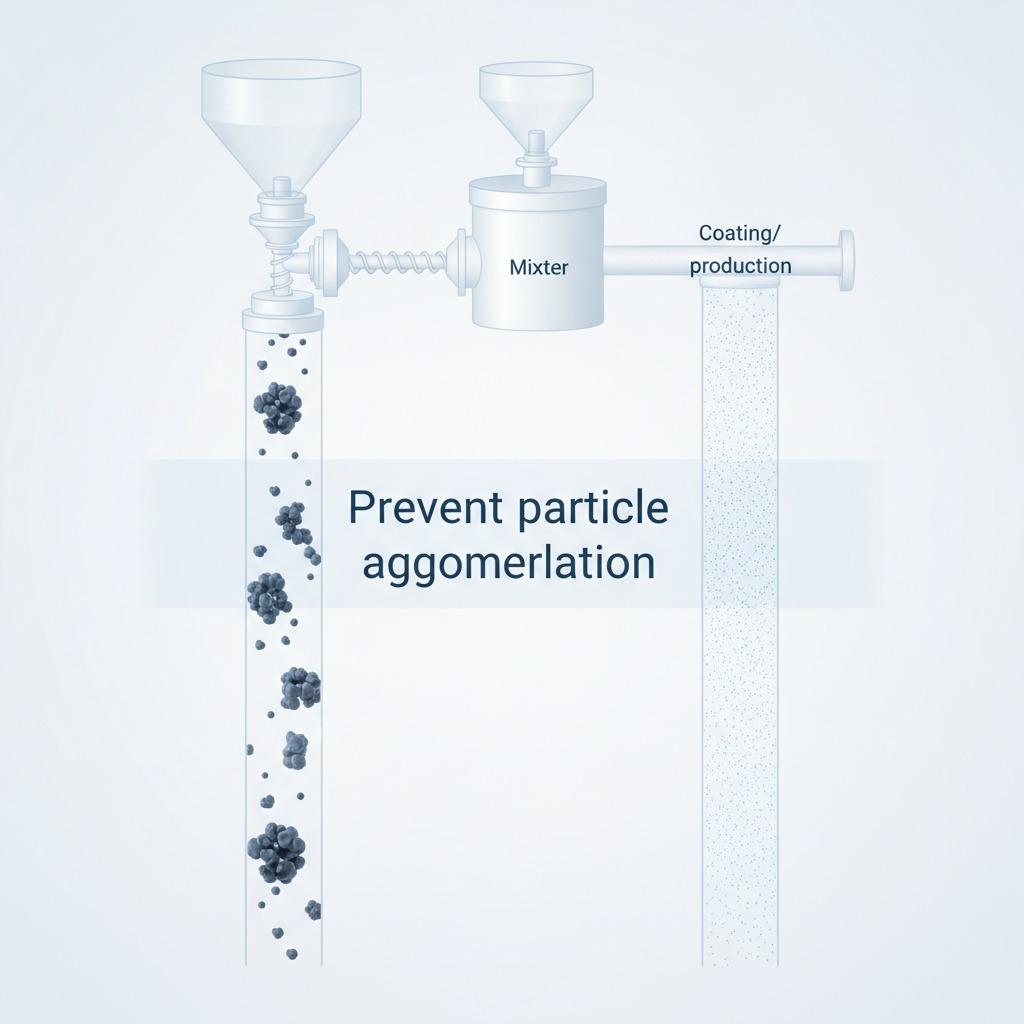
That matters because manufacturers rarely buy a material in isolation. They buy a material that has to survive drying, milling, blending, packaging, shipping, and use in a formulation. If the crystal form shifts during processing, the rest of the line can feel it. A drying step that looks routine on paper can become the point where morphology changes, agglomeration appears, or a previously stable material becomes harder to handle.
For engineers and sourcing teams, the real question is not whether crystal form control is important. It is how much control is needed, where the risk sits, and which equipment or process choices reduce the chance of unwanted change without adding unnecessary cost or complexity.
What Crystal Form Control Is Really Managing
At a practical level, crystal form control means influencing how a substance solidifies, grows, and remains in a desired state. That can include polymorph selection, crystal habit, particle shape, and the tendency to convert from one form to another under heat, shear, solvent exposure, or humidity. Not every industry needs the same level of precision, but once a material has a regulated performance profile or a demanding customer specification, the solid-state behavior becomes part of the spec whether it is written there plainly or not.
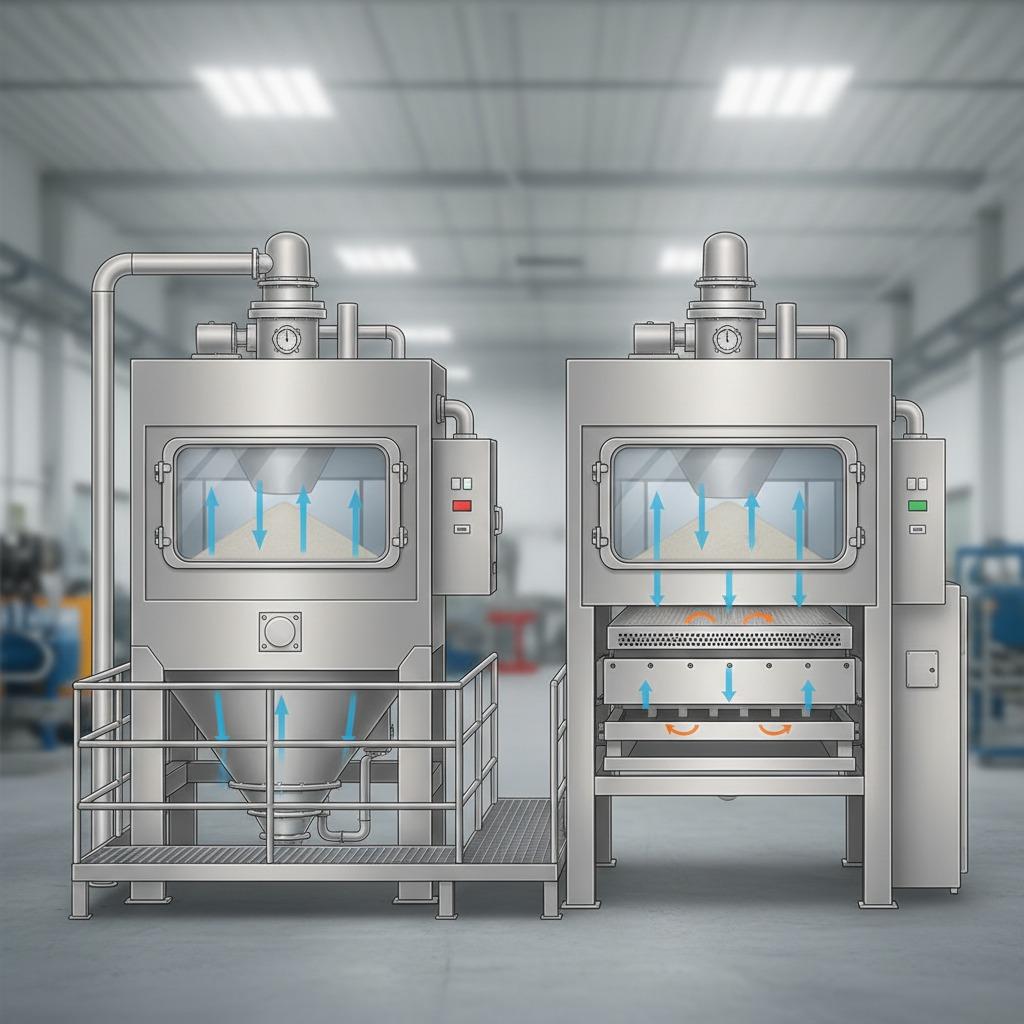
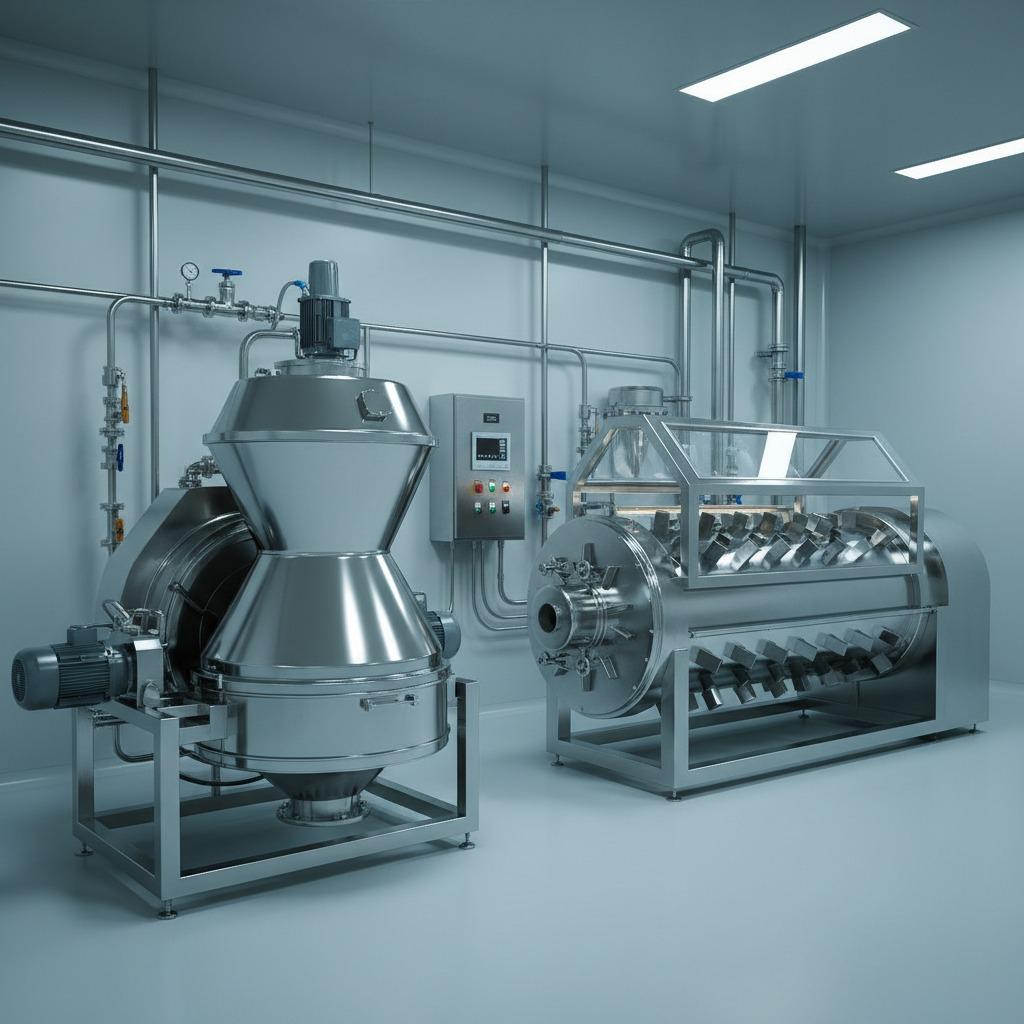
This is where fine chemical drying often enters the picture. Drying is not simply a water-removal step. It can be a thermal and mechanical event that changes the product. Solvent level, residence time, bed movement, vacuum level, and surface temperature all affect whether the material keeps its intended crystal structure or drifts into a less desirable state. That is why drying decisions should be treated as process decisions, not just utility decisions.
Why the Wrong Crystal Form Causes Trouble
A material in the wrong form can create problems that show up far downstream from the unit operation where the shift happened. Dissolution may slow down. Bulk flow may worsen. Compressibility may change. Filtration can become harder. In a formulation, the active ingredient or functional ingredient may not behave the way the development team validated it to behave.
There is also a commercial angle that sourcing managers understand quickly. If a supplier can only deliver a narrow crystal form window, then raw material consistency becomes a supply risk. If a plant line is sensitive to form change, then a small drift in drying conditions can turn into scrap, rework, or a delayed shipment. These are not abstract technical concerns; they affect cost, uptime, and customer confidence.
Where Control Is Won or Lost
Crystallization Stage
The first opportunity for control is the crystallization step itself. Solvent choice, supersaturation profile, cooling rate, seeding, and agitation all influence which crystal form appears and how large or uniform the crystals become. If a process is allowed to nucleate unpredictably, later steps are forced to correct a problem that should have been prevented earlier.
Solid-Liquid Separation
Filtration and centrifugation can also affect the final result. Mechanical stress and exposure to mother liquor may change the product state, especially if the material is sensitive to solvent retention or partial dissolution. A plant that treats separation as a purely physical operation may miss the fact that it is already shaping the product form.
Drying
Drying is often the most sensitive stage. Thermal exposure can trigger conversion between forms, while uneven drying can leave pockets of solvent or water that later drive instability. For fine chemical drying, the balance is especially delicate because these materials are often high value, small batch, and less forgiving of process drift. Gentle heat transfer, controlled vacuum, and uniform material movement are usually more important than brute-force throughput.
Selection Criteria Buyers Should Ask About
A useful supplier conversation goes beyond “Can you dry it?” and gets into the details that determine whether the material will arrive in the form the process needs.
First, ask what crystal forms are known to exist for the material and which one the process is designed to preserve. If the answer is vague, that is a warning sign. Second, ask which process steps have the highest risk of conversion. A supplier who understands the material should be able to point to crystallization, washing, drying, or storage conditions that require attention. Third, ask how the material is monitored. Even when a vendor cannot share exact analytical methods or acceptance numbers, they should still be able to describe the general approach to verifying consistency.
It is also worth asking how the material behaves at scale. Small lab samples often dry differently than production batches. Heat transfer, bed depth, and residence time are not minor details once a process moves from beaker or tray scale to a production dryer.
Common Mistakes That Undermine Control
One common mistake is assuming that a stable assay means a stable solid form. Chemical purity and crystal form are related, but they are not the same thing. Another mistake is ignoring the effect of hold time before drying. Material that sits too long in a wet or partially wet state can change before it ever reaches the dryer.
A second practical error is over-drying or forcing the process with excess heat. That can look efficient on a schedule sheet and still be the wrong answer if the product changes form, cakes, or becomes harder to handle. A third mistake is failing to align development and production. If the lab establishes one form under tightly controlled conditions but the manufacturing environment uses a different drying profile, the result may be technically consistent and commercially useless.
Practical Advice for Engineers and Sourcing Teams
Treat crystal form control as a cross-functional issue. The process engineer, formulation team, quality group, and supplier should all be looking at the same risk points. If the material is moisture-sensitive or heat-sensitive, build the drying profile around that sensitivity rather than treating it as a parameter to optimize later.
For buyers, the most useful documents and discussions are often the least glamorous ones: process flow, handling notes, storage conditions, and the supplier’s explanation of what can change the solid form. A supplier who can speak clearly about those points is usually more reliable than one who only talks in broad claims.
One caution: not every project needs a highly specialized drying approach. In some cases, a conventional drying method with careful parameter control is enough. In others, the product is sensitive enough that the wrong equipment choice can erase the gains from a carefully designed crystallization step. That tradeoff should be evaluated before scale-up, not after a batch has already failed.
Quick Reference: What Decision This Article Helps You Make
If your job is to define a process, qualify a supplier, or review a material specification, the main decision is whether crystal form control needs to be treated as a critical quality and handling issue or as a routine processing detail. If the product’s performance depends on a specific solid form, then the control strategy needs to cover crystallization, separation, and drying together. If not, the process may still need monitoring, but the tolerance for variation is usually wider.
That is the practical dividing line. The more sensitive the downstream application, the less room there is for informal handling assumptions.
FAQ
Is crystal form control only important in pharmaceuticals?
No. Pharmaceuticals are a common example because solid form can affect bioavailability and stability, but the same issue shows up in fine chemicals, catalysts, pigments, and other performance-driven materials.
Does drying always change crystal form?
No, but it can. The risk depends on temperature, moisture or solvent content, residence time, and the material itself. Some products are forgiving; others are not.
Why does fine chemical drying get mentioned so often?
Because drying is one of the last opportunities to preserve or damage the intended form. It is also where scale-up differences often become visible.
Next Step
If you are evaluating a material or process with crystal form sensitivity, start by mapping where the form can change and which step carries the highest risk. Then align supplier discussions, drying conditions, and quality checks around that risk instead of treating each step separately. That is usually where the real process improvement begins.