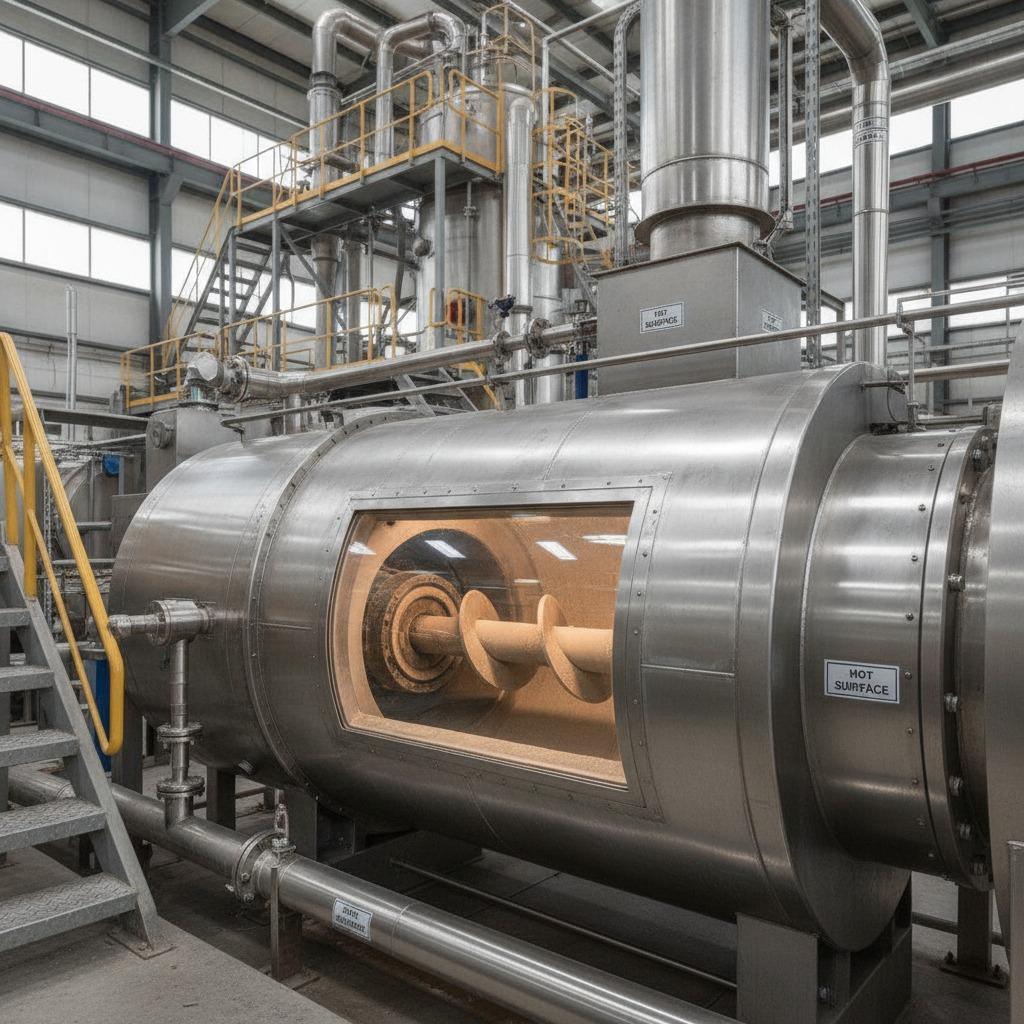
What an industrial vibrating screen is really for
An industrial vibrating screen is one of those machines that looks simple from a distance and does a lot of quiet work in the process line. In practice, it is used to separate material by size, remove oversize particles, break up soft lumps, or help keep slurry and powders moving toward a cleaner, more consistent output. That matters because a bad screen stage can ripple through the rest of production: clogged filling equipment, off-spec powder, dirty product, extra rework, and a line that spends too much time stopped.
For sourcing managers and process engineers, the real question is rarely “Do we need a screen?” It is more often “What kind of separation do we need, how sanitary does it have to be, and how will the machine fit into the line without becoming a maintenance burden?” The stainless-steel separator style described here points toward exactly that kind of decision: compact, mobile, and built for applications where cleanliness and material handling both matter.
What you can tell from the machine design
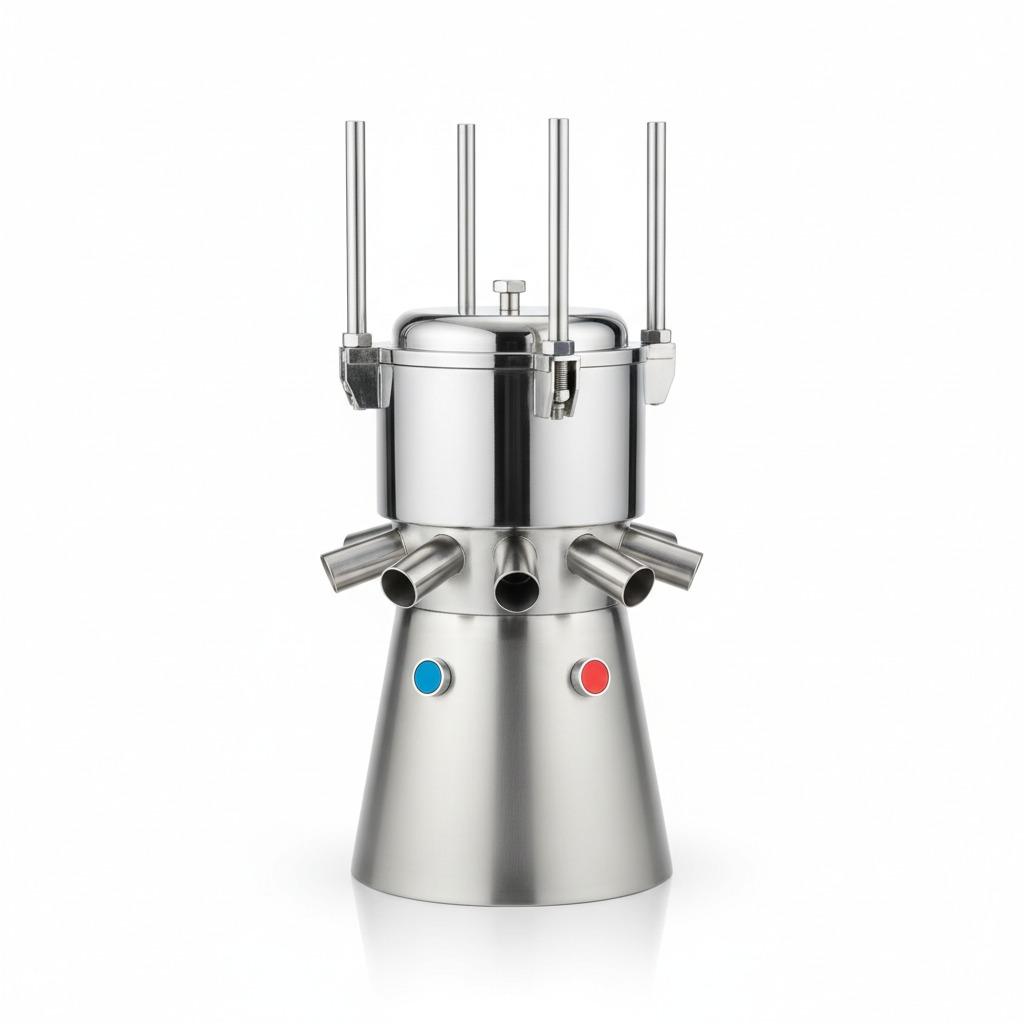
From the visible structure, this unit appears to be a stainless-steel sieving or separating machine with a cylindrical upper chamber, a conical lower section, and side ports for feed or discharge. That geometry is common in equipment used for powder classification, granule screening, or liquid-solid separation. The polished stainless finish is a practical clue too. It suggests a machine intended for sanitary or contamination-sensitive environments, rather than a rough-duty bulk handling line.
The mobile caster base is worth noting. Buyers sometimes treat wheels as a minor convenience, but in real plants they can be the difference between a machine that gets used properly and one that sits in the wrong corner because it is too awkward to move. Mobility is especially useful for batch production, shared equipment areas, pilot lines, or facilities where one separator serves more than one process step.
The top clamp or access ring also suggests maintenance access was designed into the unit. That matters. Screen changes, cleaning, inspection, and product changeovers are where many separators lose time. A machine that is easy to open and reassemble is usually easier to keep in production, though the exact service routine still depends on the internal drive and screen arrangement, which are not visible here.
Where an industrial vibrating screen fits in production
These machines are used across food processing, pharmaceuticals, chemicals, and general powder handling. The reason is straightforward: many production problems begin with inconsistent particle size. You may not notice a few oversized lumps in the hopper, but downstream they can jam nozzles, affect fill weights, or create visual defects in a finished product. For wet processes, a screen can also help separate solids from liquid or remove agglomerates before pumping or packaging.
In food applications, the emphasis is usually on hygiene, repeatability, and fast cleaning. In pharmaceutical and chemical settings, the priority may shift toward contamination control, batch integrity, and the ability to isolate product paths. In all of these cases, stainless-steel construction is a strong practical choice because it handles cleaning better than painted or lightly coated surfaces and is easier to keep presentable in a regulated environment. That said, stainless alone does not guarantee suitability. Weld quality, surface finish, gasket design, and how the machine opens for cleaning are just as important.
Key buying criteria: what to ask before you specify one
1. What is the material actually doing?
Start with the product, not the machine. Dry powder behaves differently from granules, and both behave differently from slurry. A vibrating screen for dry classification may not be the right answer if your material tends to bridge, cake, or generate static. Likewise, a wet separation task may need different outlet geometry or drain handling than a simple sifting application.
2. How sensitive is the process to contamination?
If your line is food-grade or pharma-adjacent, ask how the unit is cleaned, where residue can collect, and whether the screen frame, seals, and contact surfaces are accessible. A highly polished external finish looks good, but buyers should also look for practical cleanability around joints, clamps, and discharge points. These are the spots that often decide whether sanitation is straightforward or irritatingly slow.
3. What is the required separation outcome?
Some plants need simple impurity removal. Others need narrow particle classification. Those are not the same job. The visible machine could plausibly support either, but the correct screen size, screening area, drive behavior, and feed rate depend on the separation target. Without those details, capacity assumptions are guesswork, and in this category guesswork is expensive.
4. How will it integrate with the rest of the line?
Look at inlet height, outlet direction, access space, and whether the machine can be rolled to different stations. The side chutes and compact vertical footprint suggest a machine meant to slot into a processing area without demanding a large floor plan. That is useful, but buyers should still check whether the discharge path matches their bins, hoppers, conveyors, or collection drums. A good screen that forces awkward transfer steps often creates more trouble than it solves.
Why stainless-steel construction matters, and where it does not
Stainless-steel processing equipment is popular for good reasons. It resists corrosion better than plain steel, tolerates frequent cleaning, and supports the sanitary appearance many plants want. It also tends to age better in environments where moisture, powders, and washdowns are routine. For an industrial vibrating screen, that makes stainless a sensible material choice when the machine will touch food ingredients, pharmaceutical intermediates, or chemicals that demand a cleaner surface.
Still, stainless steel is not a magic answer. The grade of stainless, the quality of fabrication, and the internal design matter. Welds should be smooth enough not to trap residue. Edges should not create cleaning dead zones. Moving parts, seals, and screens must be maintained like wear items, because they are. A polished shell cannot compensate for a poorly thought-out internal layout.
Common mistakes buyers make when comparing separators
One frequent mistake is shopping only by appearance. A polished stainless machine can look ready for any sanitary line, but the real performance comes from the screen mechanism and how product moves across it. Another mistake is ignoring the difference between batch and continuous use. A machine that is convenient to roll around may be excellent for batch changeovers and not ideal for nonstop throughput.
Buyers also underestimate the cost of cleaning time. If the machine must be opened often, the accessibility of the lid, clamp arrangement, and screen change process becomes a productivity issue, not a maintenance detail. And if your plant handles sticky or wet materials, you should be cautious about assuming a standard screening configuration will behave well. Clumping material can turn a separator into a bottleneck unless the internal design is appropriate for the job.
Another practical caution: do not specify the machine solely around peak capacity. Real production is messy. Material may arrive warmer, wetter, finer, or more variable than the datasheet example. A separator that works in perfect conditions may struggle when the feed changes. It is better to size and configure with some margin than to discover the limits during a live production run.
What this design suggests for operation and maintenance
The presence of a control panel, indicator lights, and a movable base suggests a machine meant to be operated directly by plant staff rather than buried in a fully enclosed automated system. That can be an advantage. Operators can see the machine, respond to changes, and move it as needed. For smaller plants or shared processing areas, that flexibility has real value.
Maintenance on equipment like this usually revolves around screen inspection, seal condition, cleanliness, and mechanical stability. If the machine uses vibration internally, then fastener checks and wear inspection become routine. If it uses another drive principle, the same general rule still applies: the more a machine shakes or cycles, the more attention its contact points need over time. Buyers often focus on first cost and overlook the operational discipline required to keep a separator performing consistently. That is a mistake.
Quick buyer checklist
Before you request a quote or compare alternatives, make sure you can answer these questions clearly:
- What material are you screening: dry powder, granules, slurry, or a mixed feed?
- Is the goal impurity removal, sizing, de-lumping, or liquid-solid separation?
- How important are sanitation and easy disassembly?
- Does the line need a mobile machine or a fixed installation?
- Are the inlet and outlet positions compatible with your current process layout?
- How often will the screen need cleaning or replacement?
- What happens if feed properties vary from batch to batch?
Those are basic questions, but they eliminate a lot of avoidable confusion early. In this category, clarity saves more money than aggressive bargaining.
FAQ
Is an industrial vibrating screen always for dry powder?
No. These machines can be used for dry powders, granules, and in some cases liquid-solid separation or slurry handling. The exact application depends on the internal design and outlet arrangement.
Why choose stainless steel instead of painted steel?
Stainless steel is generally preferred where hygiene, corrosion resistance, and repeated cleaning matter. It is common in food, pharmaceutical, and chemical environments.
Does a compact machine mean lower performance?
Not necessarily. A compact separator can work well if it is matched to the material and throughput requirements. But small footprint and high capacity rarely come for free, so it is worth checking the real process conditions.
What should I ask the supplier first?
Ask for the internal screening principle, contact material details, cleaning method, and the recommended application range. Those answers tell you far more than exterior photos do.
Next step for buyers and engineers
If you are evaluating an industrial vibrating screen or a similar stainless-steel separator, the best next step is to map your material behavior and process goals before comparing equipment. Once you know whether you need sizing, impurity removal, or wet separation, the rest of the specification becomes much easier. From there, you can judge whether a mobile stainless unit with side chutes and sanitary construction is a genuine fit for your line, or simply a machine that looks right from the outside.
That distinction is usually where good purchasing decisions begin.