Industrial drying technology is often the difference between a stable process and a line that keeps drifting out of spec
For many plants, industrial drying technology is not just about removing moisture. It is about keeping powders free-flowing, protecting downstream equipment, reducing clumping, and making sure a batch behaves the same way from one shift to the next. If you work around bulk solids, that matters quickly. A material that arrives a little too wet can bridge in a hopper, load up a conveyor dryer, foul a duct, or overwhelm a collector. A material that is dried too aggressively can become brittle, dusty, or hard to handle.
That is why buyers tend to look beyond the headline question of “does it dry?” and start asking what kind of system fits the material, the line layout, and the plant’s practical limits. The equipment in the preparation data points to that larger world: stainless steel vessels, conical hoppers, ducting, structural supports, and a modular installed layout. It looks like the kind of integrated process hardware that sits inside a powder, dust, or bulk-material handling line, where drying may be part of the route or may sit beside separation, collection, transfer, or discharge steps.
This article is aimed at engineers, sourcing managers, and product teams trying to choose between system types, not just compare catalog claims. The real decision is usually whether a hot air drying system, a conveyor dryer, a fluidized bed dryer, or a neighboring process vessel will be the safer fit for the material and the plant around it.
What industrial drying technology is expected to do in a plant
At a basic level, drying equipment removes moisture. In practice, it has to do that while preserving product quality, throughput, and cleanability. In bulk-material operations, the drying step often sits between upstream washing, wet mixing, filtration, or separation and downstream milling, packaging, or storage.
A good system must do several things at once:
- Move heat into the material without damaging it.
- Let vapor or exhaust leave the system in a controlled way.
- Avoid dead zones, caking, and buildup.
- Integrate with conveying, dust collection, or discharge equipment.
- Support maintenance access without forcing a plant shutdown every time a panel needs inspection.
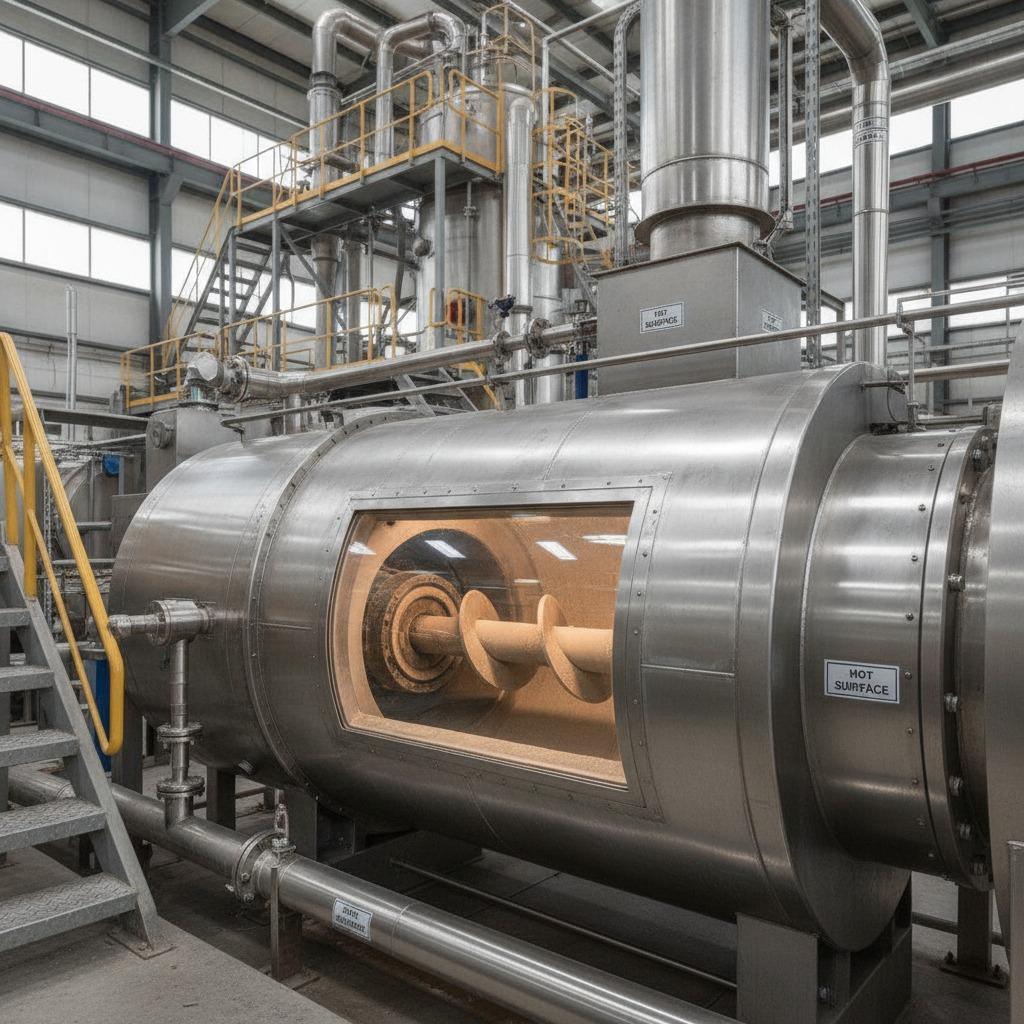
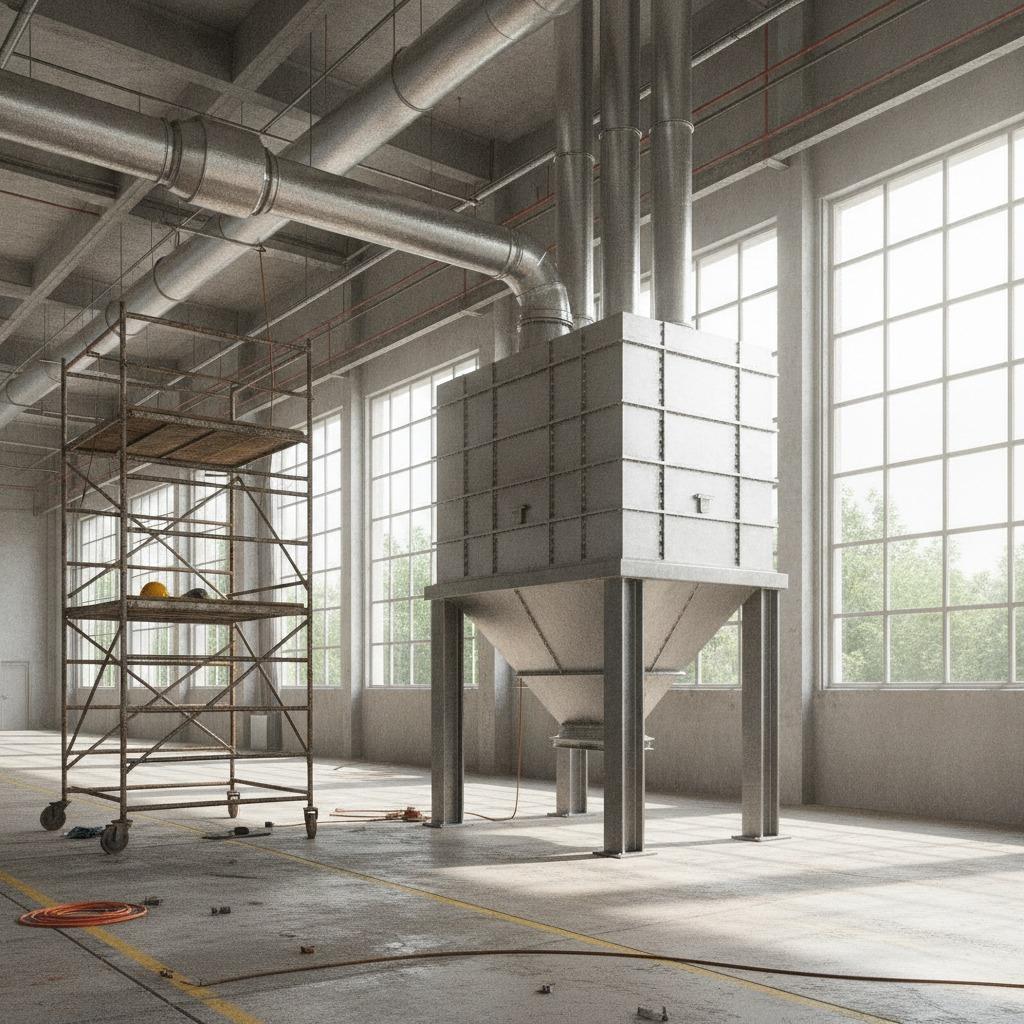
The image data supplied here shows a large stainless-steel process assembly with hopper geometry, duct connections, and elevated support frames. That does not prove a specific drying method, but it does suggest the surrounding realities of industrial drying: containment, airflow management, and the need to handle dry or partially dry material cleanly.
Quick reference: where common drying systems tend to fit
Hot air drying systems
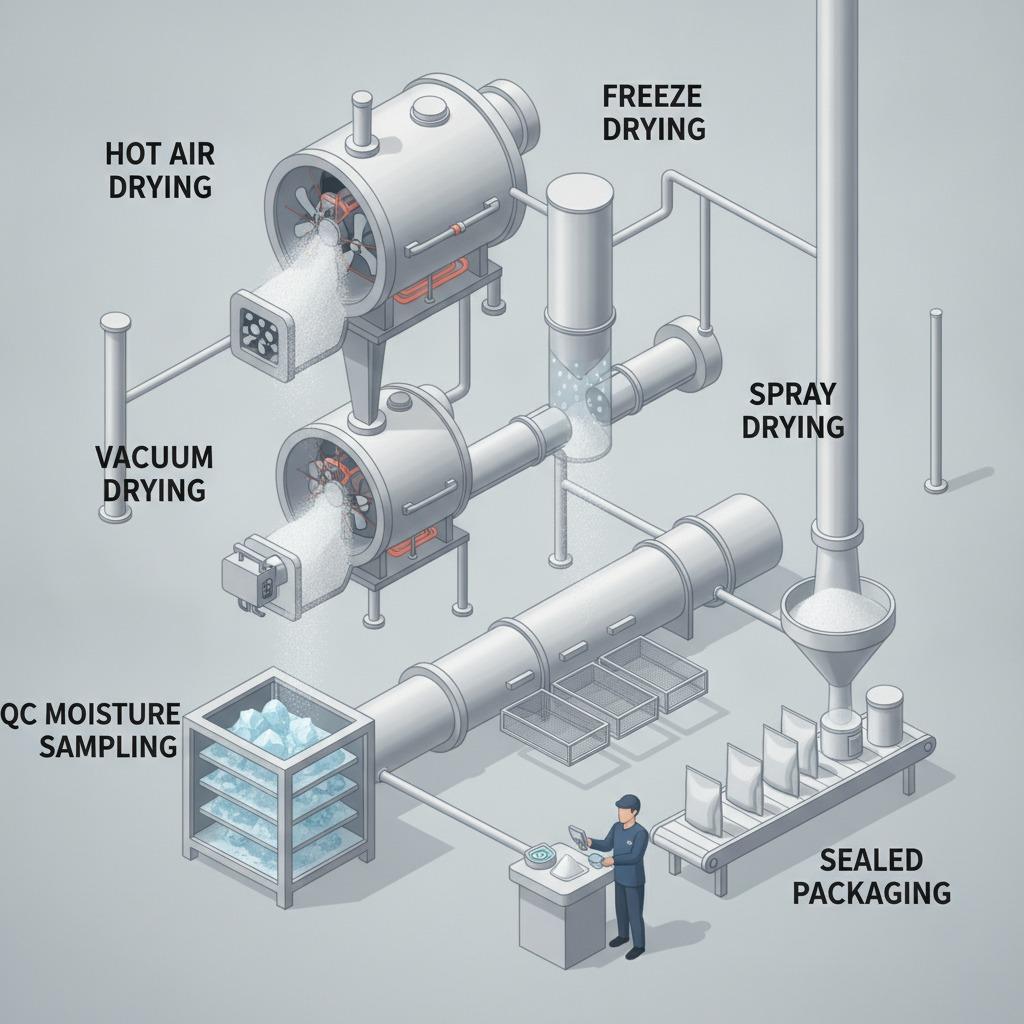
These are often the broadest category. Heated air passes through or over material and carries moisture away. They are relatively easy to understand and can be adapted to many plant layouts. The trade-off is that they can be less selective if the product is heat-sensitive or prone to surface crusting.
Conveyor dryer
A conveyor dryer is a practical choice when the material needs gentle transport and a predictable residence time. The material moves through the heated zone on a belt or similar conveying surface. Buyers often like the continuous flow and easier integration into a line, though footprint and cleaning need close attention.
Fluidized bed dryer
A fluidized bed dryer uses airflow to suspend particles and expose them evenly to heat. It can be very effective for granular materials that fluidize well. The catch is that not every powder behaves nicely in a fluid bed, and fine or sticky materials may demand more careful exhaust control and particle handling.
What the visible equipment tells a buyer, and what it does not
The supplied product information describes several visible features that are worth noting. The equipment appears to use stainless steel or polished metal construction, with conical hoppers, cylindrical vessels, ducting, flanged joints, and structural steel support frames. One unit is labeled “X1901,” and another section includes a yellow guarded component that may be a drive or rotary discharge element, though that should be verified.
Those details matter because they point to a few practical realities:
- The system is designed for enclosed processing rather than open handling.
- Gravity discharge appears to be part of the layout, which is typical for powders and granules.
- The ductwork suggests airflow or exhaust routing, which can be critical in drying, dust collection, or separation.
- Elevated mounting may help maintenance access below the equipment, but it also means structural support and vibration control need attention.
What the image does not tell you is equally important. You cannot confirm the exact machine type, internal working principle, capacity, power rating, temperature range, pressure rating, or whether the system is drying, mixing, filtering, or merely conveying. That is normal. Many industrial drying technology purchases are made from partial information at the concept stage, then narrowed down through process trials and layout reviews.
How to choose between dryer types without getting trapped by brochure language
The choice usually starts with the material, not the machine.
If the product is relatively robust and the goal is steady throughput, a hot air drying system may be enough. If the plant needs continuous movement and a controlled dwell time, a conveyor dryer often fits the operational rhythm better. If the product is granular, free-flowing, and benefits from uniform heat transfer, a fluidized bed dryer can be compelling.
But there are practical constraints that brochures do not emphasize enough:
- Stickiness changes everything. A material that starts clean can become tacky partway through the cycle.
- Particle size distribution matters. Broad distributions can dry unevenly.
- Dust handling is not a side issue. Exhaust and collection design affect housekeeping and compliance.
- Cleaning access can decide the project. A difficult-to-open chamber becomes a maintenance headache fast.
- Plant height and structural loading matter more than teams sometimes expect.
A buyer should also ask how the system interfaces with adjacent equipment. The image data suggests a modular skid-like arrangement with connected ducts and large hoppers, which is common in integrated process lines. That is useful, but integration can also create hidden friction points: awkward valve locations, poor access to service panels, or discharge points that fight the plant layout.
Common mistakes buyers make when evaluating drying equipment
One mistake is treating all “drying” systems as interchangeable. They are not. A conveyor dryer and a fluidized bed dryer can both remove moisture, yet they may produce very different particle behavior, energy use patterns, and maintenance burdens.
Another mistake is ignoring the upstream and downstream process. Drying rarely stands alone. If the feed arrives unevenly, or if discharge feeds a sensitive feeder, the dryer can become the bottleneck no matter how well the heating section performs.
A third mistake is underestimating containment. In powder-processing environments, even a good dryer can create problems if dust escapes at transfer points, flanges, or access doors. The polished stainless-steel appearance in the supplied images hints at an enclosed process mindset, which is good, but the sealing strategy is what really matters.
A fourth is assuming the largest unit is automatically the safest investment. Large-capacity process equipment can be valuable, but only if the plant can clean it, inspect it, and keep it fed consistently. Oversized systems often look attractive during procurement and less attractive six months into operations.
Why stainless-steel construction is often favored
The visible stainless-steel or polished metal surfaces in the supplied equipment are not just about appearance. In drying and bulk-material systems, that material choice is often associated with corrosion resistance, easier wipe-down, and better long-term appearance in indoor industrial environments. It is common in food, chemical, pharmaceutical, and similar plants where cleanliness and durability matter.
That said, buyers should be cautious about assuming all stainless-steel equipment is automatically sanitary or automatically suitable for aggressive service. Surface finish, weld quality, dead-leg control, and gasket selection all matter. A polished shell with a poor internal layout can still be a nuisance to maintain.
Practical questions to ask before you approve a purchase
Before selecting industrial drying technology, ask the supplier or integrator for answers to questions that usually separate a workable design from a frustrating one:
- What material behavior is the system designed around: free-flowing granules, cohesive powders, dust-laden streams, or wet cake?
- How is residence time controlled?
- How are exhaust, vapor, or dust streams handled?
- What parts of the machine require regular access?
- How is the system supported structurally, and what floor loading or clearance is assumed?
- Can the system be cleaned without major disassembly?
- How will the dryer connect to existing conveying, collection, or discharge equipment?
These questions sound basic, but they catch a surprising number of procurement problems early.
FAQ
Is the equipment shown definitely a dryer?
No. Based on the supplied information, it could also be part of powder conveying, classification, dust collection, mixing, or discharge/feeding. The image suggests an industrial process system associated with dry or partially dry material, but the exact function is not confirmed.
When does a fluidized bed dryer make sense?
Typically when the material is granular, handles airflow well, and benefits from even heat transfer. It is less straightforward for sticky, fragile, or very fine powders that do not fluidize predictably.
Why are conical hoppers so common?
They help materials move by gravity toward a discharge point. In bulk solids systems, that geometry is practical, though not foolproof. Flow behavior still depends on the material itself.
What should a buyer watch for first in a plant visit?
Look for service access, duct routing, buildup points, and how the unit connects to the rest of the line. The “best” equipment on paper can become a maintenance headache if it is hard to reach or hard to clean.
A sensible next step for buyers
If you are shortlisting industrial drying technology, do not start with brand names or horsepower figures. Start with the material, the moisture target, and the plant layout. Then compare whether a hot air drying system, conveyor dryer, or fluidized bed dryer fits the process reality you actually have.
For integrated powder and bulk-material operations like the one suggested by the supplied images, the real value is in the full system: enclosure, airflow management, discharge design, structural support, and maintainability. That is where projects succeed or get expensive.
If you are reviewing a supplier proposal, ask for a process narrative, a layout drawing, and a clear explanation of how the equipment handles feed, exhaust, and discharge. Those documents reveal far more than a polished housing ever will.