What a belt dryer is, and why buyers keep comparing it with other drying systems
A belt dryer is one of those industrial machines that sounds simple until you have to specify one for a real production line. At the most basic level, it moves material through a heated drying zone on a moving belt, using controlled airflow to remove moisture without forcing the product into a tumble, drum, or fluidized state. That makes it useful in process environments where shape, surface condition, contamination control, or gentle handling matter.
For engineers and sourcing teams, the real question is not whether a belt dryer works. It is whether belt drying technology fits the product, the moisture target, the available footprint, and the hygiene rules of the plant. In food, chemicals, and some clean processing lines, that decision affects not only product quality but also floor space, energy use, cleaning effort, and how much rework shows up downstream.
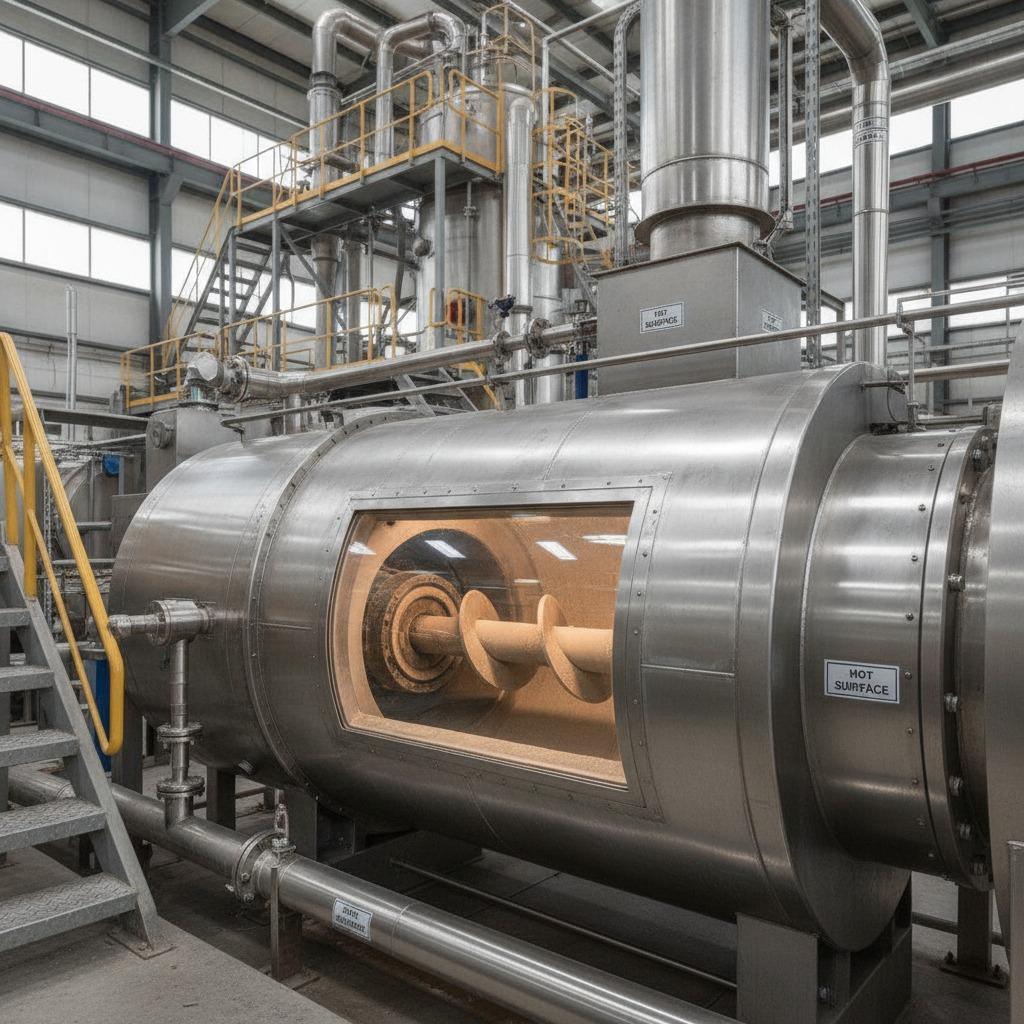
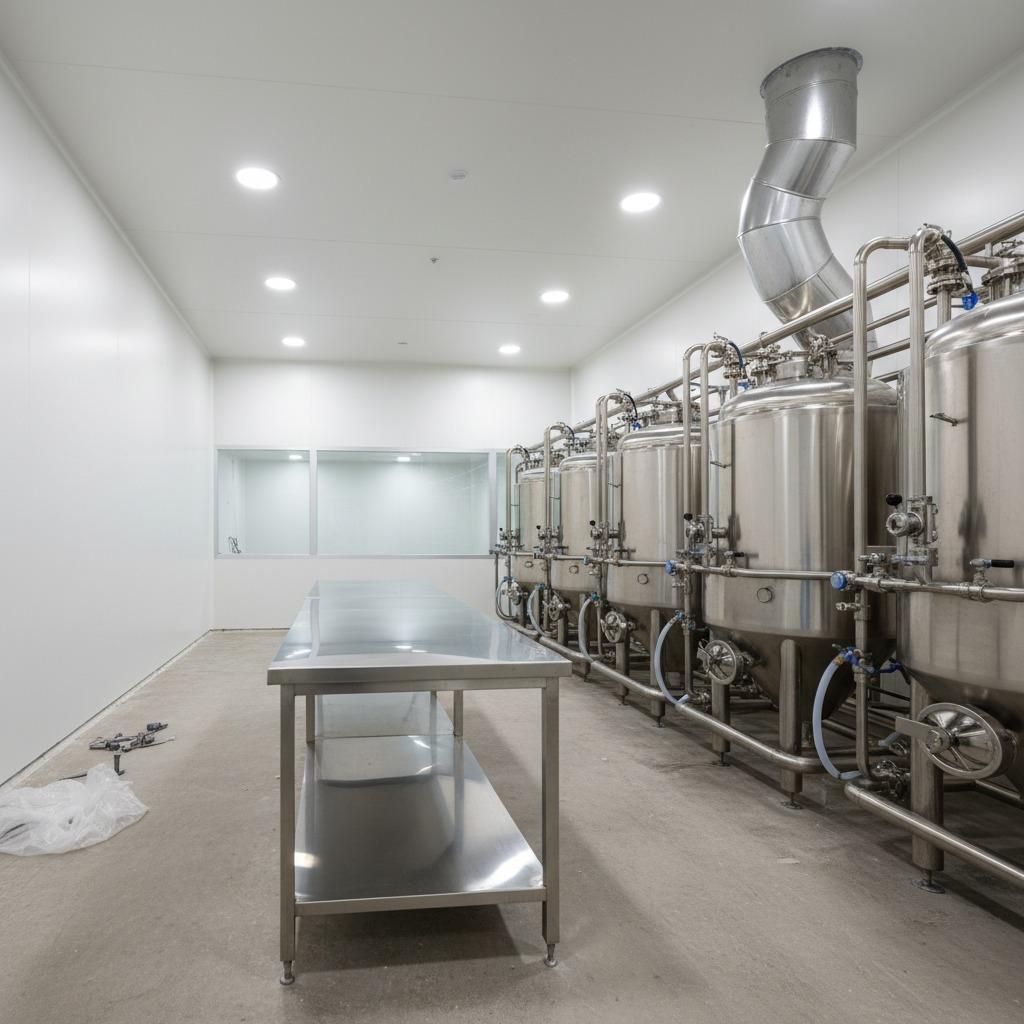
The stainless steel industrial equipment often seen in hygienic plants gives a good clue to why this format persists: long enclosed modules, washdown-friendly surfaces, ducting, valves, and access panels are all signs of a process built around controlled handling and easy maintenance. Not every line like that is a belt dryer, of course, but the same design logic applies.
The short version: where belt dryers make sense
A belt dryer is usually a strong candidate when the product is fragile, sticky, irregularly shaped, or sensitive to mechanical agitation. It is also worth serious attention when a plant needs continuous throughput rather than batch drying. That combination matters in food processing, pharma prep, and certain industrial or chemical applications where product integrity and consistent moisture removal are both non-negotiable.
Compared with a rotary or drum-style dryer, a belt dryer is generally easier on the material. Compared with small batch ovens, it can support a steadier process flow. That does not make it the universal answer. It does mean buyers should evaluate it as a line-level process tool rather than just a heated conveyor.
How belt drying technology works in practice
The principle is straightforward: product enters the feed end, travels across a perforated or otherwise air-permeable belt, and is exposed to heated process air. Depending on the configuration, airflow may come from above, below, or both. Some systems use multiple zones so temperature, airflow direction, and residence time can be adjusted as the product moves through the machine.
That zoning is one of the main reasons belt drying technology remains relevant. Moisture removal is not always linear. The surface can dry quickly while internal moisture lags behind, or the opposite can happen with certain materials. By adjusting zone settings, operators can avoid over-drying the outside while the center remains wet, or minimize case hardening in products that need an even final texture.
In a hygienic plant, stainless construction and smooth surfaces matter just as much as the thermal profile. The visible stainless process equipment in clean-room-like environments tends to use enclosed modules, pipe runs, access panels, and integrated ducting because the dryer is rarely an isolated unit. It is part of a wider system that includes air handling, exhaust, cleaning access, and sometimes upstream washing or rinsing.
Key design choices that affect performance
Airflow and heat distribution
The heat source is only part of the story. Uniform airflow across the belt width is what often decides whether the machine dries evenly or leaves wet edges and overcooked center lanes. Buyers should ask how the system handles plenum design, recirculation, exhaust, and balancing across zones. If a supplier cannot explain that in plain terms, that is usually a warning sign.
Belt material and construction
The belt itself must match the product and cleaning regime. Stainless mesh, synthetic food-safe belts, and other variants all exist, but the right choice depends on temperature, sanitation requirements, product stickiness, and abrasion. A belt that is fine for one application can become a maintenance problem in another.
Hygienic build and access
In food and pharmaceutical-adjacent settings, buyers should look closely at cleanability. Open lower shelves, removable panels, drain paths, and accessible service points matter more than glossy presentation. A machine can look polished and still be awkward to clean. That practical mismatch is common enough to mention.
Ducting and exhaust management
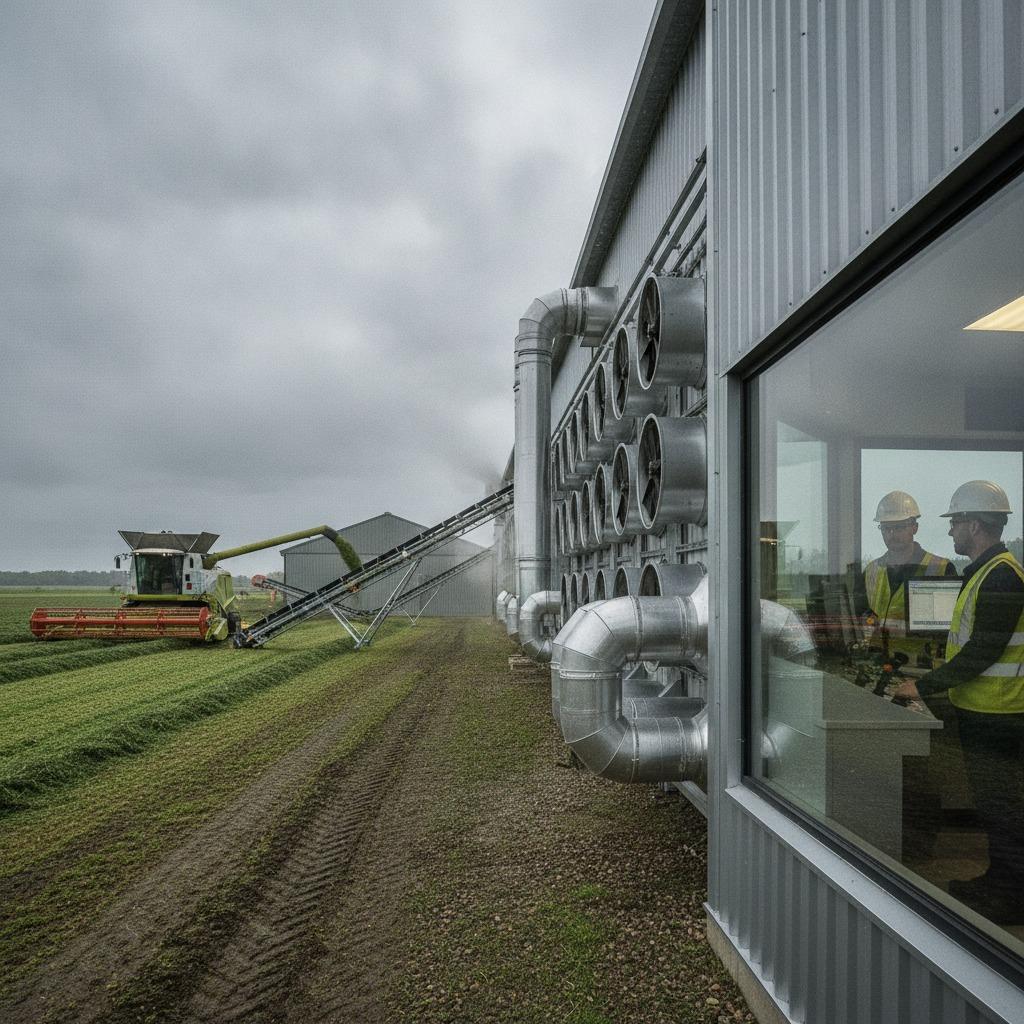
The large curved ducting often visible above process equipment is not decoration. It is part of moisture removal, air recirculation, and sometimes odor or vapor control. Poor exhaust design can affect drying rate, energy consumption, and the stability of the room environment around the machine.
Where belt dryers tend to outperform other options
A belt dryer is often the better choice when product integrity matters more than maximum thermal aggression. That includes sliced foods, granulated materials, formed components, coated parts, or any material that should keep its shape during drying. Continuous feeding also suits lines that need predictable throughput and a more stable upstream/downstream balance.
The trade-off is that belt dryers usually take more floor space than compact batch systems. They also require careful maintenance planning because the belt, air system, and access points all need regular attention. Buyers sometimes forget that the long footprint is only the visible cost; the hidden costs are service clearance, duct routing, and sanitation access.
What sourcing teams should ask before they buy
The first question is not “What is the machine’s horsepower?” It is “What moisture level do we need at discharge, and how variable is the incoming feed?” Once that is defined, the rest of the specification becomes more meaningful.
Useful buyer questions include:
How uniform is the incoming product size, thickness, or loading density?
Is the line intended for food, chemical, pharma prep, or industrial parts cleaning?
How much floor space can be allocated for the machine plus service access?
Does the system need washdown cleaning or dry clean maintenance?
What temperature range is required, and how tightly must it be controlled?
How will exhausted moisture and vapors be handled in the room layout?
Those questions sound basic, but they prevent the common mistake of buying around the machine rather than around the process.
Common mistakes that create expensive surprises
One frequent error is underestimating residence time. A product may look dry on the surface yet still fail downstream packaging or quality checks because internal moisture remains too high. Another is assuming a dryer can fix upstream inconsistency. If feed thickness or loading density varies too much, the belt dryer will often amplify the inconsistency rather than erase it.
A second mistake is specifying sanitation after the fact. Hygienic environments need more than stainless steel skin. They need accessible joints, sensible drainage, service clearances, and a layout that lets operators clean without dismantling half the line.
And then there is the familiar budget trap: choosing a system that seems compact enough on paper but becomes difficult to install because of ducting, utility routing, and access space. This is where a site walk-through is worth more than another round of brochure comparisons.
How to evaluate a supplier or fabricator
In this equipment category, fabrication quality matters as much as the process concept. Stainless steel industrial process equipment should be built with a clear understanding of washdown, corrosion resistance, alignment, and service life. The visible use of stainless surfaces, enclosed modules, valves, hose connections, and integrated piping suggests a system designed for controlled process work, but the real test is how the equipment is finished at the seams, supports, and access points.
Ask whether the supplier can support custom fabrication and installation for hygienic environments. Ask how they handle integration with existing piping or exhaust systems. And ask for a layout discussion before you discuss decorative details. Engineers usually appreciate that order, and so do maintenance teams later.
Quick buyer takeaway
A belt dryer is worth serious consideration when the product needs gentle, continuous, and controllable moisture removal. It is especially relevant in stainless steel hygienic environments where cleanability, airflow control, and integrated ducting matter.
If your line produces fragile, irregular, or contamination-sensitive material, belt drying technology may offer a better balance of throughput and product protection than more aggressive drying methods. If your product is robust and space is tight, another dryer type may be more practical. That is the real decision point.
FAQ
Is a belt dryer only used in food processing?
No. Food is a common use case, but belt dryers can also suit chemical processing, pharmaceutical prep, and certain industrial finishing or parts-handling applications.
Why is stainless steel so common around these systems?
Because stainless surfaces are easier to clean, resist corrosion better in many washdown or humid environments, and fit the hygiene expectations of controlled production areas.
Does a belt dryer always mean better drying quality?
Not automatically. Drying quality depends on airflow design, belt selection, loading consistency, and the way the system is integrated into the full line.
What should a buyer inspect first?
Start with process fit: product behavior, target moisture, cleaning regime, and footprint. Hardware details matter, but only after the process has been defined.
Next step for teams comparing options
If you are shortlisting a belt dryer, build the discussion around product behavior and plant layout, not just machine dimensions. Ask for the airflow concept, zoning strategy, belt construction, cleaning approach, and utility requirements. For custom stainless process equipment in hygienic environments, those details are usually where projects succeed or stall.
The best purchasing decisions in this category are rarely made from a catalog page alone. They come from matching the dryer to the line, the cleaning method, and the real material you are drying — including the awkward cases nobody puts in the brochure.