
What buyers really need to know about face mask powder
Face mask powder sits in an interesting corner of the personal care market. It is not a finished cream, and it is not quite a raw botanical either. For formulators, brand owners, and sourcing teams, the appeal is straightforward: powders can be easier to store, lighter to ship, and more flexible to blend into a range of skin care products. That flexibility is also what makes buying decisions less simple than they first appear.
If you are evaluating face mask powder for a private label line, a spa range, or a broader portfolio of skin care powders, the real question is not just what the ingredient is. It is what happens to it during processing, how it behaves in the final mix, and whether it will hold up in production once the formulation leaves the lab and enters a filling line. Those are the practical details that decide whether a powder works as promised or turns into a consistency headache.
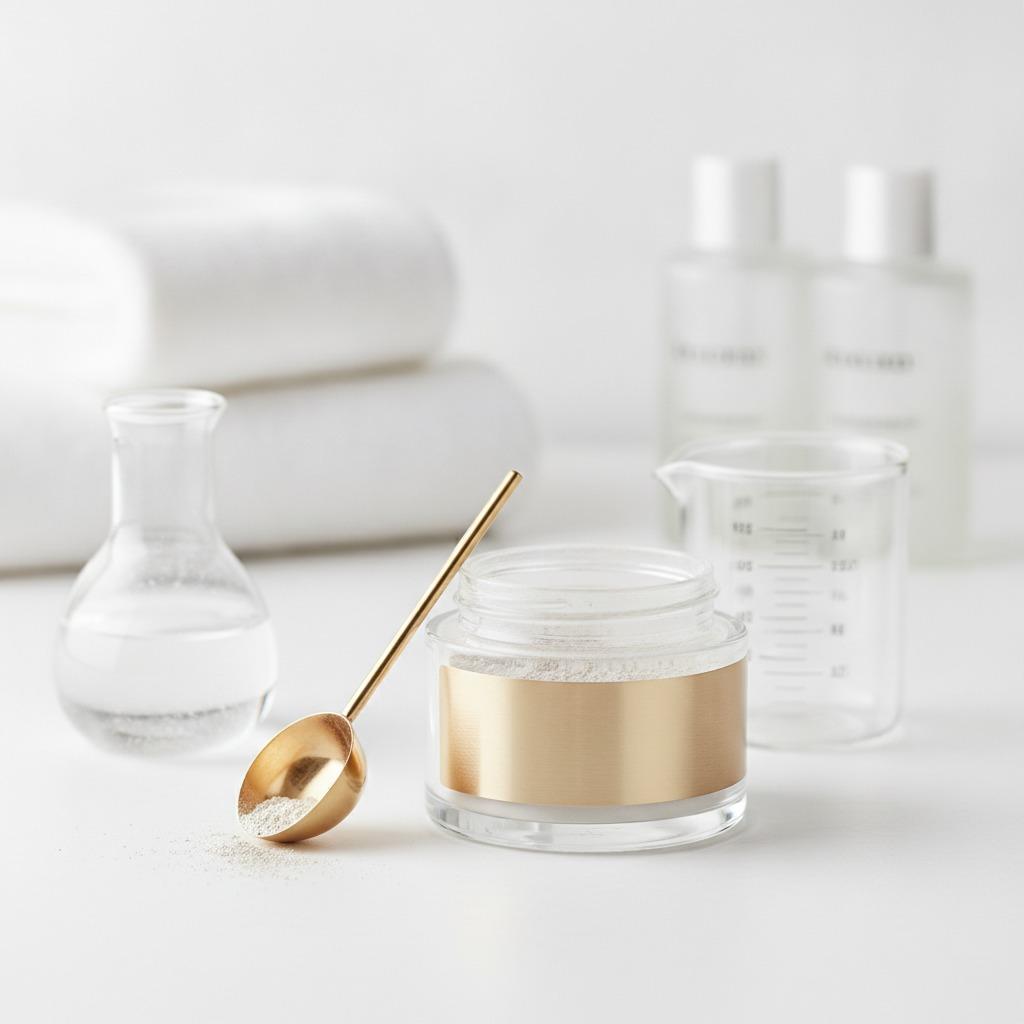
Why powder format matters in facial care
The powder format solves a few persistent problems in cosmetics manufacturing. Water-based products can be heavier to transport and more sensitive to microbial growth. Powders, by comparison, often offer simpler storage and a longer shelf-life profile when handled correctly. They can also allow brands to build a product story around freshness, customization, or concentrated actives.
That said, powder is not automatically better. A face mask powder still needs to hydrate evenly, spread smoothly, and rinse without leaving a gritty film. In practice, the user experience depends on particle size, flow behavior, dispersibility, and the supporting ingredients in the blend. A beautiful ingredient list can still fail if the powder clumps in the bowl.
Quick reference: what to check before you buy
For sourcing teams, the fastest way to screen a face mask powder is to look at four things first: ingredient base, processing method, intended use, and packaging stability. Those basics tell you more than marketing language does.
Ingredient base
Face mask powders may be built around clays, starches, botanical powders, minerals, or other skin care powders used for absorbency, texture, or visual appeal. The base determines how the mask feels on skin and how much liquid it can hold once mixed.
Processing method
The way a powder is made affects flowability and consistency. A spray dryer process is often discussed in cosmetic and food-adjacent powder manufacturing because it can turn liquid feeds into fine, uniform particles. In personal care, that can matter when a manufacturer wants consistent blending and a less dusty, more manageable powder. Not every face mask powder is spray dried, of course, but the process is worth asking about when uniformity matters.
End-use format
Some powders are designed for water activation at the point of use. Others are meant to be blended with a separate liquid base or combined with a cleanser-style system. The intended format changes everything from particle design to label claims.
Packaging and storage
Powders can absorb moisture if the barrier is poor. That may sound basic, but it is a common reason a promising formula performs well in the lab and badly on the shelf. The wrong container can undermine even a good ingredient.
How face mask powder is typically developed
Most buyers do not need a lab lecture, but they do need to understand the broad process. A face mask powder is usually built by selecting functional ingredients, reducing them to a suitable particle size, blending them for uniform distribution, and then validating how they behave in use. If a manufacturer uses a spray dryer process, the goal is often to create particles with predictable moisture content and distribution. That can support better batch consistency, though it is not a guarantee of performance on its own.
For skin care powders, the process stage matters because cosmetic texture is unforgiving. Too coarse and the formula feels scratchy. Too fine and it can dust, cake, or turn muddy when wetted. Too much hygroscopic material and the product may pull moisture from the air. In other words, a powder formula is a balancing act, not just a recipe.
Selection criteria that actually affect performance
When comparing suppliers or evaluating a new mask concept, buyers usually get the most value from a short list of technical questions rather than a long marketing presentation.
Particle size and feel
Particle size influences spreadability, rinse-off, and the sensory finish. Finer is not always better. The right range depends on whether the product is meant to be soothing, oil-absorbing, polishing, or clarifying.
Flowability and blend uniformity
If a powder bridges in a hopper or creates dust in packaging, manufacturing slows down. Uniform flow also supports dosage accuracy, which matters in sachets, jars, and refill formats.
Hydration behavior
Some powders hydrate quickly and evenly. Others need a specific liquid ratio or a little mixing time. A buyer should ask for practical mixing guidance, not just a spec sheet. This sounds obvious, yet many production problems begin with a formula that looked fine in a beaker and then misbehaved in scale-up.
Compatibility with active ingredients
Not every base works well with every active. Botanical powders, clays, enzymes, or exfoliating materials can interact differently depending on pH, water demand, and packaging conditions. If the final product includes actives, the formulation should be checked as a system.
Common mistakes when sourcing face mask powder
One frequent mistake is assuming all powders are interchangeable because they look similar in a sample jar. They are not. Two products can have nearly the same color and still behave very differently once liquid is added.
Another common issue is overlooking the production environment. A powder that handles well in a small lab batch can become difficult in a higher-speed line, especially if humidity is not controlled. Buyers sometimes focus on the ingredient and forget the factory conditions around it. That is a costly omission.
A third mistake is buying on claims alone. Terms like “natural,” “detox,” or “brightening” may be part of the commercial story, but sourcing teams still need to check physical performance, consistency, and packaging fit. The operational details are what protect a launch.
Where face mask powders fit in modern skin care lines
Face mask powder works best when a brand wants flexibility. It can support minimalist formulas, spa-style rituals, travel-friendly packs, or custom-mix concepts. It also fits well into product families that already use skin care powders in cleansers, scrubs, or treatment masks. The format can feel premium without relying on heavy packaging, which is useful for brands trying to balance aesthetics and logistics.
At the same time, powder masks are not for every customer. Some users prefer ready-to-apply creams or sheets because they are faster and less messy. That is not a flaw in the powder category; it is simply a market reality. A successful product plan should match the format to the user behavior you actually expect, not the one you hope to teach.
Practical buyer advice for sourcing teams
If you are comparing suppliers, ask for sample handling instructions, batch consistency notes, and the recommended hydration ratio. If the supplier uses a spray dryer process, ask how they control moisture and particle uniformity. If they do not, ask what process is used instead and how it affects blend stability. The point is not to chase a fashionable manufacturing term; it is to understand what it means for your line.
It is also worth checking how the powder behaves in transit. A product that arrives compacted or moisture-damaged is a sign that the packaging system needs work, even if the formula itself is sound. Buyers sometimes separate formulation from logistics too sharply. In personal care, they are connected.
For larger programs, a small pilot run is usually smarter than a full rollout. Powder-based products can expose filling, sealing, and storage weaknesses that a bench sample will never reveal. A cautious trial can save a lot of rework later.
FAQ: common questions about face mask powder
Is face mask powder always a natural product?
No. It can include botanical materials, minerals, or other cosmetic ingredients depending on the formula. The category describes the format more than the source.
Why is powder format attractive to brands?
It can reduce weight, improve storage convenience, and support customizable use. Those benefits are useful, but only if the product still hydrates and performs well for the end user.
What is the biggest quality risk?
Moisture exposure is a major concern, followed closely by poor flow and inconsistent particle size. Packaging and handling matter almost as much as the ingredient blend.
When should a buyer ask about spray drying?
When uniformity, dispersibility, or scale-up consistency is important. A spray dryer process may help produce more consistent particles, though the right process depends on the formula and the desired sensory result.
A sensible next step
If you are sourcing face mask powder, start by matching the powder to the use case rather than the sales story. Define the user experience, check the processing method, confirm how the powder behaves with liquid, and make sure the packaging supports the formula. That sequence is usually enough to separate a workable product from a promising sample that only performs on paper.
For brands building a wider assortment of skin care powders, the same discipline applies across the line. The best products are rarely the most dramatic on the shelf. They are the ones that mix cleanly, stay stable, and do the same thing in production that they did in the demo.





