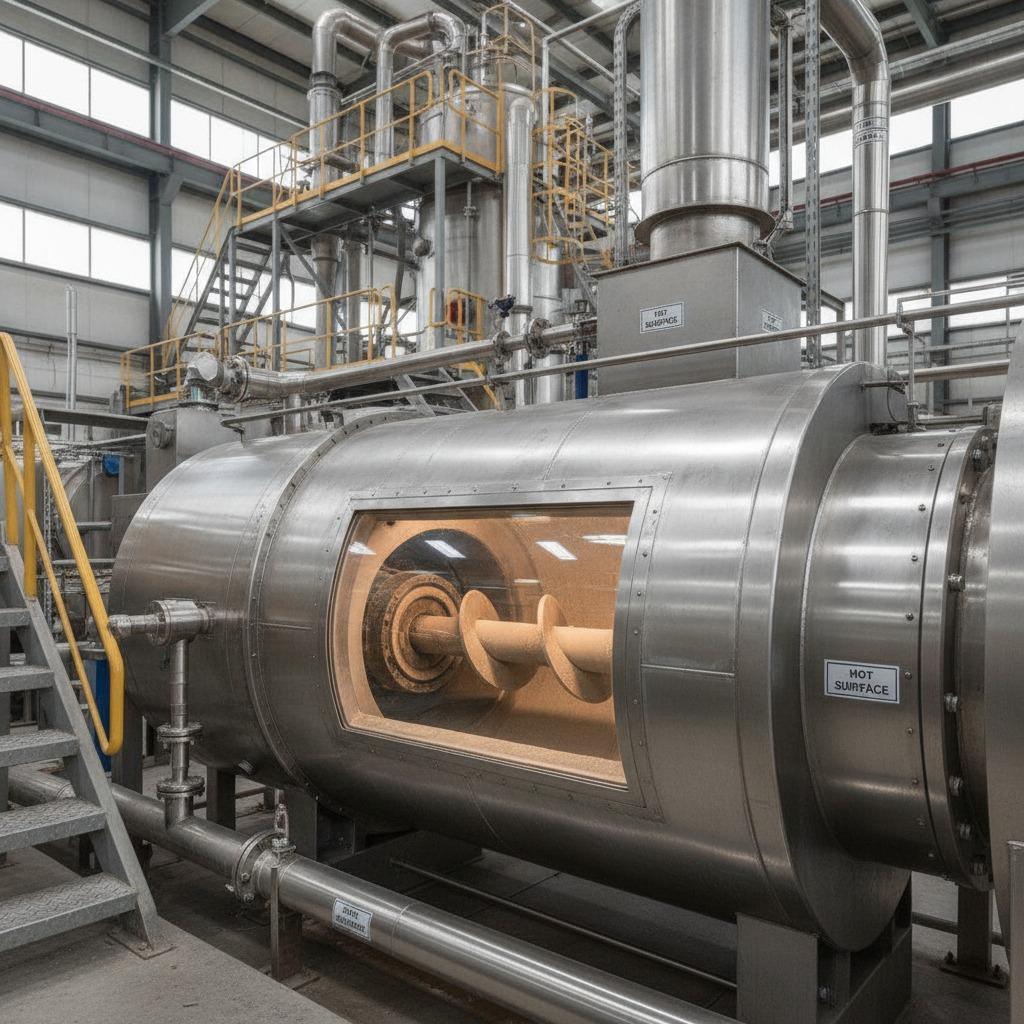
What a vibrating fluid bed dryer is actually solving
A vibrating fluid bed dryer is not just another way to move hot air through product. It is a drying platform used when bulk solids need controlled moisture removal, gentle product handling, and steady throughput without the mess and inefficiency that often come with tray drying or ad hoc hot-air systems. For engineers and sourcing managers, the real question is usually not whether the technology can dry material — it can — but whether it can dry a specific powder, granule, crystal, or particulate feed without damaging the product or slowing the line.
That matters because drying sits at the point where upstream processing and downstream packaging either work smoothly or start causing headaches. Too much moisture and product flows poorly, cakes, clumps, or degrades in storage. Too little control and you may drive off more moisture than intended, create fines, or waste energy pushing hot air through material that should have been treated more carefully. A vibrating fluid bed dryer helps bridge that gap by combining fluidization with vibration, which can improve movement through the dryer and reduce dead zones that sometimes appear in conventional fluid bed equipment.
If you are evaluating equipment for a new line, an expansion, or a product change, the decision is usually about matching drying behavior to material behavior. That is where this machine earns attention.
How the process works
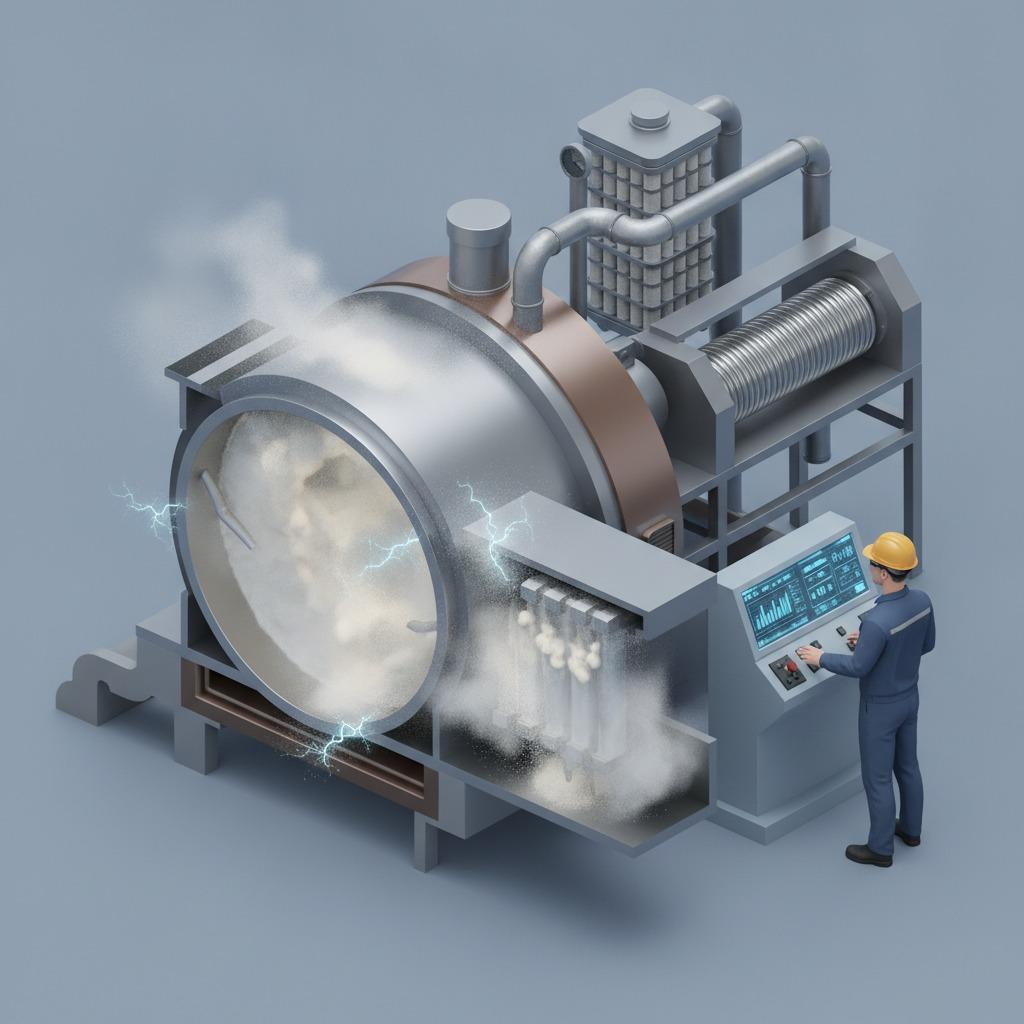
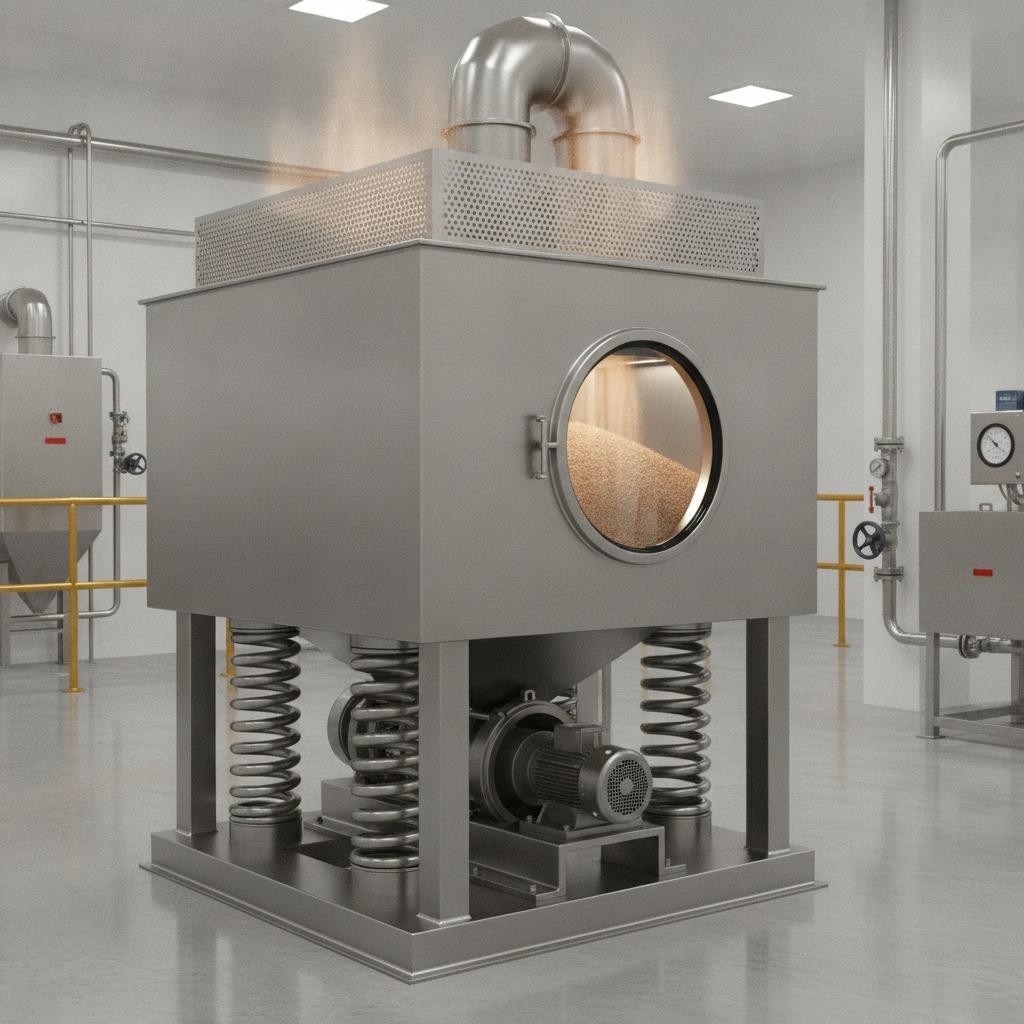
In a standard fluid bed dryer, process air passes upward through a perforated distributor and lifts the particles into a suspended, mixed state. Heat transfer is efficient because air contacts a large surface area of moving solids. In a vibrating fluid bed dryer, mechanical vibration is added to assist product movement and bed mobility. The vibration helps the material travel through the dryer in a more uniform way, especially when the solids are sticky, variable in particle size, or slightly cohesive.
The practical effect is straightforward: instead of relying only on air velocity to fluidize and transport the bed, the machine uses vibration to keep the product moving, support even exposure, and reduce bridging or stagnant zones. This can be useful when product density, moisture content, or particle geometry makes plain fluidization unreliable.
Most buyers are interested in three outcomes here: more consistent drying, better handling of difficult materials, and a process that can be integrated into a continuous production line. The last point often matters more than people expect. A dryer that works well in a pilot setting but cannot keep up with the feed system, discharge arrangement, or dust collection requirements rarely survives long in production.
Where this dryer fits best
The vibrating fluid bed dryer is often considered for free-flowing or semi-free-flowing solids, but it becomes especially valuable when the product is not perfectly cooperative. Granules, coarse powders, crystalline materials, and some agglomerates are common candidates. The technology can also be relevant when a plant wants continuous drying rather than batch handling, since the bed can be configured to move material through distinct zones for heating, drying, and cooling.
That said, the equipment is not a universal answer. Very fragile particles may not tolerate the mechanical action well. Extremely sticky feeds may still need pretreatment, conditioning, or a different dryer design entirely. And if the material has a narrow thermal window, the airflow and residence time must be controlled carefully; adding vibration does not remove the need for process discipline. It just gives the system another lever to work with.
Quick comparison: why buyers look at this design
Compared with tray drying
Tray drying is simple, but it is slow, labor-heavy, and difficult to standardize at scale. A vibrating fluid bed dryer generally offers much better throughput and more uniform drying. It also supports continuous operation, which is important when labor, floor space, and batch variability are costing more than they used to.
Compared with conventional fluid bed drying
Regular fluid bed systems can work extremely well, but they may struggle when material tends to channel, cake, or resist movement. Vibration can improve transport and reduce the chance of dead zones. In practice, that often translates into more stable operation and fewer interruptions for manual intervention.
Compared with rotary drying
Rotary dryers are rugged and familiar, but they are not always the best choice for products that need gentler handling or tighter control over residence time. A vibrating fluid bed dryer can offer a more refined drying environment, especially when product quality depends on narrow moisture targets.
Key design and operating considerations
Before a buyer compares quotes, the real work is understanding the material and the process envelope. Moisture content at inlet, target final moisture, bulk density, particle size distribution, and surface characteristics all influence dryer performance. So does temperature sensitivity. Some products can tolerate a wide thermal range; others may discolor, lose potency, or change structure if the drying profile is too aggressive.
Air handling deserves just as much attention. Heating capacity, airflow stability, exhaust management, and dust capture all affect the result. The vibration system also needs scrutiny: amplitude, frequency, and how vibration is isolated from surrounding equipment can influence both product movement and plant maintenance. It is one thing to make a bed move on a test floor. It is another to keep that motion reliable in a production environment with upstream feeders, downstream conveyors, and operators who do not want to babysit the line.
Material of construction is another practical point. The machine may need to resist abrasion, corrosion, or contamination risk depending on the product. Food, chemical, and mineral applications do not ask the same things from a dryer, even when the mechanical layout looks similar from a distance.
Common mistakes buyers make
The first mistake is assuming the dryer will solve a feed problem that really belongs upstream. If the incoming material is wildly inconsistent, no dryer will make the process look elegant for long. A vibrating fluid bed dryer can help smooth variation, but it is not a substitute for basic feed control.
The second mistake is focusing only on evaporation capacity and ignoring discharge behavior. Some dryers look attractive on paper until the product begins to accumulate at transfer points, or the cooling section cannot keep up. In continuous systems, the edges of the process matter as much as the center.
The third mistake is underestimating validation and scale-up. Pilot trials are useful, but they should be evaluated against the realities of full production: air supply stability, dust loading, maintenance access, vibration isolation, and cleaning requirements. Buyers sometimes approve equipment because the drying curve looks good, only to discover that changeover or sanitation turns into a daily nuisance.
What engineers and sourcing teams should ask suppliers
Good supplier conversations go beyond headline capacity. Ask how the dryer handles material flow across different moisture levels, whether the design can be tuned for residence time, and what options exist for heating zones or integrated cooling. Ask how the bed is distributed, how vibration is managed, and how dust is controlled at the inlet and outlet. If the supplier cannot explain how the process stays stable when feed conditions drift, that is worth noting.
Sourcing teams should also ask for clarity on installation footprint, utility requirements, maintenance access, and spare parts strategy. A dryer that is technically sound but hard to service can become a budget problem after the first production year. That is not a theoretical warning; it is the kind of thing plants discover after commissioning, when schedules are already tight.
If the application is regulated or hygiene-sensitive, request the details that affect cleaning and product protection. That includes access panels, sealing arrangements, and whether the equipment supports the plant’s sanitation expectations. It is better to ask those questions early than to retrofit workarounds later.
Practical selection advice
The best selection process starts with the material, not the catalog. Define the feed state, the target moisture, the acceptable thermal range, and the throughput requirement. Then look at whether the product needs gentle handling, continuous discharge, or staged drying and cooling. A vibrating fluid bed dryer is often strongest when those requirements line up.
As a rule of thumb, if your operation needs high throughput, controlled drying, and predictable product movement in one system, this technology belongs on the shortlist. If the material is fragile, highly sticky, or highly variable, the conversation becomes more nuanced. In those cases, you may still use a vibrating fluid bed dryer, but only after confirming the process window with trials or credible application data.
FAQ
Is a vibrating fluid bed dryer only for powders?
No. It is commonly used for powders, granules, crystals, and similar particulate solids. The key is whether the material can move and dry uniformly under the combined action of airflow and vibration.
Does vibration replace fluidization?
Not exactly. The airflow still does the drying work; vibration helps movement and stability. Think of vibration as a support function that improves transport and reduces process problems.
Can it be used for cooling as well?
Often yes. Many continuous systems incorporate cooling zones after drying so product can leave the machine at a safer handling temperature.
What should be tested before purchase?
At minimum, the material’s drying behavior, flow characteristics, sensitivity to heat, and any tendency to generate dust or fines. Trials should reflect real feed conditions as closely as possible.
Next step for a buyer
If you are comparing dryer options, start by mapping the product behavior before looking at equipment brochures. A vibrating fluid bed dryer can be a strong choice for continuous, controlled drying, but only when the material, airflow, and vibration strategy are matched properly. Bring your supplier real process data, not just a target capacity number, and insist on a conversation about feed consistency, discharge, and maintenance access. That is usually where the useful answers are.