
Understanding the Vacuum Spiral Dryer: Revolutionizing Industrial Drying Processes
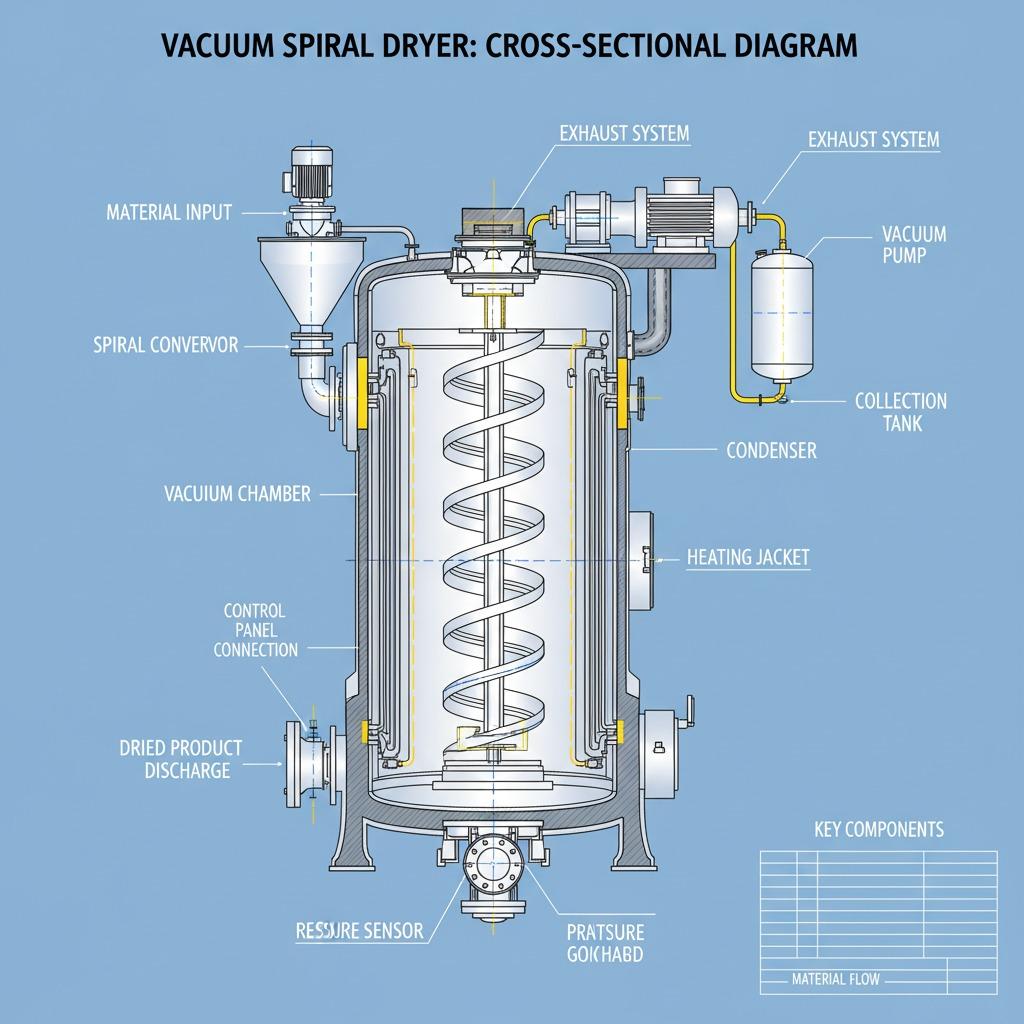
In the world of industrial manufacturing, the Vacuum Spiral Dryer stands out as a pivotal innovation for efficient material processing. This advanced equipment combines the principles of vacuum technology with a unique spiral configuration to achieve superior drying results. As industries strive for precision and sustainability, the Vacuum Spiral Dryer offers a solution that minimizes energy use while maximizing output quality. Whether you're dealing with sensitive pharmaceuticals or heat-sensitive chemicals, this dryer ensures uniform drying without compromising material integrity.
The Fundamentals of Industrial Vacuum Drying
Industrial Vacuum Drying is a cornerstone technique in modern processing plants, enabling the removal of moisture from materials under reduced pressure conditions. Unlike traditional hot air drying methods, this approach lowers the boiling point of water, allowing drying at lower temperatures. This is particularly beneficial for heat-sensitive products, preventing degradation and preserving essential properties. The Vacuum Spiral Dryer exemplifies this technology by incorporating a spiral path that promotes continuous material flow, ensuring even exposure to vacuum conditions.
The process begins with loading the material into the dryer's chamber, where vacuum is applied to create a low-pressure environment. As the pressure drops, moisture evaporates more readily, and the spiral mechanism gently agitates the material to facilitate uniform drying. This method not only speeds up the process but also reduces the risk of contamination, making it ideal for industries like food processing and pharmaceuticals. Efficiency in Industrial Vacuum Drying translates to significant cost savings, as it requires less energy compared to conventional systems.
Exploring Spiral Dryer Technology in Depth
Spiral Dryer Technology represents a leap forward in dryer design, featuring a helical or spiral conveyor system within the vacuum chamber. This innovative setup ensures that materials move progressively through the dryer, undergoing controlled drying stages. The Vacuum Spiral Dryer leverages this technology to handle a wide range of substances, from fine powders to viscous pastes, without clumping or uneven results. Its stainless steel construction, as seen in high-capacity models, provides durability and resistance to corrosion, essential for long-term industrial use.
One key advantage of Spiral Dryer Technology is its adaptability. Equipped with programmable controls, operators can adjust vacuum levels, temperature, and rotation speed to suit specific material needs. For instance, in chemical manufacturing, where precision is paramount, this technology allows for the drying of compounds that might otherwise degrade under atmospheric pressure. The integrated exhaust system further enhances performance by efficiently removing vapors, maintaining a clean operational environment. Overall, Spiral Dryer Technology in the Vacuum Spiral Dryer boosts productivity by reducing drying times by up to 50% in many applications.
Integrating Vacuum Spiral Dryers into Industrial Drying Systems
Industrial Drying Systems often require versatile equipment that can integrate seamlessly into existing production lines. The Vacuum Spiral Dryer fits this role perfectly, offering a compact design that supports both batch and continuous operations. Its top-mounted hatch simplifies loading and unloading, while the conical chamber optimizes material flow, preventing dead zones where uneven drying could occur. This makes it a reliable component in comprehensive Industrial Drying Systems, enhancing overall workflow efficiency.
When incorporating the Vacuum Spiral Dryer, considerations include compatibility with upstream mixers or reactors. For example, pairing it with a stainless steel rotary dryer mixer allows for immediate post-mixing drying, streamlining processes in pharmaceutical or food industries. Safety features, such as pressure valves and secure seals, ensure compliance with stringent regulations, protecting both operators and products. Moreover, the dryer's advanced temperature controls prevent overheating, a common issue in less sophisticated systems.
Maintenance is straightforward, thanks to the accessible design and corrosion-resistant materials. Regular cleaning of the spiral auger and chamber prevents buildup, extending the equipment's lifespan. In large-scale operations, this translates to minimal downtime and consistent performance. By adopting the Vacuum Spiral Dryer within Industrial Drying Systems, companies can achieve higher throughput and lower operational costs, aligning with goals of sustainability and innovation.
Benefits and Applications of the Vacuum Spiral Dryer
The Vacuum Spiral Dryer delivers numerous benefits that set it apart in the competitive landscape of drying equipment. Primarily, its vacuum operation preserves the nutritional value and chemical stability of materials, which is crucial for food and pharmaceutical applications. In the chemical sector, it handles volatile substances safely, reducing explosion risks associated with high-temperature drying. Energy efficiency is another highlight; by operating under vacuum, it consumes less power, contributing to greener manufacturing practices.
Applications span across multiple industries. In pharmaceuticals, it's used to dry active ingredients without altering their efficacy. Food processors employ it for dehydrating herbs, fruits, and dairy products, retaining flavors and nutrients. Even in petrochemicals, the Vacuum Spiral Dryer processes catalysts and intermediates, ensuring high purity levels. The technology's scalability means it suits both pilot plants and full-scale production, offering flexibility for growing businesses.
Furthermore, the integration of sensors for real-time monitoring enhances process control, allowing adjustments on the fly. This level of precision minimizes waste and optimizes yield, directly impacting profitability. Compared to traditional dryers, the Vacuum Spiral Dryer's spiral design reduces wear on materials, leading to higher-quality end products. As industries evolve toward more automated and eco-friendly solutions, this dryer emerges as a strategic investment.
Future Trends in Vacuum Spiral Drying Innovations
Looking ahead, advancements in Spiral Dryer Technology are poised to further elevate Industrial Vacuum Drying capabilities. Emerging trends include AI-driven controls that predict drying times based on material properties, enhancing efficiency even more. Hybrid systems combining vacuum with other drying methods, like microwave assistance, could expand the Vacuum Spiral Dryer's versatility.
Sustainability remains a driving force, with designs focusing on recyclable materials and energy recovery systems. For Industrial Drying Systems, modular Vacuum Spiral Dryers will allow easier upgrades, keeping pace with regulatory changes. As global demand for high-quality processed goods rises, this technology will play a central role in meeting those needs efficiently.
In summary, the Vacuum Spiral Dryer is transforming how industries approach drying challenges. Its blend of efficiency, precision, and durability makes it indispensable for modern manufacturing. By embracing this innovation, companies can stay ahead in a competitive market, ensuring products of the highest standard.





