Understanding the Vacuum Spiral Dryer: A Key to Efficient Industrial Processes
In the realm of industrial drying systems, the Vacuum Spiral Dryer stands out as a versatile and efficient solution for moisture removal in sensitive materials. This advanced equipment combines vacuum technology with a unique spiral configuration to achieve uniform drying without compromising product quality. Particularly useful in pharmaceuticals, food processing, and chemical manufacturing, the Vacuum Spiral Dryer ensures gentle handling of heat-sensitive substances, preventing degradation and maintaining integrity.
Principles of Industrial Vacuum Drying
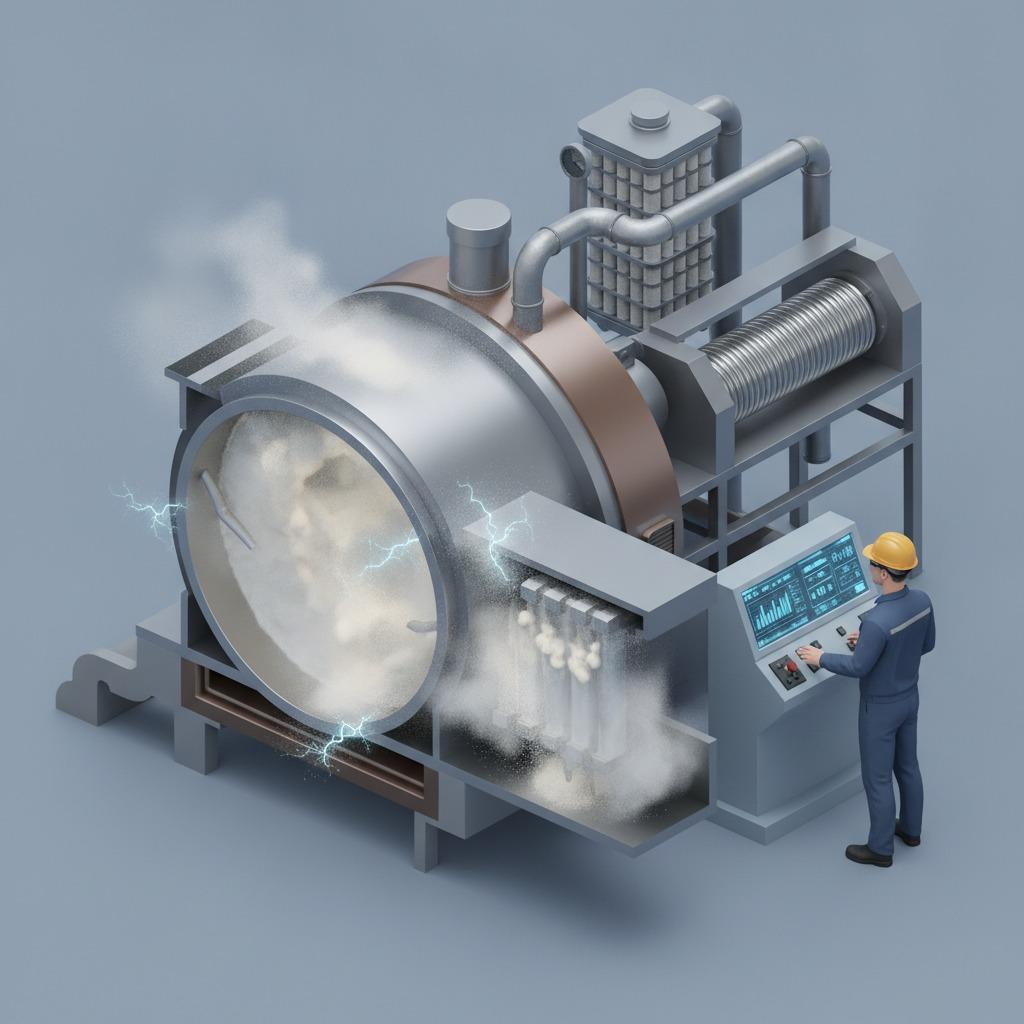
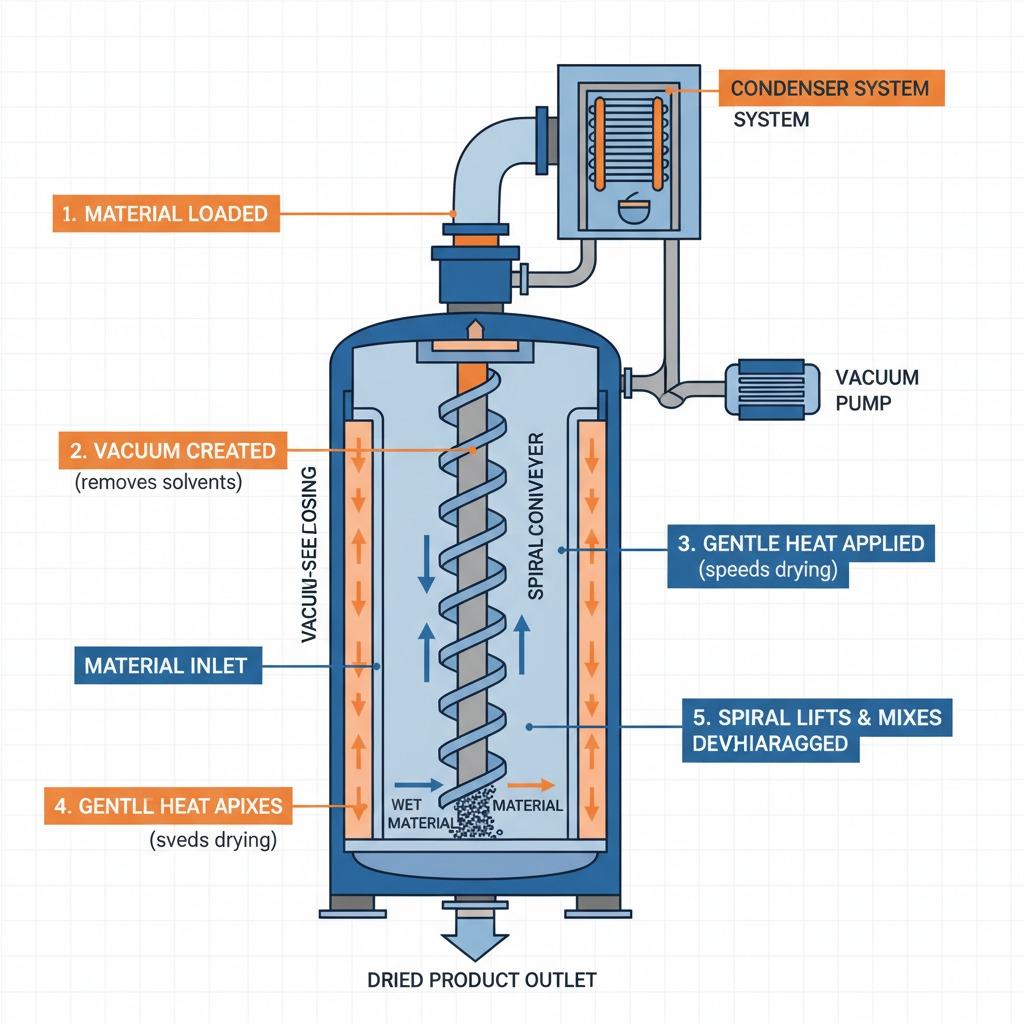
Industrial Vacuum Drying operates by reducing the pressure within the drying chamber, which lowers the boiling point of water or solvents. This allows for drying at lower temperatures compared to conventional methods, making it ideal for delicate products like APIs (active pharmaceutical ingredients) or organic compounds. The process begins with loading the wet material into the dryer, where vacuum pumps create a low-pressure environment. Heat is gently applied through conduction or radiation, evaporating the moisture that is then condensed and removed.
One of the primary advantages of Industrial Vacuum Drying is its energy efficiency. By operating under vacuum, it minimizes the need for high heat, reducing overall energy consumption by up to 50% in some applications. Additionally, it prevents oxidation and thermal decomposition, which are common issues in atmospheric drying. For industries handling hygroscopic materials, this method ensures precise control over residual moisture levels, often achieving dryness below 1%.
Integration with other systems, such as reactors or mixers, further enhances its utility. For instance, after a chemical reaction in a stainless steel reactor—featuring robust construction, conical bottoms for easy discharge, and motorized agitators for uniform mixing—the Vacuum Spiral Dryer can seamlessly process the resulting slurry or paste. This synergy supports batch processes in large-scale production, aligning with stringent quality controls in pharmaceutical and chemical sectors.
Exploring Spiral Dryer Technology
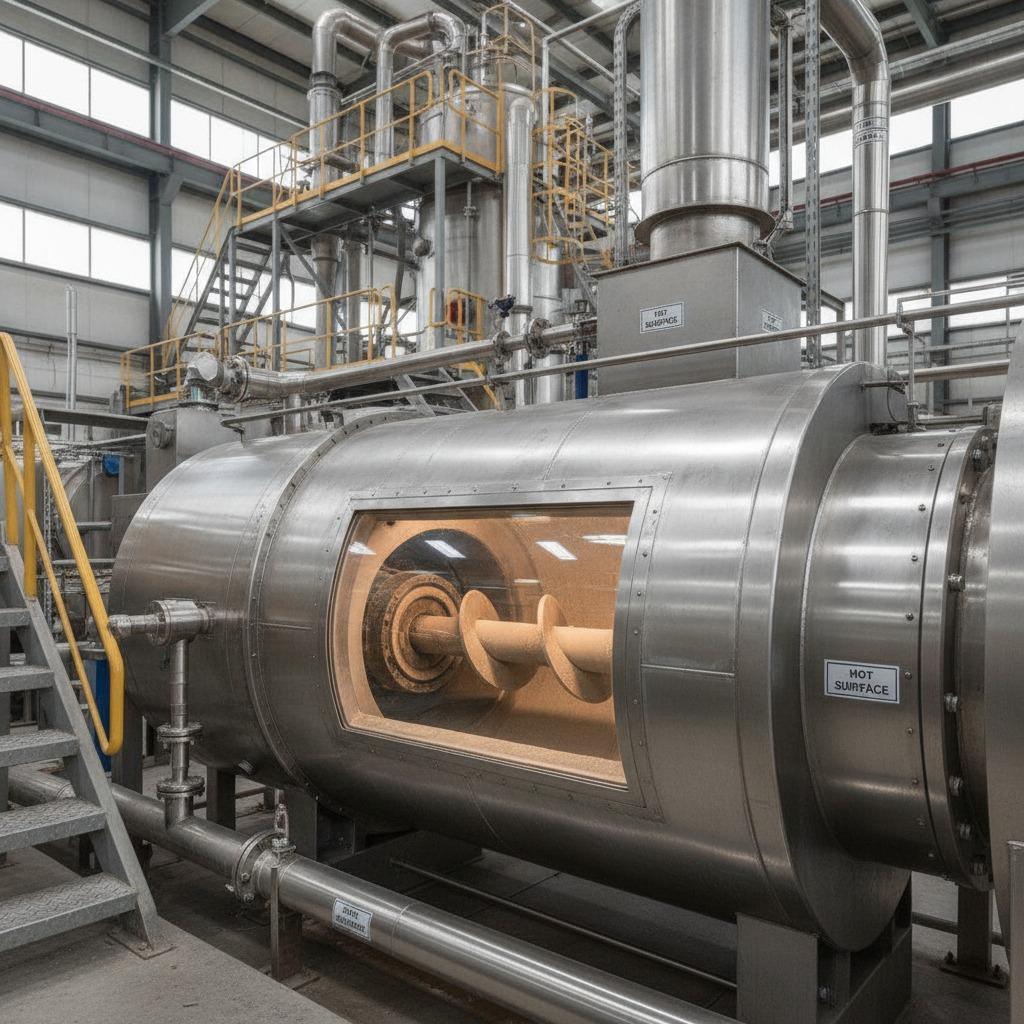
Spiral Dryer Technology refers to the innovative design where material moves along a helical or spiral path within the drying chamber. This configuration promotes continuous mixing and exposure to the vacuum environment, ensuring even drying without hot spots. The spiral mechanism, often driven by a low-shear agitator, gently tumbles the product, facilitating solvent evaporation while avoiding particle attrition.
Key components of a Vacuum Spiral Dryer include the vacuum-sealed housing, spiral conveyor or ribbon agitator, heating jacket, and condenser system. The stainless steel construction, resistant to corrosion, makes it suitable for handling aggressive chemicals or sterile environments. Safety features like pressure relief valves and temperature sensors are integrated to monitor and regulate operations, preventing over-pressurization or overheating.
In practice, Spiral Dryer Technology excels in drying viscous or sticky materials that tend to clump in traditional dryers. The continuous spiral motion breaks up agglomerates, promoting airflow and heat transfer. This results in shorter drying cycles—often 30-50% faster than static bed dryers—and higher throughput. For example, in the production of powdered pharmaceuticals, it maintains particle size distribution and bioavailability, critical for efficacy.
Compared to other dryers, such as tray or fluid bed types, the spiral design offers superior scalability. It can handle batches from 50 liters to several cubic meters, making it adaptable for pilot plants or full-scale manufacturing facilities. Maintenance is straightforward, with designs allowing quick disassembly for cleaning, complying with GMP (Good Manufacturing Practice) standards.
Advantages of Industrial Drying Systems Featuring Vacuum Spiral Dryers
Industrial Drying Systems incorporating the Vacuum Spiral Dryer provide a comprehensive solution for modern manufacturing challenges. These systems are engineered for versatility, supporting a wide range of materials from granules to pastes. The vacuum aspect minimizes dust emissions and solvent recovery, contributing to environmental compliance and cost savings—recovered solvents can be reused, reducing waste by up to 90%.
Efficiency in Industrial Drying Systems extends to operational controls. Advanced setups include PLC (Programmable Logic Controller) panels for real-time monitoring of vacuum levels, temperature, and agitation speed. This precision ensures reproducibility across batches, vital for industries like petrochemicals where consistency impacts product performance. The robust build, often with multiple ports for sampling and additions, mirrors the design of complementary equipment like chemical reactors, fostering seamless workflow integration.
From a safety perspective, these systems incorporate fail-safes such as explosion-proof motors and inert gas purging to handle flammable solvents. In high-capacity environments, the Vacuum Spiral Dryer's ability to process heat-sensitive materials without quality loss positions it as an essential asset. For instance, in food processing, it preserves nutritional value in dried fruits or proteins, while in chemicals, it supports the drying of catalysts or resins.
Moreover, the economic benefits are significant. Initial investment in a Vacuum Spiral Dryer is offset by reduced drying times and lower utility costs. Long-term durability from corrosion-resistant materials ensures minimal downtime, enhancing ROI. Companies adopting these Industrial Drying Systems report improved yield rates, often exceeding 95%, due to the gentle processing that minimizes product loss.
Applications and Future Trends in Vacuum Spiral Drying
The Vacuum Spiral Dryer finds applications across diverse sectors. In pharmaceuticals, it's used for drying antibiotics, vitamins, and herbal extracts, ensuring sterility and potency. Chemical industries employ it for pigments, polymers, and fine chemicals, where uniform dryness is crucial for downstream processing. Even in emerging fields like biotechnology, it aids in drying enzymes and probiotics under controlled conditions.
Spiral Dryer Technology is evolving with Industry 4.0 integrations, such as IoT sensors for predictive maintenance and data analytics for process optimization. Future models may incorporate AI-driven controls to adjust parameters in real-time, further boosting efficiency. As sustainability demands grow, vacuum-based systems like these will play a pivotal role in reducing carbon footprints through energy-efficient operations.
In summary, the Vacuum Spiral Dryer represents a pinnacle of innovation in Industrial Vacuum Drying and broader Industrial Drying Systems. Its blend of gentle processing, efficiency, and versatility makes it indispensable for forward-thinking manufacturers. By leveraging this technology, facilities can achieve superior product quality, operational savings, and compliance with regulatory standards, driving success in competitive markets.