Why buyers still ask about the three types of blenders
The phrase three types of blenders sounds simple, but in manufacturing and commercial sourcing it usually means one thing: choosing the right blending method for the product, the batch size, and the plant layout. That decision matters more than many teams expect. A blender that looks “close enough” on paper can create segregation, slow down production, or damage ingredients that should have stayed intact.
For engineers, sourcing managers, and product teams, the real question is not academic. It is whether the equipment can deliver repeatable mixing, handle the material characteristics, and fit into the process without creating a second problem downstream. A poor choice often shows up later as inconsistent fill weights, uneven flavor, dead zones in a powder blend, or excessive cleanup time. Those are expensive lessons.
Quick view: the three common blender categories
In industrial use, the most commonly discussed blender types are ribbon blenders, tumble blenders, and paddle blenders. Different plants may group equipment a little differently, but these three cover a large share of dry blending applications.
1. Ribbon blender
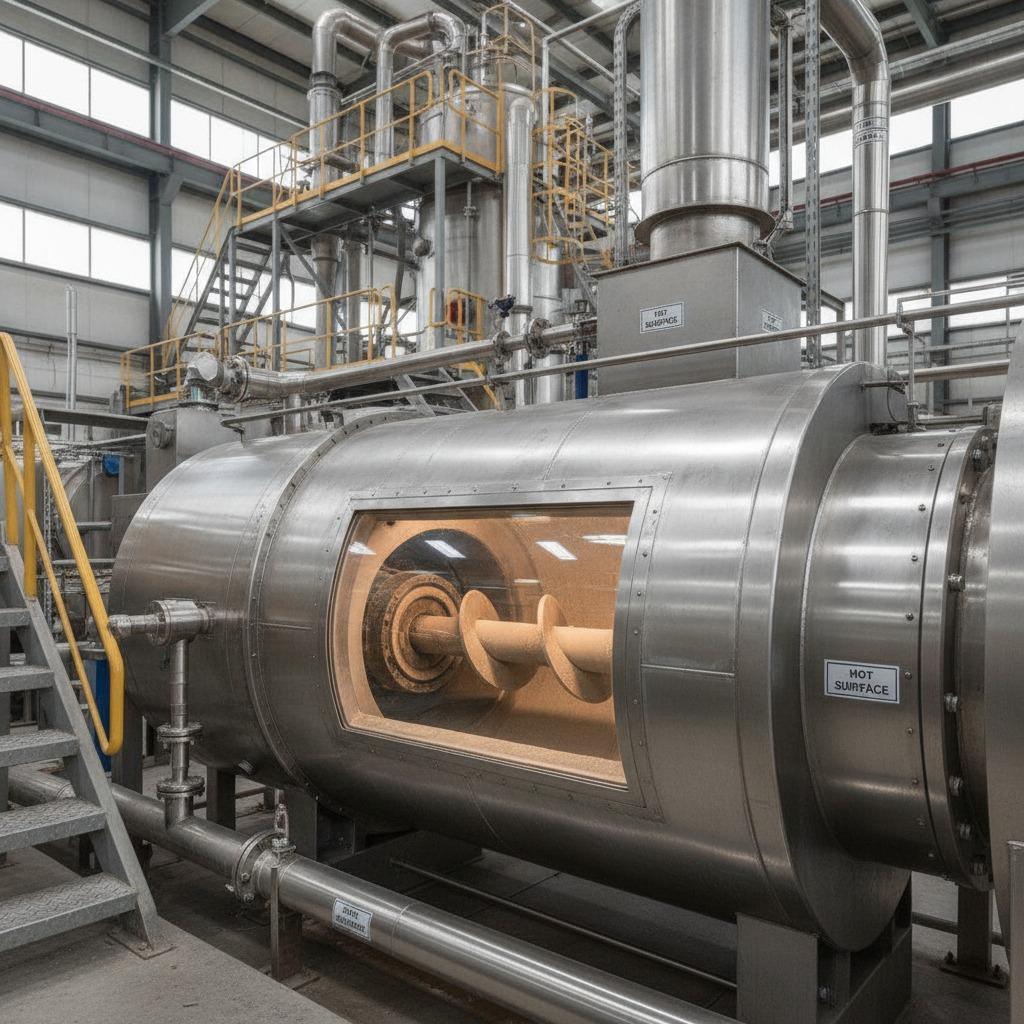
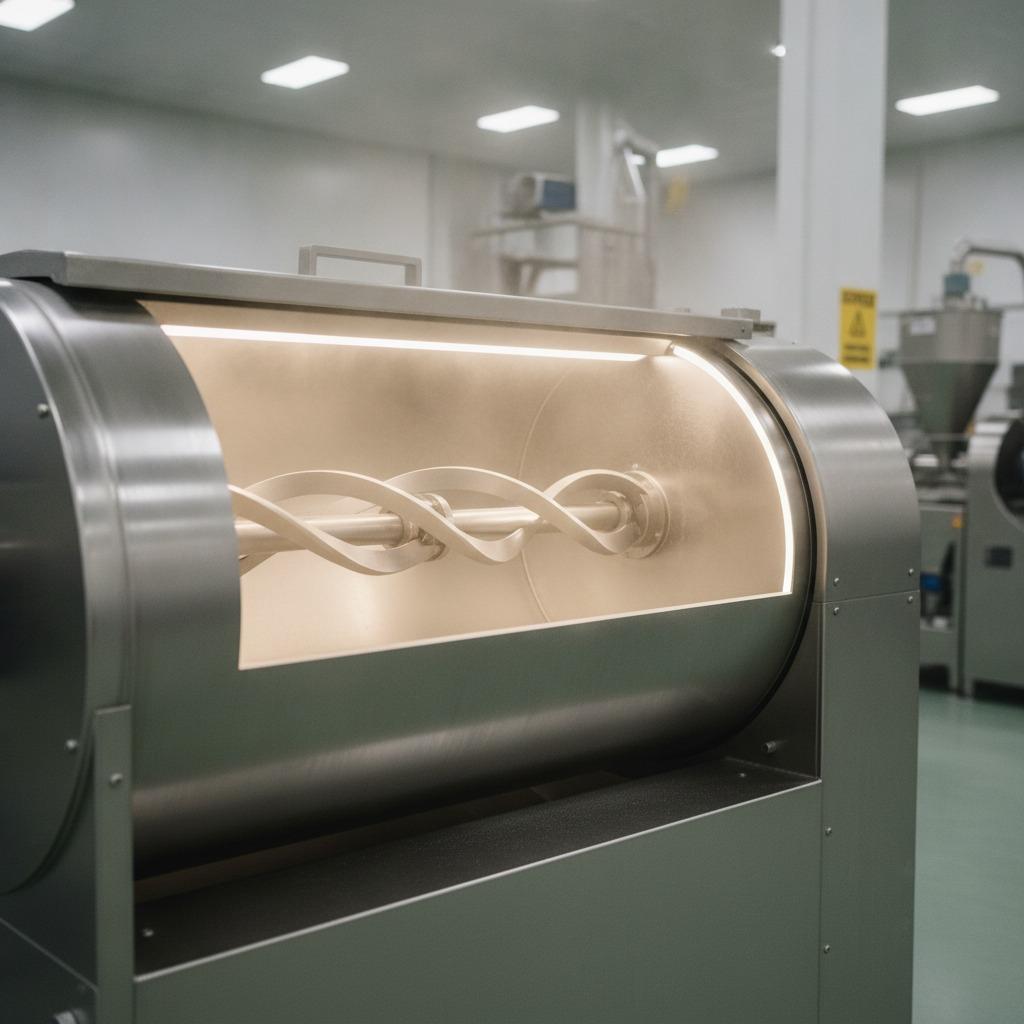
A ribbon blender uses inner and outer helical ribbons mounted on a central shaft. The ribbons move material in opposite directions, creating both axial and radial motion. That combination is why ribbon units are often used for dry powders, granules, and some light-duty pastes.
They are a practical choice when you need a relatively fast batch blend and when the material can move freely. They are not ideal for fragile particles that break easily, and they are not the best fit for very large density differences unless the process has been carefully validated.
2. Tumble blender
A tumble blender rotates a drum, V-shell, or similar vessel so the material repeatedly lifts and falls. Mixing happens through gravity, not through aggressive internal agitation. This gentler action makes tumble blenders useful for blends that must avoid particle damage or heat buildup.
They are often chosen for pharmaceuticals, specialty chemicals, and other products where preserving particle shape matters. The tradeoff is that tumble blending can be slower, and it may struggle with cohesive powders unless the formulation and fill level are well matched to the machine.
3. Paddle blender
A paddle blender uses paddles or plows to move material in more vigorous patterns than a tumble blender, but usually with a different flow profile than a ribbon blender. It is commonly selected when the formula includes more delicate ingredients, some sticky components, or when the process needs a faster, more distributive mix.
The paddle design can be forgiving in certain applications, but it also needs careful evaluation. If the batch is extremely small relative to vessel size, or if the product tends to cake, the operator may still see inconsistent results. As with most mixer choices, the devil is in the material behavior.
What actually separates these blender types
When buyers compare blender types, they often focus on speed or price first. Those matter, but they are not the main variables. Material behavior usually decides the outcome.
The key factors are:
Batch size relative to vessel volume
Particle size distribution
Bulk density differences
Flowability and cohesiveness
Shear sensitivity
Cleaning requirements
Desired blend uniformity
Heat generation during mixing
A free-flowing powder may blend well in one machine and separate in another if the feed stream is not controlled. A fragile granule may survive a tumble blender but break apart in a more aggressive system. And a sticky formulation can make any blender look bad if the equipment was never designed for that kind of load.
Selection criteria that matter on the plant floor
There is a tendency to over-specify mixing equipment. Teams ask for the “most versatile” blender, which sounds reasonable until the line is running a product family that does not need versatility so much as consistency. The better question is: what is the actual process window?
1. Match the blender to the material, not the brochure
If the formula is mostly free-flowing powder, a ribbon blender may be a strong, practical option. If particle integrity matters more than fast turnover, tumble blending may be the safer route. If the process needs more active material movement, a paddle system may be a better fit.
In other words, the material should lead the specification. Equipment catalogs rarely say that loudly enough.
2. Check batch turnover and changeover demands
Some blenders look efficient until a plant needs frequent product changeovers. Then cleaning time becomes the hidden cost. Access points, discharge design, and surface finish all influence how much labor is needed between batches. For multi-SKU operations, this can outweigh a small difference in mixing speed.
3. Think about segregation after mixing
A blend is only useful if it stays blended long enough to be transferred, packaged, or used downstream. If the ingredients have very different densities or particle sizes, a blender may create a good sample at discharge and a poor one later in the process. That is one of the most common mistakes in powder handling.
Common mistakes buyers make
A few problems come up again and again.
One is assuming all dry blenders behave similarly. They do not. The same formulation can perform very differently in a ribbon blender versus a tumble blender.
Another is ignoring fill level. Many blender types depend on a specific working range. Overfilling can kill circulation; underfilling can reduce mixing efficiency. This is not a minor setup detail. It is part of the machine’s operating logic.
A third mistake is forgetting the discharge step. A beautifully blended batch that bridges, segregates, or hangs up during emptying is not a success. The transfer method has to work with the blender, not against it.
Practical buyer advice for sourcing and engineering teams
If you are selecting equipment, start with a simple trial plan. Define the formulation family, identify the worst-case ingredients, and test the equipment under realistic loading conditions. If the supplier can demonstrate the machine with your material or a close analog, that is far more useful than a polished datasheet.
It also helps to ask how the blender will be maintained. Bearings, seals, access doors, and removable parts affect uptime more than many first-time buyers realize. A machine that is easy to clean and inspect will usually be easier to keep in service.
For plants handling sensitive materials, ask whether the blender can be configured for gentle blending, sanitary access, or dust control as needed. Those options may not be glamorous, but they can save a project from a lot of friction later.
A simple way to think about the three types of blenders
If you want the short version: ribbon blenders are often chosen for efficient batch mixing of powders and granules; tumble blenders are favored when gentle handling matters; paddle blenders sit somewhere in between and can handle more active blending needs. That is the starting point, not the final answer.
The right decision depends on whether your priority is speed, gentleness, ease of cleaning, product integrity, or some combination of all four. Most real production lines care about at least three of those at once, which is why selection deserves more than a quick comparison table.
FAQ: a few questions buyers usually ask
Are the three types of blenders suitable for wet and dry products?
Not equally. Some can handle light pastes or small liquid additions, but each machine has a practical operating range. Dry blending is the most common use case, and wet applications need closer review.
Which blender is best for fragile ingredients?
A tumble blender is often the first machine people evaluate for fragile materials because it blends more gently. Still, formulation details matter, and a test run is the safest guide.
Which blender is fastest?
Speed depends on the material and the target uniformity. A faster machine is not automatically better if it creates segregation or breaks product.
Can one blender handle every product?
Usually not well. Plants sometimes buy a versatile machine and then discover it is a compromise everywhere. That can work for low-risk operations, but high-value or sensitive products usually need a tighter fit.
What to do next
If your team is comparing the three types of blenders for a new line or a process upgrade, build the decision around material behavior, cleaning burden, and downstream handling first. Then compare the candidate machines under realistic conditions. That approach is less dramatic than chasing the biggest spec sheet, but it tends to produce better long-term results.
The best blender is rarely the most impressive one on paper. It is the one that keeps the process stable when the line is busy, the recipe changes, and the product still has to come out right.