Spray Drying Benefits: Why Engineers and Product Teams Still Rely on It
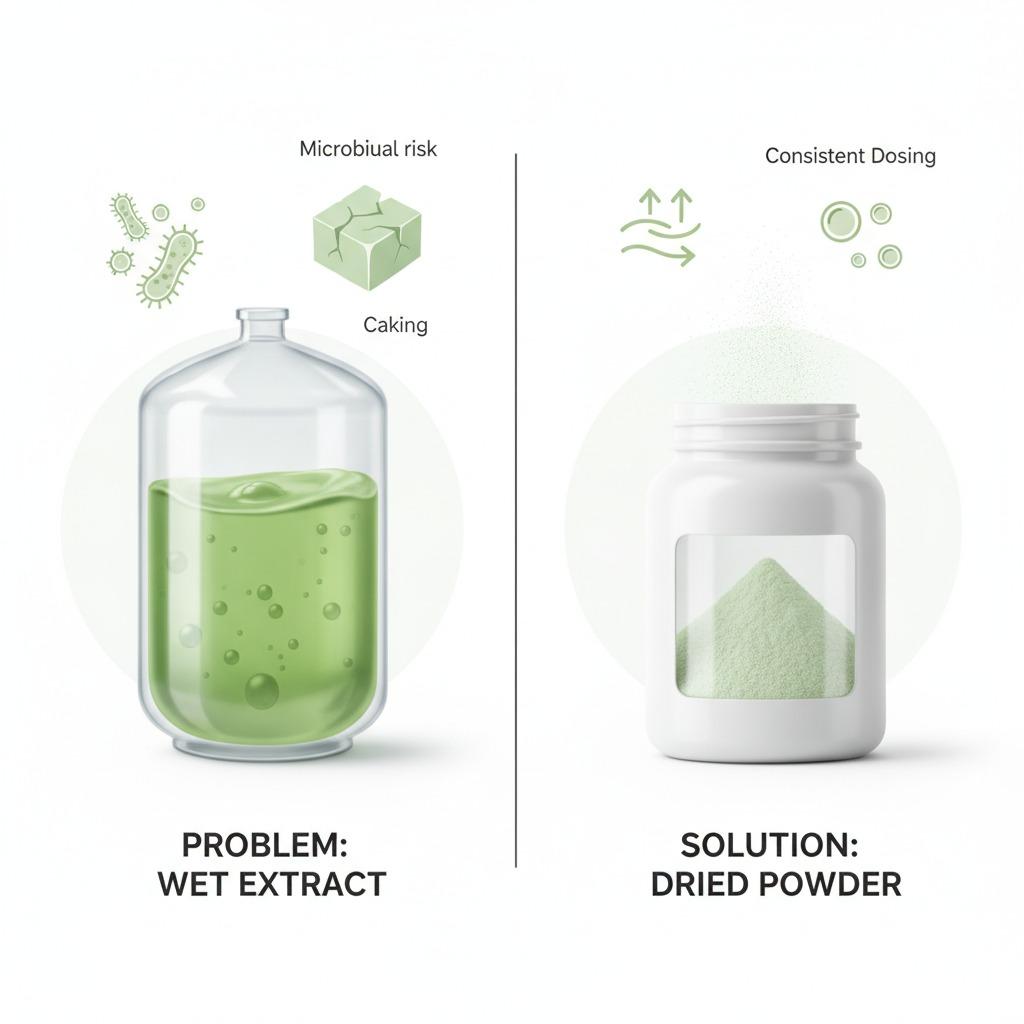
Spray drying benefits show up most clearly when a liquid formulation has to become a stable, free-flowing powder without losing the qualities that matter in use. That may sound straightforward, but in manufacturing it is rarely simple. A feed stream can contain flavors, active ingredients, polymers, chemicals, or food solids that do not behave well under heat, and yet the end user still wants a powder that stores cleanly, meters predictably, dissolves or disperses properly, and survives transport. Spray drying is one of the few processes that can solve several of those problems at once.
For engineers, sourcing managers, and product teams, the practical question is not whether spray drying is fashionable. It is whether the process fits the product, the scale, and the commercial target. A drying method can be technically possible and still be a poor business choice if it creates dusting, weak yield, or unstable powder morphology. The decision usually comes down to whether the benefits justify the process complexity.
What spray drying does, in plain manufacturing terms
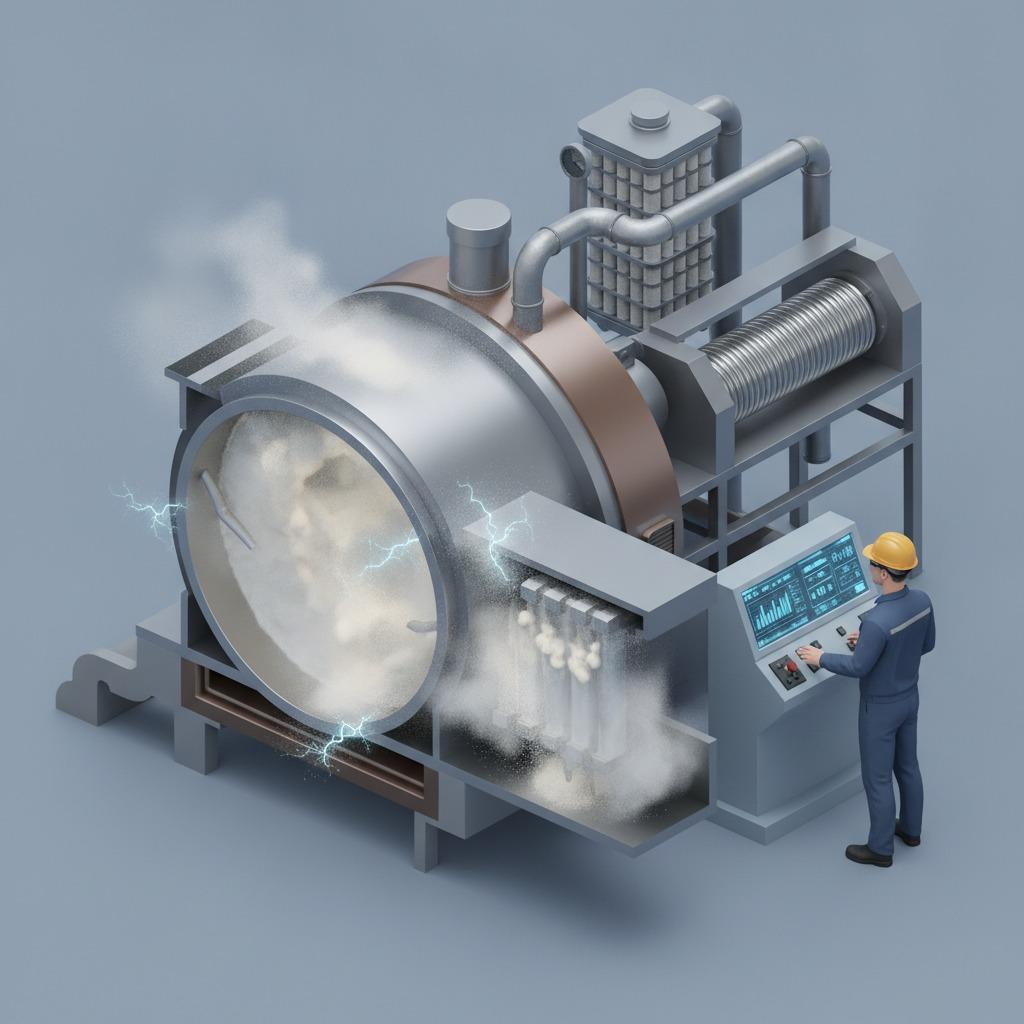
Spray drying converts a liquid feed into a dry particulate product by atomizing it into a hot drying chamber. The droplets are exposed to heated air, moisture evaporates quickly, and solid particles are collected at the outlet. Because evaporation happens in seconds rather than minutes or hours, the process is widely used when heat exposure must be controlled.
That fast turnaround is central to spray drying benefits. It allows a plant to turn a pumpable liquid into a powder with relatively consistent particle properties, provided the feed formulation and dryer settings are well matched. This is one reason the process appears in foods, pharmaceuticals, specialty chemicals, ceramics, detergents, and a range of engineered materials.
The main spray drying benefits buyers care about
1. Stable powders from hard-to-handle liquids
Many products are easier to sell, ship, and dose as powders than as liquids. Spray drying gives manufacturers a route from slurry, emulsion, solution, or suspension to a dry format that is often less bulky and more storage-friendly. For buyer teams, that can reduce packaging complexity and improve logistics. For formulators, it can also make a product less vulnerable to settling, separation, or microbial issues that affect liquids.
2. Short thermal exposure
This is one of the most important technical advantages. Because each droplet dries quickly, the material is not held at high temperature for long periods. That matters for ingredients that are heat-sensitive, though the real picture is more nuanced than marketing language sometimes suggests. The outlet temperature, droplet size, residence time, and feed composition all influence the final result. Still, compared with slower drying methods, spray drying often gives formulators more control over thermal stress.
3. Better powder handling
A good spray-dried powder can flow better than a wet cake or an irregularly milled solid. That matters in filling lines, blending operations, and downstream processing. Some powders also show improved dispersibility or reconstitution behavior because the particle structure is engineered during drying. This is especially useful when a product needs to dissolve quickly or disperse uniformly in a later step.
4. Particle engineering opportunities
Spray drying is not just a drying step; it is also a shaping step. By changing atomization conditions, solids content, binder systems, and drying parameters, manufacturers can influence particle size distribution, density, porosity, and surface characteristics. That can support better compressibility, lower caking tendency, or specific dissolution behavior. In other words, spray drying can help a formulation do more than simply survive shelf life.
5. Batch consistency at scale
Once a spray dryer is tuned, the process can be relatively repeatable. That makes it attractive for industrial buyers who care about lot-to-lot consistency. Of course, repeatability depends on disciplined feed preparation and process control. If the incoming solids vary or the slurry is not mixed well, the dryer will not magically fix that. But compared with more artisanal drying methods, spray drying can offer a tighter path to standardized output.
Where spray drying fits best
Not every product should be spray dried. The process is most effective when the formulation can be made pumpable and when the value of a powdered product is clear enough to justify the capital and operating costs.
Common fit categories include:
Liquid-to-powder conversions where storage stability matters
Products that need controlled particle size or improved flow
Heat-sensitive ingredients that cannot tolerate long drying cycles
Mixtures that need encapsulation or protection within a carrier matrix
Materials that benefit from rapid dissolution or uniform dispersion
The caveat is important: a spray dryer is not a cure for poor formulation design. If the solids content is wrong, the feed viscosity is too high, or the material is sticky by nature, the process window may be narrow. Buyers sometimes overlook this and assume the dryer alone will deliver the desired powder. It usually takes formulation work first.
How spray drying compares with other drying routes
A quick comparison is useful when teams are choosing a process route.
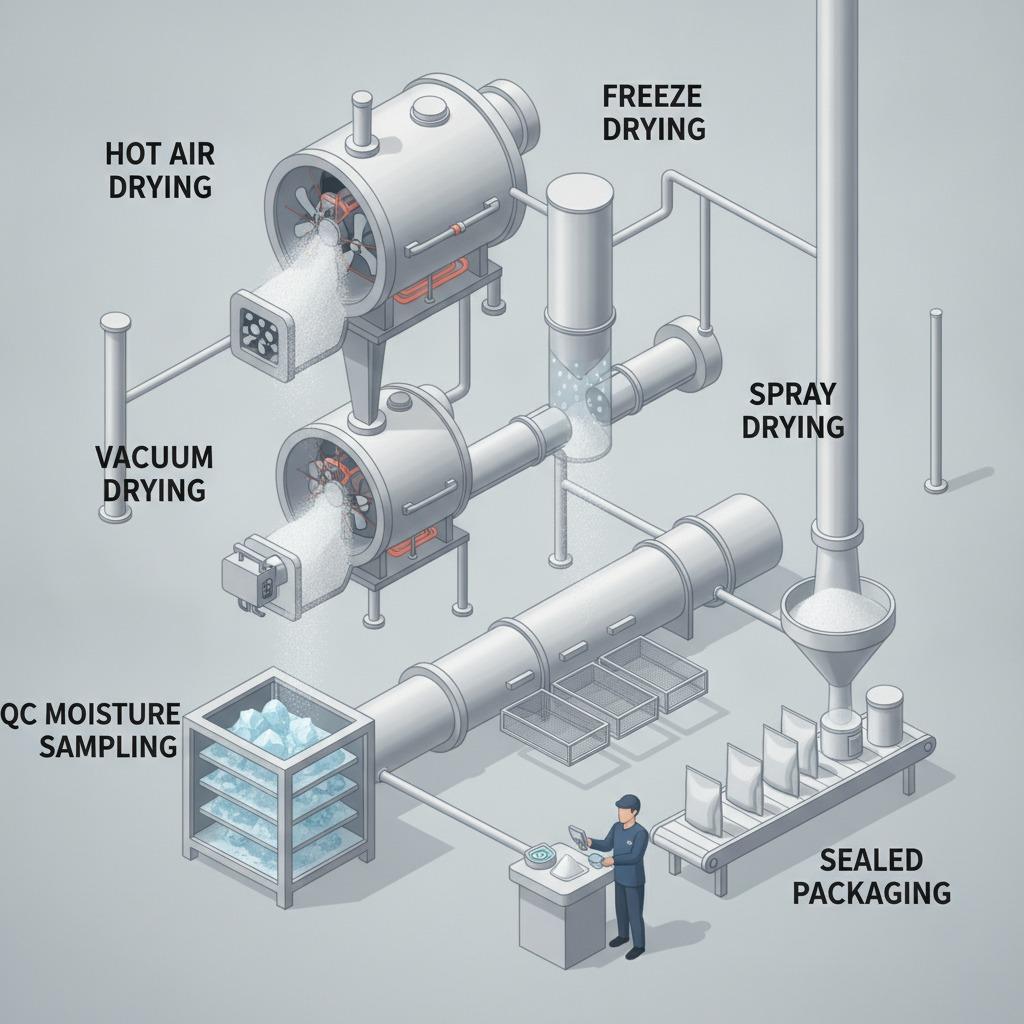
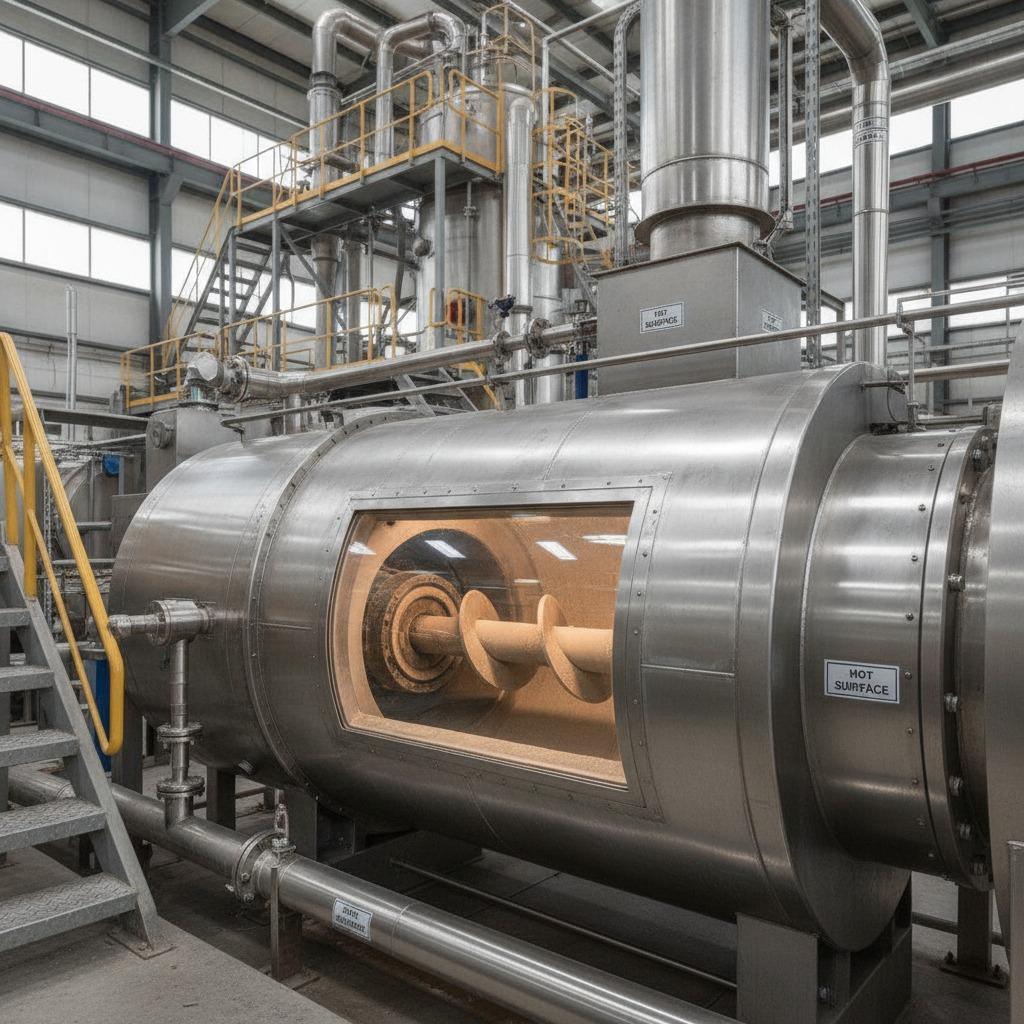
Conventional tray or oven drying is simple and often lower in equipment complexity, but it is slow and can expose materials to prolonged heat. Freeze drying protects sensitive products well, yet it is expensive and generally not suited to high-volume industrial powder production. Drum drying can be efficient for certain materials, though it may not provide the same control over particle formation.
Spray drying sits in the middle for many applications: more controllable than bulk drying, faster than freeze drying, and often better suited to continuous production. That does not make it universally superior. It makes it strategically useful when speed, powder quality, and scale all matter at the same time.
Technical factors that influence the result
A buyer looking at spray drying benefits should also understand the variables that determine whether those benefits appear in production.
Feed properties matter first. Solids concentration, viscosity, surface tension, and thermal sensitivity all affect atomization and drying performance. A feed that seems acceptable in the lab can behave very differently at plant scale.
Atomization method matters as well. Different nozzle or rotary approaches create different droplet patterns, which in turn influence particle size and final powder structure.
Drying air temperature and airflow shape the process window, but hotter is not automatically better. Too much heat can damage sensitive components or create undesirable skin formation on droplets. Too little heat can leave the powder tacky or insufficiently dried.
Collection and post-processing matter too. Some products need agglomeration, sieving, or blending after drying. If those steps are not planned early, the powder may meet technical specs but still be awkward to use in the field.
Common mistakes buyers make
One frequent mistake is focusing only on moisture removal and ignoring powder behavior. A dry powder that cakes badly or dusts excessively can create downstream problems that outweigh the drying success.
Another mistake is underestimating formulation work. Spray drying often requires carriers, stabilizers, or process aids to make a product viable. Those extras affect cost and performance, so they should be evaluated early.
A third issue is assuming scale-up will be linear. Lab results are valuable, but pilot and production runs are where residence time, heat transfer, and feed consistency start to reveal practical limits. Teams that skip pilot validation sometimes pay for it later in yield losses or inconsistent powder morphology.
Questions to ask before choosing spray drying
What problem is the powder supposed to solve: shelf life, handling, dispersibility, encapsulation, or all of these?
Is the feed chemistry stable enough for atomization and drying?
Can the formulation tolerate the necessary process aids or carriers?
What powder properties matter most to downstream users: flow, solubility, density, or particle size?
What yield and recovery level is acceptable for the business case?
Will the product be made in batches or continuously, and what volume justifies the equipment investment?
These are not academic questions. They determine whether spray drying benefits will show up on the shop floor or only in the specification sheet.
Practical buyer advice
If you are sourcing a spray-dried ingredient or evaluating a contract manufacturing partner, ask for more than a simple moisture value. Ask how the feed is prepared, what the likely particle morphology is, how sensitive the powder is to humidity, and whether the process has been demonstrated at relevant scale. If the supplier is vague on those points, treat that as a warning sign.
It also helps to request sample material and test it in your own handling conditions. A powder can look excellent in a sealed container and still bridge in a hopper or disperse poorly in your actual equipment. That kind of field mismatch is common enough that it deserves attention early.
FAQ: spray drying benefits in real-world use
Is spray drying always better than other drying methods?
No. It is often better when fast drying, powder quality, and scale matter together, but other methods can be more economical or more suitable for certain materials.
Why do manufacturers choose spray drying for sensitive ingredients?
Because the material experiences short thermal exposure, which can reduce the risk of damage compared with slower drying processes. That said, the formulation still has to be designed carefully.
Can spray drying improve shelf life?
It can, especially when the product is more stable as a powder than as a liquid. Shelf life still depends on packaging, moisture control, and the chemistry of the ingredient itself.
What is the biggest hidden risk?
Assuming the powder will behave well just because it is dry. Flowability, dispersibility, and caking resistance matter just as much as moisture content.
A useful way to think about the decision
The real spray drying benefits are not limited to drying speed. The process can change how a product behaves in storage, shipping, and downstream use. That is why it remains important across so many industries. When the formulation is right and the process is well controlled, spray drying can turn a difficult liquid into a commercially practical powder with useful handling characteristics.
For teams evaluating the option, the smartest next step is usually a small technical review: define the target powder behavior, check feed suitability, and compare pilot data against the actual requirements of packaging, transport, and end use. If those pieces line up, spray drying is often worth serious attention. If they do not, the process may still be possible, but the commercial case becomes much weaker.