
Why a spray dryer for plant extracts matters in real production
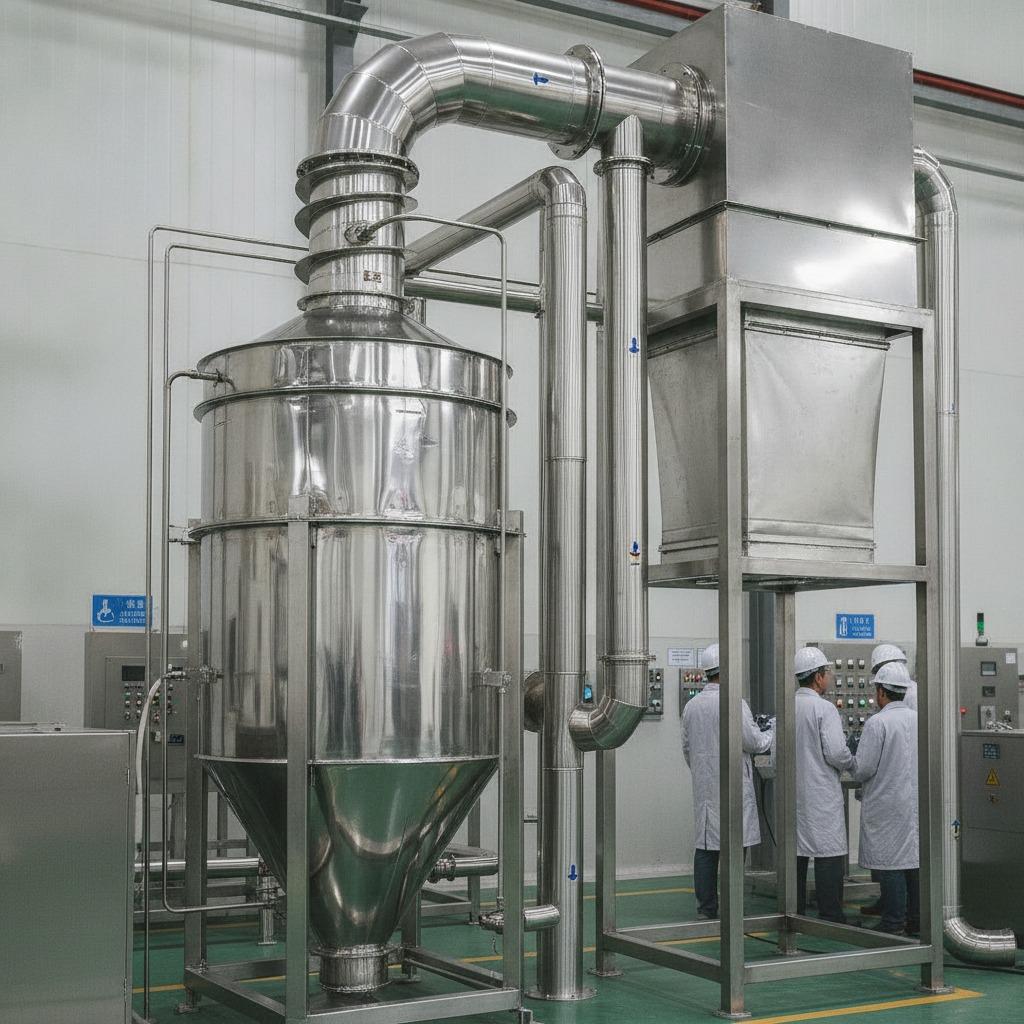
A spray dryer for plant extracts is one of those pieces of process equipment that can quietly determine whether a botanical product behaves well on the market or becomes a constant source of complaints. For engineers and sourcing teams, the question is rarely whether spray drying works in principle. It does. The real issue is whether a given extract can be dried into a stable, free-flowing powder without losing too much of the active profile, sticking to the chamber, or creating a product that performs inconsistently in the next step of manufacturing.
That matters because plant extracts are not simple fluids. They can be viscous, sticky, acidic, sugary, aromatic, or sensitive to heat. One batch may atomize cleanly; another may foul the dryer because the solids content shifted or the feed was not prepared in the same way. Buyers often look at the dryer itself first, but in practice the whole chain matters: extraction, concentration, filtration, carrier selection, feed conditioning, and then the drying step. Miss one of those, and the best machine on the shop floor will still struggle.
What spray drying is doing to a botanical feed
At its core, spray drying turns a liquid feed into powder by atomizing it into fine droplets and exposing those droplets to a controlled stream of hot air. The moisture flashes off quickly, and the dry particles are collected as powder. For plant extracts, that fast drying profile is attractive because it can reduce thermal exposure compared with slower evaporation methods.
Still, “faster” does not automatically mean “gentler.” The inlet temperature, outlet temperature, droplet size, residence time, and feed concentration all influence how the extract behaves. A spray dryer for plant extracts is usually being asked to accomplish several things at once:
- preserve functional compounds as much as practical
- produce a powder with acceptable flowability
- control stickiness and wall deposition
- achieve a consistent moisture level
- make the product suitable for blending, tableting, encapsulation, or packaging
That combination is why botanical drying is often more demanding than drying a fairly forgiving chemical solution. In other words, the equipment is only part of the answer.
Key process variables buyers should pay attention to
If you are comparing options, there are a few variables that should get more attention than glossy brochures usually give them.
Feed solids and viscosity
Higher solids content can improve drying efficiency because less water needs to be removed. But there is a limit. Botanical feeds often become thick, sticky, or hard to atomize as solids rise. A feed that is too concentrated may create poor droplet formation and more buildup inside the chamber.
Atomization method
The atomizer helps determine droplet size, and droplet size influences drying speed and final particle characteristics. Depending on the process, plants may use pressure nozzles, two-fluid nozzles, or rotary atomization. Each has trade-offs in throughput, maintenance, and sensitivity to feed variation. This is one of those areas where plant operators tend to develop strong opinions, usually for good reason.
Temperature control
Botanical materials may tolerate short thermal exposure better than long residence time, but there is no universal rule. Excess heat can damage certain aromatic or bioactive compounds, while too little heat can leave you with damp powder and poor yield. The useful decision is not “hot or cold,” but how the dryer manages the balance between moisture removal and product quality.
Carrier or wall-protection strategy
Many extracts benefit from carriers or processing aids that reduce stickiness and help form a more stable powder. Maltodextrin, gum arabic, and similar materials are often discussed in this context, though the right choice depends on the extract chemistry and the final application. If the end customer wants a “clean label” or a high active-loading powder, this step deserves careful scrutiny. A carrier can make the process work, but it also changes the formulation.
What a good powder should look like
A spray dryer for plant extracts is not judged only by whether it runs. It is judged by the powder it produces. Depending on the application, the buyer may care about the following:
- moisture level and storage stability
- bulk density and packing behavior
- flowability for downstream dosing
- particle size distribution
- solubility or dispersibility
- retention of color, aroma, or active constituents
For nutraceutical, food, and herbal applications, the powder often needs to behave predictably in blending and packaging. For pharmaceutical-adjacent uses, consistency becomes even more important, because variation in powder behavior can create processing headaches downstream. A powder that bridges in a hopper or clumps in humid storage quickly erodes the economic case for drying it in the first place.
Common pitfalls in plant extract spray drying
A few mistakes show up again and again.
Buying the dryer before fixing the feed
This is probably the most common problem. Teams focus on the machine, then feed it an extract that has not been properly filtered, concentrated, or standardized. Spray dryers are not forgiving of debris, sediment, or inconsistent solids content. If the upstream liquid changes from batch to batch, the dryer will magnify those differences.
Assuming one set of conditions fits all extracts
Different plants behave differently. A sugar-rich botanical extract may stick badly even when the inlet temperature seems moderate. A more mineral-heavy extract may dry cleanly but produce a coarse, less desirable powder. The practical point is simple: process development should be product-specific, not borrowed from a neighboring formulation that merely looks similar on paper.
Ignoring cleaning and changeover time
Botanical production often involves multiple SKUs, which means flavor carryover, color contamination, and residue buildup can matter. If the spray dryer is hard to clean, the production schedule will suffer. This is one reason maintenance access and chamber design are not minor details.
How to compare equipment options without getting lost in specs
When sourcing a spray dryer for plant extracts, it helps to compare units the way a plant manager would, not the way a catalog would like you to.
Start with throughput range, but do not stop there. Ask whether the dryer can actually handle the feed characteristics you have, not just the water removal number. Review the atomization system, chamber geometry, exhaust handling, and powder collection approach. If the product is especially sensitive, ask how the system supports temperature management and whether it allows practical process adjustment during runs.
Also look at the collection and recovery side. Botanical powders can be fine and lightweight, so cyclone performance, bag filtration, and powder transfer design affect both yield and housekeeping. In many plants, this is where the hidden cost lives.
If you are working with a contract manufacturer or equipment vendor, request data from a representative extract class rather than a generic sugar solution. Even if the exact formula cannot be shared, the material family should be similar enough to tell you whether the dryer is realistic for your application. That is a much better conversation than debating catalog temperature ranges in the abstract.
Buyer-facing questions worth asking early
Before you commit to a design, a short list of practical questions can save months later:
- What feed concentration range is realistically manageable?
- How does the system deal with sticky or hygroscopic extracts?
- What cleaning access is built in?
- How is powder collected and recovered?
- Can the dryer support small development batches as well as larger runs?
- What happens if the extract composition shifts between harvests or suppliers?
Those questions may sound basic, but they are exactly the ones that determine whether a dryer becomes a productive asset or a recurring troubleshooting project.
When spray drying is the right choice, and when it may not be
A spray dryer for plant extracts makes sense when the goal is a stable powder, the extract can be prepared into a pumpable feed, and the business wants a process with strong throughput potential. It is especially useful when the powder needs to be blended, encapsulated, or packaged in a form that is easier to store and ship than a liquid extract.
It may be the wrong choice if the extract is extremely heat sensitive, highly viscous even after concentration, or too sticky without heavy formulation help. In some cases, freeze drying, vacuum drying, drum drying, or alternative concentration methods may fit better. Those methods each bring their own trade-offs in cost, throughput, and product characteristics.
Practical next step for sourcing and process teams
The safest way to evaluate a spray dryer for plant extracts is to treat it as part of a process, not a standalone machine purchase. Start with the extract chemistry, define the powder properties you actually need, and then test whether a candidate dryer can deliver that outcome with acceptable cleaning, recovery, and operating stability.
If you are preparing an RFQ, build it around the feed characteristics, desired powder behavior, and downstream use case. That will produce better supplier responses than a vague request for a “botanical spray dryer,” which is too broad to be useful. A little specificity up front usually pays for itself quickly once production starts.





