Spray Dryer Common Problems: what buyers and plant teams should watch before output quality slips
Spray dryer common problems usually show up the same way: product that will not hold moisture targets, powder that sticks where it should not, or a unit that seems to need more and more operator attention just to keep running. For engineers and sourcing managers, the issue is not only finding the fault. It is deciding whether the problem sits in feed preparation, atomization, airflow, chamber design, or simple maintenance discipline. That distinction matters because the wrong fix can waste time, damage product quality, and push operating cost higher than it needs to be.
In drying operations, small changes can have outsized effects. A slight shift in feed viscosity may alter droplet size. A worn nozzle can broaden the particle distribution. An air leak can pull down thermal efficiency without anyone noticing until energy use climbs or the outlet powder goes out of spec. If you are evaluating a new machine or trying to stabilize an existing line, it helps to understand where spray drying tends to go wrong and which symptoms point to which cause.
Why spray drying issues matter so much
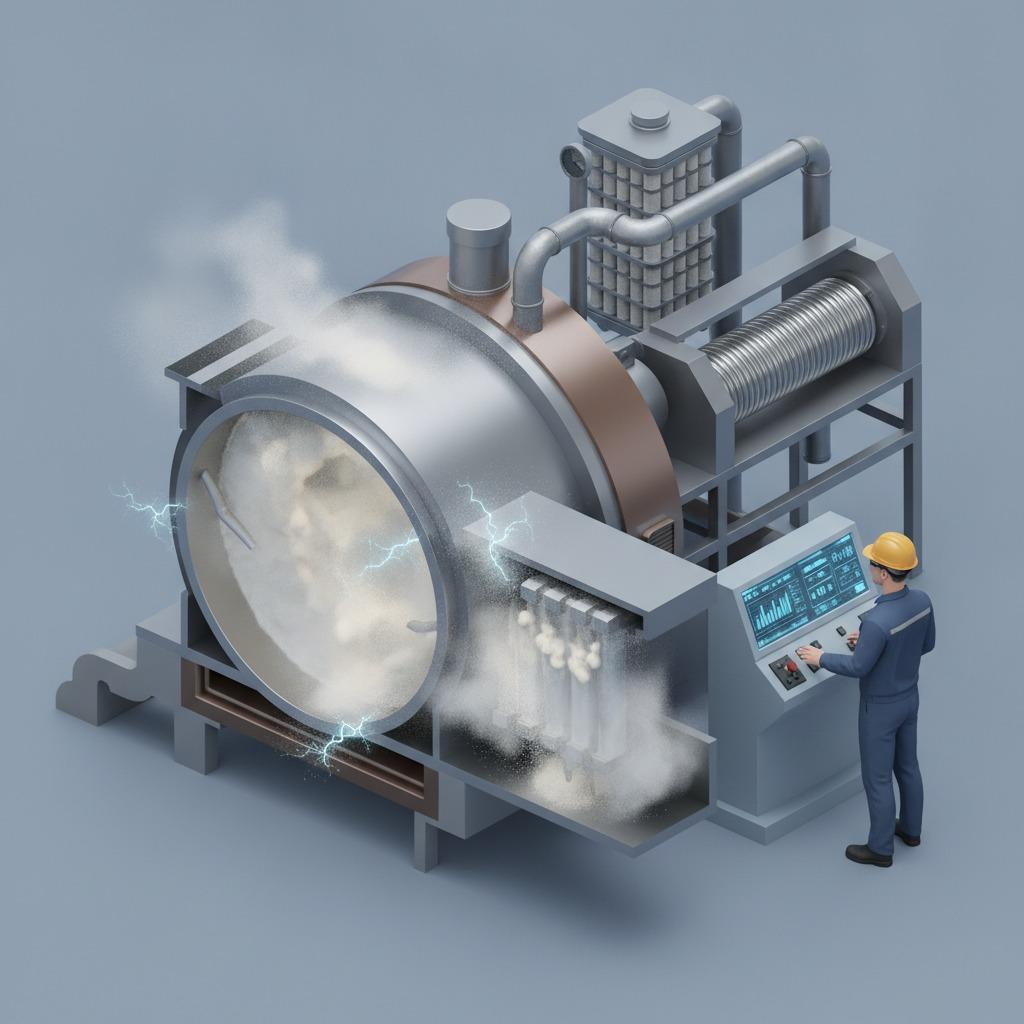
Spray drying is often chosen because it can turn liquids, slurries, or emulsions into a dry powder quickly and with good control over particle characteristics. That is also why the process can be unforgiving. A spray dryer is not just a hot-air box; it is a tightly linked system. Feed preparation, atomization method, air distribution, residence time, and powder recovery all interact. When one element drifts, the whole process can drift with it.
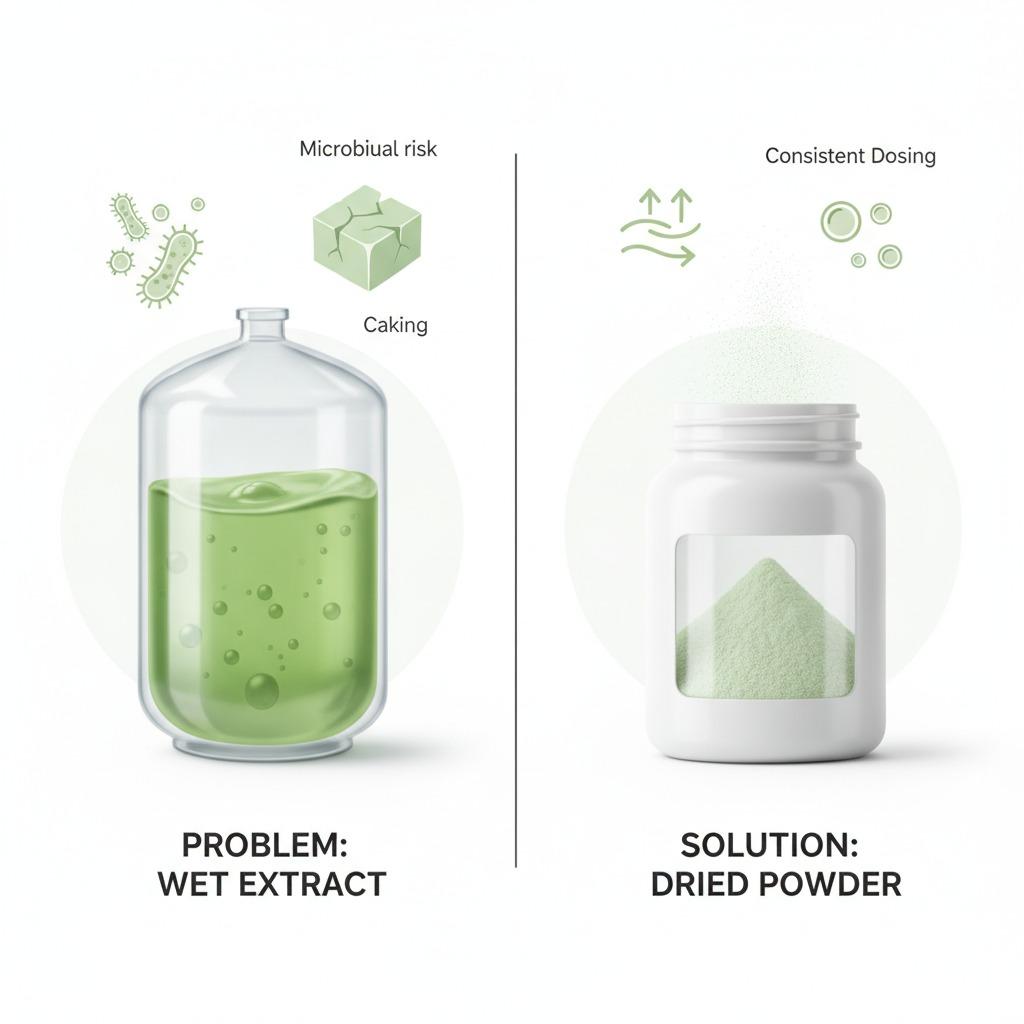
For product teams, the consequences are practical. A powder that is too moist may cake in packaging or storage. A powder that is too fine may cause dusting and losses. An inconsistent particle profile can affect flowability, dispersibility, bulk density, and how the powder behaves downstream in blending, tableting, or instantization. In food, pharma, ceramics, detergents, and specialty chemicals, those differences can be commercial issues, not just process notes.
Quick reference: where the trouble usually starts
Most spray dryer common problems fall into a handful of categories. Some are mechanical, some are process-related, and some are caused by a mismatch between the feed material and the dryer design.
Feed-related problems
If the feed solids content, viscosity, temperature, or filtration is off, the atomizer can only do so much. Thick feeds often create larger droplets and wider particle spread. Unstable emulsions can separate before drying, and solids that are not well dispersed may leave deposits or inconsistent powder quality.
Atomization problems
Nozzles, pressure atomizers, rotary atomizers, and two-fluid systems each have different failure modes. Wear, plugging, poor alignment, or improper operating pressure can all affect droplet formation. Once droplet size shifts, drying behavior shifts with it.
Airflow and thermal control problems
Uneven air distribution, incorrect inlet temperature, or poor exhaust control can leave powder under-dried in one run and overheated in another. Sometimes the problem is not the nominal temperature at all, but airflow pattern and residence time inside the chamber.
Powder recovery and buildup problems
Fines escaping into the exhaust, powder sticking to the chamber wall, and deposits on cyclones or filters all reduce yield. They also increase cleaning frequency, which becomes a hidden cost over time.
Common spray dryer common problems and what they usually indicate
1. Powder sticking to chamber walls
Wall deposition is one of the most familiar complaints. It can point to outlet temperatures that are too low for the product, droplets that are too wet, or a chamber design that does not suit the feed’s stickiness profile. Some materials have a narrow window where they dry cleanly. Outside that window, they become tacky and begin to build up on internal surfaces.
Operators sometimes respond by raising temperature, but that is not always the right answer. If the root cause is atomization, hotter air may only create a crust on the outside of the droplet while the interior stays moist. That can make fouling worse rather than better.
2. High residual moisture in the powder
Moisture that stays above target usually means the drying load exceeds available energy transfer or residence time. Feed rate may be too high, inlet temperature too low, air volume insufficient, or droplet size too large. In practical terms, the dryer is being asked to do more work than the current settings allow.
It is worth checking whether product conditions changed upstream. A feed that was previously stable can behave very differently after a recipe change, seasonal raw-material variation, or a shift in solids content. That is one of the easier causes to overlook.
3. Excessive fines or dusty product
When powder is too fine, it can become difficult to handle and may escape with exhaust air. This can happen if atomization is overly aggressive, if the feed is too dilute, or if the drying curve is too fast for the formulation. Fine particles can also be a sign that brittle material is breaking up during handling or collection.
Buyers sometimes focus on capacity and forget that a dryer can make the “right” mass of powder while still producing the wrong particle structure. That is a real risk when the downstream process depends on flowability or reconstitution behavior.
4. Nozzle plugging or atomizer wear
Plugging is often caused by inadequate filtration, poor feed preparation, or crystallization at the nozzle tip. Wear is a different issue and usually shows up more gradually: changing spray pattern, drifting droplet size, and less stable product quality. A rotary atomizer can also wear at the wheel or feed point, affecting distribution over time.
This is one of the areas where preventive maintenance pays for itself. If operators wait until the output visibly degrades, the process has often been drifting for some time already.
5. Low thermal efficiency
Dryers can lose efficiency through air leaks, fouled surfaces, poor insulation, or poor heat recovery practices. Sometimes a unit appears to be “running fine” while energy use steadily rises. That is especially common when deposits narrow flow paths or when exhaust conditions drift away from the intended operating window.
From a sourcing perspective, this is where a lower-priced dryer can become expensive later. A system that looks acceptable on paper may still cost more if it is harder to keep clean, tune, and seal properly.
What to check first before replacing equipment
Not every spray dryer problem means the machine is wrong for the application. A disciplined troubleshooting sequence usually saves more money than a rushed equipment change.
Start with the feed. Confirm solids content, viscosity, temperature, pH if relevant, and filtration quality. Then check atomization components for wear, clogging, or inconsistent operation. After that, review inlet and outlet temperature control, airflow, exhaust handling, and the condition of the chamber and collection system. Only after those basics are ruled out should the team move toward larger mechanical changes.
A practical warning here: operators may compensate for a bad condition so well that the underlying cause is hidden. If a dryer has been “tuned” manually for months, recorded setpoints may not reflect the real process anymore. That makes historical data useful, but not always fully trustworthy.
Selection criteria that reduce future headaches
When evaluating equipment, engineers should think beyond capacity. The right dryer is the one that matches the material, not just the production target.
Key questions include: How sticky is the product during drying? Does it need tight control over particle size? Is the feed stable or variable? How often will the unit be cleaned? Are there heat-sensitive ingredients? Will the powder be used in instant products, blending, or direct filling?
Different spray dryer configurations handle these demands differently. Pressure nozzles can be a good fit for certain feeds. Rotary atomizers can support different throughput and particle patterns. Two-fluid systems may help with specific atomization needs, though they can affect energy use and droplet size in ways that matter to the final powder. The point is not that one design is universally better. It is that a good match reduces the chance of spray dryer common problems later.
Common buyer mistakes that show up after commissioning
One frequent mistake is underestimating cleaning access. If the dryer is difficult to inspect, fouling tends to linger longer and small issues become recurring issues. Another is assuming that a lab-scale success will scale cleanly without revisiting air distribution and residence time. That assumption causes trouble more often than vendors like to admit.
Another common oversight is ignoring the upstream and downstream systems. Feed tanks, pumps, filters, conveying lines, and packaging equipment all influence how the dryer performs in practice. A spray dryer is rarely the only variable in the room.
FAQ: short answers buyers often need
What is the most common spray dryer issue?
Wall buildup and off-spec moisture are among the most common. They often point to a combination of feed, atomization, and airflow issues rather than a single fault.
Can a spray dryer run well but still produce poor powder?
Yes. A unit can appear mechanically stable while particle size, moisture, or bulk density drift outside the needs of the application.
Should I fix process settings before buying new equipment?
Usually, yes. Many spray dryer common problems can be traced to operating conditions, maintenance, or feed preparation. Replacing equipment too early can hide the real issue.
What should I ask a supplier during evaluation?
Ask how the dryer handles your feed type, what cleaning access looks like, how atomization is maintained, and what process conditions are most sensitive to variation. Those answers tend to reveal more than a brochure does.
A practical next step for sourcing and engineering teams
If you are dealing with recurring spray dryer common problems, document the symptom first, then trace it backward through feed, atomization, air handling, and recovery. That sequence is tedious, but it is usually faster than chasing isolated fixes. For new equipment, use the same logic before RFQ: define the product behavior you need, not just the throughput you want. A dryer that meets the spec on paper but struggles with your actual feed is not a good purchase.
The best outcome is a system that dries consistently, cleans predictably, and fits the product’s real-world behavior. That is not glamorous, but it is what keeps a powder line profitable.