
Exploring the Frontiers of Powder Mixing Technology
Powder mixing technology is a critical process in modern manufacturing, where consistent composition, uniform particle distribution, and reliable batch quality are essential. From pharmaceutical and food processing to chemical manufacturing, battery materials, and powder metallurgy, the right powder mixing equipment can directly affect product quality, production efficiency, and material handling.
Industrial powder mixers are designed to combine powders and granules into a homogeneous blend while controlling factors such as mixing time, particle characteristics, segregation, dust generation, and energy consumption. Depending on the material properties and production requirements, manufacturers can select different solutions, including 3D motion mixers, double cone mixers, V-type mixers, and other industrial powder blending equipment.
This guide explains how powder mixing technology works, the main types of industrial powder mixers, their applications, and the key factors to consider when selecting powder mixing equipment for your production process.
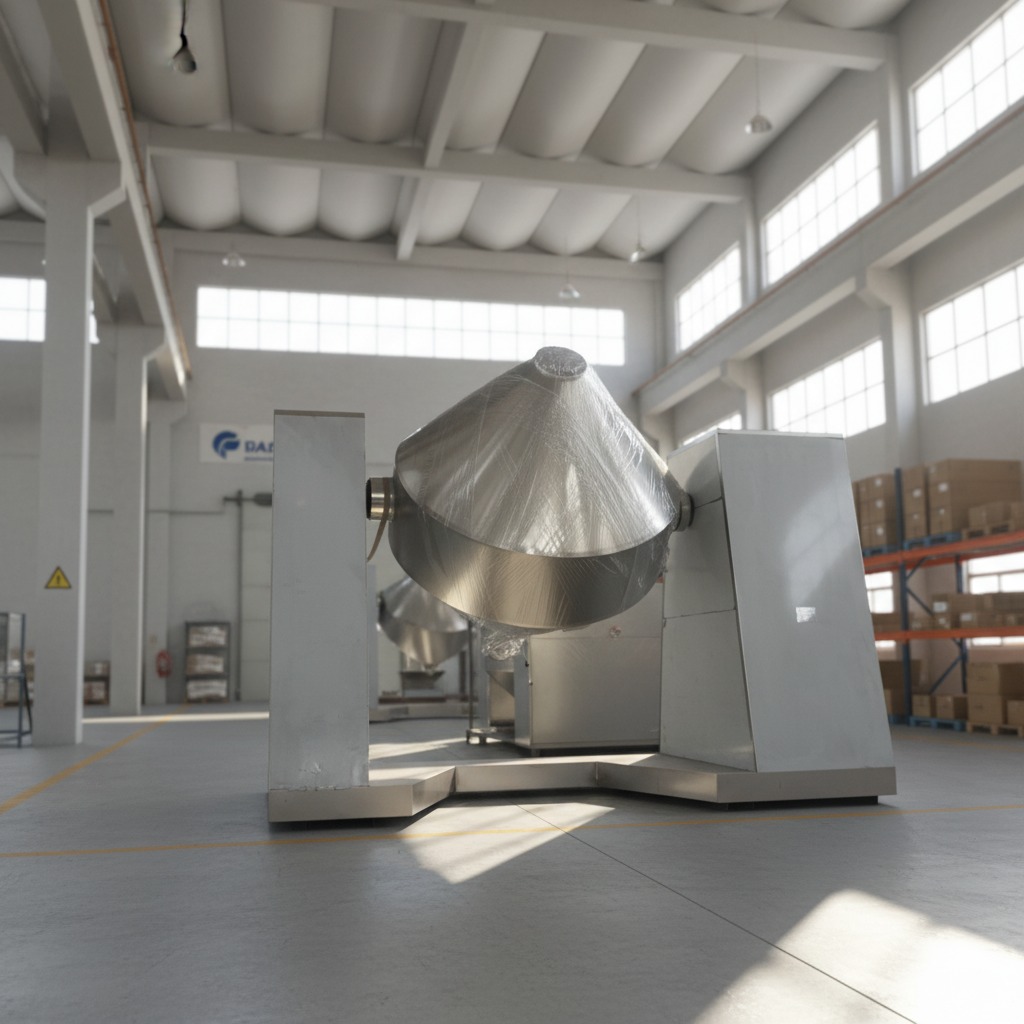
Powder mixing technology has revolutionized how industries handle dry materials, ensuring uniformity and efficiency in processing. At its core, this technology involves sophisticated equipment designed to blend powders without compromising quality or introducing contaminants. For sectors like manufacturing and production, mastering powder mixing technology is essential for achieving consistent results in every batch. This article delves into the intricacies of this vital process, highlighting key equipment and applications that drive modern innovation.
Types of Powder Mixing Equipment
Different powders require different mixing mechanisms. Particle size, bulk density, flowability, moisture content, sensitivity to shear, and required batch capacity should all be considered when selecting industrial powder mixing equipment.
1. 3D Motion Powder Mixer
A 3D motion mixer uses multi-directional movement to continuously change the position of the materials inside the mixing vessel. This approach promotes uniform powder blending while reducing dead zones and excessive mechanical stress.
It can be used for pharmaceutical powders, food ingredients, chemical materials, battery materials, and other dry powders or granules.
2. Double Cone Mixer
A double cone mixer uses a rotating vessel to tumble powders and granules through the mixing chamber. Its relatively gentle mixing action makes it suitable for applications where particle integrity and uniform blending are important.
Typical applications include pharmaceutical powders, food ingredients, chemical powders, ceramic materials, and other free-flowing dry materials.
3. V-Type Powder Mixer
A V-type powder mixer uses a V-shaped mixing chamber to divide and recombine materials during rotation. This repeated movement helps achieve homogeneous blending with relatively low shear.
V-type mixers are commonly considered for pharmaceutical, food, chemical, and fine powder applications.
4. Ribbon and Paddle Mixers
Ribbon and paddle mixers use internal mixing elements to move powders through the vessel. They can be suitable for applications requiring stronger mixing action, higher throughput, or the handling of powders with different flow characteristics.
5. High-Shear Powder Mixers
High-shear mixers generate stronger mechanical forces to disperse, deagglomerate, or rapidly incorporate difficult materials. They are useful when conventional tumble mixing does not provide sufficient dispersion.
Understanding the Basics of Powder Mixing Technology
Powder mixing technology refers to the methods and machines used to combine dry particulate materials into a homogeneous mixture. This process is crucial in industries where particle size, density, and flowability can affect the final product's performance. Traditional mixing techniques often fall short in achieving perfect uniformity, leading to issues like segregation or uneven distribution. Modern powder mixing technology addresses these challenges through advanced engineering, such as rotational and tumbling mechanisms that promote gentle yet thorough blending.
One of the primary goals in powder mixing technology is to minimize energy consumption while maximizing mix quality. Factors like mixing time, speed, and vessel design play pivotal roles. For instance, the technology ensures that even cohesive powders, which tend to clump, are dispersed evenly. This not only improves product consistency but also reduces waste, making it a cost-effective solution for high-volume operations. As industries evolve, powder mixing technology continues to incorporate automation and smart controls to enhance precision.
| Mixer Type | Best For | Mixing Action | Typical Applications |
|---|---|---|---|
| 3D Motion Mixer | Uniform dry powder blending | Multi-directional motion | Pharmaceutical, food, chemical |
| Double Cone Mixer | Gentle powder blending | Tumbling | Pharmaceutical, food, chemical |
| V-Type Mixer | Low-shear blending | Dividing & recombining | Pharmaceutical, chemical |
| Ribbon Mixer | Larger-volume blending | Convective mixing | Chemical, food, industrial |
| High-Shear Mixer | Deagglomeration & rapid dispersion | High mechanical shear | Chemical, specialty powders |
The Role of Battery Production Equipment in Powder Mixing
In the realm of battery production equipment, powder mixing technology takes on heightened importance due to the stringent requirements for material purity and uniformity. Battery manufacturing involves blending electrode materials like lithium salts and carbon powders, where any inconsistency can lead to performance failures or safety risks. Battery production equipment integrated with advanced powder mixing technology ensures that active materials are homogeneously distributed, optimizing energy density and cycle life in the final batteries.
Battery production equipment often features specialized mixers that operate under controlled environments to prevent moisture ingress or oxidation. This technology allows for scalable operations, from laboratory-scale testing to full industrial production lines. By leveraging powder mixing technology, manufacturers can achieve faster throughput without sacrificing quality. For example, inline monitoring systems within battery production equipment can adjust mixing parameters in real-time, ensuring each batch meets exact specifications. This integration is transforming the electric vehicle and renewable energy sectors, where demand for reliable batteries is surging.
Moreover, advancements in battery production equipment have led to more sustainable practices. Powder mixing technology in this context reduces the need for over-mixing, which can degrade sensitive materials. Companies investing in such equipment report up to 30% improvements in production efficiency, underscoring its value in competitive markets. As the push for greener energy solutions intensifies, powder mixing technology will remain a cornerstone of innovative battery production equipment.
Automated Powder Blending: The Future of Efficiency
Automated powder blending represents a leap forward in powder mixing technology, combining robotics and software to streamline the blending process. This approach eliminates manual intervention, reducing human error and exposure to hazardous materials. In automated powder blending systems, sensors and algorithms monitor blend quality continuously, adjusting variables like rotation speed or addition rates to achieve optimal results.
The benefits of automated powder blending extend to versatility across applications. Whether mixing pharmaceuticals, where precision is paramount, or chemicals requiring explosive safety measures, this technology adapts seamlessly. It supports high-throughput environments by handling multiple recipes without downtime for cleaning. Powder mixing technology embedded in these systems ensures scalability, allowing businesses to ramp up production as needed. For food processing, automated powder blending maintains flavor and nutritional consistency, meeting regulatory standards effortlessly.
Furthermore, automated powder blending enhances traceability, which is critical in regulated industries. Data logging features within these systems provide audit trails, ensuring compliance with quality assurance protocols. As industries adopt Industry 4.0 principles, powder mixing technology through automation will drive smarter factories, minimizing downtime and maximizing output. This evolution not only boosts productivity but also fosters innovation in product development.
Spotlight on the Industrial Double-Cone Mixer
A standout example in powder mixing technology is the industrial double-cone mixer, engineered for efficient and homogeneous mixing of diverse materials. This robust machine features a sleek, stainless-steel double-cone vessel that rotates to deliver thorough blends with minimal material loss and contamination. Its design is particularly advantageous in demanding settings, ensuring durability and reliability over extended use.
The industrial double-cone mixer excels in applications ranging from pharmaceuticals to food processing, where hygiene and precision are non-negotiable. Its large capacity allows for batch sizes that suit both small-scale and large-scale operations, enhancing overall productivity. Battery production equipment can integrate this mixer for blending cathode and anode materials, while automated powder blending setups benefit from its seamless automation compatibility. The mixer's modern aesthetic also integrates well into contemporary facilities, combining functionality with visual appeal.
What sets the industrial double-cone mixer apart in powder mixing technology is its user-friendly operation. Quick setup and easy discharge mechanisms reduce turnaround times, making it ideal for fast-paced production lines. Maintenance is straightforward, with accessible components that minimize downtime. Industries adopting this equipment often see significant reductions in operational costs, thanks to its energy-efficient design and long service life.
Industrial Powder Mixing Equipment Manufacturer
Choosing a powder mixing equipment manufacturer involves more than selecting a standard machine. Industrial applications may require different capacities, mixing mechanisms, materials of construction, discharge configurations, automation options, and process conditions.
Jiangsu Yutong Drying Engineering Co., Ltd. provides industrial mixing and drying solutions for different powder and granule processing requirements. Our equipment portfolio includes solutions for dry powder blending, 3D motion mixing, and other industrial material processing applications.
Before recommending a powder mixer, key parameters such as material characteristics, required capacity, mixing uniformity, batch cycle, discharge method, and downstream processing requirements should be evaluated.
If you are looking for an industrial powder mixer, powder blending equipment, or a customized mixing solution, contact our engineering team with your material and production requirements for a suitable equipment recommendation.
Applications and Innovations in Powder Mixing Technology
Beyond specific equipment, powder mixing technology is pivotal in various industrial applications. In the chemical sector, it facilitates the creation of uniform composites for paints and coatings, ensuring consistent viscosity and color. For nutraceuticals, precise blending via battery production equipment analogs maintains active ingredient potency. Automated powder blending innovations are also pushing boundaries in 3D printing, where custom powder formulations require exact homogeneity.
Emerging trends in powder mixing technology include AI-driven optimization, where machine learning predicts and refines mixing parameters based on material properties. This leads to customized solutions that adapt to unique challenges, such as handling nano-powders or heat-sensitive substances. Sustainability is another focus, with eco-friendly designs that reduce energy use and incorporate recyclable materials. As global supply chains demand faster, greener processes, powder mixing technology will continue to evolve, supporting diverse industries with cutting-edge solutions.
Frequently Asked Questions About Powder Mixing
What is powder mixing technology?
Powder mixing technology refers to the processes and equipment used to combine two or more powders or granular materials into a uniform mixture. Mixer selection depends on particle characteristics, required uniformity, capacity, and processing conditions.
What is the difference between powder mixing and powder blending?
Powder mixing and powder blending are often used interchangeably for dry solid processing. In industrial applications, both generally refer to the controlled combination and distribution of powder or granular materials to achieve a specified level of uniformity.
What type of mixer is suitable for powder blending?
The suitable mixer depends on the material properties and process requirements. 3D motion mixers, double cone mixers, V-type mixers, ribbon mixers, and high-shear mixers can serve different powder blending applications.
How do I choose an industrial powder mixer?
Consider material properties, particle size, bulk density, flowability, batch capacity, required mixing uniformity, mixing time, cleaning requirements, and automation needs before selecting an industrial powder mixer.
Can powder mixers be customized?
Industrial powder mixing equipment can often be configured according to capacity, product-contact materials, discharge requirements, automation level, and other production conditions. Specific customization depends on the application.
What industries use powder mixing equipment?
Powder mixing equipment is used in pharmaceutical, food, chemical, battery material, nutraceutical, ceramic, powder metallurgy, and other manufacturing industries.
What information is needed to select a powder mixer?
Useful information includes the material name, particle size, bulk density, batch size, target mixing uniformity, mixing time, moisture content, production capacity, and any special requirements for temperature, vacuum, hygiene, or explosion protection.
In conclusion, powder mixing technology, bolstered by tools like battery production equipment and automated powder blending systems, is indispensable for modern manufacturing. The industrial double-cone mixer exemplifies how thoughtful design can elevate efficiency and quality. By embracing these advancements, industries can achieve superior results, driving progress in an ever-competitive landscape.





