How efficient is spray drying? A practical answer for processors and buyers
How efficient is spray drying depends on what you are measuring: thermal efficiency, product yield, throughput, or how well the final powder meets spec. In day-to-day plant conversations, that distinction matters more than the headline number. A spray dryer can look expensive on energy use alone, yet still be the right choice if it converts liquid feed into a stable powder quickly, continuously, and with good control over particle size, moisture, and flowability.
For engineers and sourcing teams, the real question is not whether spray drying is “efficient” in the abstract. It is whether the process fits the product, the plant utility profile, and the economics of scale. Dairy powders, food ingredients, chemicals, ceramics, pharmaceuticals, and specialty polymers all place different demands on the same basic unit operation. One plant may value gentle drying for heat-sensitive material; another may care far more about uptime and bulk handling than absolute energy consumption.
What efficiency means in spray drying
Efficiency in spray drying is usually judged across several layers. Thermal efficiency looks at how much of the supplied heat actually removes water from the feed. Product yield measures how much finished powder is recovered versus what is lost to chamber walls, cyclones, filters, or fines handling. Process efficiency includes how steadily the dryer runs, how much rework is needed, and how often cleaning or stoppages interrupt production. Buyers often forget this last part, though it can dominate the true operating cost.
That is why a spray dryer with modest energy performance on paper can still be efficient in a commercial setting. If it produces a consistent powder with fewer rejects, less downstream milling, and easier packaging, the total system may outperform a theoretically leaner alternative.
Why spray drying can be a strong process choice
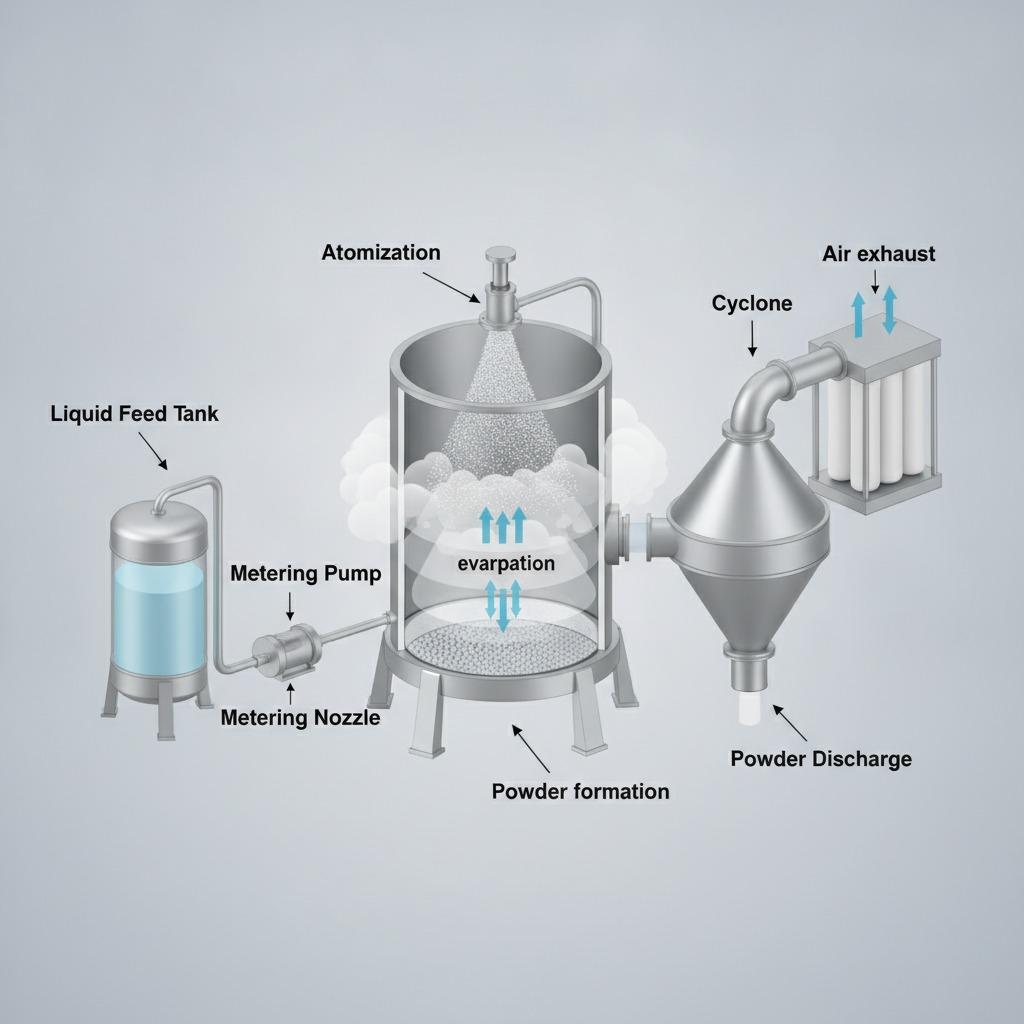
Spray drying is popular because it combines several functions in one continuous process: atomization, moisture removal, powder formation, and collection. For liquid and slurry feeds, that can simplify the route from raw material to saleable powder. In many industries, the alternative would mean multiple unit operations, longer residence times, and more handling steps.
The method is also well suited to heat-sensitive materials. The droplets may be exposed to hot air, but the evaporation of water cools the particle surface during much of the drying cycle. That does not make the process gentle in every case, but it does help explain why spray drying is widely used for ingredients that would struggle in slower, hotter dryers.
Still, the method is not automatically economical. Feed solids content, inlet and outlet temperatures, atomizer choice, and chamber design all influence efficiency. A poorly matched system can burn through energy and still leave sticky deposits or low powder recovery.
Key factors that drive efficiency
Feed concentration and viscosity
Higher solids content usually improves efficiency because less water has to be evaporated per kilogram of finished powder. That said, the feed must still atomize properly. If viscosity climbs too far, droplet formation degrades and the process can become unstable. In other words, chasing high solids without respecting pumpability and atomization can backfire.
Atomization method
Atomization is central to the answer to how efficient is spray drying. Smaller, more uniform droplets dry faster and more evenly, but generating them requires suitable equipment and operating conditions. Rotary atomizers, pressure nozzles, and two-fluid nozzles each have tradeoffs in droplet size distribution, maintenance, and energy demand. The “best” option depends on product behavior, desired particle characteristics, and scale.
Air handling and heat recovery
Drying air is one of the largest utility loads. Plants improve efficiency by preheating air where possible, recovering heat from exhaust streams, and reducing leakage or unnecessary over-ventilation. Even modest improvements in air management can matter because spray dryers move large volumes of gas. If the exhaust system is oversized or poorly controlled, energy waste rises quickly.
Chamber design and powder recovery
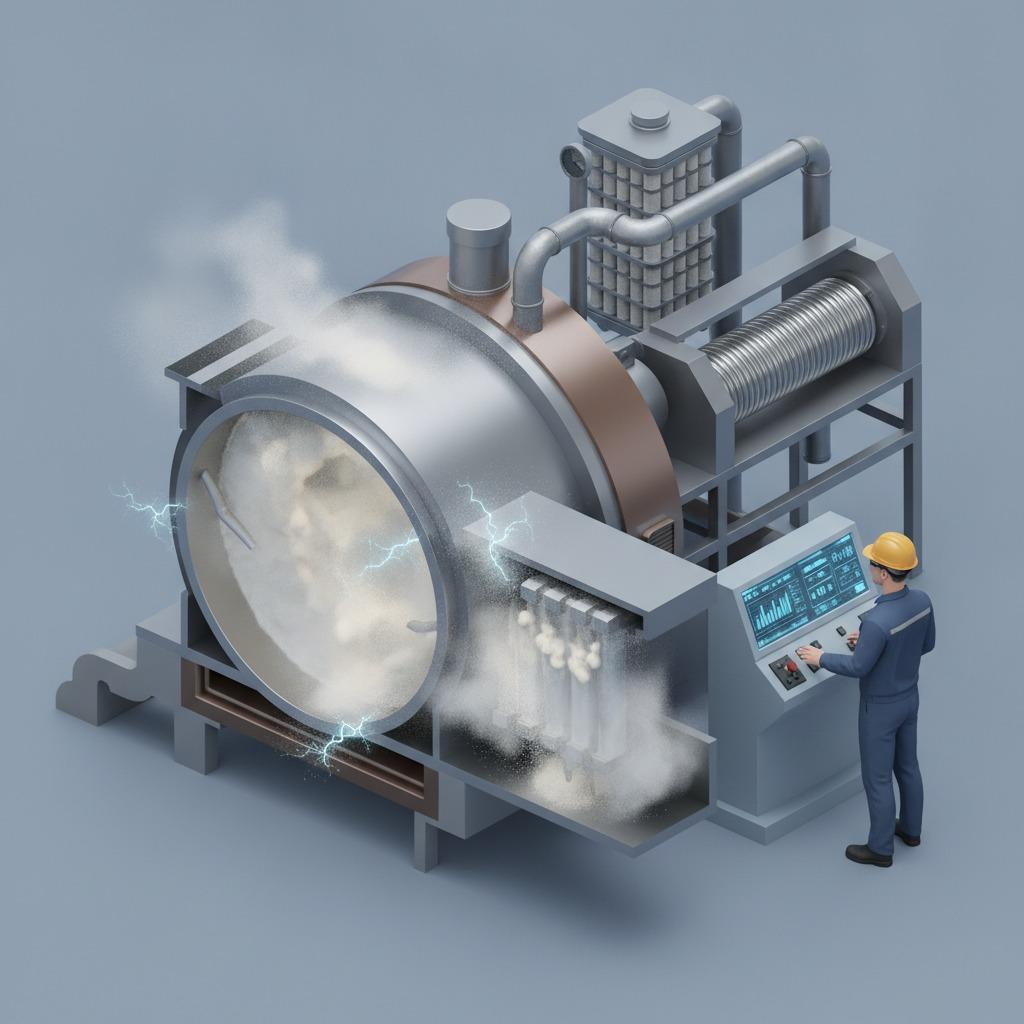
Powder adhesion to chamber walls, build-up in ducts, and losses through fines can all reduce useful yield. A well-designed chamber and reliable collection system help keep material where it belongs. Cyclones, bag filters, and integrated recovery systems are common tools, but their efficiency depends on particle size, density, and stickiness. For some products, a slight sacrifice in energy use may be worth it if recovery improves.
How spray drying compares with other drying methods
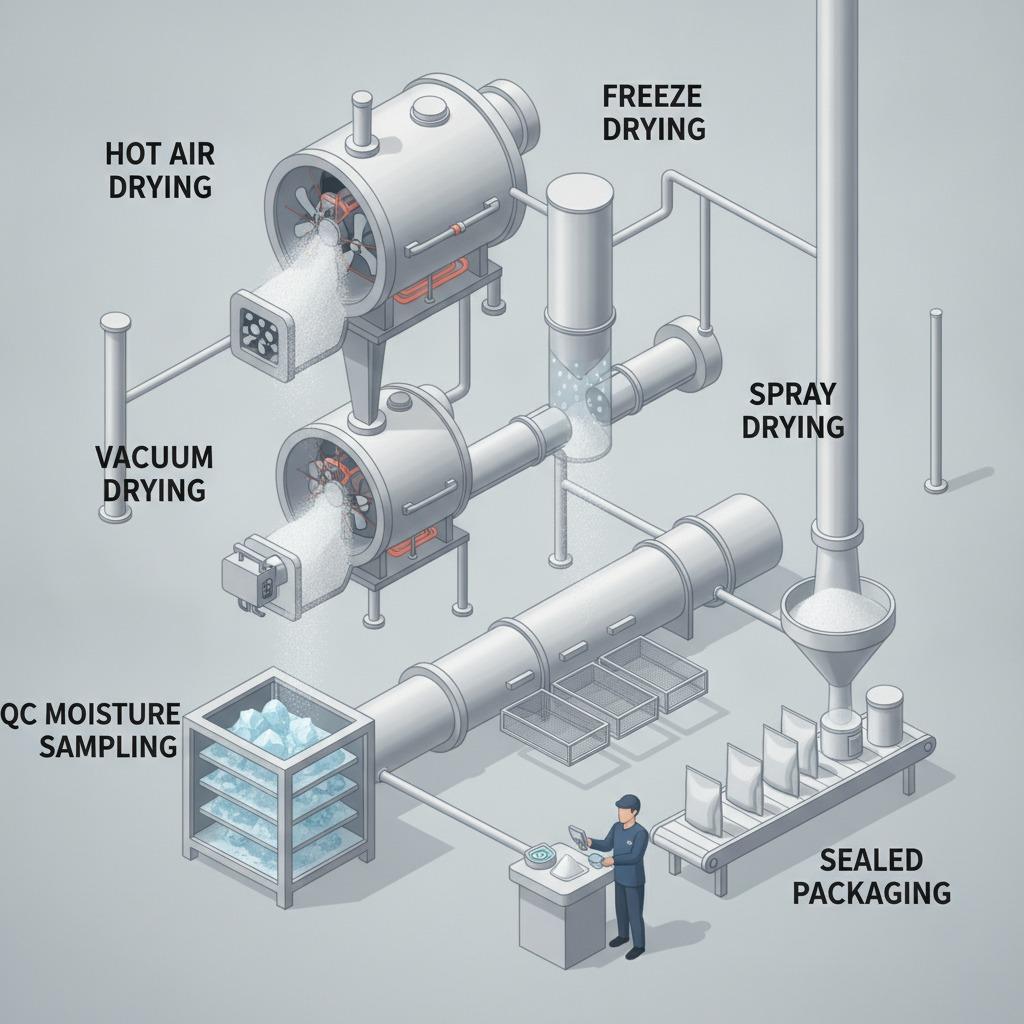
Compared with tray drying, spray drying is usually much faster and better suited to continuous production. Compared with vacuum drying or freeze drying, it generally offers far higher throughput and lower capital intensity per unit of output, though not always lower energy use per kilogram of water removed. That comparison is important. Different drying methods optimize different outcomes.
Freeze drying, for example, can preserve sensitive structures exceptionally well, but it is not chosen for high-volume powder production where cost and throughput dominate. Tray drying may work for certain bulk materials but often introduces longer cycle times and more labor. Spray drying sits in a practical middle ground: not the most energy-frugal method in every case, but often the best balance of speed, product quality, and industrial scale.
Where inefficiency usually shows up
The biggest losses are often not dramatic. They show up as sticky deposits, unstable moisture content, fines that escape collection, or excessive energy use caused by conservative temperature settings. Operators sometimes run hotter or longer than needed because they are trying to avoid off-spec powder, but that approach can reduce total efficiency more than it helps.
Another common issue is overdrying. If the powder leaves the dryer with moisture content far below what the application requires, the plant has paid to remove extra water with no added value. That sounds obvious, yet it happens frequently when a process is tuned around fear of wet product instead of a defined product target.
Practical buyer questions to ask before investing
When evaluating a spray drying system, sourcing managers and engineers should ask a few straightforward questions. What feed solids level can the process handle reliably? What is the expected powder recovery for this material family? How sensitive is the product to heat, shear, and residence time? What utilities are required, and what heat recovery options are practical at this scale?
It is also worth asking how the system will be cleaned, how often fouling is expected, and what downtime means in real production terms. A dryer that performs well for a few hours but needs frequent intervention may not be efficient in the way a production team actually needs.
For projects involving multiple products, flexibility matters too. A plant built for one formulation can be efficient when fully loaded, yet awkward when the product mix changes. That is one reason pilot trials and material testing are so valuable before committing to a full installation.
Common mistakes that distort the efficiency discussion
One mistake is focusing only on energy consumption and ignoring output quality. Another is treating throughput as proof of efficiency even when recovery is poor. A third is comparing spray drying to an unrelated process without adjusting for product requirements. These errors lead to bad purchasing decisions and, later, complaints from production teams that the equipment was “specified correctly” on paper but not in practice.
There is also a tendency to understate the value of powder properties. If the dryer creates a product that flows well, dissolves predictably, and packs consistently, downstream handling becomes easier. That hidden gain often belongs in the efficiency calculation, even if it does not appear on the utility bill.
So, how efficient is spray drying really?
The short answer is that spray drying is efficient when the product, feed, and equipment are aligned. It is especially attractive for continuous powder production from liquids and slurries, where speed, scalability, and consistent output matter. It is less attractive when the feed is too dilute, too sticky, or too variable for stable operation without excessive energy use or yield loss.
From a buyer’s perspective, the right decision is not to ask whether spray drying is universally efficient. It is to ask whether it is the most efficient route for your material, your plant utilities, and your quality target. That is a narrower question, but it is the one that actually leads to a sound purchasing choice.
What to do next
If you are comparing drying options for a new product or line expansion, start with the product specification and the feed properties, then work backward into process design. A good vendor conversation should cover solids content, atomization method, thermal limits, powder collection, cleaning, and energy strategy in one discussion. If those topics are separated too neatly, the final system can look better on spreadsheets than it does on the floor.
In practice, the most efficient spray drying setup is rarely the one with the flashiest brochure number. It is the one that keeps running, meets spec, and turns liquid feed into useful powder with the least unnecessary handling in between.