
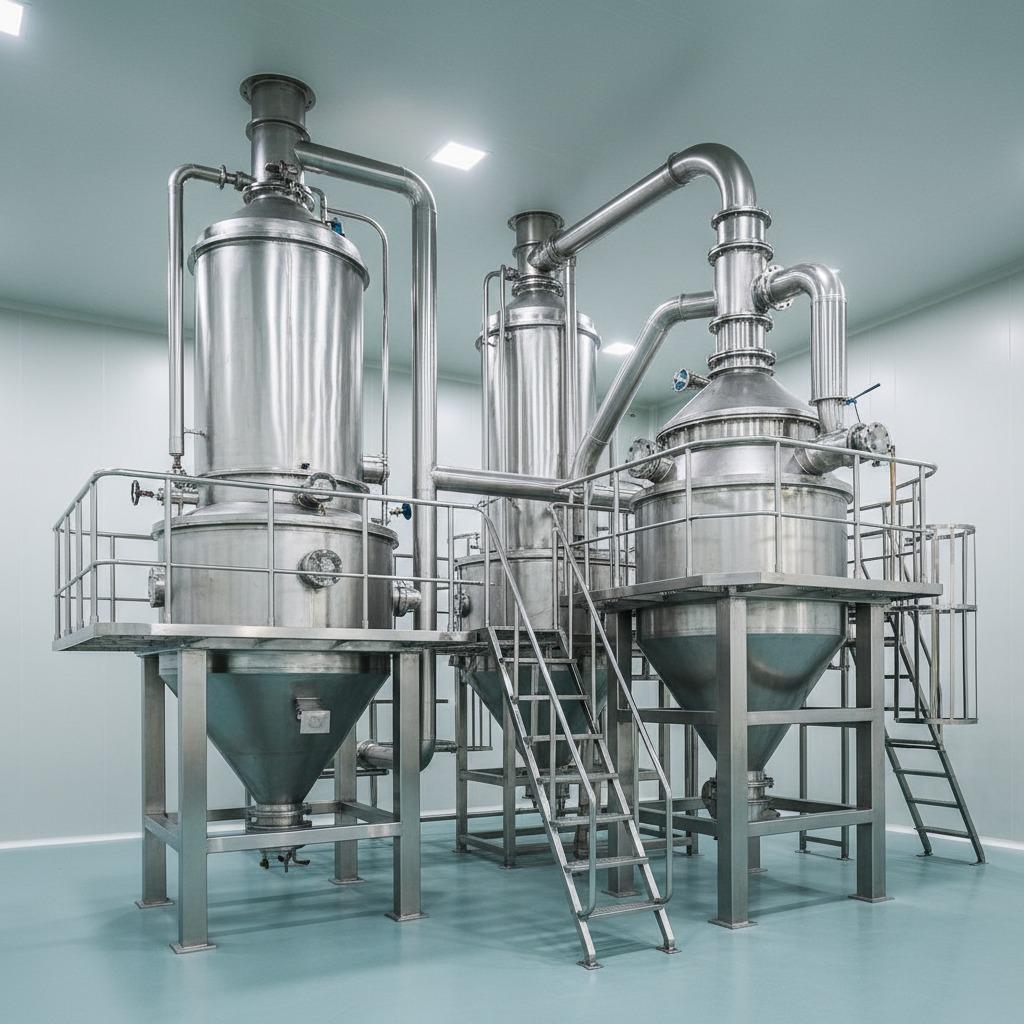
A high speed centrifugal spray dryer is one of those machines that looks straightforward from the outside and becomes much more interesting once you start thinking about product consistency, powder handling, and plant layout. For engineers, sourcing managers, and product teams, the real question is rarely whether spray drying works. It does. The question is whether a centrifugal spray drying system is the right fit for the material, the throughput target, and the downstream handling line that has to live with the powder afterward.
That is where buyers often get tripped up. They focus on the dryer itself and underweight the rest of the process: feed preparation, atomization behavior, dust collection, storage, discharge, conveying, and the final point where powder is packed, blended, or moved to another vessel. A pharmaceutical spray dryer or an industrial unit for food or chemical powders is only as useful as the line around it. In practice, the dryer, hopper, ducting, cyclone or dust-separation section, and transfer vessels have to behave like one system.
What the system is doing, in plain terms
In a centrifugal spray drying process, liquid feed is introduced into a hot gas stream and atomized into fine droplets by a high-speed rotating disc or similar mechanism. Those droplets dry rapidly as they travel through the chamber, becoming powder that is then collected, separated, and moved onward. The appeal is easy to understand: fast moisture removal, relatively controllable particle formation, and a continuous process that can support large-scale production.
But the visible equipment around the dryer matters just as much. The industrial stainless steel vessels and conical hoppers described here suggest a powder handling line built for controlled indoor production. Large cylindrical bodies with cone bottoms, access ports, side-mounted fittings, stainless piping, and support frames all point to a system designed for receiving, holding, feeding, and transferring bulk solids without unnecessary exposure to dust or contamination.
That is important because spray-dried powder is often not ready for use the moment it exits the chamber. It may need temporary storage, controlled transfer, dust separation, or buffering before packaging or downstream processing.
Quick reference: where centrifugal spray drying fits best
A centrifugal spray dryer is usually chosen when a plant needs:
- High-throughput drying of liquid or slurry feeds
- Powder with a relatively uniform appearance or particle profile
- Continuous operation rather than batch drying
- Controlled handling in food, pharmaceutical, chemical, or related powder applications
- Integration with enclosed stainless steel process equipment and ducting
It is not automatically the best choice for every product. Some materials are too heat-sensitive, too sticky, too abrasive, or too variable in solids content. Others can work, but only if the atomization and downstream collection are tuned carefully. That is usually where project teams need a sober engineering review rather than a sales pitch.
Why the surrounding stainless steel equipment deserves attention
The supplied product details describe stainless steel vessels, conical hoppers, duct runs, flanged joints, valves, sensors, motors, and access hatches installed in a clean indoor environment. That is a strong clue about the kind of manufacturing philosophy at work: enclosed, hygienic-looking, modular, and serviceable.
For buyers, the benefits are practical rather than decorative.
A conical bottom helps with gravity discharge and reduces dead zones where powder can bridge or hang up. A cylindrical upper section gives useful storage volume without spreading the footprint too far across the floor. Side nozzles and instrumentation ports support monitoring, transfer, or auxiliary functions. And stainless construction is the standard choice in many powder lines because it is durable, easier to clean than many alternatives, and generally better suited to controlled production spaces.
That said, stainless steel is not a magic word. The exact grade, surface finish, and fabrication quality still matter, and none of those should be assumed unless they are specified in the project documentation.
Selection criteria that actually affect performance
When evaluating a centrifugal spray drying system, the most useful questions are the ones tied to process reality.
1. What kind of feed are you drying?
The viscosity, solids content, sensitivity to heat, and tendency to foam or stick all influence how the atomization step behaves. A well-designed dryer for one slurry may struggle with another that looks similar on paper.
2. What does the powder need to do after drying?
If the powder is going straight to packaging, the collection and discharge arrangement may be simpler. If it has to be transferred to a silo, blended, or pneumatically conveyed, then the hopper geometry, dust control, and valve arrangement become far more important.
3. How sensitive is the application to contamination and cleaning?
This is especially relevant for a pharmaceutical spray dryer or any line touching food or specialty ingredients. Easy access, smooth internal surfaces, and sensible layout are not luxury items; they reduce cleaning burden and make maintenance less disruptive.
4. How will the plant handle dust and off-gas?
A spray drying line can generate fine particles that need to be captured and separated. The visible piping and auxiliary vessels in the provided equipment imagery suggest a modular process approach, which is useful, but the exact dust collection method still needs verification during engineering review.
Common mistakes buyers make
The first mistake is treating spray drying as a standalone machine purchase. It is not. It is a process line, and the downstream handling equipment is part of the job.
The second mistake is assuming all stainless steel systems are equivalent. They are not. Weld quality, vessel layout, access for inspection, and the way pipes and flanges are routed can make a large difference in day-to-day operation.
The third mistake is underestimating the amount of powder that has to be buffered somewhere between drying and final use. A large conical hopper or silo can be a sensible bridge, but only if discharge behavior, sensor placement, and cleaning access suit the material.
There is also a quieter problem that shows up late: inadequate planning for maintenance access. Elevated platforms, ladders, and guard rails may look secondary on a layout drawing, but they matter when a valve needs inspection or a duct connection has to be checked at shift change.
How to think about the integrated system, not just the dryer
The visible equipment description points to an integrated powder-handling line: large vessels, stainless ducts, support structures, access hardware, and floor-mounted installation in a controlled indoor space. That kind of layout is common where bulk material has to move between stages with less dust and less manual intervention.
From a buyer’s perspective, that raises a better set of questions than “What is the dryer rated for?”
Ask how the material exits the dryer. Ask where it is collected. Ask whether the transfer is gravity-fed, vacuum-assisted, or pneumatically conveyed. Ask how the system handles fines. Ask what happens if material bridges in the cone or if the powder arrives at a downstream vessel with inconsistent flow.
Those questions sound basic, but they are exactly the ones that keep a project from becoming a maintenance headache later.
Practical advice for sourcing teams
If you are comparing a centrifugal spray dryer with other drying options, the best starting point is not a glossy brochure. It is a process description that includes feed properties, target moisture, downstream storage, cleaning expectations, and installation constraints.
Then check the physical system design.
Look at whether the vessels are sized sensibly relative to the room and the process rhythm. Consider whether the piping is arranged for maintainability, not just compactness. Review whether the access points are where operators and technicians will actually need them. And if the application is in a regulated or hygiene-sensitive sector, verify the materials and finish levels directly rather than inferring them from appearance.
A caution worth repeating: a powder line can look complete and still be awkward to operate if the discharge points, sensors, and transfer paths are poorly planned. It is a common issue, and it is expensive to fix after installation.
FAQ: a few buyer questions that come up often
Is a high speed centrifugal spray dryer always better than other dryer types?
No. It is strong for continuous powder production and rapid drying, but it is not universally best. Feed behavior, product sensitivity, and cleaning requirements should drive the decision.
Why is stainless steel so common in these systems?
Because it suits many industrial powder applications where corrosion resistance, cleanability, and durability matter. It also fits controlled production environments well.
Does the surrounding hopper and vessel layout really affect drying performance?
Yes, indirectly and sometimes decisively. Even a well-run dryer can be undermined by poor powder collection, awkward discharge, or a bottleneck in the transfer system.
Can this kind of setup be used outside food or pharmaceuticals?
Yes. The described equipment style could serve chemical, mineral, or other powder-processing operations too. The exact industry depends on the material and process requirements, which are not confirmed here.
What to request before you move forward
Before approving a centrifugal spray drying system, ask for the process narrative, equipment layout, material specifications, and cleaning/maintenance approach. If the supplier is also providing the stainless steel hoppers, ducts, and supporting vessels, that is actually an advantage, because the handoff between dryer and powder handling becomes easier to manage.
You do not need every detail at the first meeting, but you do need enough information to judge whether the system is coherent. A good installation should make sense as a whole: the dryer, the collection path, the storage buffer, and the transfer route should all fit the same operating logic.
If you are reviewing a project now, start with that system view. It will tell you more than a spec sheet alone, and it will save you from buying a dryer that works on paper but fights the plant every day after commissioning.





