Why Fruit Powder Spray Drying Matters to Product Teams
Fruit powder spray drying sits at the intersection of shelf stability, ingredient functionality, and sensory quality. For food formulators, procurement teams, and manufacturing engineers, it is not just a drying method; it is often the step that decides whether a fruit ingredient behaves like a reliable powder or like a temperamental natural extract that cakes, fades, or clumps before it reaches the line.
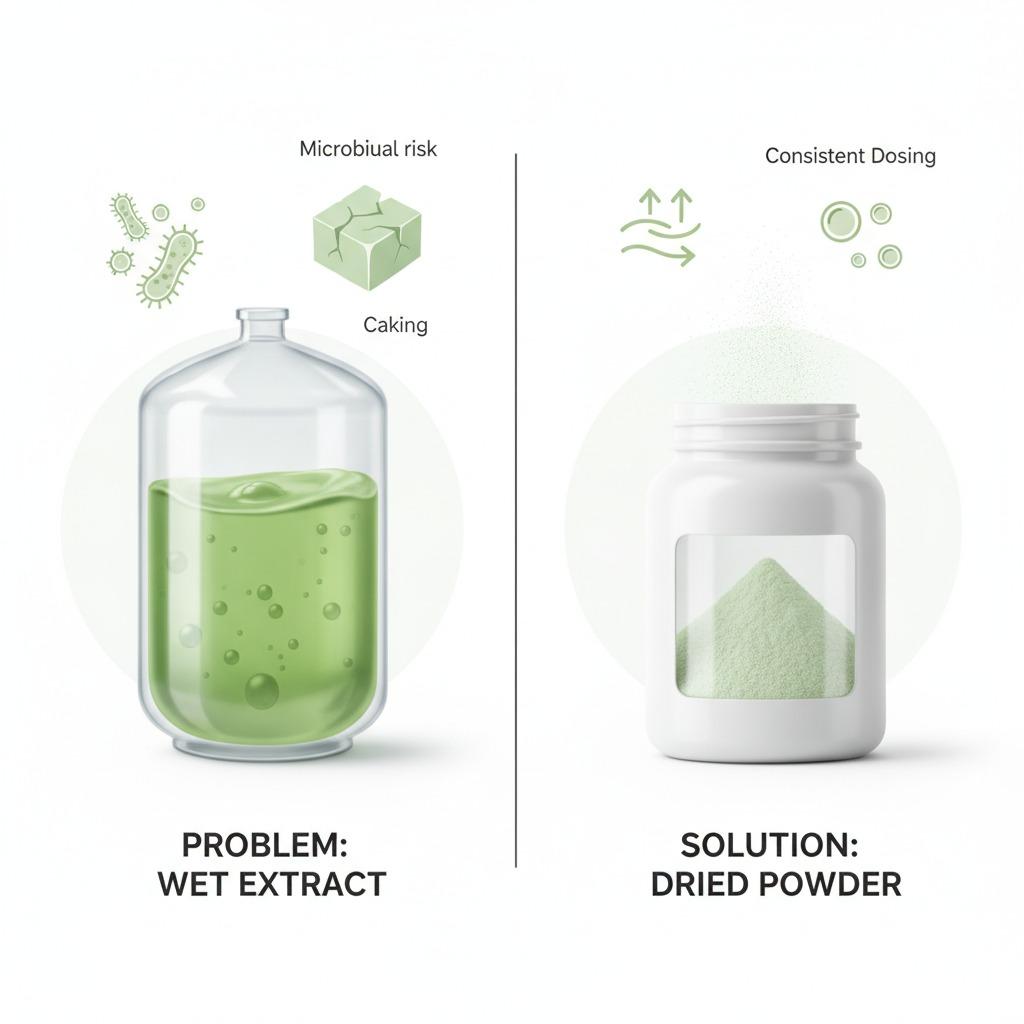
The basic appeal is easy to understand. Fresh fruit is costly to store, bulky to transport, and highly perishable. Convert it into a powder and you reduce weight, extend shelf life, and make dosing much more consistent. The harder part is keeping enough of the fruit’s character intact. Color, aroma, and flavor are all vulnerable to heat and oxygen, which is why spray drying is usually discussed in the same breath as preserving color in spray drying and protecting volatile compounds.
For buyers, the real decision is not whether powder is useful. It is whether the powder will perform in the intended application: beverage mixes, confectionery, bakery, instant foods, nutraceuticals, or seasoning blends. A powder that looks fine in a drum can still disperse poorly, absorb moisture too quickly, or lose its appeal after a few months on the shelf.
What Spray Drying Does to Fruit Ingredients
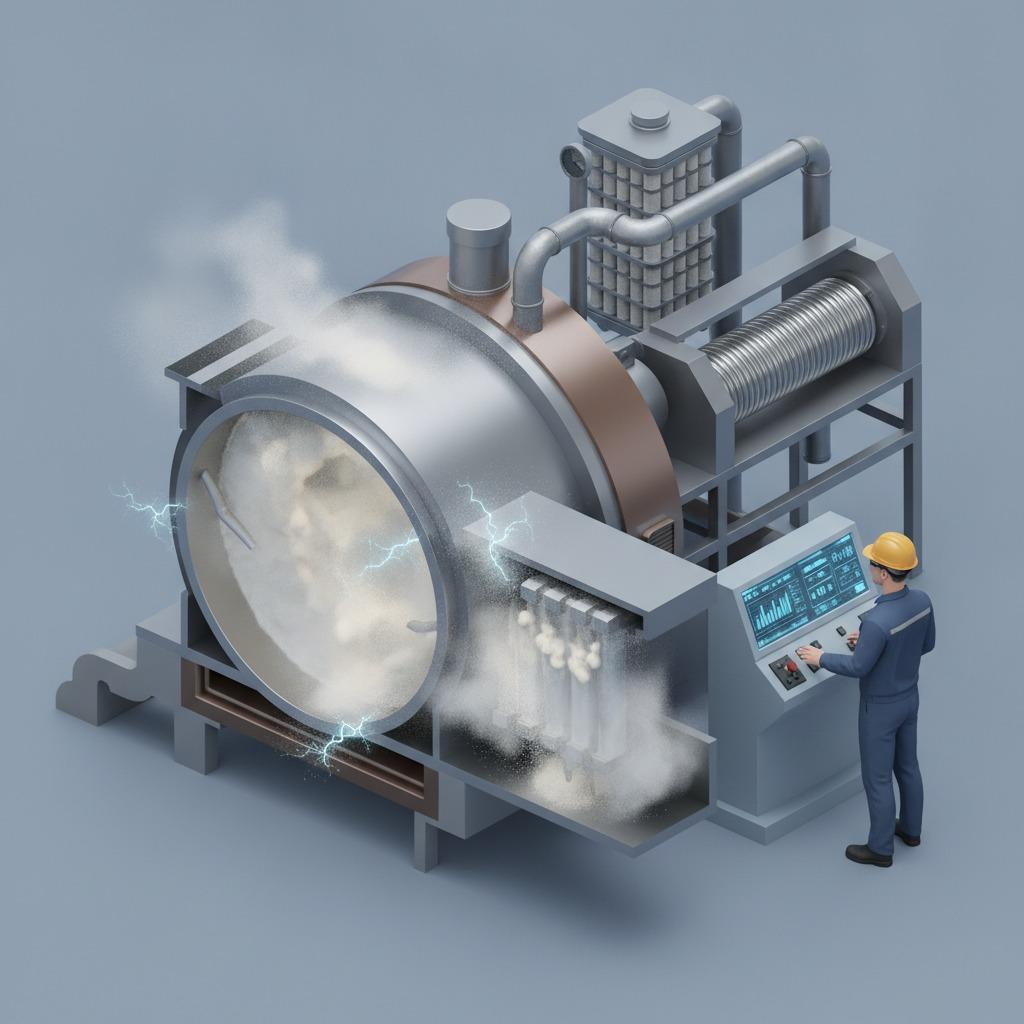
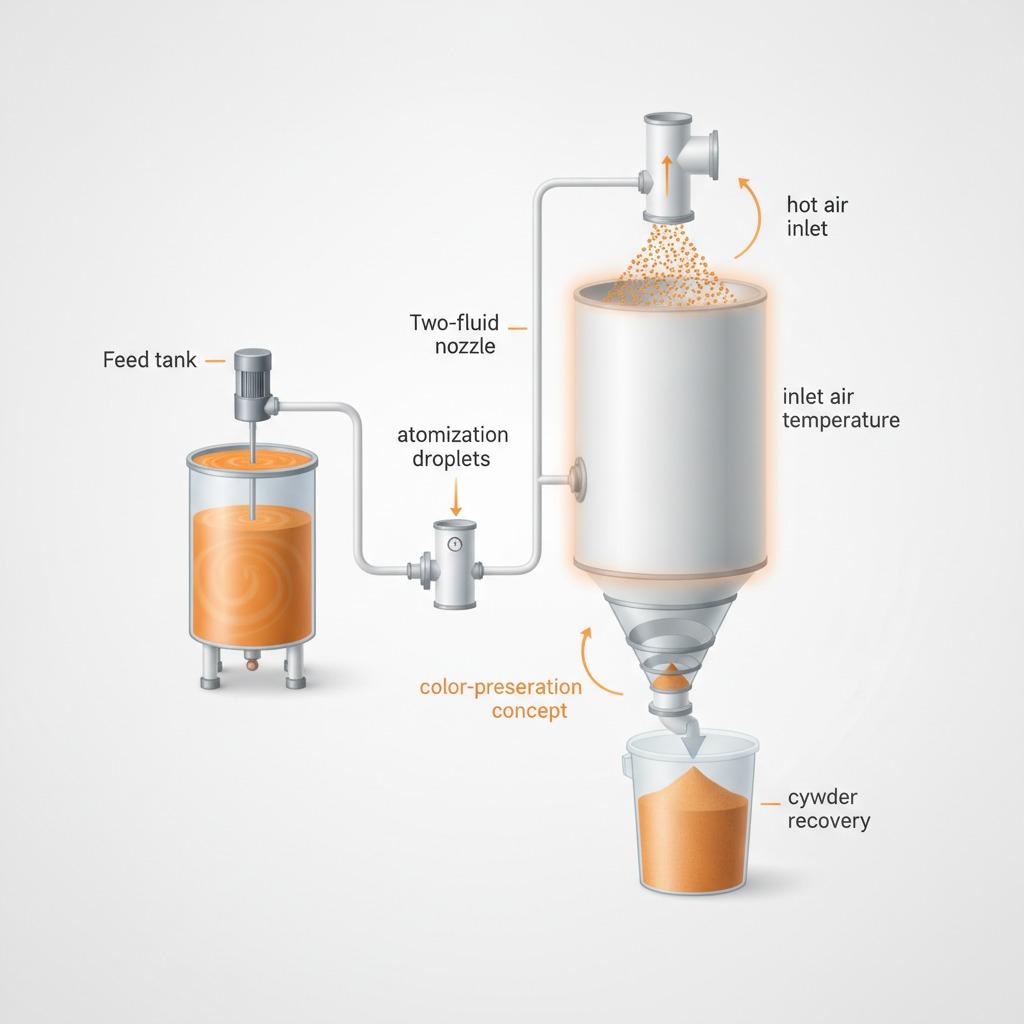
Spray drying atomizes a liquid feed into a hot drying chamber. Fine droplets meet hot air, moisture flashes off rapidly, and a dry particle is collected at the bottom or through a separator. In fruit processing, the feed is usually a puree, juice concentrate, or blended slurry rather than a simple liquid. That matters, because fruit solids contain sugars, acids, natural pigments, fibers, and sometimes pulp. Each of those affects how the powder forms.
The process is attractive because drying happens in seconds, not hours. That short exposure can help retain more of the fruit’s natural profile than slower thermal methods. Still, “short exposure” does not mean harmless. High inlet temperatures, poor atomization, or an unstable formulation can lead to stickiness, browning, weak flowability, and lost aroma. This is where process control becomes more important than the equipment brochure often makes it sound.
Key Takeaways Buyers Usually Need First
Fruit powders are not all built the same
A strawberry powder for a beverage base may need bright color and instant dispersibility. A banana powder for bakery use may prioritize flavor and bulk handling. A mango powder for sachets may need low hygroscopicity so it does not turn gummy in humid storage. One spray-dried powder cannot be judged against another without knowing the intended use.
The feed formulation often matters as much as the dryer
Many fruit feeds need carriers or wall materials to dry well. Common choices in industry include maltodextrin, gum arabic, modified starches, or blends of these materials, selected for their ability to reduce stickiness and support particle formation. Without the right carrier system, fruit sugars can make particles tacky and difficult to collect. That is a practical problem, not a theoretical one.
Color retention is a commercial issue, not cosmetic trivia
In fruit ingredients, color is often treated as a proxy for freshness and quality. A powder that turns dull or brownish may still be functional, but its market appeal drops fast. Preserving color in spray drying usually depends on feed preparation, temperature balance, residence time, oxygen exposure, and the use of protective carriers. In some cases, the better question is not how to maximize heat, but how to minimize unnecessary thermal stress.
How the Process Is Typically Set Up
A fruit powder spray drying line usually starts with raw fruit selection and preprocessing. The fruit is washed, sorted, peeled or de-seeded if needed, and then pulped or juiced. The liquid feed may be filtered or standardized to manage solids content and consistency. If a carrier is used, it is blended before atomization so the composition is uniform entering the dryer.
Atomization can be achieved through a pressure nozzle, two-fluid nozzle, or rotary atomizer depending on capacity and desired particle characteristics. Smaller droplets dry faster and often yield finer particles, while larger droplets can create broader size distributions and different handling behavior. There is no universal best choice; it depends on throughput, powder density, and the downstream filling system.
The drying air is usually heated before entering the chamber. Inlet and outlet conditions are adjusted to balance moisture removal with product quality. If the temperature is too aggressive, sensitive compounds can degrade or surface sugars may form a sticky outer layer. If it is too mild, the powder may leave with excess moisture and reduced shelf life. The best operators pay attention to the whole curve, not just the setpoint.
Selection Criteria That Actually Matter
When sourcing fruit powders or evaluating a spray drying partner, it helps to separate marketing language from functional requirements. The most useful questions are often simple.
How stable is the powder under normal warehouse humidity? Does it flow through a hopper without bridging? Does it reconstitute in water with minimal grit? Does it keep the expected fruit tone after packaging and storage? Does the powder fit the application without requiring awkward reformulation?
Moisture content, bulk density, solubility behavior, particle morphology, and hygroscopicity all deserve attention. So does packaging. A good powder in a weak barrier bag can become a disappointing powder in a matter of weeks, especially in warm or humid supply chains. That is one of those buyer-facing warnings that is easy to overlook until the first complaint arrives.
Common Problems in Fruit Powder Spray Drying
Stickiness and wall deposition
Fruit powders often contain natural sugars that can become sticky during drying. This leads to deposition on chamber walls, lower yield, and unstable operation. Carriers and careful control of feed solids can help, but there is usually a tradeoff between processability and “clean label” expectations.
Poor powder recovery
If particle size is too fine or the dryer is not set up well, powder can escape with the exhaust stream. Recovery systems matter more than many buyers assume, because low recovery affects cost and consistency.
Loss of flavor or color
Heat-sensitive aromas and pigments can suffer during processing and storage. This is especially visible in berries, citrus, and tropical fruit ingredients where bright sensory cues are part of the selling point.
Moisture pickup after drying
Some powders look fine when first packed but absorb moisture quickly in storage. That can lead to caking, reduced flow, and a shorter usable life. Packaging selection and warehouse conditions become part of the process, whether procurement likes it or not.
Practical Buyer Advice for Sourcing Teams
If you are comparing suppliers, ask for the product profile in application terms, not only lab language. A data sheet may list moisture and mesh size, but that still does not tell you how the powder behaves in a syrup, a dry blend, or an instant beverage system. If possible, test it in the actual formulation and under the actual packaging conditions.
It also helps to clarify whether the supplier specializes in fruit juice powders, puree powders, or custom blends. Those categories can behave differently. Juice powders tend to focus on flavor and color clarity, while puree-based powders may carry more solids and body. Neither is automatically better. The right choice depends on mouthfeel, cost, and process tolerance.
Another useful question concerns carrier strategy. Some products rely on high carrier loading to make drying practical, while others aim for lower additions to preserve more fruit identity. There is no free lunch here: less carrier may sound purer, but it can make drying harder and handling worse. Buyers should weigh label goals against manufacturing reality.
Where Fruit Powder Spray Drying Fits Best
This process is especially useful when a fruit ingredient must travel well, dose accurately, and store for a reasonable period without refrigeration. That makes it common in instant drink mixes, flavor systems, bakery premixes, dessert powders, snack coatings, and nutraceutical formulations. In many of these applications, the powder is not meant to taste exactly like fresh fruit. It is meant to deliver a dependable fruit note at scale, which is a different task.
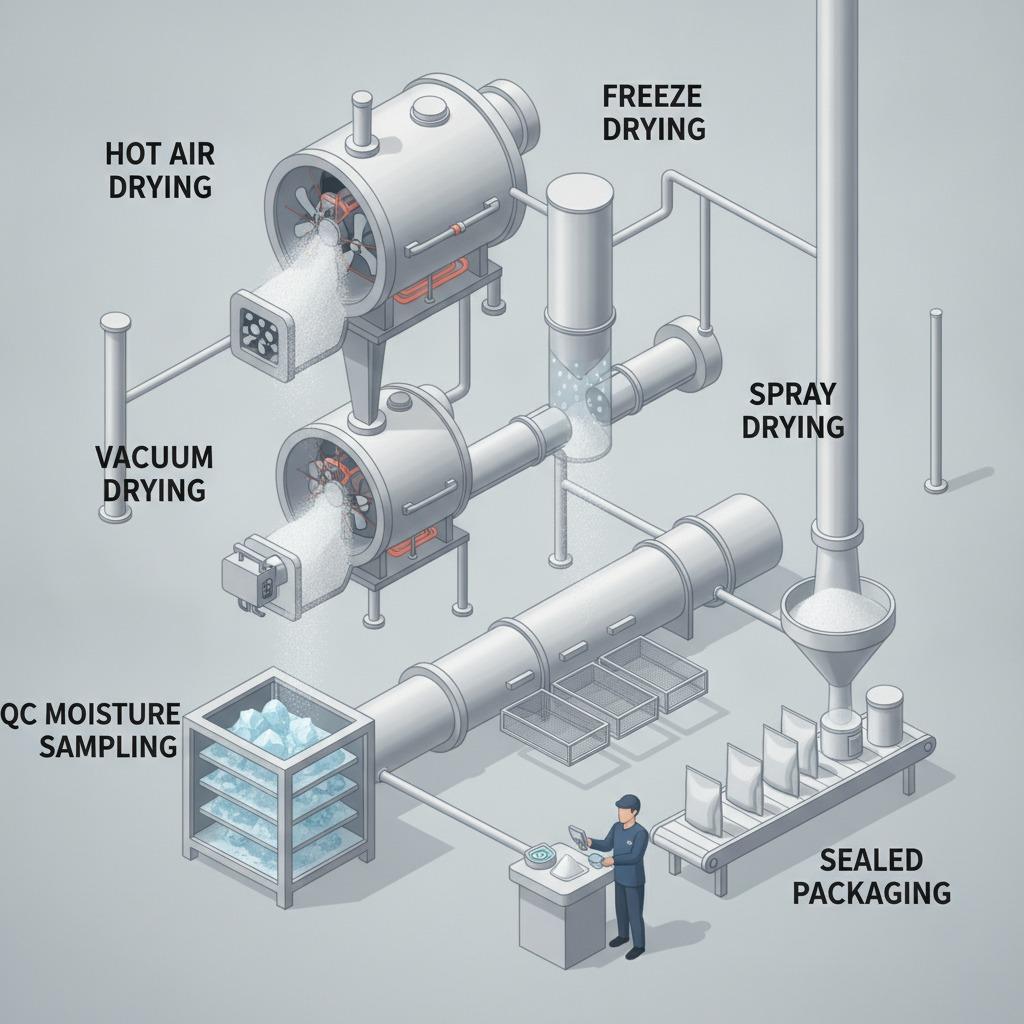
There are limits, of course. Spray drying is not always the best route for ingredients that must preserve maximum raw-fruit character or contain high insoluble solids that are hard to atomize. In those cases, freeze drying or other technologies may be considered, though usually at higher cost. The point is to match the drying method to the commercial objective instead of assuming one process solves everything.
FAQ
Is spray-dried fruit powder the same as dried fruit ground into powder?
No. Spray-dried powder is produced from a liquid feed and typically has different particle structure, dispersibility, and functional behavior than mechanically milled dried fruit.
Why do some fruit powders need carriers?
Carriers help reduce stickiness, improve powder formation, and make the product easier to handle and store. They are often important when the fruit feed contains a lot of natural sugar.
Can spray drying preserve color well?
It can, but only with the right formulation and process conditions. Preserving color in spray drying depends on more than temperature alone; oxygen exposure, residence time, and carrier choice all play a role.
What a Good Next Step Looks Like
If you are sourcing fruit powders or planning a spray drying project, start with the application requirement and work backward. Define the target use, expected storage environment, reconstitution needs, and sensory priorities. Then evaluate whether the feed formulation, dryer setup, and packaging system can realistically support those goals. That approach usually saves more time than chasing the lowest quote.
For product teams, the smartest move is often a small pilot run followed by real-world testing in the intended formula. For procurement, it means asking enough technical questions to distinguish a stable ingredient from a shiny sample. Fruit powder spray drying can produce a useful, versatile ingredient, but only when the process is designed around the material’s natural sensitivity rather than against it.