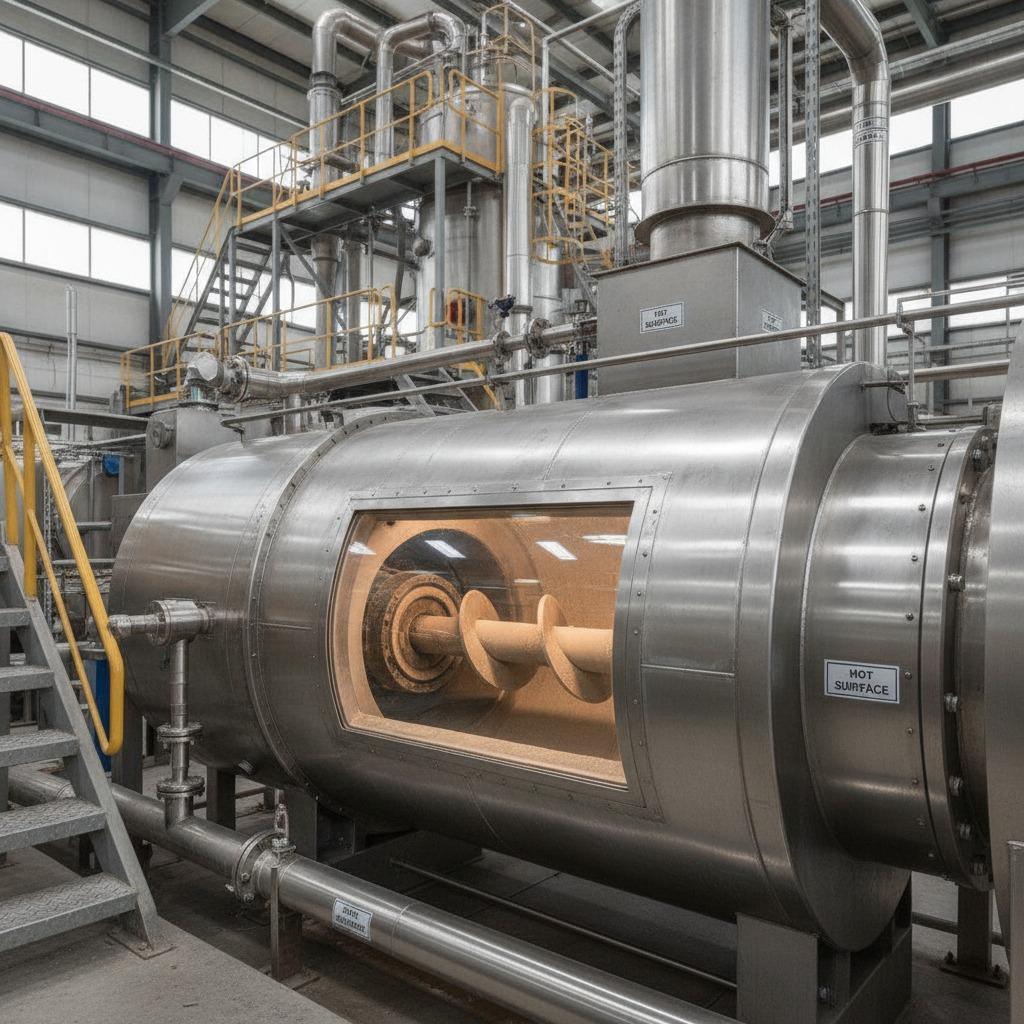
Understanding Fluidized Bed Granulation: A Key Process in Modern Manufacturing
Fluidized bed granulation stands as a cornerstone in the realm of granulation technology, enabling precise control over particle formation in various industries. This method involves suspending particles in an upward-flowing gas stream, creating a fluid-like state that facilitates uniform granulation. Widely used in pharmaceuticals, food processing, and chemicals, fluidized bed granulation ensures consistent product quality by combining mixing, granulation, and drying in a single efficient step. As industries strive for higher efficiency and better product uniformity, this technique has gained prominence for its ability to handle diverse materials without compromising on quality.
The Fundamentals of Granulation Technology
Granulation technology encompasses a variety of methods aimed at transforming fine powders into larger, free-flowing granules, improving handling, flowability, and dissolution properties. Within this broad field, fluidized bed granulation excels due to its dynamic process environment. Unlike traditional methods that rely on mechanical compression, this approach uses air to fluidize the bed, allowing binders to distribute evenly across particles. This results in granules that are spherical and robust, ideal for tablet compression in pharmaceuticals or uniform mixing in food production.
The process begins with the introduction of a powder bed into a chamber where air is heated and forced through a perforated distributor plate. As the air velocity increases, the particles become suspended, mimicking a boiling fluid. A liquid binder is then sprayed onto the fluidized particles, promoting agglomeration. This controlled environment minimizes over-wetting and ensures that granules form with desired size and density. Industries benefit from reduced dust, better content uniformity, and enhanced stability of sensitive materials, making granulation technology a vital tool for scaling production.
Integrating Fluidized Bed Drying for Optimal Results
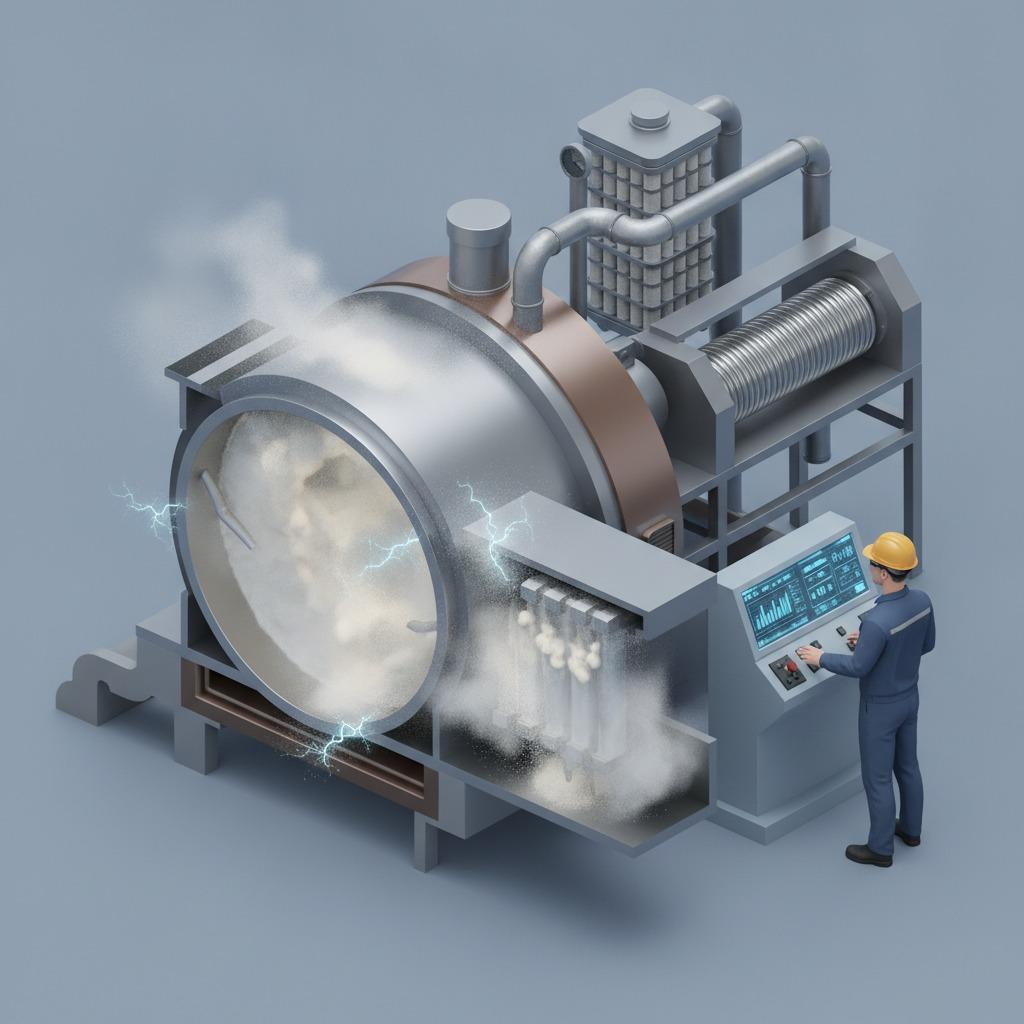
Fluidized bed drying plays a pivotal role in fluidized bed granulation, often occurring concurrently to remove moisture from the newly formed granules. This integrated approach, known as one-step granulation, streamlines operations by eliminating the need for separate drying equipment. In fluidized bed drying, the same fluidization principle suspends wet granules in hot air, promoting rapid evaporation and preventing clumping or uneven drying.
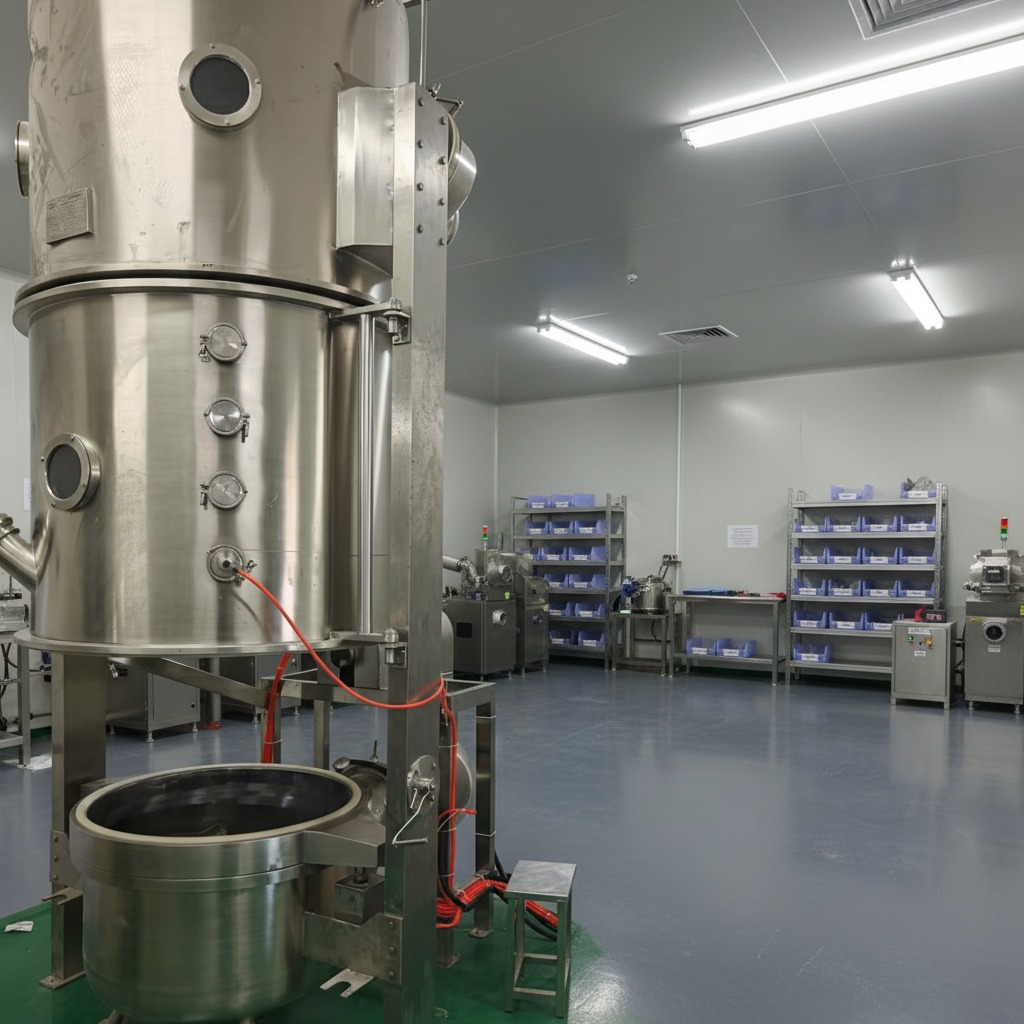
Consider the design of advanced equipment like the cutting-edge fluidized bed dryer, which features a stainless-steel construction for durability and hygiene. Multiple gauges and inspection windows allow real-time monitoring of temperature, airflow, and humidity, ensuring precise control. The circular drying chamber optimizes airflow distribution, accelerating the drying rate while maintaining uniform moisture levels across the batch. For pharmaceutical applications, this is crucial to meet stringent regulatory standards, as it reduces the risk of microbial contamination and preserves active ingredients.
In practice, fluidized bed drying enhances the efficiency of the overall granulation process. By adjusting air velocity and temperature, operators can tailor the drying profile to specific materials, such as heat-sensitive pharmaceuticals or hygroscopic food powders. This not only shortens processing time but also improves energy efficiency, lowering operational costs. Companies adopting such systems report up to 30% faster cycle times compared to conventional drying methods, underscoring the synergy between fluidized bed granulation and drying.
Exploring Industrial Granulation Methods and Their Applications
Industrial granulation methods vary widely, but fluidized bed granulation distinguishes itself through its versatility and scalability. Other methods, like high-shear wet granulation or roller compaction, offer alternatives but often require multiple steps and additional equipment. In contrast, fluidized bed granulation's continuous fluidization enables gentle handling of fragile particles, making it suitable for a broad spectrum of applications.
Take the FL-60 Fluid Bed Granulator, for instance, an advanced machine crafted from high-grade stainless steel for corrosion resistance. Its cylindrical design and precision controls, including a touchscreen interface and sight glasses, facilitate seamless observation and adjustment of the process. Equipped with rotating wheels for mobility, this equipment fits effortlessly into diverse production lines, from small-scale labs to large industrial setups. In the food industry, it ensures granules for instant beverages or nutritional supplements achieve uniform size, enhancing solubility and mouthfeel.
Another exemplary tool is the Vertical Fluid Bed Dryer, which revolutionizes drying through its efficient fluidization technology. This vertical configuration saves floor space and incorporates user-friendly interfaces for precise temperature and airflow management. Safety features, such as anti-overheating mechanisms, comply with industry standards, providing peace of mind in high-stakes environments like chemical processing. By suspending materials in a hot air stream, it achieves rapid moisture removal, yielding dry, free-flowing products ready for packaging or further processing.
When comparing industrial granulation methods, fluidized bed granulation offers superior control over granule properties, such as porosity and strength, which directly impact downstream processes like coating or compression. In pharmaceuticals, this translates to better bioavailability; in agriculture, it improves fertilizer efficacy. The method's adaptability to batch or continuous operations makes it indispensable for modern manufacturing, where flexibility and precision are paramount.
Advantages and Best Practices in Fluidized Bed Granulation
The advantages of fluidized bed granulation extend beyond efficiency to include environmental and economic benefits. By minimizing solvent use and enabling closed-loop systems, it reduces waste and emissions, aligning with sustainability goals. Moreover, the uniform granules produced enhance product performance, reducing variability in final formulations.
To maximize benefits, best practices involve optimizing process parameters like binder concentration, atomization pressure, and fluidization velocity. Pre-testing with pilot-scale equipment, such as the compact fluidized bed dryer, helps refine these settings for full production. Regular maintenance of components, including air filters and distributor plates, ensures consistent performance and longevity.
In the chemical sector, fluidized bed granulation facilitates the production of catalysts or pigments with precise particle size distributions, improving reaction rates and color consistency. For food processors, it enables the creation of granulated flavors or spices that dissolve quickly in recipes. As technology evolves, innovations like automated controls in the Vertical Fluid Bed Dryer promise even greater precision, reducing human error and boosting throughput.
Overall, fluidized bed granulation, supported by robust granulation technology and fluidized bed drying, represents a forward-thinking approach to industrial granulation methods. By investing in high-quality equipment, manufacturers can achieve superior product quality, operational efficiency, and competitive edges in their markets. This process not only meets current demands but also paves the way for future advancements in particle engineering.