
Why fluid bed drying still matters on the factory floor
Fluid bed drying technology is one of those process choices that seems straightforward until a line starts struggling with moisture variability, dusting, or longer-than-expected drying cycles. Engineers know the basics: hot air passes through a bed of particles, the solids become suspended or “fluidized,” and heat transfer improves because more surface area is exposed to moving air. What matters in practice is that the method can shorten drying time, improve uniformity, and make a batch or continuous process more predictable.
For sourcing managers and product teams, the real question is not whether the method works in principle. It is whether it fits the material, the throughput target, the thermal sensitivity of the product, and the reality of plant utilities. A dryer that looks efficient on paper can become troublesome if the feed has broad particle-size distribution, if the product is sticky, or if the moisture spec is tighter than the process can consistently support. That is the decision this article is meant to help with: when fluid bed drying is a good fit, where it is weak, and what to ask before buying or specifying equipment.
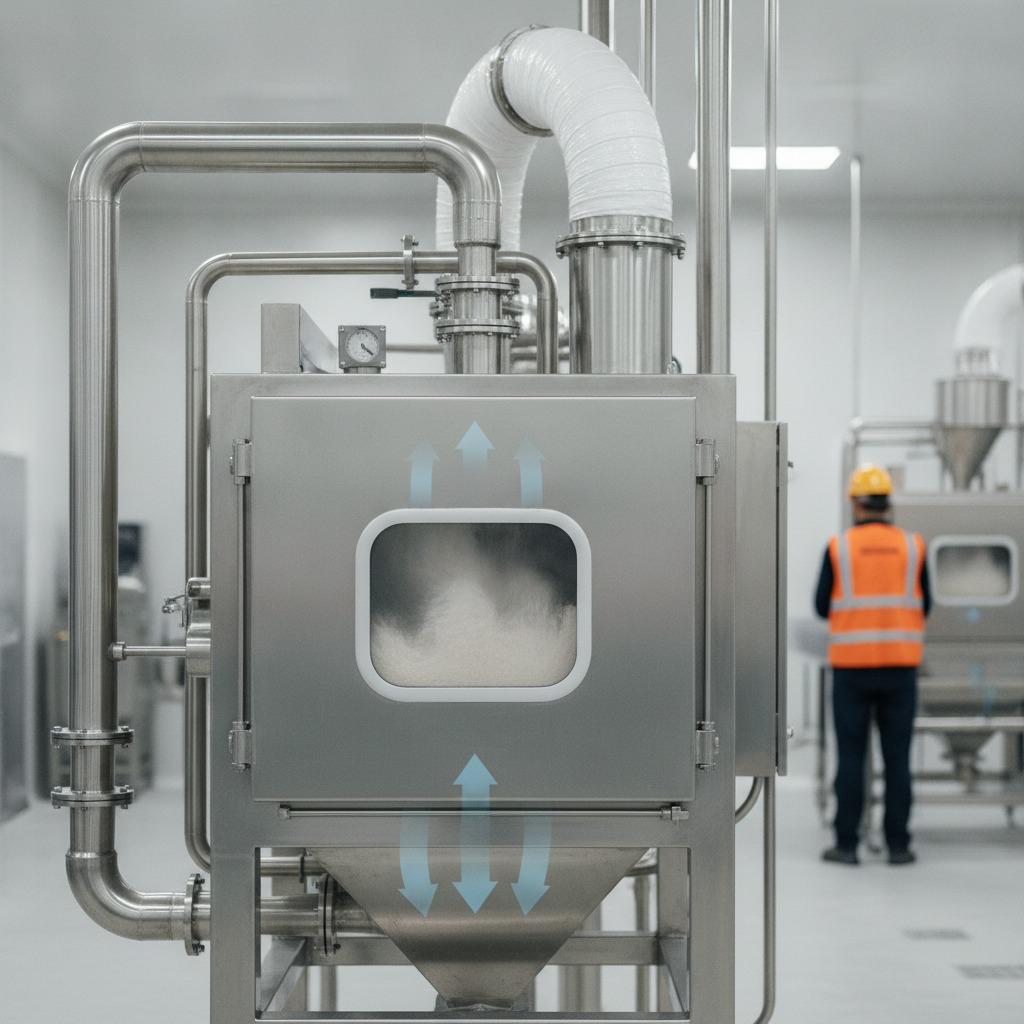
What fluid bed drying technology actually does
At a simple level, fluid bed drying technology uses upward airflow to suspend particulate material so each particle behaves more like it is moving in a liquid than sitting in a static pile. This “fluidized” state improves heat and mass transfer. Instead of waiting for heat to creep into a dense bed, the product is exposed more evenly, which can reduce drying time and help control final moisture.
The idea is especially useful for granular, crystalline, or pelletized materials. Common applications include food ingredients, pharmaceutical intermediates, detergents, fertilizers, chemicals, and some engineered powders. The process can be run as batch or continuous, and that choice often matters more than buyers expect. Batch systems can be more flexible for multi-product plants, while continuous systems usually suit steady, high-volume production.
Where the process tends to perform well
The biggest advantage is efficiency. Because particles are constantly moving and exposed to a large volume of air, drying can be faster than in static tray systems or some conventional ovens. Uniformity is another strength. If the product fluidizes properly, each particle sees a similar drying environment, which helps reduce over-dried and under-dried zones.
There is also a quality angle. In the right application, fluid bed drying can be gentler than people assume. Yes, it involves airflow and motion, but it can still be a practical choice for materials that should not sit for long periods at elevated temperature. For heat-sensitive products, the real benefit is not “low temperature” in the abstract; it is reduced residence time at the target temperature. That nuance matters.
Energy use can also be attractive, although buyers should be cautious about broad claims. A well-designed system may use energy more effectively than older drying methods, but the actual result depends on airflow design, heat recovery, inlet conditions, product loading, and how much moisture has to be removed. Plant teams should look for utility data that reflects the real duty, not just brochure numbers.
Common fluid bed dryer types and how they differ
Batch fluid bed dryers
Batch dryers are common where product changes are frequent or where cleaning and segregation concerns are important. They usually offer straightforward operation and are easier to integrate into smaller facilities. The tradeoff is throughput. A batch cycle may be perfectly acceptable for one product family and inefficient for another.
Continuous fluid bed dryers
Continuous systems are built for stable output and more predictable line balancing. Feed enters at one end, dried material exits at the other, and process control becomes a central issue. These systems can support higher volumes, but they also demand more discipline in upstream feeding and downstream discharge. If the feed surges or varies too much, the dryer shows it quickly.
Vibrating or agitated variants
Some materials do not fluidize cleanly on airflow alone. In those cases, vibrating or mechanically assisted designs may be used to improve movement and reduce dead zones. That can help with more difficult powders, but the mechanical complexity goes up. Buyers should weigh maintenance, cleaning, and spare-part support carefully rather than focusing only on drying performance.
The material properties that decide success or failure
Not every powder belongs in a fluid bed. That sounds obvious, but in procurement reviews it is still one of the most common gaps. The key variables are particle size, density, shape, cohesiveness, moisture level, and thermal behavior. Free-flowing granules generally behave well. Fine, sticky, irregular, or highly cohesive powders often do not.
Particle-size distribution deserves special attention. If too many fines are present, air can carry them out of the bed and into filters or product-loss streams. If the material is too coarse or too dense, fluidization may be uneven. Moisture content at feed also matters. A wet surface can promote agglomeration, which may be desirable in some products and problematic in others. That line is easy to miss during early trials.
Another practical point: the material’s sensitivity to attrition. A product that fractures too easily can generate dust, change bulk density, and create handling headaches downstream. This is one of those issues people only notice after commissioning, when the process line is already tied to a production schedule. A pilot trial or representative sample test is often worth the time.
Selection criteria buyers should not skip
When evaluating fluid bed drying technology, start with process fit rather than equipment features. Ask how much moisture must be removed, what the inlet and outlet targets are, and whether the product must remain free-flowing afterward. Then move to the plant realities: available floor space, dust collection capacity, energy source, cleaning method, and operator workflow.
Temperature control is important, but airflow control is usually the deeper issue. A system that can hold temperature but not manage airflow evenly may still produce inconsistent results. Filtration should also be examined closely. Airborne fines can create contamination risk, reduce yield, and increase maintenance if the dust-handling side of the dryer is undersized.
Controls are another area where a plain-looking specification can hide a lot of value. Modern systems may include sensors for inlet and outlet temperature, airflow, product temperature, pressure drop, and alarms for abnormal conditions. Buyers do not need every option, but they should understand which variables actually affect their product quality and which are merely convenient.
Common mistakes that cause trouble later
One frequent mistake is assuming the dryer will handle any powder with the same setup. It will not. Fluidization quality changes with product characteristics, and sometimes a small change in formulation or supplier lot can shift performance enough to matter. That is especially true in regulated or tightly specified products.
Another mistake is underestimating dust management. If the installation does not include proper filtration and containment, the line can become messy quickly. That creates cleanup burden, product loss, and in some environments a safety concern. This is not a corner to cut.
A third issue is overfocusing on drying speed. Faster is not automatically better. If residence time is shortened too far, moisture uniformity can suffer, or the outer layer may dry while internal moisture remains trapped. Engineers usually know this, but commercial pressure can push teams toward aggressive cycle targets that look impressive and then cause rework.
Quick buyer checklist
Before moving forward, a practical team should confirm the following: the material fluidizes reliably; the dryer can remove the required moisture without damaging the product; filtration and dust collection are adequate; cleaning and access fit the plant’s operating model; and utilities are available at the needed scale. If any of those items is uncertain, the project deserves a pilot test or deeper engineering review.
It is also worth asking whether the same result could be reached with a simpler process. Fluid bed drying technology is powerful, but it is not always the cheapest or easiest answer. For some products, tray drying, vacuum drying, rotary drying, or a hybrid process may fit better. The better buyer is the one who compares methods honestly instead of forcing every material into the same equipment category.
FAQ: practical questions buyers usually ask
Is fluid bed drying suitable for heat-sensitive products?
Often yes, provided the product can fluidize properly and the process can keep residence time under control. The material still experiences warm air, so “heat-sensitive” does not mean “risk-free.”
Can sticky powders be dried this way?
Sometimes, but sticky behavior is one of the main warning signs. The process may require modifications, mechanical assistance, or a different drying method entirely.
What matters more: temperature or airflow?
Both matter, but airflow is frequently the deciding factor in whether the bed fluidizes evenly and dries consistently. A stable temperature with poor fluidization is not much help.
Should a buyer request pilot testing?
Yes, when the product is new, the material properties are uncertain, or the moisture specification is tight. Trial data is often more useful than a long list of catalog features.
What to do next
If your team is considering fluid bed drying technology, start with the material, not the machine. Define the powder behavior, the moisture target, and the real operating constraints in your plant. Then compare dryer types against those facts. That approach saves time, and more importantly, it keeps you from buying a system that looks capable but struggles once production starts.
For sourcing and engineering teams, the best next step is usually a structured request for process data, not just a quotation. Ask vendors how the system handles fines, what assumptions sit behind the drying capacity, and what kind of product testing they recommend. A good answer will be specific. A vague one is usually a warning sign.





