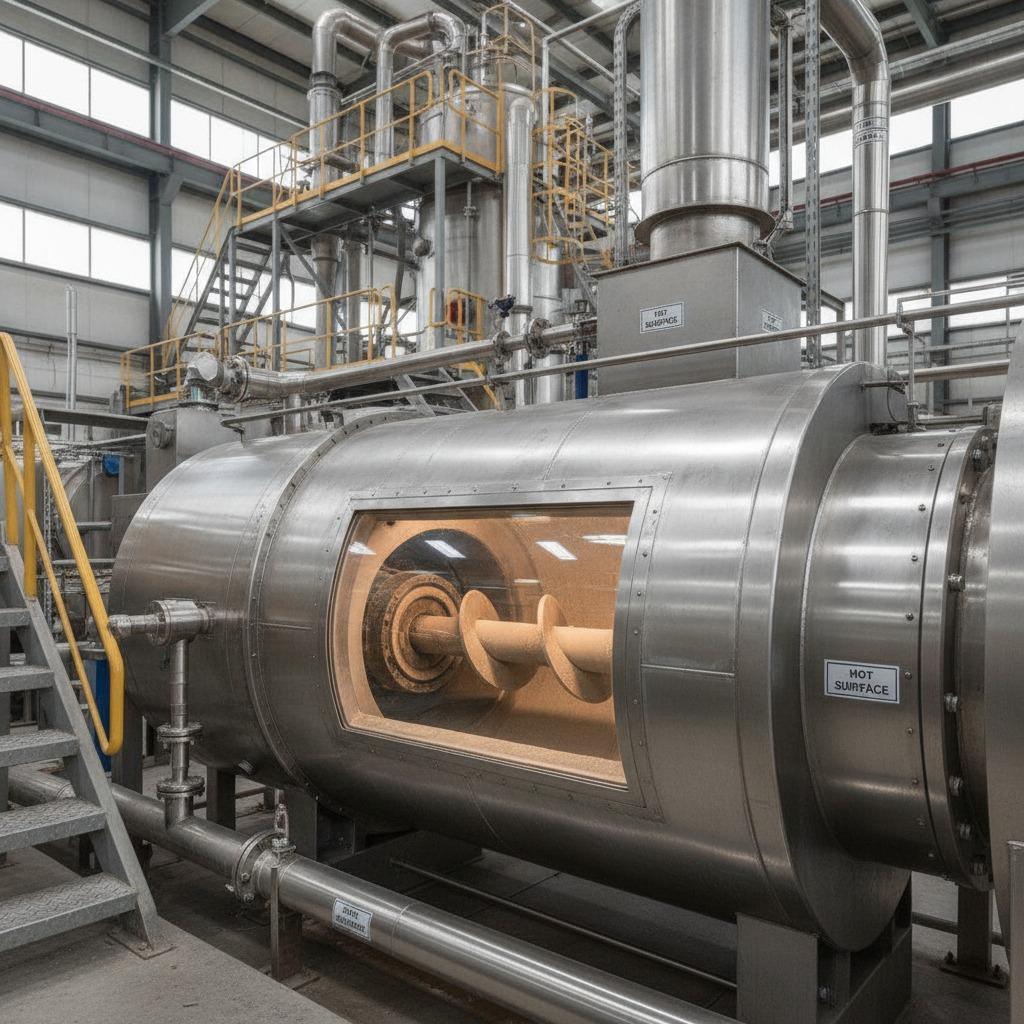
Fluid Bed Drying: How to Choose and Control the Process
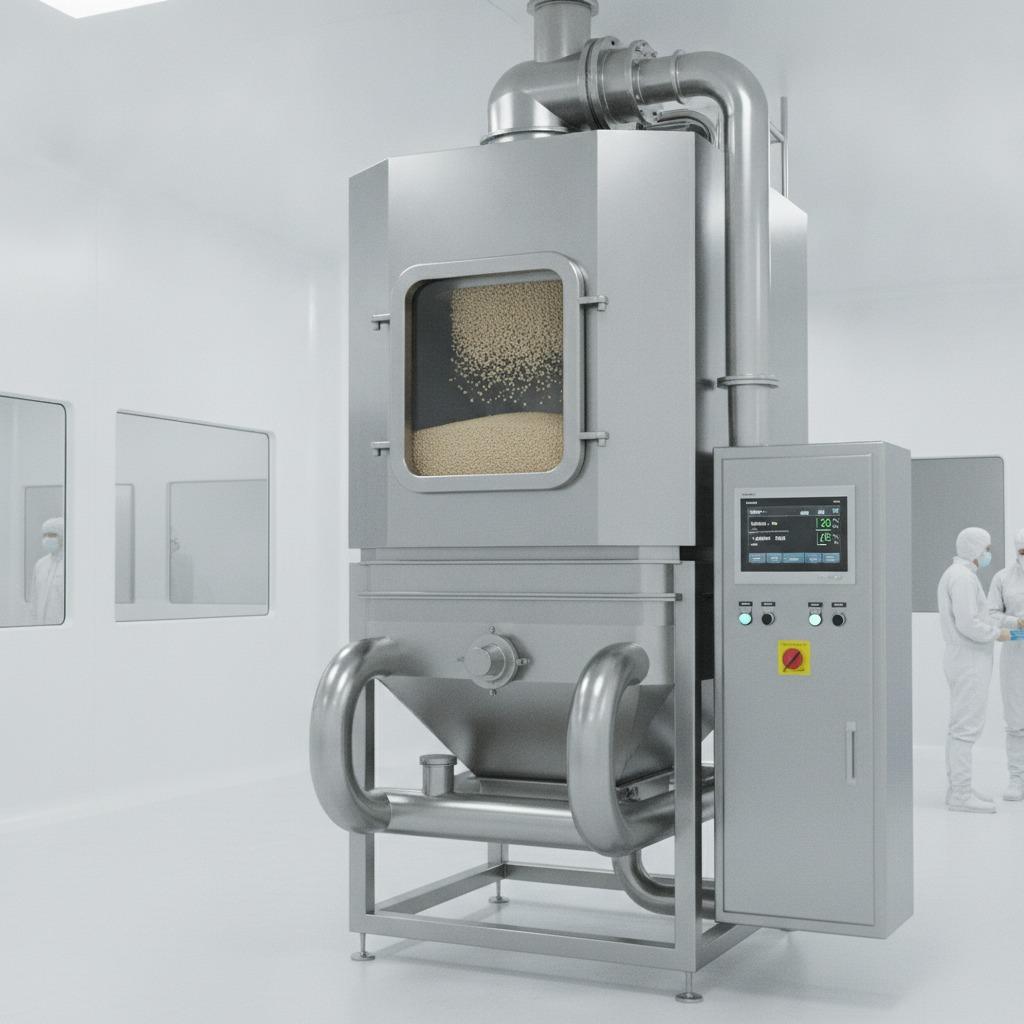
Fluid bed drying is a widely used method for removing moisture from powders, granules, crystals, and other particulate materials. It matters because drying is rarely just a matter of adding hot air: the process affects product stability, flowability, particle strength, downstream handling, and ultimately manufacturing yield. For engineers and sourcing managers, the central decision is whether a fluid bed dryer can deliver the required moisture profile without creating excessive fines, agglomeration, thermal damage, or unnecessary operating complexity.
This article explains how the process works, where it fits in a production line, which variables deserve the closest attention, and how to compare equipment options before requesting a quotation or approving a design.
What fluid bed drying does
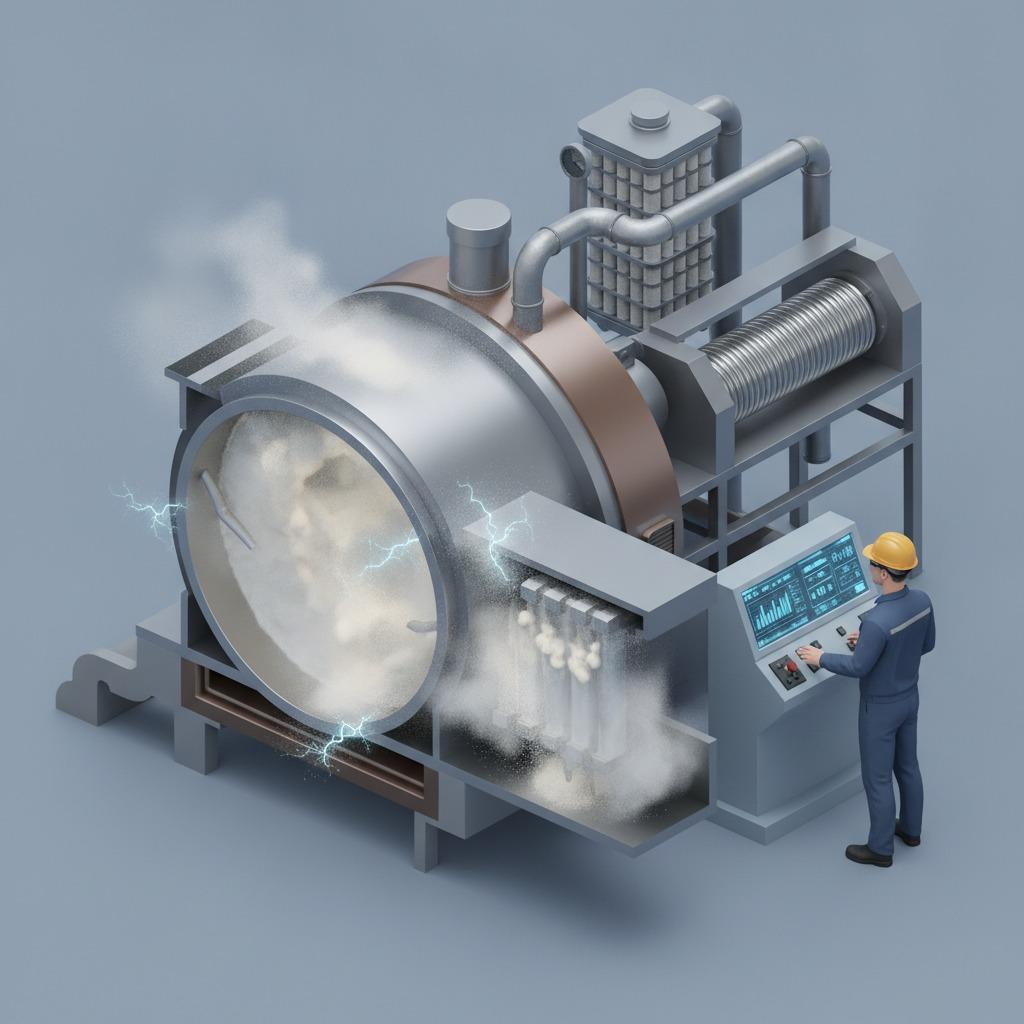
In a fluid bed dryer, a stream of process air passes upward through a bed of wet particles. At a suitable air velocity, the particles become suspended and behave in a fluid-like manner. This creates intimate contact between the material and the drying air, increasing heat and mass transfer compared with many static drying arrangements.
The process normally involves three simultaneous actions. Heat moves from the air to the wet solid, moisture migrates from inside or on the surface of the particle, and the air carries vapor away from the bed. The practical result is a relatively compact drying operation with good mixing and, when properly controlled, fairly uniform moisture distribution.
That last qualification is important. A fluidized bed is not automatically uniform. Particle size distribution, loading depth, air distribution, inlet-air condition, product temperature, exhaust conditions, and the material's tendency to agglomerate all influence the result.
Quick reference: where the process fits
| Consideration | Why it matters | Buyer question |
|---|---|---|
| Material form | Free-flowing particles generally fluidize more easily than cohesive or highly irregular material. | Will the supplied material form a stable, mobile bed? |
| Moisture target | Residual moisture affects stability, flow, compression, storage, and later processing. | How will moisture be measured and released? |
| Heat sensitivity | Product temperature may differ from inlet-air temperature, but thermal exposure still requires control. | What product-temperature limit must be respected? |
| Particle attrition | Air movement and repeated collisions can generate fines or alter particle shape. | What level of attrition is acceptable? |
| Scale-up | Airflow, distributor design, bed depth, and residence time can change with scale. | What evidence supports the proposed production scale? |
How the drying process is controlled
Airflow and fluidization
Air velocity must be high enough to suspend and mix the particles, but not so high that useful material is carried into the exhaust system or subjected to excessive attrition. The required velocity depends on particle size, density, shape, moisture content, and cohesiveness. A material that fluidizes well when wet may behave differently as it dries and becomes lighter or more free-flowing.
The air distributor at the base of the chamber is therefore a critical component rather than a minor fabrication detail. Its design influences pressure drop, air distribution, dead zones, and the risk of channeling. Uneven air distribution can leave wet pockets while other areas become over-dried.
Temperature and moisture removal
Inlet-air temperature is only one part of the thermal picture. Product temperature, exhaust-air temperature, humidity, residence time, and the material's evaporation rate also need to be considered. During the early stage of drying, surface moisture may evaporate readily. Later, moisture must migrate from within the particle, and the drying rate can fall.
For heat-sensitive products, the process should be evaluated against the actual product temperature rather than an inlet-temperature figure alone. A conservative operating window is often more useful than a nominal maximum setting. Buyers should also clarify whether the equipment design supports adjustment of airflow, temperature, and batch time independently.
Exhaust handling and containment
The exhaust side removes humid air and may also carry a small amount of fine product. Filters, separation devices, and cleaning arrangements must be suitable for the material and the intended operating environment. If the powder is hazardous, potent, dusty, or combustible, containment and dust-control requirements become central to the equipment specification.
Do not treat filtration as an accessory to be finalized after the dryer has been selected. Filter loading can affect airflow and process stability. Cleaning method, filter access, changeover requirements, and the handling of recovered fines all have consequences for labor and maintenance.
Fluid bed drying after granulation
Drying is often positioned after wet granulation, where liquid has been added to agglomerate smaller particles into larger, more manageable granules. In this arrangement, the dryer must remove the added moisture while preserving the granule structure created upstream.
Some production lines use integrated fluid bed granulation, combining granulation and drying functions in one process platform or vessel arrangement. The appeal is straightforward: fewer transfers, reduced handling, and a potentially more compact process. The trade-off is that the equipment and process controls must accommodate both the wet agglomeration stage and the subsequent drying stage. Spray distribution, binder addition, air handling, filter design, and endpoint control all become part of one linked process.
Integration can be valuable, but it should not be chosen simply because it reduces the number of machines on a layout. Ask whether the integrated system provides suitable control at each stage, whether cleaning and inspection are practical, and whether the resulting granule properties meet the needs of compression, filling, coating, or other downstream operations.
Material and product factors that change the equipment choice
Particle behavior is often more decisive than the nominal product name. Fine powders may be cohesive and difficult to fluidize. Large or dense granules may require a different airflow range than light particles. Sticky materials can form agglomerates on chamber walls, filters, or distributor surfaces, particularly if the process passes through a tacky moisture range.
Consider the following before selecting a dryer:
- Initial and target moisture content
- Particle-size distribution and bulk density
- Shape, surface texture, and tendency to break
- Thermal sensitivity and exposure limits
- Risk of sticking, agglomeration, or electrostatic charging
- Acceptable fines generation and product loss
- Batch size, operating mode, and expected production schedule
- Cleaning, containment, and material compatibility requirements
These properties should be supplied to the equipment manufacturer as process data, not left for the vendor to infer from a broad product description. “Powder” and “granule” are not sufficiently precise design inputs.
Common selection mistakes
Using only a nominal capacity
Dryer capacity is affected by moisture load, material density, bed depth, air conditions, and required endpoint. A stated vessel volume or maximum batch mass does not by itself prove that the equipment can achieve the required drying performance. Compare capacity on the basis of the actual material and cycle objective.
Ignoring scale-up behavior
A laboratory or pilot result is useful, but production scale introduces different air-distribution and heat-transfer conditions. Confirm which parameters are expected to remain constant and which must be adjusted. Scale-up should address more than chamber dimensions; it should include the distributor, filters, airflow range, control strategy, and discharge behavior.
Over-drying the product
More drying is not always better. Excessive drying can increase energy use, extend the cycle, create brittle granules, increase fines, or produce a material that behaves poorly in the next operation. Define the acceptable moisture range and the method used to determine the endpoint.
Leaving cleaning out of the specification
Product-contact surfaces, filter areas, seals, discharge points, and less visible corners all matter during changeover. A design that performs well but takes excessive time to clean may be unsuitable for a multi-product plant. Request clear information on access, inspection, disassembly, and cleaning procedures.
Practical questions for an equipment supplier
A useful technical discussion should cover the complete process rather than only the dryer chamber. Ask the supplier to explain the proposed air path, distributor arrangement, filter configuration, control variables, product discharge method, and expected operating range. Provide representative material, if possible, and distinguish between normal production material and difficult-to-process variants.
It is also worth asking how the supplier will establish the drying endpoint, what process measurements are available, and which operating parameters can be recorded for batch review. If the project involves integrated fluid bed granulation, request a separate explanation of the granulation stage and the transition into drying. The handoff between those stages can determine whether the final granule is consistent.
FAQ
Is fluid bed drying suitable for every powder?
No. Cohesive, very fine, sticky, or highly irregular materials may require special air-distribution designs, conditioning, vibration, agitation, or another drying method. Suitability should be established from material behavior and trials rather than assumed.
Does a higher inlet temperature always shorten the drying cycle?
Not necessarily. Drying is also limited by internal moisture migration, airflow, exhaust humidity, particle structure, and the allowable product temperature. A higher setting can increase thermal risk without delivering a proportional reduction in cycle time.
What is the most important specification?
There is no single universal specification. The core set normally includes material properties, batch size, initial and final moisture, temperature limits, acceptable particle change, airflow range, containment needs, cleaning requirements, and the method for confirming endpoint performance.
Making the next decision
The right fluid bed dryer is the one that matches the material's behavior and the plant's operating reality, not merely the one with the largest chamber or the most features. Begin with a clear process brief, define the moisture and product-quality targets, and require the proposed design to address airflow, heat exposure, fines, cleaning, containment, and scale-up.
For projects that include wet granulation, evaluate whether integrated fluid bed granulation genuinely simplifies the process while preserving control at both stages. A focused technical review with representative material and an agreed endpoint method will usually reveal more than a comparison of catalog specifications. That is the point at which equipment selection becomes an engineering decision rather than a capacity estimate.