
Why the double conical vacuum dryer still matters
A double conical vacuum dryer is one of those pieces of process equipment that rarely gets much attention until a batch goes wrong. Then the conversation changes quickly. Moisture is still in the powder, the product has caked on the wall, solvent removal took longer than planned, or a heat-sensitive material picked up more thermal stress than the formulation team was comfortable with. For engineers and sourcing managers, the real question is not whether the vessel looks impressive on a GA drawing. It is whether the drying method fits the material, the solvent system, and the plant’s handling reality.
The basic appeal is straightforward. The vessel rotates, the product tumbles, heat transfer happens through the jacketed shell, and vacuum lowers the boiling point so moisture or solvent can leave at a lower temperature. That combination makes the double conical vacuum dryer useful for powders, granules, crystals, and some pastes that need gentle handling. It is especially attractive when the product is sensitive to oxidation, discoloration, or overdrying. In many plants, the same unit also reduces the number of transfer steps, which matters more than it sounds when you are trying to keep contamination risk under control.
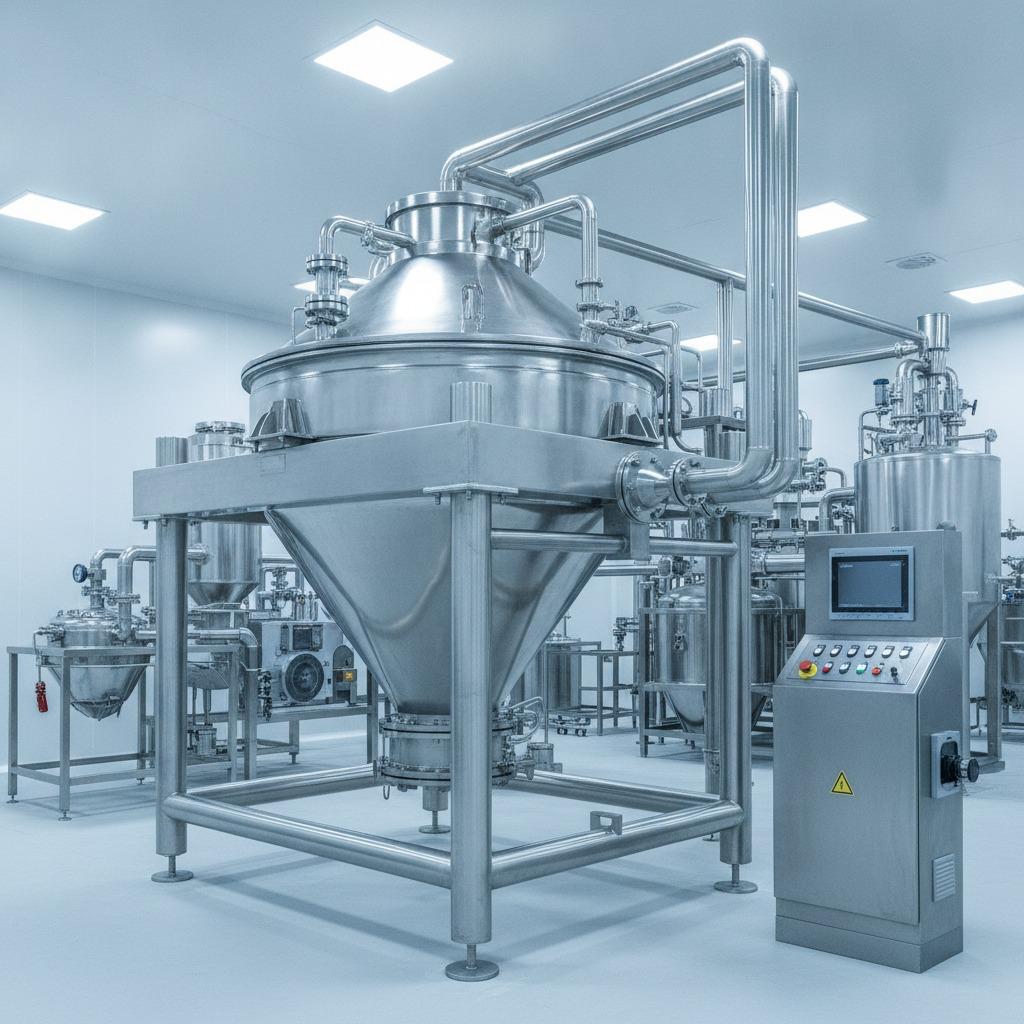
What the equipment is actually doing
The geometry is the first clue. The twin-cone shape is not just a visual signature. As the vessel rotates, the material repeatedly lifts and cascades, exposing fresh surface area to the heated wall and vacuum environment. Because the load is enclosed, operators can dry under negative pressure without constant exposure to ambient air. That is useful for products that absorb moisture, oxidize easily, or carry residual solvents that need controlled recovery.
Compared with some other drying methods, a double cone dryer is usually chosen for batch processes where product quality matters more than brute-force throughput. It is not a universal solution. Sticky pastes, highly viscous masses, and materials that form hard agglomerates may behave poorly unless upstream conditioning is sound. That is one of the small practical cautions buyers should keep in mind: the dryer itself does not fix a difficult solid-liquid separation upstream.
Where a double cone design tends to fit best
In broad terms, the equipment is used where low-temperature drying, gentle mixing, and enclosed handling line up with process needs. Typical applications include pharmaceutical intermediates, fine chemicals, specialty ingredients, and certain food or nutraceutical materials, provided the product is compatible with batch tumble drying. If the process calls for solvent recovery, vacuum operation becomes especially valuable because it can help reduce drying temperature and shorten the time the product spends in the vessel.
For many buyers, the decision comes down to material behavior. Free-flowing crystals are easier to manage than dense wet cakes. Fragile particles may benefit from the low-shear tumbling action. Products that can bridge or smear may need careful testing, because a vessel that works well in theory can underperform when the batch scale grows. Pilot trials matter here. They often reveal whether the material breaks up cleanly, whether walls stay reasonably clean, and whether the final moisture endpoint is realistic without pushing the cycle too far.
Quick comparison: what buyers usually weigh
When teams compare a double conical vacuum dryer with other drying options, a few tradeoffs come up repeatedly. A tray dryer may be simpler but usually takes more floor space and more manual handling. A fluid bed dryer can be efficient for suitable free-flowing granules, but it is not the right answer for every fragile or non-fluidizable product. A vacuum paddle dryer can handle more difficult pastes in some cases, though its agitation profile and cleaning approach are different.
The double conical vacuum dryer often wins when gentle tumbling and enclosed vacuum drying are the priorities. It may lose ground when a plant needs very high throughput, aggressive agitation, or a highly automated continuous line. That is not a weakness so much as a design boundary. Choosing well means accepting that boundary instead of trying to force the unit into a role it was not built to play.
Selection criteria that matter in real plants
Material behavior
Start with the product, not the vessel. Ask how the wet material behaves, how much it cakes, whether it abrades, and whether it can tolerate tumble motion without breaking down. Also consider whether the product contains solvent, water, or a mixture of both. The drying curve and vacuum level depend on that detail.
Heat transfer and cycle time
Because heat is applied through the jacketed surface, the drying rate depends heavily on batch fill, wall area, and the thermal characteristics of the material. In practice, cycle time is often shaped by more than one variable: heat input, vacuum stability, condenser performance, and how quickly vapors can be removed. A buyer looking only at vessel volume can miss the real bottleneck.
Cleaning and changeover
For multiproduct plants, cleaning deserves as much attention as drying performance. The enclosed cone shape can be a benefit, but access points, discharge arrangement, seals, and internal finish all influence how much effort changeover will take. If your plant handles allergens, potent compounds, or products with strong odor carryover, this section should not be treated as a footnote.
Discharge and solids handling
Drying is only part of the job. How the material leaves the vessel matters for yield and operator safety. Some products pour cleanly; others need careful discharge design to avoid buildup. If the powder is fine and dusty, the transfer route to downstream packaging or milling may need more attention than the dryer itself.
Common mistakes buyers make
One frequent mistake is assuming all vacuum dryers behave similarly. They do not. The internal motion, residence pattern, and cleaning burden vary enough that a process that works in one machine can struggle in another. Another mistake is overestimating the impact of vacuum alone. Lower pressure helps, but it does not eliminate the need for proper heat transfer and vapor removal.
A second issue is under-specifying the mechanical side. The vessel rotates as a loaded system, so drive design, seal integrity, and support structure matter. The machine may look simple, but the load can be substantial, and poor mechanical choices show up quickly in vibration, maintenance, or inconsistent performance. Buyers sometimes focus too much on the shell and not enough on the rotating assembly, controls, and utility integration.
There is also a tendency to skip representative testing. For a double cone dryer, that is risky. Lab assumptions do not always scale cleanly, especially if the product forms lumps or changes character as it dries. A small sample might tumble beautifully, while a larger batch compacts in ways nobody expected. It is better to discover that before release scheduling is built around the new unit.
Practical sourcing advice for engineers and procurement teams
If you are writing an inquiry or comparing vendors, keep the focus on process data. Describe the wet cake or granulate, initial and target moisture, solvent type if any, batch size, acceptable temperature exposure, and the quality criteria that define an acceptable dry product. Also ask how the vessel handles vacuum integrity, vapor recovery, discharge, and cleaning. Those are the points that usually separate a merely acceptable quote from a machine that actually fits production.
For purchasing teams, a useful question is whether the vendor can discuss comparable materials without overpromising. You do not need a sales pitch that claims universal success. You need a supplier who can explain where the double conical vacuum dryer works well, where it does not, and what process data they would want before committing to a final design. That kind of answer is usually more valuable than a glossy catalog statement.
When another dryer may be the better choice
A double cone dryer is not automatically the best option just because it is familiar. If your product is extremely sticky, if high shear is needed to break apart agglomerates, or if the process requires rapid continuous drying, another dryer type may be more practical. Likewise, if the plant has severe throughput pressure and the product is easy to fluidize, the batch nature of a double cone dryer may become a limitation rather than an advantage.
That said, batch equipment remains relevant because many materials are not perfectly behaved. They swell, clump, settle, oxidize, or release solvent slowly. In those situations, a carefully sized and properly specified system can save more trouble than a faster but less forgiving alternative.
What to ask before signing off
Before final approval, confirm that the supplier has addressed the thermal basis, vacuum system, discharge arrangement, cleaning approach, and utility connections. If solvent recovery is part of the process, make sure the condensation and vent handling logic is clear. If the product is high value, ask how batch loss is minimized. If the plant is regulated or tightly controlled, ask how the design supports traceability and consistent operation.
The best projects are the ones where the drying equipment is treated as part of the process, not as a standalone purchase. That sounds obvious, but it is still where many spec sheets go thin.
Next step
If you are evaluating a double conical vacuum dryer for a new line or a replacement project, start with product behavior, not vessel size. Build the specification around the material, the moisture target, the solvent load, and the cleaning expectation. Then compare vendors on whether they can support that process honestly and with enough mechanical detail to avoid surprises later. For most plants, that approach saves time, protects product quality, and keeps the conversation grounded in what the dryer actually needs to do.





