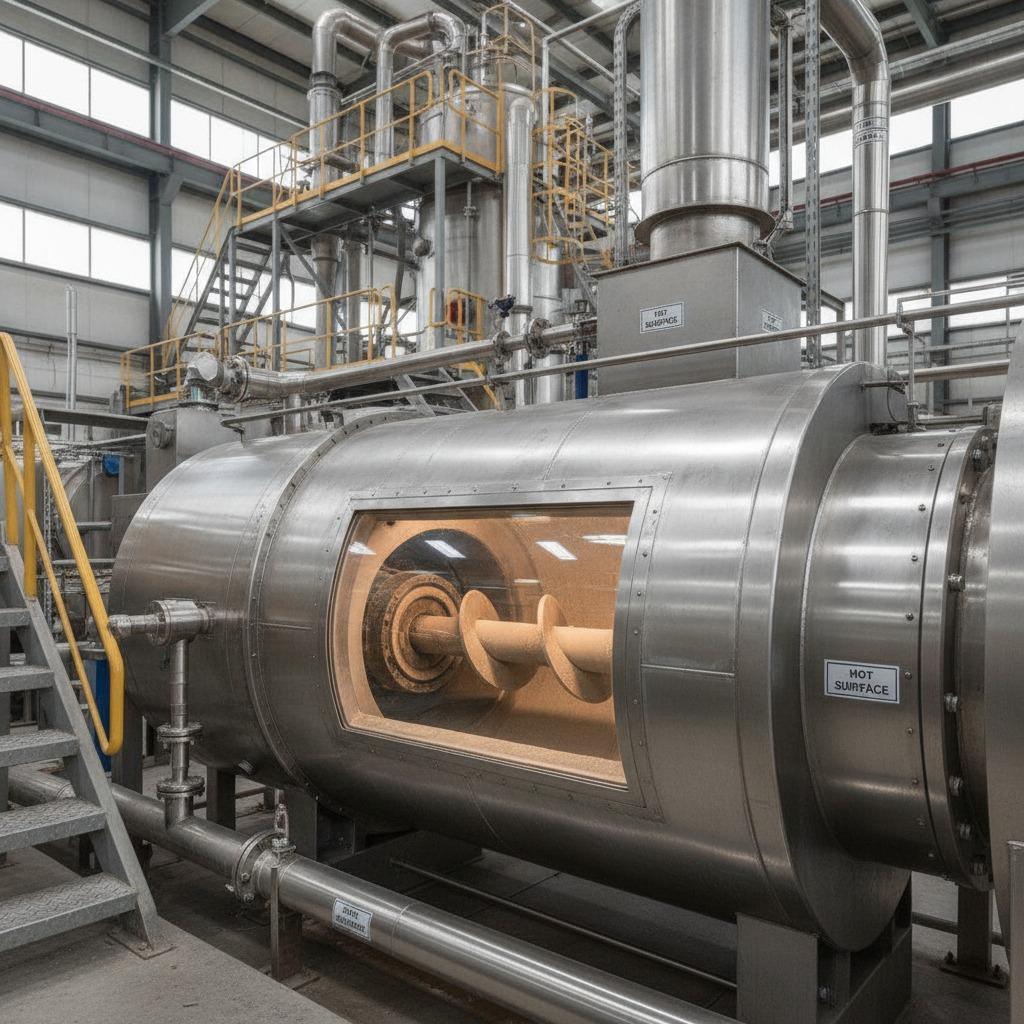
Why a double cone mixer still matters in modern powder processing
A double cone mixer looks simple, and that is part of its appeal. For manufacturers dealing with dry powders, granules, or free-flowing blends, it remains a practical choice when the job is to get a uniform mix without overworking the product. The geometry is old-school, but the use case is very current: batch blending where flow behavior is reasonably predictable and gentle handling matters.
That is the real decision many engineers and sourcing teams are trying to make. Not whether a mixer is fashionable, but whether it will deliver a consistent blend, clean discharge, and manageable maintenance in a production environment that may already be crowded with tighter quality demands and shorter changeovers.
A double cone mixer is often selected for pharmaceutical intermediates, food ingredients, chemicals, and other dry bulk materials that do not require intensive shear. It can be a good fit when you want distribution rather than size reduction, and when product integrity is more important than aggressive mixing action.
How the machine works
The vessel is formed by two conical sections joined at the center. During operation, the drum rotates around its horizontal axis, lifting material up the sides and allowing it to cascade and split repeatedly. That tumbling action creates blending through movement and redistribution rather than mechanical agitation.
This is why the equipment is frequently described as gentle. There are no internal paddles or high-speed impellers striking the product, so fragile particles are less likely to break down. For some buyers, that is the main attraction. For others, it is the limit: if the formulation contains sticky, cohesive, or very fine powders with poor flow, the mixer may need help, or it may not be the right platform at all.
Where the double cone mixer fits best
The machine is strongest in batch applications where materials are already close in particle size, density, and flowability. It is commonly used for dry blends before packaging, pre-mixing before downstream processing, and combinations where segregation risk must be controlled without adding heat or mechanical stress.
A few traits usually make the application easier:
The product is dry or very low in moisture.
The materials are free-flowing enough to cascade inside the rotating vessel.
The blend does not require high shear or aggressive dispersion.
The batch size sits comfortably within the working volume of the mixer.
That last point is often underestimated. An overloaded vessel can reduce effective movement, while an underfilled one may not generate enough intermixing. Buyers sometimes focus on total capacity and overlook working fill range, which is a more meaningful number in day-to-day production.
What buyers should compare before choosing one
On paper, many mixers can look similar. In practice, the details around discharge, loading, cleaning, and controls matter just as much as the vessel shape.
Batch size and usable volume
A mixer is only useful if its working volume matches the plant’s batch plan. Some users want flexibility across multiple products; others need a single machine dedicated to one recipe family. Either way, the fill level should be checked against the actual process, not just the nameplate capacity.
Material construction
The vessel and contact parts should suit the product being processed. Stainless steel is common in food and pharmaceutical environments, while other industrial applications may tolerate different material choices. The right answer depends on corrosion risk, cleaning expectations, and product compatibility.
Discharge and transfer method
Blending is only half the job. If discharge is awkward, the mixer can become a bottleneck. Buyers should look at how the blended material exits the vessel, how much hold-up remains, and whether the transfer path supports the plant’s sanitation or containment goals.
Cleaning and changeover
For facilities running more than one formula, cleanability can make or break the equipment decision. A simple vessel can still be time-consuming if access is poor or residue gathers around seals and discharge points. This is one of those areas where a small design detail saves hours later.
Strengths and limits in real production
The double cone mixer is not trying to do everything, and that is exactly why it survives in so many plants. Its strengths are straightforward: gentle blending, relatively simple operation, and a design that is easy for operators to understand. Fewer moving parts often mean fewer surprises.
Still, it is not a universal solution. If the formulation includes trace additives that must be dispersed evenly at very low inclusion rates, or if ingredients vary greatly in density and size, the blending challenge becomes harder. In those cases, process validation and sampling strategy matter a great deal. A good-looking vessel does not guarantee a uniform result.
There is also the practical matter of cycle time. Tumbling mixers generally do not match the speed of more aggressive technologies when the application demands rapid dispersion. Some plants accept that trade-off because the product quality is better preserved. Others do not, which is why the end use has to guide the equipment choice.
Common mistakes buyers make
One frequent mistake is assuming all dry blends behave the same. They do not. A mix that flows beautifully in one product line may segregate or hang up in another. Particle shape, density, and moisture all change the outcome.
Another mistake is ignoring the upstream and downstream handling steps. A mixer may perform well, but if the charging method causes segregation before the batch even begins, the process still fails. The same applies to discharge into bins, bags, or tablet-feed systems. The entire material path matters.
A third issue is underestimating the importance of validation sampling. Uniformity should be checked with a sampling plan that reflects the batch geometry and the material’s behavior. Otherwise, teams may overstate performance based on a few favorable tests.
Practical buyer advice
If you are evaluating a double cone mixer, start with the product characteristics before the machine brochure. Ask whether the material is free-flowing, whether the recipe tolerates gentle tumbling, and whether the batch size will remain stable over time. Those questions narrow the field quickly.
Then look at the boring but essential items: access for cleaning, seals, discharge design, control simplicity, and how the unit will fit into the plant layout. A mixer that is technically suitable but awkward to load or clean can cost far more in labor than expected.
It also helps to involve production staff early. Operators usually spot the nuisance points faster than anyone else. If they are concerned about dust, access, or changeover time, take that seriously. Those are rarely cosmetic complaints; they are usually pointing at lost time or hidden contamination risk.
When another mixer may be better
A double cone mixer is not the best answer for every powder line. If the product needs high-intensity blending, wet granulation, or deagglomeration, another mixer type may be more suitable. Likewise, if the formulation is especially cohesive or prone to dead zones, the gentle tumbling action may simply not be enough.
That does not make the design outdated. It makes it specific. The best equipment choices are often the ones that do one job well instead of three jobs badly.
FAQ: short answers buyers usually want
Is a double cone mixer suitable for fragile powders?
Often yes, because it blends without high shear. That said, the final answer depends on the powder’s flow and whether segregation is likely.
Can it handle multiple ingredients with different densities?
Sometimes, but this is where process testing matters. Density differences can lead to segregation during loading, mixing, or discharge.
Is it easy to clean?
The basic geometry is simple, which helps, but actual cleanability depends on access, seals, discharge points, and the plant’s sanitary requirements.
Is it better for small or large batches?
It can serve both, provided the working volume matches the batch size and the fill level is appropriate.
What to do next
If you are comparing dry blending equipment, use the double cone mixer as a benchmark rather than a default choice. Test it against the material behavior, not just the production target. Review batch size, handling, cleanability, and discharge before you focus on motor power or cosmetic features.
That sequence usually leads to a better purchase decision. It also avoids the classic problem of buying a mixer that looks correct on paper but becomes inconvenient once production starts.