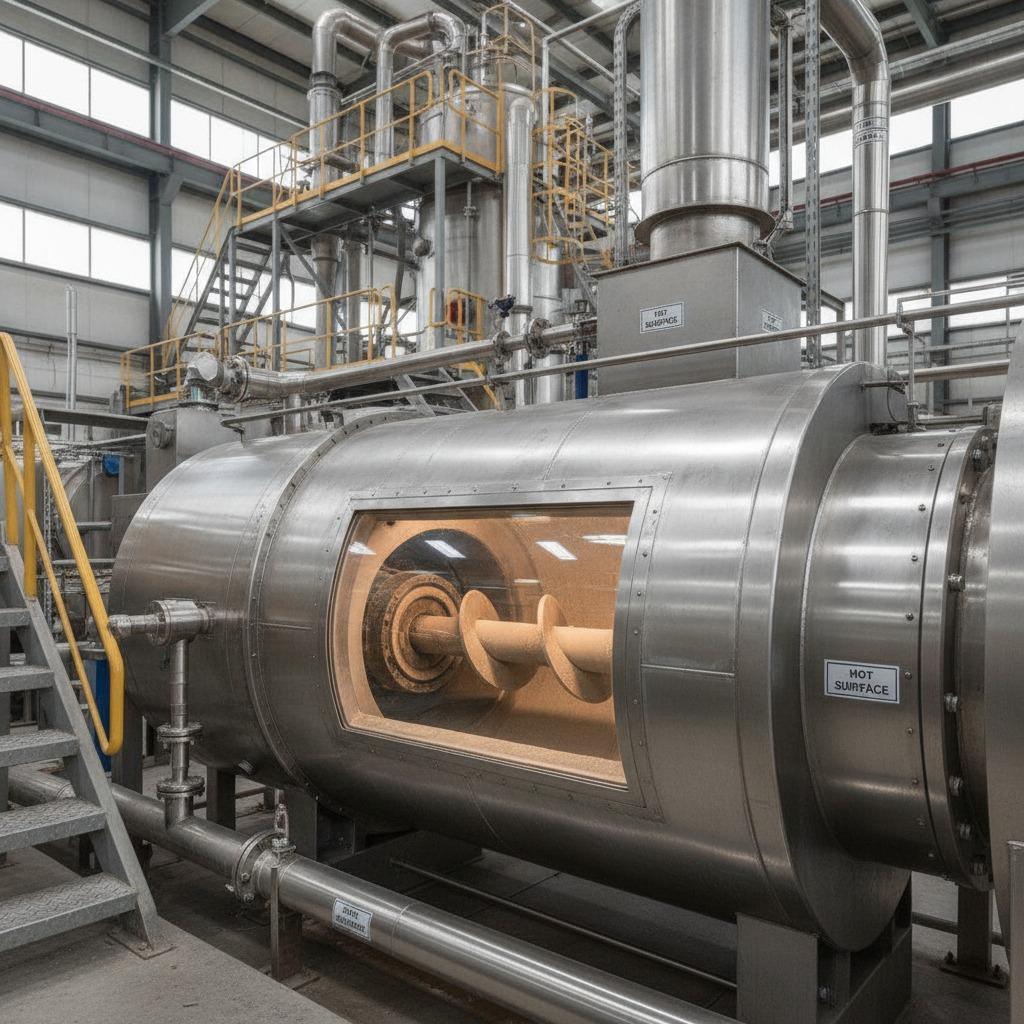
Difference Between Flash Dryer and Rotary Dryer: How to Choose the Right Drying System
If you are comparing the difference between flash dryer and rotary dryer, you are probably not shopping for theory. You are trying to decide which drying system fits a real material, a real line, and a real production target. That decision matters because the wrong dryer can create uneven moisture, damaged product, wasted energy, or a line that looks fine on paper and becomes a headache in the plant.
Both machines remove moisture, but they do it in very different ways. A flash dryer moves material through a stream of hot air for very fast drying. A rotary dryer tumbles material in a rotating drum while hot gas and solids exchange heat over a longer residence time. Those differences shape everything else: what materials they suit, how much footprint they need, how gently they handle product, and how forgiving they are when feed conditions drift.
Quick answer: what separates the two
The simplest way to think about it is this: a flash dryer is built for speed and fine particles, while a rotary dryer is built for longer drying time and bulk solids.
A flash dryer is usually chosen when the material is already in a powder, granule, slurry, or filter cake form that can be dispersed and carried by air. Drying happens in seconds or fractions of a minute, so it works well for heat-sensitive or fast-processing applications where the product does not need a long dwell time.
A rotary dryer is closer to a heavy-duty thermal workhorse. Material enters a rotating cylinder, is lifted and cascaded through the hot gas stream, and exits after a much longer residence time. That makes it a practical option for ores, minerals, sand, biomass, fertilizers, aggregates, and other bulk solids that are not easily pneumatically conveyed.
How each dryer works
Flash dryer
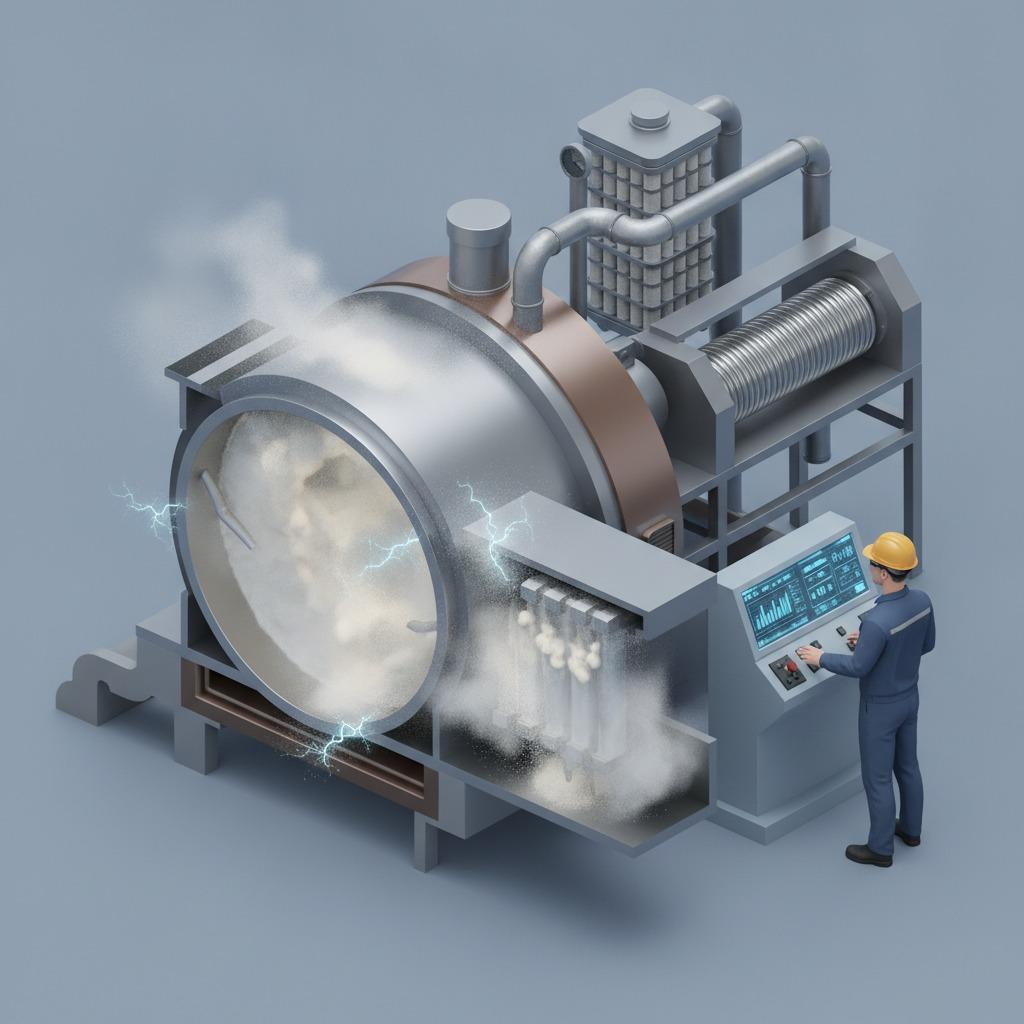
A flash dryer uses a high-velocity stream of heated air or gas to suspend and transport material through the drying chamber. The particles are repeatedly exposed to hot gas while the moisture evaporates very quickly. Because the residence time is short, the system is often paired with size reduction, dispersion, and separation equipment upstream or downstream, depending on the material.
This design is often suitable for materials that break up easily and dry quickly. It is not usually the first choice for large, wet lumps that need significant mechanical breakup. If the feed is inconsistent, the dryer can become sensitive fast; that is one reason plant teams pay close attention to feed preparation.
Rotary dryer
A rotary dryer consists of a slightly inclined rotating drum. As the shell turns, flights lift and shower the material through the hot gas stream. The material advances gradually from the inlet to the outlet, and the long travel time allows substantial moisture removal.
This setup is mechanically straightforward and widely used for rugged, high-throughput service. It tolerates a broader range of feed sizes and moisture levels than many faster systems. The tradeoff is that it usually occupies more floor space and consumes more thermal energy per unit of moisture removed if the process is not well controlled.
Key differences that matter to buyers
1. Residence time
This is one of the most important practical differences. Flash dryers operate in a very short time window, which is useful when the product can dry quickly and should not be exposed to heat for long. Rotary dryers keep material in the system longer, which helps with more difficult drying jobs and larger particle loads.
2. Material form
Flash dryers favor powders, granules, slurries, filter cakes, and other feed that can be dispersed into the airflow. Rotary dryers are better suited to bulk solids, especially where particle size is mixed or the feed is too heavy or sticky for efficient pneumatic transport.
3. Footprint and layout
Flash dryer systems can be relatively compact, though the full line may include feeders, cyclones, dust collection, and other auxiliaries. Rotary dryers are typically larger, especially when designed for high throughput and long retention. Plant layout often becomes a deciding factor when retrofit space is tight.
4. Thermal exposure
Short exposure in a flash dryer can be an advantage for heat-sensitive materials. A rotary dryer may still be suitable for sensitive products, but the operating profile has to be set carefully. In both cases, product quality depends on moisture target, inlet temperature, airflow, and feed consistency. A dryer is only as controlled as the system feeding it.
5. Mechanical simplicity and maintenance
Rotary dryers are known for rugged mechanical construction, but they involve rotating seals, support rollers, drive systems, and wear components that need routine attention. Flash dryers are different: the drying chamber may have fewer moving parts, but the overall system can depend heavily on air handling, dispersing devices, and dust separation. Maintenance is not “less” in one case and “more” in the other; it is simply shifted to different parts of the line.
Which applications suit each dryer?
A flash dryer is often considered for:
- Fine powders that can be dispersed into a gas stream
- Slurries or filter cakes that need rapid drying
- Materials that benefit from very short thermal exposure
- Processes where a compact drying zone is valuable
A rotary dryer is often used for:
- Minerals and ores
- Sand, aggregates, and other construction materials
- Biomass and organic solids
- Fertilizers and similar bulk materials
- Feedstocks with variable particle size or higher moisture loads
That said, the application boundary is not absolute. Some materials can be dried either way if the upstream preparation, final moisture specification, and production rate are different. Engineers often end up choosing not just a dryer, but a whole process style.
Selection criteria engineers and sourcing teams should check
Before deciding between these systems, buyers should look at the feed and not just the output target.
Start with material behavior. Does it stick, bridge, agglomerate, or break apart easily? Can it be fed consistently? Can it be carried in air, or does it need mechanical tumbling? These questions often tell you more than a headline moisture number.
Next, examine the moisture profile. A very wet feed with broad variation may favor a rotary dryer. A feed that is already partially dewatered and fairly uniform may suit a flash dryer better.
Then consider product sensitivity. If color, odor, structure, or thermal degradation are concerns, residence time and temperature control become critical. Faster is not always better; sometimes “gentler” means shorter and more controlled, sometimes it means lower temperature and longer exposure.
Finally, review utility and housekeeping needs. Dryers create dust, exhaust, and energy demand. A system that looks efficient in the brochure can still become expensive if air treatment, dust collection, or feeding systems are undersized.
Common mistakes when comparing the two
One common mistake is comparing only heat source and throughput. Those matter, but they do not tell the full story. A second mistake is assuming that a faster dryer is automatically more efficient. In practice, efficiency depends on how well the dryer matches the material.
Another frequent issue is underestimating feed preparation. A flash dryer can struggle if the material is too wet, too lumpy, or not properly dispersed. A rotary dryer can also underperform if the feed rate fluctuates widely or if the drum is not sized for the required retention time.
A practical caution: plant teams sometimes focus on final moisture and forget discharge handling. If the dried material is hot, dusty, or fragile, downstream conveying and packaging can become the real bottleneck.
Practical buyer advice
If you are sourcing a drying system, ask suppliers to talk through the material from feed to discharge, not just the dryer body itself. Ask how the dryer handles upset conditions. Ask what happens if inlet moisture rises. Ask how dust is managed. Ask which parts wear first and how access is handled for cleaning or inspection.
If your material is fine, fast-drying, and sensitive to prolonged heat, the flash dryer is often the stronger candidate. If your material is bulky, variable, and needs long exposure to hot gas, the rotary dryer is usually the more practical machine.
In many plants, the right answer also depends on upstream dewatering, milling, classification, and downstream storage. Drying does not live alone; it sits in a process chain, and the chain usually decides the economics.
FAQ
Is a flash dryer always more energy efficient than a rotary dryer?
Not always. A flash dryer can be very efficient for the right material, but system efficiency depends on moisture removal load, heat recovery, exhaust handling, and feed consistency. The wrong material can erase the advantage quickly.
Can a rotary dryer handle sticky material better?
Often, yes, because the tumbling motion and longer residence time help, but stickiness can still create buildup and cleaning issues. Material behavior should be tested or reviewed carefully before final selection.
Which dryer is easier to integrate into an existing line?
That depends on space, utilities, dust collection, and how the current feed is delivered. Flash dryer systems may fit into compact layouts, while rotary dryers may be simpler in some heavy-material plants because they tolerate broader feed variation.
Should I choose based only on final moisture target?
No. Final moisture is important, but it is only one variable. Particle size, thermal sensitivity, throughput, housekeeping, maintenance access, and utility cost can matter just as much.
A decision that should start with the material
The difference between flash dryer and rotary dryer is not just about speed versus size. It is about how the material behaves under heat, motion, and airflow. That is why two systems with similar output specifications can lead to very different operating results.
For sourcing managers, the safest next step is to define the feed characteristics, moisture range, and discharge requirements as clearly as possible before comparing vendors. For engineers, the useful question is not which dryer is better in general, but which dryer is less likely to fight the material you actually have.
If you are evaluating options now, build your comparison around the real feed, the required moisture endpoint, and the practical limits of your plant layout. That is the point where the choice becomes clear.