
Why cosmetic raw material drying matters more than many teams think
Cosmetic raw material drying sits at an awkward but important point in the production chain. It is not the most visible part of a beauty product, yet it can shape everything that follows: powder flow, odor stability, microbial risk, blending behavior, and even how consistently a finished batch performs from one run to the next. For engineers and sourcing teams, the real question is not whether drying is needed. It is which drying approach protects the raw material without damaging the properties that make it useful in the first place.
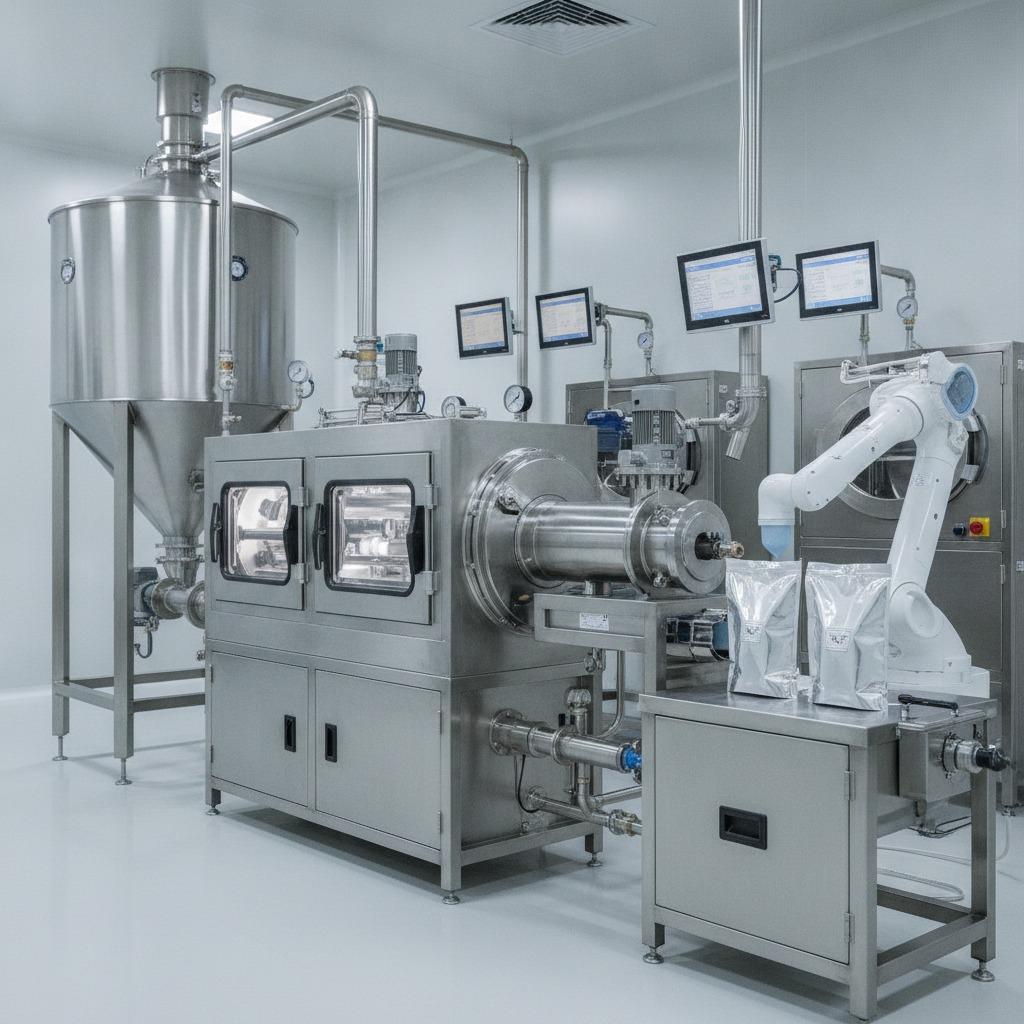
That distinction matters because cosmetic ingredients are not all the same. A botanical extract, a clay, a sugar-based exfoliant, a pigment, and a polymer powder each respond differently to heat, airflow, vacuum, and residence time. Push too hard, and you may lose volatile compounds, discolor the material, or create lumps that are expensive to break apart later. Dry too gently, and the material may hold moisture that complicates storage, shipping, and formulation.
The practical goal: remove moisture without changing the material
In a manufacturing setting, drying is usually about more than hitting a moisture number on a certificate of analysis. The real target is to make the raw material easier to handle while preserving its functional characteristics. For cosmetic ingredients, that often means maintaining particle structure, color, fragrance profile, dispersibility, and cleanliness.
This is why cosmetic raw material drying is often approached as a balancing act. A supplier may be trying to stabilize a botanical powder after extraction, reduce water activity in a mineral ingredient, or prepare a sensitive active for packaging. The correct method depends on the material’s heat sensitivity, initial moisture content, particle size, and whether the end use is in skincare, color cosmetics, haircare, or a more specialized formulation.
Common drying approaches used for cosmetic ingredients
There is no single universal method that fits every cosmetic ingredient, and that is where sourcing decisions can go wrong. Teams sometimes ask only whether a material is “dried,” when the better question is how it was dried and what that process may have done to the material.
Hot air drying
Hot air drying is one of the simplest and most familiar options. It is often suitable for robust raw materials that can tolerate moderate heat and airflow. The upside is accessibility and straightforward operation. The downside is that prolonged exposure can affect delicate plant-derived materials or cause surface hardening before the interior moisture has fully escaped.
Vacuum drying
Vacuum drying lowers the pressure around the material so moisture can leave at lower temperatures. That makes it attractive for heat-sensitive cosmetic ingredients, especially when odor retention or active stability is a concern. It is not a free lunch, though. Vacuum systems add equipment complexity, and the material still has to be loaded and handled carefully to avoid contamination or agglomeration.
Spray drying
Spray drying is common where a liquid feed must be converted into a free-flowing powder. It can be useful for encapsulated fragrances, extracts, and some functional ingredients. The process can create consistent powder morphology, but not every ingredient survives atomization and heat exposure equally well. Buyers should ask about inlet and outlet conditions, carrier materials if used, and how the final powder behaves during blending.
Freeze drying
Freeze drying is often chosen when preserving structure and sensitive compounds matters more than throughput. It is slow and generally more expensive than standard thermal methods, but it can be valuable for premium or highly delicate cosmetic raw materials. In practice, it is more likely to appear in specialty ingredients than in high-volume commodity streams.
What buyers should evaluate before choosing a drying process
For sourcing managers, the temptation is to compare price first. That is understandable, but drying method usually affects more than cost. A lower-cost process can create downstream waste if the material bridges in bins, clumps during blending, or loses performance in the formula.
Start with the material’s sensitivity. Does it contain volatile aroma compounds? Is it prone to oxidation? Does it change color when heated? These are not academic questions; they can determine whether the supplier’s process is suitable for your formulation.
Next, consider the intended application. A powder used in pressed makeup may need very different particle behavior from a raw material intended for a cream or lotion. Flowability, compressibility, and dispersibility matter in production, not just on paper. If the dried ingredient is difficult to meter consistently, the line may spend more time compensating than manufacturing.
Finally, look at packaging and storage. A well-dried material can still absorb moisture if it is packed poorly or stored in a humid warehouse. Some cosmetic raw materials benefit from moisture-barrier packaging, desiccant use, or tighter incoming inspection. This is one of those areas where the buying department, QA team, and plant floor should stay in the same conversation.
Quality risks that often show up later
Drying problems do not always appear immediately. That is part of what makes them frustrating. A batch may look acceptable on arrival, then reveal issues after a few weeks in storage or after blending into a finished formula.
Common red flags include caking, uneven particle size, weak flow, off-odor, color drift, and inconsistent bulk density. In some cases the material may appear fine but perform differently because surface moisture or residual solvents remain too high. If a supplier cannot clearly describe the drying process, that is worth treating as a warning sign.
Another practical issue is microbial control. Drying is not a substitute for good hygiene, but it is one of the controls that can help reduce risk when handled properly. For ingredients that are naturally prone to contamination or retain moisture, insufficient drying may complicate preservation strategy downstream. That can become a formulation headache very quickly.
Selection criteria for engineers and sourcing teams
A sensible selection framework usually starts with four questions: what is the material, what does the formula need, what can the process tolerate, and what proof can the supplier provide?
Material compatibility comes first. Heat-sensitive botanicals, mineral powders, actives, and functional polymers may each require different handling. Next is process fit. A supplier’s drying line should match the product’s physical form and sensitivity rather than forcing the ingredient into a one-size-fits-all route.
Proof matters as well. Ask for a process description that explains the drying method, the handling sequence, and the controls used to protect product quality. If the supplier can share specification data, moisture targets, or packaging details, review those carefully. If they cannot, you may be taking a blind leap into an ingredient that will be expensive to qualify later.
There is also a commercial angle that experienced buyers know well: consistency often matters more than absolute performance. A process that gives slightly less aggressive drying but far better batch-to-batch stability can be the better choice, especially for large production runs.
Common mistakes when sourcing dried cosmetic raw materials
One common mistake is assuming all powders are interchangeable. They are not. Two ingredients can share a similar appearance and still behave very differently during blending, pressing, or dissolution.
Another mistake is ignoring the drying history of a raw material simply because the final moisture value looks acceptable. The method used to reach that value can influence particle integrity, aroma retention, and shelf stability. Buyers sometimes discover too late that a material was technically dry, but not usable in their process.
A third mistake is overlooking transport conditions. Even well-dried cosmetic ingredients can pick up moisture during shipping if the packaging is not robust enough. This becomes especially important for hygroscopic materials and in climates with high ambient humidity.
A simple buyer’s checklist before approving a supplier
Before approving a new source, it helps to confirm a few practical points:
Does the drying method match the material’s sensitivity? Is the powder free-flowing enough for your equipment? Are there any concerns about odor loss, oxidation, or color change? Has the supplier described how the material is protected after drying? And can they explain any variability you might see between batches?
If the answers are vague, ask again. Cosmetic ingredient purchasing often rewards patience here. A supplier that can speak plainly about process limits is usually easier to work with than one that promises every outcome without qualification.
FAQ: quick answers on cosmetic raw material drying
Is lower drying temperature always better?
Not always. Lower temperature can protect sensitive materials, but it may also leave too much moisture behind or extend process time. The right balance depends on the ingredient.
Can drying improve shelf life?
It can help, especially when moisture is a driver of degradation or microbial risk. But shelf life still depends on packaging, storage, and the chemistry of the material itself.
Should every cosmetic raw material be dried the same way?
No. That approach usually creates quality problems. The process should match the ingredient’s structure, sensitivity, and intended end use.
What to do next
If you are comparing suppliers or validating a new ingredient source, start by asking how the material was dried and what the process is designed to preserve. That one question often reveals more about usable quality than a glossy product sheet does. For teams building reliable cosmetic formulations, the drying step is not background noise. It is part of the ingredient specification, and sometimes the part that decides whether production runs smoothly or becomes a troubleshooting exercise.





