
Why animal feed ingredient drying matters more than many buyers expect
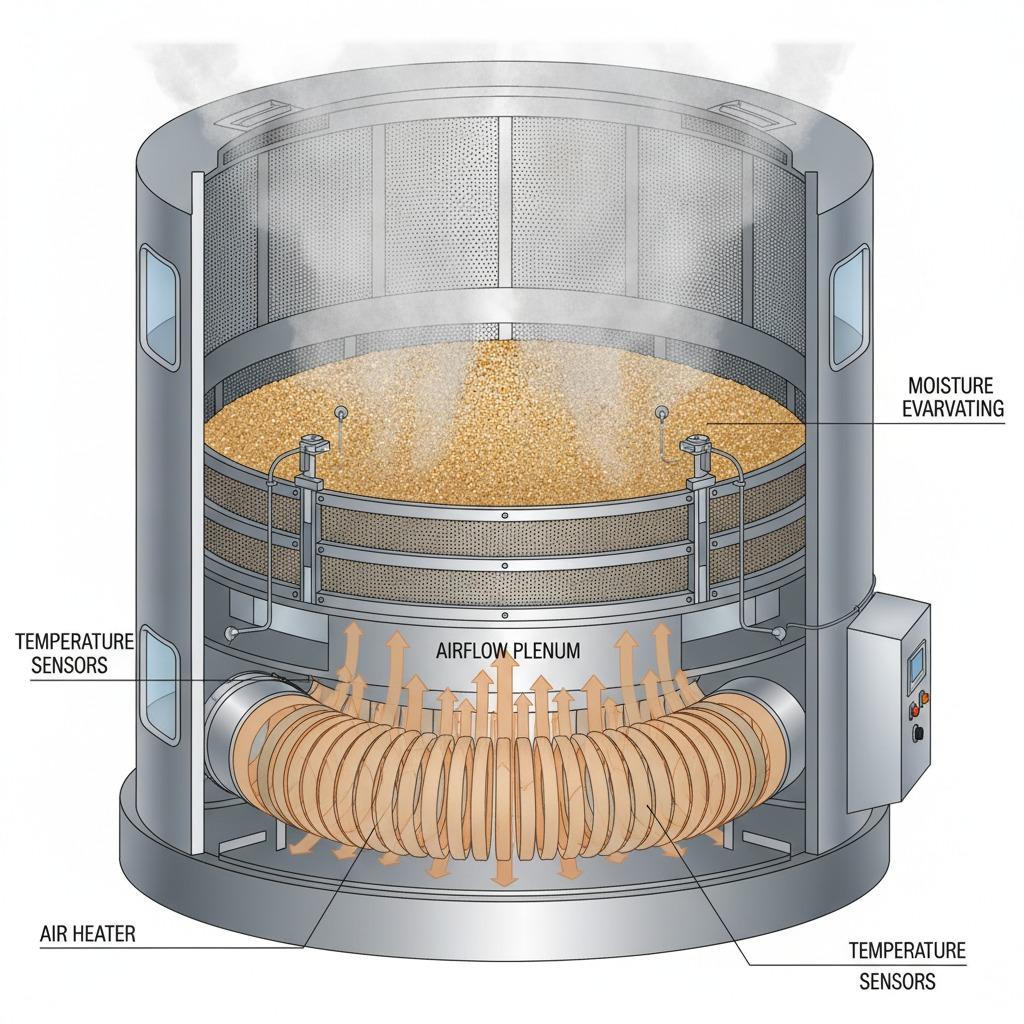
Animal feed ingredient drying is one of those upstream process steps that rarely gets much attention until something goes wrong. A load arrives too wet, storage heats up, a premix clumps, or a mill starts seeing inconsistent flow through conveyors and bins. For sourcing managers and plant teams, the issue is not simply moisture reduction. It is whether the ingredient will store safely, move reliably, blend consistently, and preserve the nutritional and physical qualities the formulation depends on.
That is why drying is not just a preprocessing task. It affects shelf life, microbial risk, handling behavior, and in some cases the final feed quality itself. Whether the ingredient is a grain, byproduct meal, plant fiber, or a specialty feed component, the buyer usually has to make a practical decision: how dry is dry enough, and what drying method will protect the material without adding unnecessary cost or damage?
The basic goal: remove moisture without creating a new problem
At a high level, drying is about bringing incoming material to a moisture range that supports safe storage and downstream processing. In feed manufacturing, the target is often tied to stability in storage and transport, though the exact moisture level depends on the ingredient, climate, packaging, and intended use. A grain that will be held in bulk for weeks is not the same as a lightly processed ingredient that moves straight into formulation.
The challenge is that moisture is only part of the story. Heat exposure can affect appearance, flowability, and sometimes nutrient integrity. Excessive drying can make brittle particles, increase fines, or change how an ingredient behaves in mixing. Too little drying leaves the supply chain exposed to spoilage, mold growth, caking, and bridging in silos. So the real objective is controlled drying, not simply aggressive drying.
Where grain drying for animal feed fits into the picture
For many facilities, grain drying for animal feed is the most visible example of this process, but it is not the only one. Corn, wheat, barley, sorghum, and other cereal inputs may need moisture reduction after harvest or before storage. Other ingredients, such as oilseed meals or fibrous plant materials, may also require drying depending on how they are collected, cleaned, or conditioned.
In practice, grain drying is often evaluated on three questions:
1. Can the material be dried evenly enough to avoid hot spots or overprocessed fractions?
2. Will the drying method preserve the ingredient’s handling and nutritional profile?
3. Does the system fit the plant’s throughput, energy budget, and quality requirements?
Those questions sound simple, but they are where many purchasing mistakes begin. A system that looks efficient on paper can become expensive if it produces inconsistent moisture or forces extra rework later in the line.
Common drying methods and how they differ
There is no single best drying method for every animal feed ingredient. The right choice depends on starting moisture, final moisture target, sensitivity to heat, particle size, and volume.
Hot-air and forced-air drying
Hot-air systems are common because they are relatively straightforward and scalable. They move heated air through or across the material to remove moisture. These systems can work well for grain and many bulk feed ingredients when properly controlled, but they require attention to residence time and temperature. If the airflow is uneven, the result can be a mix of underdried and overdried material in the same batch.
Low-temperature or ambient-assisted drying
Low-temperature drying is often chosen when preserving quality matters more than speed. It may be slower, but it can reduce the risk of thermal damage. This matters when the ingredient is intended for sensitive formulations or when the producer wants to limit cracking and dust generation.
Batch versus continuous systems
Batch dryers are easier to control for smaller or variable lots. Continuous systems are better suited for high-volume operations where steady throughput matters. Buyers should think carefully here: the right choice is not only about capacity but also about how variable the incoming moisture is. Highly variable feedstock can be difficult for a continuous process unless the upstream handling is well managed.
What can go wrong if drying is poorly controlled
The most obvious risk is spoilage. Residual moisture creates the conditions for microbial growth, heating, and insect activity during storage. But the operational risks are just as serious. Moist or unevenly dried ingredients may bridge in hoppers, stick in transfer points, or produce inconsistent feed rates at the mixer.
There is also a quality-control issue that is sometimes underestimated. When moisture varies from lot to lot, the apparent density and flow behavior can change, which affects batching accuracy. A formulation may be correct on paper and still perform unpredictably if the ingredient condition keeps shifting.
For buyers, this becomes a hidden cost. It shows up as complaints from operations, more cleaning, extra labor, and sometimes product downgrades. That is why drying should be judged as part of the whole process line, not as a standalone utility.
Selection criteria for sourcing and plant teams
When evaluating a drying solution or dried ingredient supply, practical buyers usually need more than a technical brochure. The real decision often comes down to a short list of operating questions.
1. Starting moisture range
Know the moisture range of incoming material, not just the average. A narrow range supports simpler control. A wide range may demand more robust drying or a buffering step before the dryer.
2. Heat sensitivity
Some feed ingredients tolerate heat better than others. If the material includes delicate protein fractions, oil-rich components, or naturally fragile particles, the drying profile should be conservative enough to avoid unnecessary degradation.
3. Final use in the feed formula
An ingredient going into a pelleted ration may have different requirements than one used in a mash feed or a specialty premix. The downstream process sets the bar for particle behavior and storage stability.
4. Energy and throughput balance
A drying line that is technically capable but energy-heavy can become hard to justify when volumes increase. Buyers should look at throughput under real conditions, not just nameplate capacity.
5. Cleanability and contamination control
Feed operations cannot ignore cross-contamination risk. Dust buildup, residue retention, and cleaning accessibility matter, especially when multiple ingredient types move through the same equipment.
Practical mistakes buyers still make
One common mistake is assuming that “drier is always better.” That is not true. Overdrying can make materials more fragile, create excess fines, and increase handling losses. Another mistake is specifying a dryer based only on peak capacity without considering moisture variability across seasons. Harvest conditions change, and so does the incoming material.
A third mistake is ignoring the storage environment after drying. If the ingredient is dried properly but then stored in a humid or poorly ventilated area, the benefit can disappear quickly. Drying and storage should be designed together.
It is also worth noting that some companies focus only on the dryer itself and overlook intake cleaning, screening, and preconditioning. Those upstream steps can make the drying process more stable. A cleaner, more uniform feedstock is usually easier to dry consistently.
How to compare options without getting lost in technical jargon
If you are comparing equipment or ingredient supply options, it helps to reduce the conversation to performance under ordinary plant conditions. Ask how the system handles moisture variation, what kind of temperature control is used, how evenly material moves through the chamber or airflow path, and what kind of maintenance burden to expect.
For ingredient buyers rather than equipment buyers, the same logic applies. Ask for moisture consistency, storage recommendations, packaging considerations, and any handling cautions. Do not assume that a dried ingredient will behave the same way as a raw one just because both fit the same spec sheet. In feed manufacturing, small differences in physical condition can create outsized process changes.
A few questions worth asking before you buy
What is the acceptable moisture window for the ingredient in your climate and storage setup?
How much variation exists between lots, and how is it measured?
Will the dried material stay stable long enough for your normal receiving and production cycle?
Does the drying process change flowability, density, or dust generation in a way that affects handling?
These are not glamorous questions, but they are the ones that protect margin.
What to do next
If your operation is reviewing animal feed ingredient drying, start by mapping the material flow from intake to storage to formulation. Identify where moisture is being added, lost, or left uncontrolled. Then compare the drying method, storage environment, and downstream equipment as one system rather than as separate purchases.
That approach usually reveals the real bottleneck. Sometimes it is the dryer. Sometimes it is poor incoming material control. Sometimes it is storage that undoes the work of the dryer. Either way, the best decision is the one that keeps ingredients stable, easy to handle, and ready for consistent feed production.





