Understanding Spray Drying Technology: A Comprehensive Guide
Spray drying technology has revolutionized the production of fine powders across various industries, offering a efficient method to transform liquid feeds into stable, free-flowing products. This process involves atomizing a liquid into a hot gas stream, typically air, where rapid evaporation of the solvent occurs, resulting in solid particles that are collected as powder. As industries seek precision and scalability, spray drying technology stands out for its ability to handle diverse applications, from food and pharmaceuticals to chemicals and advanced materials. Our next-generation industrial spray drying system exemplifies this innovation, providing a fully integrated solution for high-value powders in nutraceutical, chemical, and new-materials sectors.
The Fundamentals of Spray Drying Technology
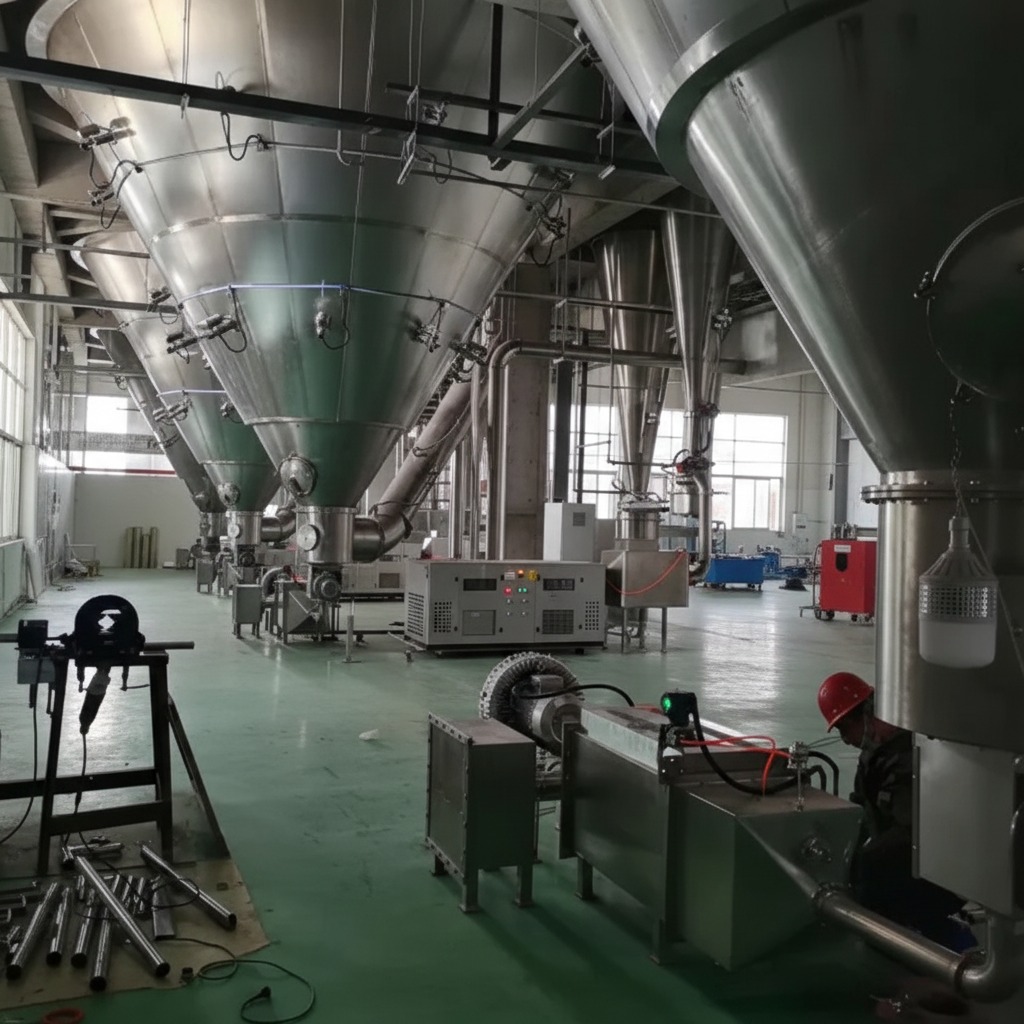
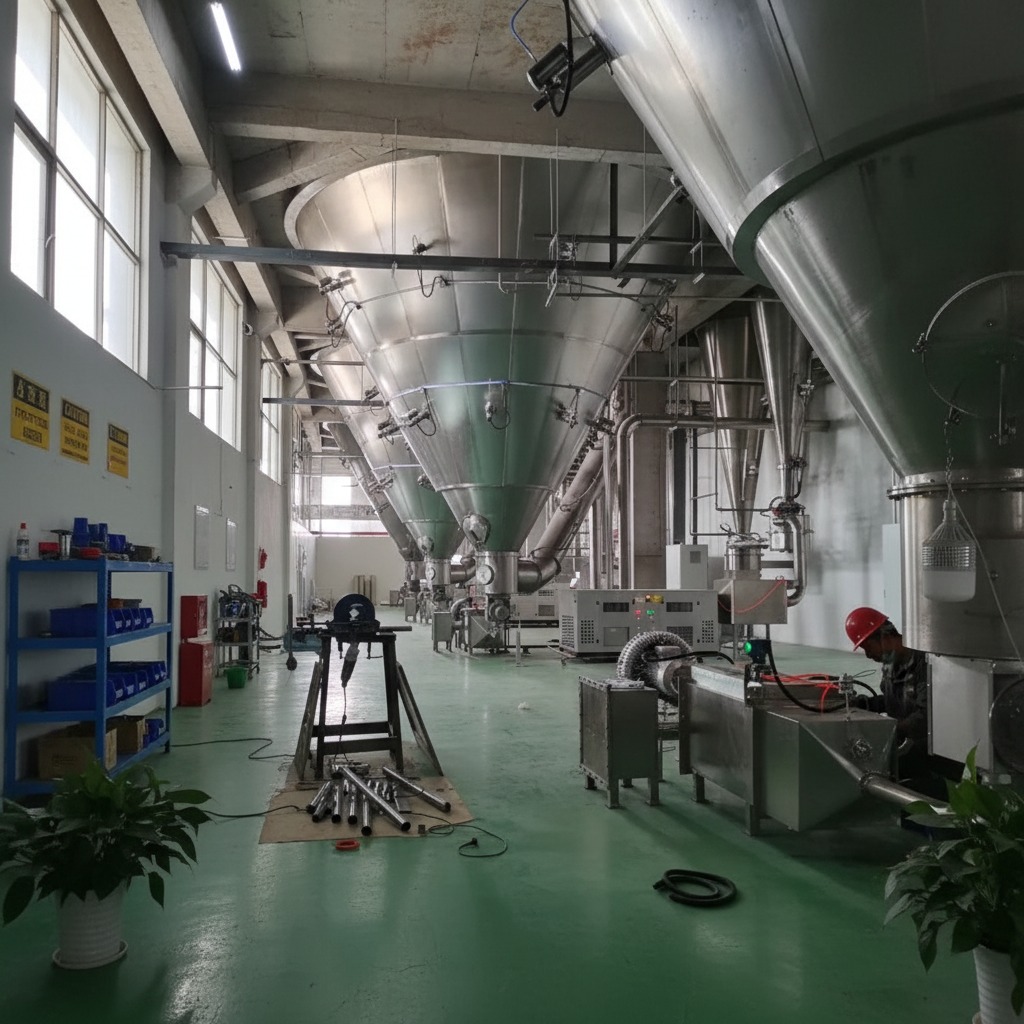
At its core, spray drying technology relies on the principles of atomization, drying, and particle separation. The process begins with the preparation of a liquid feed, which is pumped through a nozzle or rotary atomizer to create fine droplets. These droplets are then introduced into a drying chamber filled with hot air, where the heat causes the solvent to evaporate almost instantaneously, leaving behind dry particles. The design of the drying chamber is crucial; in advanced systems like ours, towering inverted-cone stainless-steel chambers with mirror-finish interiors minimize product adhesion and ensure uniform particle size. This geometry optimizes airflow, allowing droplets to follow a controlled thermal path that preserves sensitive properties such as flavors and active compounds.
The efficiency of spray drying technology also stems from its modular components. Pre-processing units, including precision pumps, filtration, and homogenization, condition the feed to exact specifications before atomization. Automated controls via PLC systems and touchscreen interfaces enable precise tuning of parameters like temperature, humidity, airflow, and feed rate. This recipe-based control is essential for reproducibility, supporting everything from lab trials to full-scale production with data logging for traceability and compliance with GMP standards.
Applications in Metal Phosphate Production and Chemical Spray Drying
One of the key strengths of spray drying technology lies in its versatility for specialized applications, such as metal phosphate production and chemical spray drying. In metal phosphate production, which is vital for battery materials and catalysts, the technology enables the creation of uniform, high-purity powders. The process ensures consistent particle morphology, which is critical for electrochemical performance in lithium-ion batteries or as precursors in ceramic manufacturing. Our system, with its clean-in-place (CIP) features—including spray balls, sanitary piping, and quick-release clamps—facilitates rapid changeovers, reducing downtime and maintaining hygiene standards suitable for these high-value chemicals.
Chemical spray drying extends this capability to a broader range of formulations, producing powders for pigments, fertilizers, and polymers. The inverted-cone design and controlled environment prevent agglomeration and ensure free-flowing characteristics, which are essential for downstream processing like sieving and blending. Auxiliary units such as cyclones and powder conveyors are arranged in a compact, linear layout, making maintenance straightforward and integration seamless. This setup is particularly beneficial for chemical spray drying, where handling abrasive or corrosive feeds requires robust, stainless-steel construction and food-grade seals for durability under aggressive cleaning regimes.
Spray Drying Technology in Traditional Medicine and Herbal Applications
Spray drying technology has also found a niche in the pharmaceutical and nutraceutical sectors, particularly for Chinese herbal medicine and traditional medicine granules. Traditional extracts from herbs like ginseng or astragalus are often liquid-based and prone to degradation, but spray drying transforms them into stable granules that retain bioactivity. The gentle thermal path in modern systems preserves volatile compounds and antioxidants, making it ideal for producing instant teas, supplements, and effervescent tablets. Our integrated line supports this by offering precise control over inlet and outlet conditions, ensuring the powders meet the stringent purity requirements of traditional medicine.
In producing traditional medicine granules, spray drying technology allows for encapsulation of active ingredients, enhancing shelf life and bioavailability. For instance, herbal formulations can be homogenized and atomized to create microencapsulated particles that dissolve quickly in water, mimicking traditional decoctions but with modern convenience. The CIP principles embedded in our system elevate hygiene to pharmaceutical levels, crucial for herbal products that must comply with regulatory standards. This not only cuts operational costs through tool-free cleaning but also minimizes cross-contamination risks when switching between different herbal batches.
Advantages and Innovations in Modern Spray Drying Systems
The advantages of spray drying technology are manifold, including scalability, energy efficiency, and product quality. Unlike other drying methods, it operates continuously, handling high throughputs while maintaining particle size distribution below 100 microns if needed. Innovations like our system's low-profile housings and organized wiring keep the production floor uncluttered and service-friendly, integrating effortlessly with packaging lines. For food applications such as instant beverages and dairy powders, the technology locks in flavors and nutrients, while in new materials like ceramic precursors, it achieves the spherical particles required for sintering.
Moreover, spray drying technology supports sustainability efforts by optimizing energy use through advanced heaters and fans that recycle exhaust air. In chemical and nutraceutical contexts, this translates to lower operational costs and reduced environmental impact. The touchscreen interface allows operators to monitor real-time data, with alarms ensuring process integrity. Whether for metal phosphate production or Chinese herbal medicine, these systems turn complex liquids into value-added powders, combining industrial scale with precision control.
Future Prospects and Industry Integration
Looking ahead, spray drying technology is poised for further advancements, particularly in automation and AI-driven optimization. Integration with downstream processes like blending and packaging will streamline entire production workflows, especially for traditional medicine granules where consistency is paramount. In chemical spray drying, emerging applications in nanotechnology could yield even finer particles for drug delivery or advanced coatings.
Our next-generation system reflects this forward-thinking approach, designed with a modern aesthetic that underscores the engineering excellence within. From preserving the efficacy of Chinese herbal medicine to enabling high-performance metal phosphates, spray drying technology continues to drive innovation across sectors. By adopting such systems, manufacturers can achieve superior product quality, operational efficiency, and market competitiveness in an evolving landscape.